
Font size
 Worksheets
Vascular and Ventricular Systems
Total questions: 25
Worksheet time: 6hrs 15mins
CSF is mainly produced by what structure?
The choroid plexus in the lateral ventricle
The choroid plexus in the lateral and third ventricles
The choroid plexus in the lateral, third and fourth ventricles
The choroid plexus in the lateral, third, fourth and central canal
What is the main function of the CSF?
To keep the brain and spinal cord lubricated like oil in an engine
To clean the brain and spinal cord like a car wash
To protect the brain and spinal cord by acting as a shock absorber
To transport signals from the brain to the spinal cord
What supporting cells are responsible for the creation and circulation of CSF?
Satellite cells
Ependymal cells
Purkinje cells
Epithelial cells
What does hydrocephalus mean?
Water on the bridge
Water on the skull
Water on the floor
Water on the brain
What large vessel is formed by the union of the two vertebral arteries?
Basilar artery
Common carotid artery
Aorta
Anterior cerebral artery
Anterior communicating artery
What arteries account for most of the blood supply to the brain?
The two posterior cerebral arteries
The two anterior cerebral arteries
The two internal carotid arteries
The two external carotid arteries
The two vertebral arteries
What structure makes collateral circulation to the brain possible due to a vascular anastomosis at the base of the brain?
The Circle of Willis
The Circle of Friends
The Circle of Ranier
The Circle of Williamsburg
The middle cerebral artery supplies what areas of the brain?
The frontal lobes and medial aspects of the parietal and occipital lobes
The insula, most of the lateral surface of the cerebral hemisphere, the anterior temporal tip
The rostral midbrain, posterior thalamus, medial occipital lobe, and inferior and medial surfaces of the temporal lobe
The posterior cerebral artery supplies what areas of the brain?
The frontal lobes and medial aspects of the parietal and occipital lobes
The insula, most of the lateral surface of the cerebral hemisphere, the anterior temporal tip
The rostral midbrain, posterior thalamus, medial occipital lobe, and inferior and medial surfaces of the temporal lobe
The anterior cerebral artery supplies what areas of the brain?
The frontal lobes and medial aspects of the parietal and occipital lobes
The insula, most of the lateral surface of the cerebral hemisphere, the anterior temporal tip
The rostral midbrain, posterior thalamus, medial occipital lobe, and inferior and medial surfaces of the temporal lobe
What large arteries are formed by the bifurcation of the common carotid artery?
External carotid artery and internal carotid artery
Posterior communicating artery and anterior communicating artery
Anterior cerebral artery and posterior cerebral artery
Anterior carotid artery and posterior carotid artery
Anastomosis is a point where four blood vessels merge and combine their bloodstreams.
True
False
Anastomosis is a point where two blood vessels merge and combine their bloodstreams.
True
False
What absorbs the CSF into the bloodstream?
Choroid plexus
Ependymal cells
Arachnoid villi
Dura mater
The vertebral arteries enter the cranial cavity through the:
Intraventricular foramen
Circle of Willis
Cerebral aqueduct
Foramen magnum
This artery supplies most external head structures except the orbits.
External carotid arteries
Internal carotid arteries
Common carotid arteries
Circle of Willis
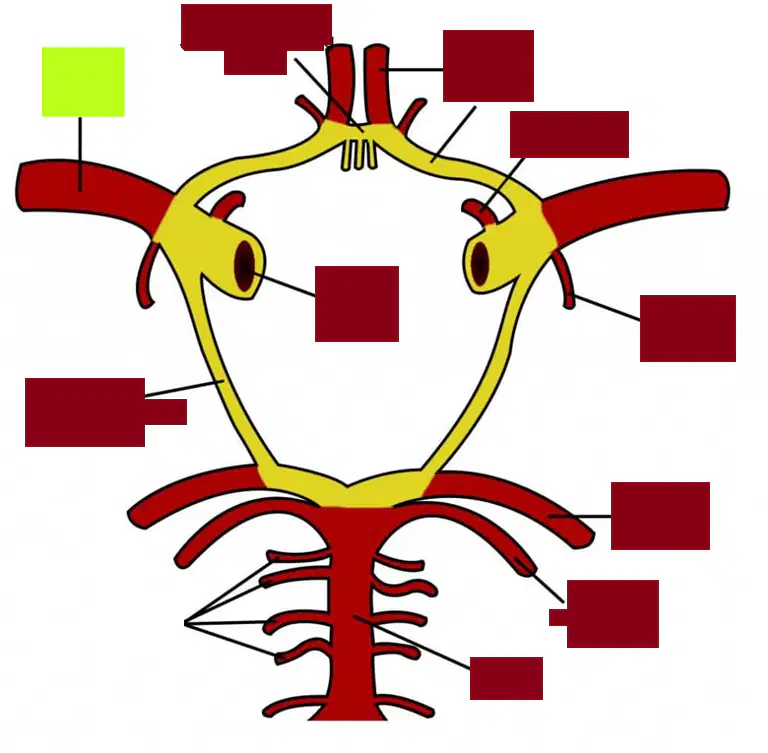
What is the name of the structure identified by the green box?
Anterior cerebral artery
Internal carotid artery
Middle cerebral artery
Posterior cerebral artery
Basilar artery

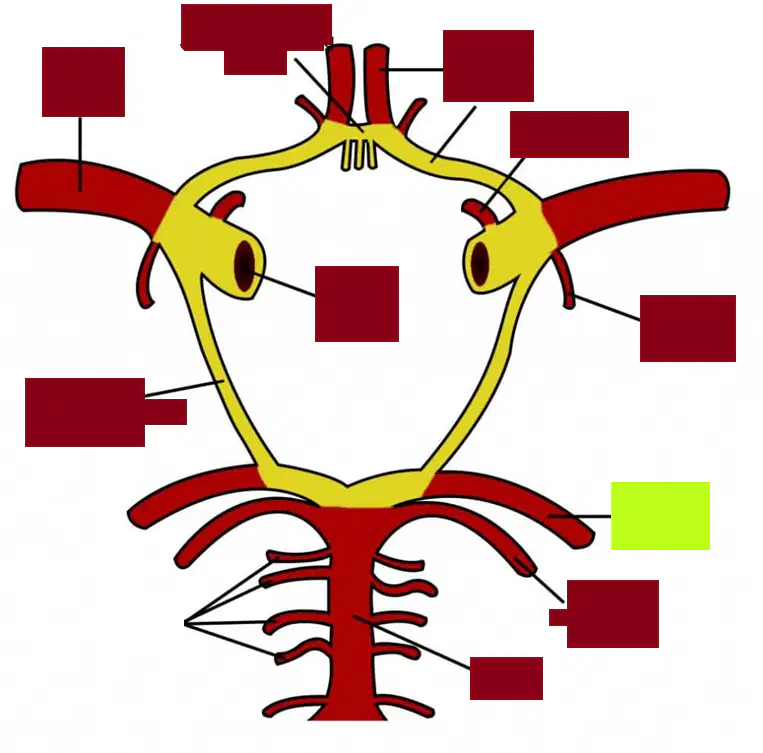
What is the name of the structure identified by the green box?
Anterior cerebral artery
Internal carotid artery
Middle cerebral artery
Posterior cerebral artery
Basilar artery
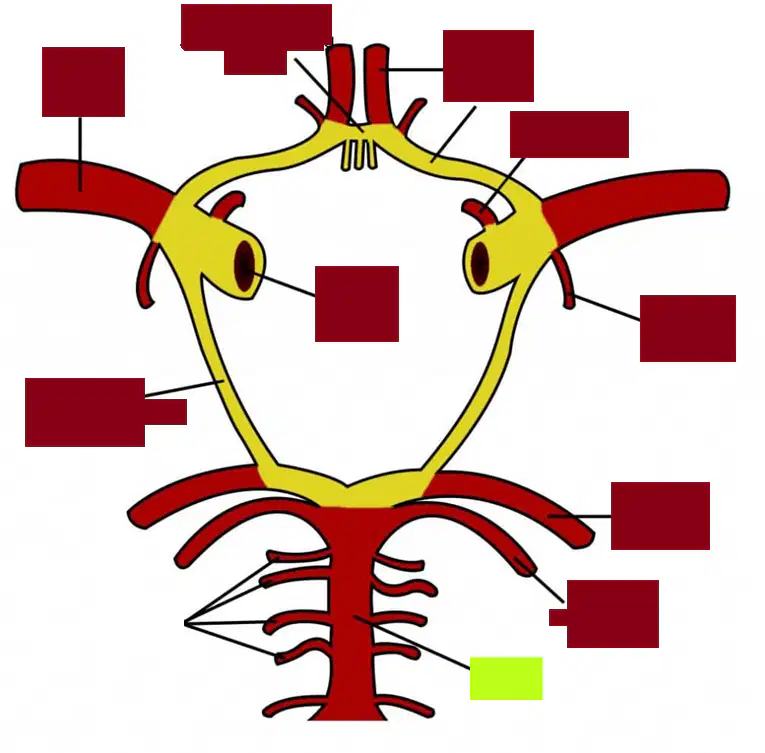
What is the name of the structure identified by the green box?
Anterior cerebral artery
Internal carotid artery
Middle cerebral artery
Posterior cerebral artery
Basilar artery
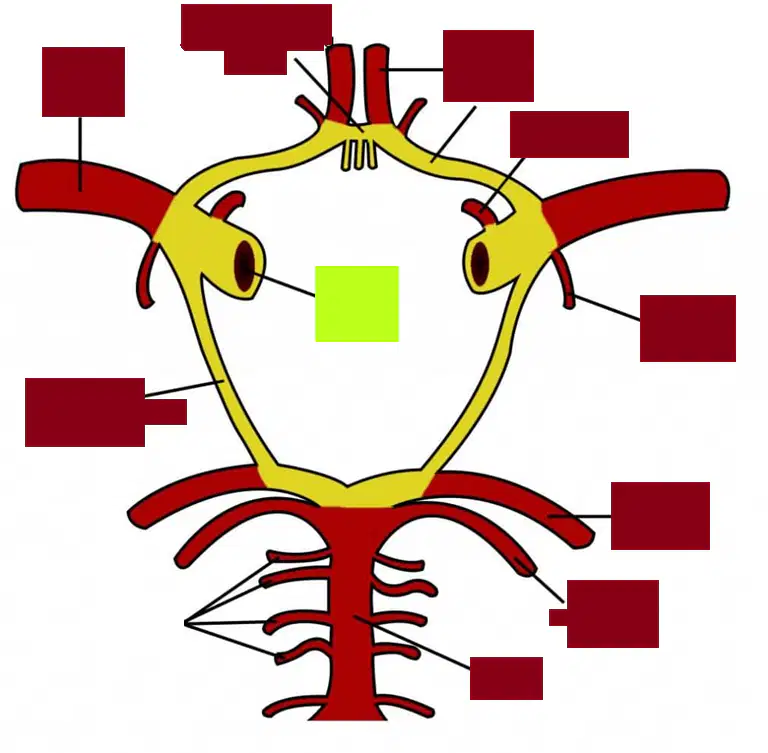
What is the name of the structure identified by the green box?
Anterior cerebral artery
Internal carotid artery
Middle cerebral artery
Posterior cerebral artery
Basilar artery
What is the name of the structure identified by the green box?
Anterior cerebral artery
Internal carotid artery
Middle cerebral artery
Posterior cerebral artery
Basilar artery
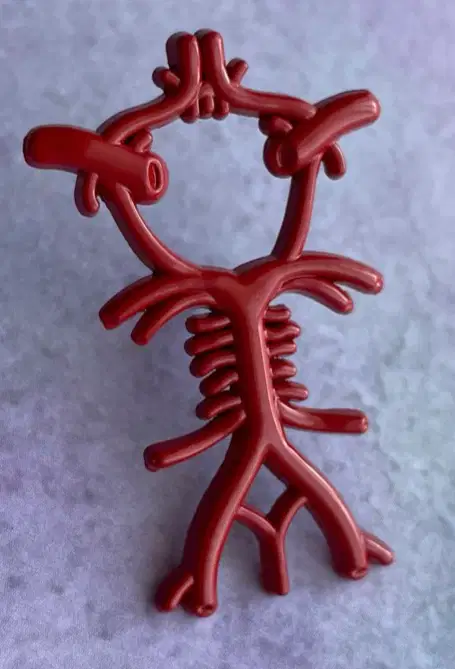
What is the main function of the Circle of Willis
Supply blood to the posterior scalp
Supply blood to the tongue
Supply blood to the thyroid gland and larynx
Provide collateral blood flow between the anterior and posterior arterial systems of the brain
The Circle of Willis receives blood flow from the:
internal carotid arteries
basilar arteries
occipital arteries
lingual arteries
ophthalmic arteries
Bathes the spinal cord in CSF
Intraventricular foramen
Cerebral aqueduct
Central canal
Internal carotid arteries
Hydrocephalus occurs when:
there is a decrease in the volume of CSF
there is an increase in the volume of CSF
there is a decrease in the volume of blood flow in the brain
there is an increase in the volume of blood flow in the brain

