
 Worksheets
Mongol Empire Review
Total questions: 110
Worksheet time: 2hrs 33mins
Where was Mongolia in relation to China?
north of China
south of China
near Tibet
on the islands
What advantage did the Mongols have over surrounding peoples?
They were mostly literate, unlike China who mostly was illiterate
They had more equality than surrounding peoples
Their calvary, fighting from horseback, unlike the Chinese who were not as well trained
They didn't care about religion, where as the Chinese made Confucianism the official religion
Who was the fiercest Mongol leader?
Empress Wu
Genghis Khan
Confucius
Marco Polo
What was one reason why Genghis Khan was so fierce?
He was really mean
He was well trained in combat
He led the capture of China, Central Asia, & Persia
He killed many of his followers who did not listen
How was Kublai Khan related to Genghis?
his son
his grandson
his brother
his wife
Kublai continued his grandfather's quest for land by capturing all but
Japan
Tibet
the rest of China
Southeast Asia
Batu Khan, another grandson, continued his grandfathers quest for land by invading
Africa
America
Australia
Europe
Besides China, Southeast Asia, Tibet, & Europe, what other place did the Mongols take over for the next 200 years?
northern coast of Africa
Japan
England
Russia
Trade increased between Europe and Asia and there was a period of regional stability and safe trade along the Silk Road. This characterizes
Chaos and mayhem of battle
Results of Pax Mongolica
A period of good luck.
Development of canal system.
What factors contributed to the rise of the Mongol Empire?
Leadership of Genghis Khan
Use of the Stirrup
Excellent horsemanship
All of the above
Which of the following was a result of the peace in Asia in the 13th and 14th centuries under Mongol rule?
Trade along the Silk Road increased.
Islam's influence expanded into China.
The four khanates rejoined to form one empire.
Vietnam and Japan were annexed as part of China.
What effect did the Mongols have on the Silk Road?
The Mongols raised travel taxes, decreasing trade.
The Mongols raided travelers all the time, decreasing trade.
The Mongols made travel tax-free, increasing trade.
The Mongols made it safer, increasing trade.
What led to the overthrow of the Mongols?
a partnership with Japanese allies
growing opposition to the rule of foreigners
fear of a isolated society
dislike of the rule of Genghis Khan
Why did the Mongols terrorize people?
To spread fear, thus making them more likely to surrender without a fight
To make them fight for their lives
To make other people talk about them, and write about them in books
They only terrorized people after they conquered them.

Only the strong survived in Ancient Mongolia, because of the harsh geography of the ______.
Rivers
Mountains
Plains
Steppes
Some Characteristics of Mongolian Governance and administration include
Development of a Tribute System.
Establishment of Safe Trade along Silk Road.
Created an empire from Eastern Europe to Pacific Coast of Asia.
All of the above
How do we know that diversity was an important part of the Mongol Empire? (1200-1350)
The Mongols made everyone follow the religion of Genghis Khan.
The Mongol Empire ruled peoples from China, Russia, Eastern Europe, and India
They conquered and slaughtered many men.
They practiced psychological warfare.

________ united the Mongols and led them in conquering much of Asia
Wu Zhao
Kublai Khan
Tang Taizong
Genghis Khan
A group who had the ability to ride horses and wage war
Asians
Japanese
Mongols
Philippines
The largest land empire the world has ever known?
Ottoman Empire
Tibetan Empire
Yong Empire
Mongol Empire
A famous European traveler who went to China?
George Washington
Kublai Khan
Genghis Khan
Marco Polo

What were the two major rivers of Ancient China?
Yellow and Yangtze
Nile and Euphrates
Yellow and Red
Yangtze and Himalaya
Who was the tribal leader of the Mongols??
Waka Flocka
Gucci
Genghis Khan
Coach Grimes
Who did the Mongols have a big impact on
Constitution
Nosa
Kylie Jenner
China

This Mongol ruler ____ united China for the first time in over 300 years
Kublai Khan
Wu Zhao
Marco Polo
Ghengis Khan

Most European readers did not believe the stories told by Venetian trader _________
Genghis Khan
Marco Polo
Kublai Khan
Mansa Musa
Which did the Mongols NOT do?
Destroyed whole villages that fought back
Spread across and united almost all of Asia
Forced nomadic way of life on conquered people
Established a peaceful period of trade known as Pax Mongolica
Which of the following generalizations can be made about the Mongols during the Middle Ages?
They generally brought learning and prosperity to the lands they conquered in Europe.
They controlled all of Europe, Asia and North Africa at the height of their conquests
They spread across Eurasia to become one of the largest empires in history.
They joined with the Islamic armies to spread Islam along with Mongolian culture.

This map shows the _________ empire
Mongol
Tong
Khan
Byzantine
What do all nomadic peoples do?
ride horses
travel
conquer
cultivate
Which empire was largest?
Roman
Mongol
Napoleonic
Carolingian
The officers in Genghis Khan's army were chosen for this
bravery
abilities
weapons
smarts
The Mongols were different from the Chinese in these ways....
language, clothing, and weapons
dialect, rules, and skills
language, laws, and customs
customs, weapons, and language
The wide rolling grassy plains found in Asia
fields
steppes
acres
plateaus
What advantage did the Mongols have over surrounding peoples?
They were mostly literate, unlike China who mostly was illiterate
They had more equality than surrounding peoples
Their calvary, fighting from horseback, unlike the Chinese who were not as well trained
They didn't care about religion, where as the Chinese made Confucianism the official religion

Who was the fiercest Mongol leader?
Empress Wu
Genghis Khan
Confucius
Marco Polo
What did the Mongols improve within the former Chinese empires?
trade & communication routes
lower taxes allowing materials to be more affordable
human constructions such as the Great Wall & Terracotta Army
creating equality between the nobles & peasants

The ________ was highly valued amongst the Mongols.
ability to run
farming techniques
ability to fight
ability to write

How was trade along the Silk Road effected under the Mongol Empire?
Mongols made them safer for merchants
Mongols hated the trade routes
It was unaffected
Trade spread ideas not luxury goods

The largest land empire the world has ever known?
Ottoman Empire
Tibetan Empire
Yong Empire
Mongol Empire
What animal was greatly valued by the Mongol culture and helped them be successful on the battlefield?
Cow
Pig
Horse
Elephant

How were women treated by nomads?
When there are less resources to spend people need to work together more which allowed women to be treated more fair
The Mongols were Barbarians, women were warriors that fought with the men
Women stayed behind faming and raising the children while men went on raids
Women were only used as babymammas, so they were considered property

How do Nomads plan their trips?
They migrate according to climate, so they can feed their animals
They choose random locations to move to to prevent their enemies from tacking them
They move from town to town
They farm their farms far from their houses for protection

What type of food did the Mongols spread to the rest of the world?
They introduced Rice to the Persians
They shared Mongolian
They introduced to the world Sheep milk
They shared how to eat horse meat

Why were the Mongols so successful compared to their enemies?
Mongol archers were like super fast tanks compared to their slow enemies
There were millions of Mongol soldiers
The Mongols were extremely technologically advanced
The enemies of the Mongols were unprepared

Who started Islam?
Moses
Jesus
Isaac
Muhammad

The holy book of Islam is:
Torah
Quran
Bible
Old Testament

The crusades were a series of wars fought between:
Jews and Christians
Jews and Muslims
Christians and Muslims
Christians and Catholics

Many of the traditions of Islam were influenced by which other Monotheistic religions?
Hinduism and Judaism
Buddhism and Judaism
Christianity and Judaism
Zoroastrianism and Judaism

In the 200 years after it was founded how far had Islam spread?
Spain to France
India to Arabia
Spain to India
Africa

What mathematics achievement can be attributed to the House of Wisdom?
Arabic numerals
Roman Numerals
Finger Counting
Calculators
What invention helped Muslims learning surpass Europeans?
papyrus
parchment
scroles
paper

This is the vast grassland that stretches across Northern Asia
Siberia
Steppe
Tibetan Plateau
Ethiopian Highlands
Around 1200 CE, this person unified the Mongol Empire
Kublai Khan
Genghis Khan
Confucius
Marco Polo
Genghis Khan died in 1227 CE. What happened after is death?
His sons and grandsons continued his campaign of conquest
The Monngol reign ended immediately
The Mongols conquered North America
The Chinese overthew the Mongols
Eventually the Mongols would divided their empire into four regions or _______________
Sects
Divisions
Khanates
Territories
In 1260, the grandson of Genghis Khan became the new ruler of Mongol Empire. His name was
Gerald Khan
Wu Khan
Kublai Khan
Amir Khan
________________ was allegedly the most famous European to viists China during years of Mongolian rule.
Columbus
Marco Polo
John Wayne
Tom Brady
A man who rules an empire
Communist
President
Emperor
Dictator
The act of taking control of a country, or city through the use of force.
conquest
compass
hinder
emperor
A horde is a small group of people
True
False
To make slow or difficult
horde
accelerate
conquest
hinder
A large group of people
faction
horde
hinder
clique
The beliefs, customs, arts, etc., of a particular society, group, place, or time is its'
religion
destiny
legacy
culture
To diffuse is
The act of spreading or allowing to spread freely
To bring together
The act of forcing control on a population
Stop the spreading of ideas
A conquest is the act of taking control of a country, or city through the use of force.
True
False
A man who rules an empire is an emperor
True
False
A spreading of ideas and products between different groups of people.
Manifest Destiny
Expansion Theory
Cultural Diffusion
Magna Carta
A conquest is the beliefs, customs, arts, etc., of a particular society, group, place, or time
True
False
Cultural diffusion is a spreading of
ideas and products between
different groups of people.
True
False
Which is the best example of cultural diffusion?
Muslim architects built mosques with minarets.
Muslims face toward Mecca when they pray.
Muslim cities along major trade routes grew wealthy.
Muslim architects built Muslims spread the Chinese craft of paper making to Europe.
What do the products listed below have in common?
• cotton • melons • apricots • pepper
They were common in the Muslim lands of North Africa.
Spain grew rich by exporting them to the Crusader kingdoms.
Crusaders brought them back to Europe from the Middle East.
They were trade goods carried from India to Muslim cities.
Genghis Khan and the Mongols were known as what type of society?
peaceful
civilized
nomadic
stationary
Genghis Khan lived during what century A.D.?
11th
12th
13th
14th
Which of Genghis’ grandsons conquered the Song Dynasty in China in 1279?
Khan Noonien Singh
Kublai Khan
Shere Khan
Tolui Khan
What was Genghis Khan's birth name?
Temujin
Jurchen Jin
Yuan Haowen
Marco Polo
What metaphor was used in the article to describe the Mongol's fearsome military reputation?
Tsunami
Great Plague
Wet Towel
Car Crash
How did Genghis Khan often treat defeated enemies that had shown bravery?
killed them
gave them positions in his own army
made them slaves
buried them alive
Large portable wool-felt tent used by the Mongols
teepee
suni
yurt
domo
Mongol warfare was designed for one purpose only...
to spread Mongol culture
to acquire war booty
to fulfill the divine mandate
to prove Mongol strength
What DID NOT contribute to the military success of the Mongols?
ferocious mobility
adopting skills and strategies of others
an organized postal system
advanced naval technology
How were practitioners of other religions treated in the Mongol empire?
they were killed
they were enslaved
they were tolerated
they were forced to convert
How did Genghis Khan die?
boiled in a cauldron
decapitated
poisoned
unknown
When Genghis died, his empire stretched from the Mongol homeland to the ______________.
East China Sea
Caspian Sea
Mediterranean Sea
Rhine River
Approximately how long did the Mongol empire last?
5 years
20 years
80 years
200 years
How many sections was the Mongol Empire divided into?
2
3
4
5
The Mongols were surprisingly tolerant of other religions and cultures.
True
False
Which empire was the largest?
Roman
Hellenistic under Alexander the Great
Mongol
What was one positive thing that happened during the Pax Mongolica?
Where did Kublai Khan move his capital to?
Mongolia
China
India
Europe
Who was Marco Polo?
Famous traveler and trader
Mongolian ruler
Italian ruler
Servant of Genghis Khan
Which of these was NOT a contributing factor to the decline of the Mongol Empire?
Halted expansion
Growing cultural differences
Invasions of the Huns
Chinese rebellions
Remember: An ______ is an extensive group of states under a single, supreme authority
society
region
empire
country
Is there anything about the Pax Mongolica that reminds you of the Pax Romana?
How were the two empires (the Mongol Empire and the Roman Empire) different?
Wood block printing, gunpowder, and the magnetic compass originate from where? (a)
Which invention do you think was the most useful when traveling along the Silk Road?
Paper, to share ideas
Gunpowder, to fend off enemies
Compass, to direct you
What was the primary reason for the Mongol Empire's rapid expansion?
Superior military technology
Diplomatic alliances
The leadership of Genghis Khan
Agricultural advancements
Which of the following was a significant impact of the Mongol rule on Russia?
Introduction of Buddhism
Isolation from Western Europe
Adoption of the Mongolian language
Decrease in trade activities
How did the Mongols contribute to the cultural exchange during their empire?
By enforcing Mongolian culture on conquered peoples
By promoting the Silk Road as a major trade route
By isolating conquered regions from each other
By discouraging the spread of religions
The Mongol Empire was the largest land empire ever created.
True
False
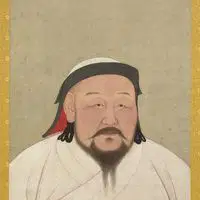
Who was the grandson of Genghis Khan that formed the Yuan Dynasty?
Temujin
Mongke
Kublai
Ogedai


