wayground logo

Free Printable Worksheets

Font size

S
M
L
XL
Worksheets

Genetics Review

Total questions: 120

Worksheet time: 3hrs 3mins

Name
Class
Date
1.

genetics is the study of __________

a)

heredity

b)

genetics

c)

parents

2.

a gene is a _________ of DNA

a)

DNA

b)

segment

c)

RNA

d)

nucleotide

3.

A ______________ is a physical characteristic

a)

DNA

b)

RNA

c)

gene

d)

trait

4.

an _______ is a specific trait.

a)

trait

b)

gene

c)

allele

d)

DNA

5.

TT; big letters are ___________

a)

recessive

b)

dominant

c)

nothing

6.

tt, small letters are ______

a)

DNA

b)

dominant

c)

recessive

7.

a ___________ is a letter combination of an allele

a)

phenotype

b)

genotype

c)

dominant

d)

recessive

8.

a __________- is the trait that we see; black, long, blue, tall

a)

DNA

b)

recessive

c)

genotype

d)

phenotype

9.

Tt, Hh, Rr

a)

homozygous

b)

heterozygous

c)

recessive

d)

phenotypes

10.

TT, RR, WW, SS

a)

homozygous recessive

b)

homozygous dominant

c)

heterozygous

d)

recessive

11.

rr, tt, hh, gg

a)

homozygous dominant

b)

heterozygous

c)

homozygous recessive

d)

strong

12.

This image is called a ____________

a)

triangle

b)

punnett square

c)

square

d)

rectangle

13.

Tt, Hh, Rr

a)

homozygous

b)

heterozygous

c)

recessive

d)

phenotypes

14.

A version of a gene is called a(n)

a)

allele

b)

characteristic

c)

specific gene

d)

trait

15.

An organism’s genetic makeup; the pair of alleles for a trait is called a(n)

a)

dominant trait

b)

genotype

c)

phenotype

d)

recessive trait

16.

An organism’s physical expression of a trait is called a(n)

a)

dominant trait

b)

genotype

c)

phenotype

d)

recessive trait

17.

What is it called when both alleles in a genotype are the same?

a)

Dominance

b)

Heterozygous

c)

Homozygous

d)

Recessiveness

18.

What is it called when the alleles in a genotype are different?

a)

Dominance

b)

Heterozygous

c)

Homozygous

d)

Recessiveness

19.

Which pair of alleles is an example of homozygous recessive?

a)

bb

b)

BB

c)

Bb

20.

Which pair of alleles is an example of homozygous dominant?

a)

tt

b)

TT

c)

Tt

21.

Which pair of alleles is an example of heterozygous alleles?

a)

ll

b)

LL

c)

Ll

22.

What are physical characteristics of an organism?

a)

Alleles

b)

Genotypes

c)

Genes

d)

Traits

23.

In a Punnett square, a lower case letter stands for a ____________ allele.

a)

dominant

b)

recessive

c)

homozygous

d)

heterozygous

24.

Hair color, height, eye color and freckles are examples of human traits. What do we call the physical expression of the genetic material of an organism?

a)

genetics

b)

heredity

c)

genotype

d)

phenotype

25.
Which of the following alleles is homozygous (purebred) recessive?
a)
Tt
b)
tt
c)
TT
d)
t
26.

Which of the following genotypes is homozygous dominant?

a)

A

b)

Aa

c)

AA

d)

aa

27.
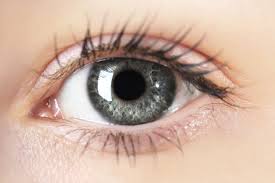
Which is the correct phenotype for this organism?
a)
BB
b)
blue
c)
green
d)
bb
28.
 Recessive alleles are-
a)
capital
b)
lowercase
c)
both
d)
neither
29.
 Dominant alleles are-
a)
capital
b)
lowercase
c)
both
d)
neither
30.
Tt is-
a)
homozygous dominant
b)
homozygous recessive
c)
heterozygous
d)
none of these
31.
Brown fur color is dominant over black fur color. Which of the following is the actual genotype of ALL of the offspring in the next generation of this cross for fur color?
AA x aa
a)
AA
b)
Aa
c)
aa
d)
brown fur
32.
If green is dominant over purple, then what is the genotype for this individual?
a)
Purple
b)
Green
c)
GG
d)
gg
33.
One form of a gene is called_______________
a)
a DNA
b)
a Phenotype
c)
a trait
d)
an allele
34.
Two brown eyed parents (Bb) have a baby. What is the chance the baby is blue eyed?
a)
0 %
b)
25%
c)
50%
d)
75%
35.
What is a phenotype
a)
The genetic make up (code)
b)
The physical trait
36.
Which of the following is a phenotype?
a)
BB
b)
Bb
c)
bb
d)
Blue eyes
37.
How many chromosomes are in a human egg cell and passed down from a mother to her child?
a)
23
b)
46
c)
92
38.
How many chromosomes are in a normal human body cell?
a)
23
b)
46
c)
92
39.
What term describes what you see, or the physical appearance.
a)
Genotype
b)
Phenotype
c)
Homozygous
d)
Heterozygous
40.
The genotypic percentage resulting from this this cross would be _____________________.
a)
25% blue eye 75 % brown eye 
b)
BB = 25% Bb = 50% bb = 25%
c)
BB= 50 % bb = 50%
d)
All brown eye
41.
Two heterozygous parents produce offspring. What is the probability of the HOMOZYGOUS DOMINANT GENOTYPE appearing in the offspring generation?
a)
75%
b)
25%
c)
50%
d)
100%
42.

What type of chromosomal mutation occurred?

a)

chromosomal insertion/duplication

b)

chromosomal deletion

c)

chromosomal inversion

d)

chromosomal translocation

43.

Which answer shows a deletion gene mutation from the following DNA bases:

ATG CCA AAT

a)

ATG TCA AAT

b)

ATG CCT AAA T

c)

ATC CA AT

d)

ATG CCA AAT

44.

Original DNA: TGA CCA

Mutated DNA: TGA TCC A

This is an example of which type of gene mutation?

a)

Substitution

b)

Deletion

c)

Insertion

d)

Translocation

45.

What are the three types of gene mutations?

a)

Insertion, Deletion, Subsitution

b)

Deletion, Insertion, Duplication

c)

Translocation, Duplication, Insertion

d)

Substitution, Inversion, Translocation

46.

Original DNA: GAG CTC GAC

Mutated DNA: GAG CTC CAC

This is an example of which type of gene mutation?

a)

no mutation

b)

substitution

c)

insertion

d)

duplication

47.

Original DNA: TTA CGC AAG

Mutated DNA: TTC GCA AG.

This is an example of which type of gene mutation?

a)

Substitution

b)

Deletion

c)

Insertion

d)

Translocation

48.

Any change in the DNA is called a

a)

replication

b)

protein synthesis

c)

translation

d)

mutation

49.

Part of a chromosome

is deleted.

This is an example of

a)

Substitution - Gene Mutation

b)

Translocation - Chromosomal Mutation

c)

Deletion - Chromosomal Mutation

d)

Insertion - Gene Mutation

50.
What mutation has occurred here? 
T-G-A-C-C-A
T-G-A-G-C-A
a)
Substitution
b)
Deletion
c)
Insertion
d)
Frameshift 
51.
Are all mutations bad?
a)
Yes
b)
No
52.
Which organelle is DNA usually found in?
a)
cell membrane
b)
vacuole
c)
chloroplast
d)
nucleus
53.

DNA is related to

a)

Carbohydrates

b)

Photosynthesis

c)

Cellular Respiration

d)

Genetics

54.

What do organisms have in common?

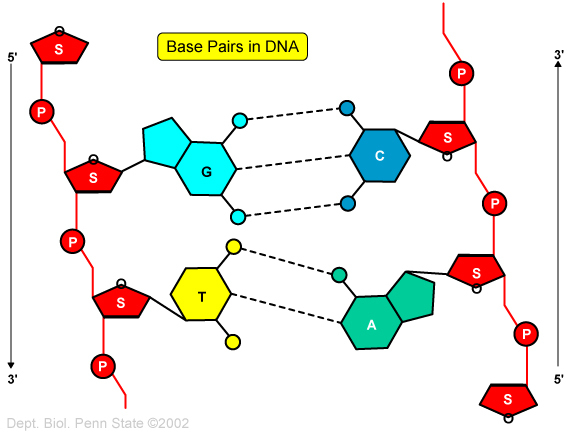
a)

DNA sequence made of A,C,T,G

b)

DNA sequence is in the same order

c)

DNA sequence between organisms have nothing in common

d)

DNA sequence made of A,U,C,T,G

55.

What is "A"?

a)

Nucleotide

b)

Deoxyribose Sugar

c)

Nitrogenous base

d)

Phosphate

56.

What is "B"?

a)

Nucleotide

b)

Deoxyribose Sugar

c)

Nitrogenous base

d)

Phosphate

57.

What is "C"?

a)

Nucleotide

b)

Deoxyribose Sugar

c)

Nitrogenous base

d)

Phosphate

58.

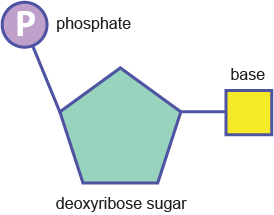
What is the molecule in the image?

a)

Nucleotide

b)

Deoxyribose Sugar

c)

Nitrogenous base

d)

Phosphate

59.

What is the complimentary sequence of the following sequence:

GATCAG

a)

TGACAT

b)

GACATG

c)

CTAGTC

d)

CGACTA

60.
Which of the following best describes a DNA molecule?
a)
double helix
b)
contains ribose
c)
made of amino acids
d)
contains Uracil
61.
Why is DNA important?
a)
it is very small and very complicated
b)
it's in everything
c)
it serves as the blueprint for traits of all living things
d)
because we eat it every day for energy
62.
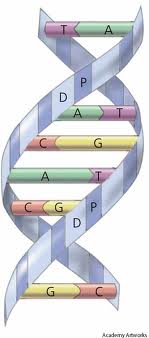
Which 2 molecules form the sides (backbone) of the DNA ladder?
a)
deoxyribose sugar and adenine
b)
deoxyribose sugar and a hydrogen bond
c)
deoxyribose sugar and the nucleus
d)
deoxyribose sugar and phosphate
63.
Nitrogenous bases are joined by which type of bond?
a)
polar bonds
b)
ionic bonds
c)
covalent bonds
d)
hydrogen bonds
64.
What does DNA stand for?
a)
Deoxyribonucleic acid
b)
Denitrogenous acid
c)
Deribonucleic acid
d)
Diribonucleic acid
65.
Which 2 molecules forms the sides (backbone) of the DNA ladder?
a)
deoxyribose and adenine
b)
deoxyribose and a hydrogen bond
c)
sugar and the nucleus
d)
deoxyribose (sugar) and phosphate
66.
What are the three components of a nucleotide?
a)
sugar, hydrogen, nitrogen base
b)
sugar, oxygen, nitrogen base
c)
sugar, phosphate, nitrogen base
d)
sugar, phosphate, protein
67.
Cytosine always pairs with
a)
Adenine
b)
Thymine
c)
Uracil
d)
Guanine
68.
Nucleotides are made up of a sugar, phosphate, and..?
a)
nitrogenous base
b)
nucleic acid
c)
cholesterol
d)
fatty acid
69.
Guanine bonds with ______________.
a)
Adenine
b)
Guanine
c)
Cytosine
d)
Thymine
70.

The DNA sequence is ATG what is the complementary sequence?

a)

ATG

b)

GTA

c)

TAC

71.

The DNA sequence is TTA CCG What is the complementary sequence?

a)

TTA CCG

b)

AAT GGC

c)

GGC AAT

72.

Adenine pairs with

a)

Thymine

b)

Thyme

c)

Guanine

d)

Glutamine

73.
In the Punnett square shown, what must the genotype of the missing parent be?
a)
BB
b)
Bb
c)
bb
d)
Tt
74.
B = brown fur  b = white fur
In the Punnett square, what is the probability for white fur
a)
0%
b)
25%
c)
50%
d)
75%
75.
What are the possible genotypes for this cross?
(Click the picture to see it without the text)
a)
TT = 25% Tt= 50% tt=25%
b)
all tall
c)
TT= 75% tt = 25%
d)
Tt = 100%
76.
What is the dominant trait?
a)
yellow pea seeds
b)
green pea seeds
c)
there is no dominant seed
d)
Jolly green giant
77.
What genotype would go in box 3?
a)
BB
b)
Bb
c)
bb
78.
What genotype would go in box 1?
a)
BB
b)
Bb
c)
bb
79.
G = green, g = yellow
The genotype for a yellow plant is...
a)
GG
b)
Gg
c)
gg
d)
all of the choices result in yellow
80.

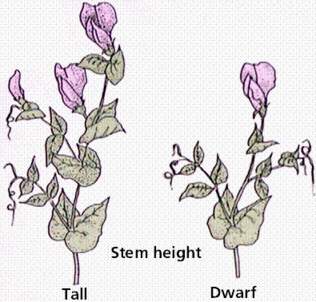
Two heterozygous (Tt) tall pea plants are crossed. Tall (T) is dominant. Short (t) is recessive. Which is the likelihood of each phenotype?

a)

50% tall and 50% short

b)

75% tall and 25% short

c)

100% short

81.

Which of the following would complete this Punnett Square?

a)

aa

b)

AA

c)

Aa

82.

Select TWO answers. Which are the missing parts?

a)

BB

b)

bb

c)

Bb

83.

Which of the following must be the father's genotype?

a)

RR

b)

Rr

c)

rr

84.
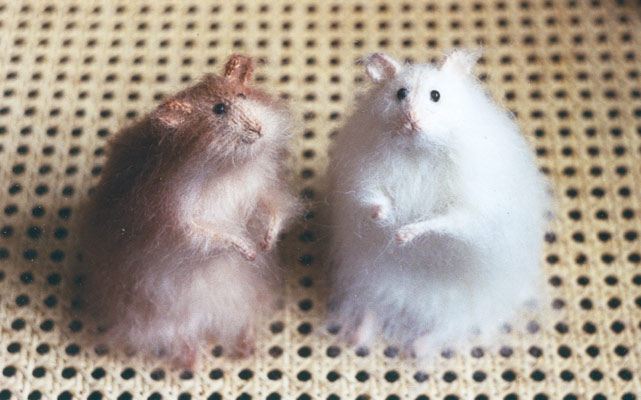
A homozygous dominant brown mouse is crossed with a heterozygous brown mouse (tan is the recessive color). 
a)
100 % tan
b)
100 % brown 
c)
50 % brown and 50% tan 
d)
75 % brown and 25 % tan 
85.

If a heterozygous parent and a homozygous recessive parent mate, what percentage of their offspring will be dominant?

a)

25%

b)

50%

c)

75%

d)

100%

86.
Two brown eyed parents (Bb) have a baby. What is the chance the baby is blue eyed?
a)
0 %
b)
25%
c)
50%
d)
75%
87.
Aa, DD, bB, yy are all examples of
a)
genotypes
b)
phenotypes
88.
AA and Aa always show up as
a)
dominant
b)
recessive
89.
Which of the following genotypes is heterozygous?
a)
Bb
b)
BB
c)
bb
d)
B
90.
Which of the following genotypes is homozygous dominant?
a)
A
b)
Aa
c)
AA
d)
aa
91.
Which of the characteristics is a lion least likely to pass on to its offspring?
a)
fur color
b)
length of tail
c)
scars on leg
d)
body size
92.
In a heterozygous genotype, the ___________ allele takes over in the phenotype.
a)
recessive
b)
dominant
c)
lower case letter
d)
both 
93.
What you see, or the physical appearance.
a)
Genotype
b)
Phenotype
c)
Homozygous
d)
Heterozygous
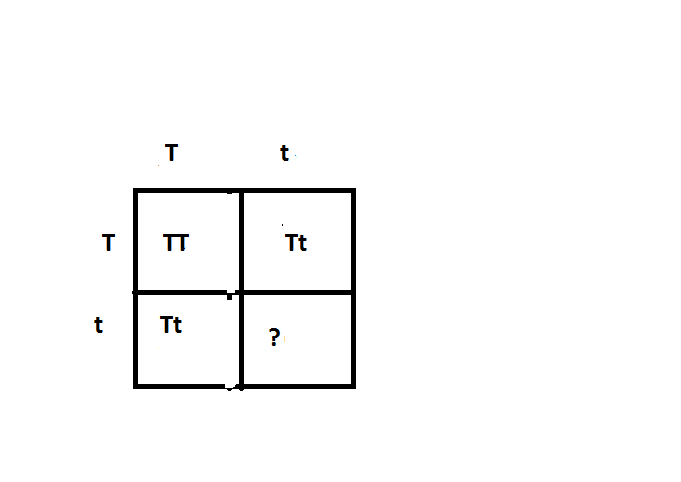
94.
T - tall and t = short
In the punnett square below, what belongs in the missing square
a)
tt
b)
Tt
c)
Bb
d)
TT
95.
B = brown eyes
b = blue eyes
What is true about these two brothers that have brown eyes?
One has genotype BB the other Bb.
a)
they have same phenotype and genotype
b)
they have different genotypes and phenotypes
c)
they have same phenotype but different genotypes
d)
they have same genotype but different phenotypes
96.
aa always shows up as
a)
dominant
b)
recessive
97.
Which of the following is a phenotype?
a)
Aa
b)
red hair
c)
heterozygous
d)
DNA
98.
What allele combination should go in the missing box?
a)
AA
b)
Aa
c)
aa
d)
none of these
99.

What belongs in Box 2?

a)

y

b)

Y

c)

YY

d)

yy

100.

What belongs in Box 4?

a)

Y

b)

YY

c)

Yy

d)

yy

101.

What belongs in Box 8?

a)

Y

b)

YY

c)

Yy

d)

yy

102.

What belongs in box 1?

a)

F

b)

f

c)

FF

d)

Ff

103.

What belongs in box 4?

a)

F

b)

FF

c)

Ff

d)

ff

104.

What belongs in box 5?

a)

F

b)

FF

c)

Ff

d)

ff

105.

What belongs in box 8?

a)

F

b)

FF

c)

Ff

d)

ff

106.
What chance does the offspring have of showing a dominant trait?
a)
100%
b)
75%
c)
50%
d)
0%
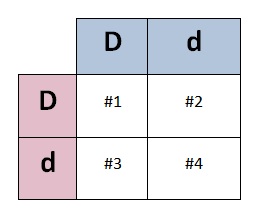
107.
What is the allele combination for square 1?
a)
Dd
b)
DD
c)
dd
d)
D
108.
A red flower (Rr) is crossed with a white flower (rr). What is the genotype?
a)
0 RR; 0 Rr: 4 rr
b)
2 RR; 0 Rr: 2 rr
c)
4 RR; 0 Rr: 0 rr
d)
0 RR; 2 Rr: 2 rr
109.
Two heterozygous red flower (white flowers are recessive) are crossed. What is the phenotype?
a)
75% red and 25% white
b)
25% red and 75% white
c)
100 White 
d)
50% red 50% red 
110.

B=Brown fur

b=tan fur

What percent of the offspring would be tan when you cross BbxBb?

a)

75%

b)

25%

c)

50%

d)

100%

111.

What are the genotype ratios when you cross BbxBb?

a)

4BB:0Bb:0bb

b)

2BB:2Bb:0bb

c)

1BB:2Bb:1bb

d)

0BB:2Bb:2bb

112.
A green pea plant (GG) is being crossed with a green pea plant (Gg). What is the phenotype?
a)
100 % rainbow 
b)
50% yellow and 50% green 
c)
100% green
d)
100% yellow 
113.

A tall plant (TT) is crossed with a short plant (tt). What is the genotype?

a)

2 TT: 2 Tt: 0 tt

b)

1 TT: 2 Tt: 1 tt

c)

2 TT: 1 Tt: 1 tt

d)

0 TT: 4 Tt: 0 tt

114.

If B=Hair, b=bald... what is the percent chance of the offspring being bald?

a)

100%

b)

75%

c)

50%

d)

25%

115.
Black fur is dominant (B) over white fur (b).  Find the probability of heterozygous offspring using the following genotype of these parents.
Bb + bb
a)
0%
b)
25%
c)
50%
d)
100%
116.
What would be the results of a genetic cross between the following parents?  TT + Tt
a)
Tt, tt, tt, tt
b)
TT, TT, TT, Tt
c)
Tt, Tt, Tt, TT
d)
TT, TT, Tt, Tt
117.

You create a punnett square to determine the probability of hair color being passed to offspring. Brown hair is dominant. Blond hair is recessive. Both parents have brown hair. Both parents are heterozygous. What is the probability that the offspring will have blond hair?

a)

100%

b)

75%

c)

50%

d)

25%

118.

Brown eyes are dominant over blue eyes. What is the probability that the offspring will have brown eyes in this cross?

a)

25%

b)

50%

c)

75%

d)

100%

119.
In some animals, brown eyes (B) are dominant over blue eyes (b). Which of these genotypes will complete the Punnett Square to the right?
a)
B
b)
bb
c)
Bb
d)
BB
120.

Which of these Punnett squares represents a cross between a homozygous dominant parent and a heterozygous parent?

a)
b)
c)
d)