
 Worksheets
Test #1 (semester 2)
Total questions: 116
Worksheet time: 2hrs 19mins
Name
Class
Date
1.
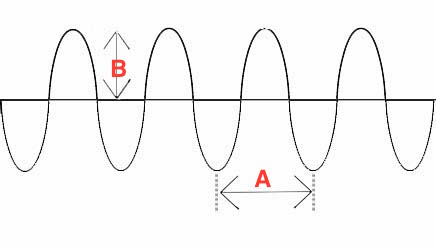
What property of the wave is represented by the letter "B"?
a)
amplitude
b)
crest
c)
trough
d)
wavelength
2.
The highest point on a wave is:
a)
the crest
b)
the trough
c)
the top
d)
the coast
3.
The lowest point on a wave is the:
a)
Amplitude
b)
Crest
c)
Trough
d)
Wavelength
4.
The number of wavelengths that pass a point each per second is:
a)
frequency
b)
period
c)
longitudinal
d)
transverse wave
5.

Which vocabulary term is used to identify the distance between points C & G?
a)
Amplitude
b)
Crest
c)
Frequency
d)
Wavelength
6.
When the frequency of a wave increases, what happens to the wavelength?
a)
The wavelength is not directly affected by the frequency of a wave.
b)
The wavelength increases.
c)
The wavelength decreases.
d)
More specific information is needed to form a conclusion about the wavelength.
7.
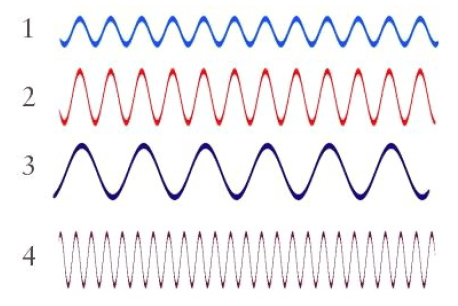
Which wave in the diagram has the greatest frequency?
a)
1
b)
2
c)
3
d)
4
8.
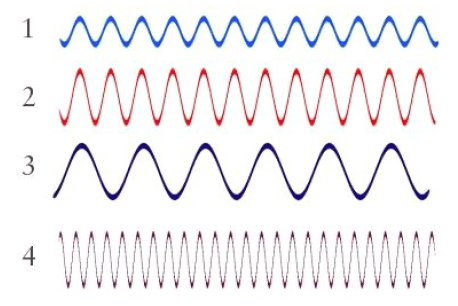
Which wave in the diagram has the greatest wavelength?
a)
1
b)
2
c)
3
d)
4
9.

What kind of wave is pictured below?
a)
compressional wave
b)
transverse wave
c)
sound wave
d)
mechanical wave
10.
All waves carry
a)
energy
b)
light
c)
matter
d)
particles
11.
Constructive interference will cause the wave to
a)
Increase its displacement
b)
Decrease its displacement
c)
Make its displacement stay the same
12.
A standing wave appears to be staying in one place.
a)
True
b)
False
13.
Destructive interference is
a)
When the two waves affect each other in a negative way
b)
The two waves add together and produce a single wave of greater amplitude
c)
Are in phase
14.

In a standing wave, destructive interference creates points of zero amplitude called nodes. Which letters represent this.
a)
A,E,F
b)
B,D,F
c)
B,C,D
d)
A,C,F
15.

In a standing wave, constructive interference creates larger amplitudes. The points of maximum amplitude are antinodes. The letters for these are?
a)
B,C,D
b)
A,E,F
c)
A,C,F
d)
B,D,E
16.

"I can lead with pride, I can make us strong, I'd be satisfied if I played along..."
a)
Aladdin
b)
Moana
c)
Brave
d)
Mulan
17.
"it's funny how some distance makes everything seem small..."
a)
The Lion King
b)
Tangled
c)
Peter Pan
d)
Frozen
18.

"tranquil as a forest, but on fire within..."
a)
Princess and the Frog
b)
Moana
c)
Pocahontas
d)
Mulan
19.

How many nodes are in the picture?
a)
5
b)
4
c)
8
d)
3
20.
How many antinodes are in the picture?
a)
5
b)
4
c)
8
d)
3
21.
What type of wave is this?
a)
Longitudinal Wave
b)
Standing Wave
c)
Bubble Wave
d)
This is not a wave.
22.
Wave particles are parallel to the wave direction in ________waves.
a)
Transverse
b)
Longitudinal
23.
Wave particles are perpendicular to the wave direction in ________waves.
a)
Transverse
b)
Longitudinal
24.

If two overlapping waves are in-phase, the resultant wave will have ______ compared to the two waves.
a)
Greater amplitude
b)
Greater frequency
c)
Greater wavelength
d)
Greater wave speed
25.
When two waves combine to form a new wave with a larger amplitude, it is called
a)
Diffraction
b)
Destructive Interference
c)
Resonance
d)
Constructive Interference
26.
When two waves combine to form a new wave with a smaller amplitude, it is called
a)
Refraction
b)
Constructive Interference
c)
Resonance
d)
Destructive Interference
27.

Look at the diagram. At which positions will the overlapping waves have the most destructive interference?
a)
Positions #2 & #6
b)
Positions #3 & #4
c)
Positions #5 & #8
d)
Positions #3 & #5
28.
Look at the diagram. At which positions will the overlapping waves have the most constructive interference?
a)
Positions #1 & #2
b)
Positions #2 & #3
c)
Positions #4 & #5
d)
Positions #6 & #7
29.
what is interference
a)
occurs when two or more waves overlap and combine
b)
occurs when two or more waves combine and neutralize each other
c)
when one waves travels alone
30.
_____________ are Waves that form a stationary pattern because they are traveling in opposite directions
a)
Transverse
b)
Construcive
c)
Destructive
d)
Standing
31.

What phenomenon does this image demonstrate?
a)
Constructive interference
b)
Destructive interference
c)
Increasing frequency
d)
Increasing period
32.

What phenomenon does this image demonstrate?
a)
Constructive interference
b)
Destructive interference
c)
Increasing frequency
d)
Increasing period
33.
1. A wave has frequency of 5 Hz and a speed of 25 m/s. What is the wavelength of the wave?
a)
25 m
b)
125 m
c)
5 m
d)
25 m/s
34.
A wave has wavelength of 10 m and a speed of 340 m/s. What is the frequency of the wave?
a)
34 m/s
b)
3400 Hz
c)
3.4 Hz
d)
34 Hz
35.
The movement of thermal energy from a warmer object to a cooler object is called:
a)
heat
b)
temperature
c)
motion
d)
momentum
36.
No more energy can be removed from matter at:
a)
its freezing point
b)
0°C
c)
absolute zero
d)
273 K
37.
Heat transfer occurs:
a)
in many directions
b)
both from warm objects to colder ones and from cold objects to warmer ones
c)
only from warm objects to colder ones
d)
only from cold objects to warmer ones
38.
A measure of the average kinetic energy of the individual particles in an object is called:
a)
thermal energy
b)
conduction
c)
convection
d)
temperature
39.
When you touch something that feels cold,
a)
heat from your hand moves into the cold substance.
b)
coldness moves from the cold substance into your hand.
c)
it melts.
d)
it freezes.
40.
Why does a diver wear a wet suit?
a)
To keep in thermal energy.
b)
To keep from getting cuts.
c)
To keep from sinking.
d)
To keep out cold.
41.
What does absolute zero mean?
a)
A failed quiz.
b)
The lowest temperature possible.
c)
The hottest temperature possible.
d)
A race.
42.
The temperature of a substance increases as___.
a)
the substance expands
b)
the average kinetic energy of its particles increases
c)
the substance's volume increases
d)
the substance's mass increases
43.
Energy is measured in units called.....
a)
pounds
b)
meters
c)
horsepower
d)
joules
44.
heat is energy
a)
false
b)
true
45.
You're holding hands with your best friend. Your friend's hands are REALLY warm and yours are really cold. After a few minutes, this has changed. How might you explain what happened?
a)
The cold energy from your hand transferred to your friend's hand through conduction.
b)
The heat energy from your friend's hand transferred to your hand through conduction.
c)
The cold energy from your hand transferred to your friend's hand through convection.
d)
The heat energy from your friend's hand transferred to your hand through convection.
46.
LT3: If two objects have different temperatures, heat will flow from the warmer object to the cooler one UNTIL ____________
a)
one reaches a temperature of zero
b)
they both have an equal temperature
c)
one runs out of energy
47.
Thermal energy ALWAYS moves from _____ to _____.
a)
solid to liquid
b)
ice to water
c)
hot to cold
d)
solid to gas
48.
When a popsicle melts, the particles _____.
a)
gain thermal energy and speed up
b)
there are no particles in popsicles
c)
lose thermal energy and slow down
d)
stay the same
49.
Warming hand over a radiator.
a)
Conduction
b)
Convection
c)
Radiation
50.
Eggs cooking in a frying pan.
a)
Conduction
b)
Convection
c)
Radiation
51.
Snowman melting in the sun.
a)
Conduction
b)
Convection
c)
Radiation
52.
Water boiling in a kettle.
a)
Conduction
b)
Convection
c)
Radiation
53.
Warmth from the fireplace circulating through the house.
a)
Conduction
b)
Convection
c)
Radiation
54.
Tongue freezing to a metal pole.
a)
Conduction
b)
Convection
c)
Radiation
55.
Newt boiling in a hot caldron.
a)
Conduction
b)
Convection
c)
Radiation
56.
Ice melting on a hotplate.
a)
Conduction
b)
Convection
c)
Radiation
57.
Burning your hand on a hot pan
a)
Conduction
b)
Convection
c)
Radiation
58.
Laying out in the sun.
a)
Conduction
b)
Convection
c)
Radiation
59.
Which is NOT an insulator.
a)
Wool
b)
Plastic
c)
Copper
d)
Glass
60.
A conductor allows energy to easily pass by.
a)
True
b)
False
61.
A conductor allows energy to easily pass by.
a)
True
b)
False
62.
A insulator does not let energy flow through easily
a)
True
b)
False
63.
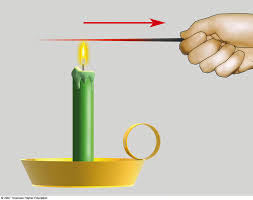
The candle will slowly heat the metal and transfer the heat directly to the mans hand.
a)
conduction
b)
convection
c)
radiation
64.
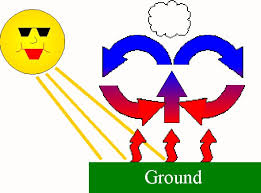
Warm air rises and the cool air sinks.
a)
conduction
b)
convection
c)
radiation
65.
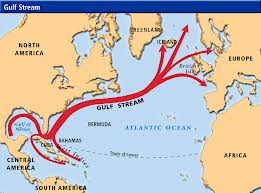
The Gulf Stream is a current that brings warm ocean water from the south to the north.
a)
conduction
b)
convection
c)
radiation
66.

A group of friends gather around a fire to stay warm.
a)
conduction
b)
convection
c)
radiation
67.

Why do bridges have gaps so that the bridge will not buckle?
a)
thermal insulation
b)
thermal expansion
c)
thermal energy
d)
thermal kinetics
68.
If an object has particles that are moving very slowly, the object's temperature is probably ______.
a)
hot
b)
small
c)
cold
d)
big
69.
If an object has particles that are moving very quickly, the object 's temperature is probably _____.
a)
cold
b)
slow
c)
big
d)
hot
70.
Water boils at...
a)
373º C
b)
32º C
c)
100º C
d)
200º C
71.
The most common temperature scale used in the United States - where water freezes at 32 degrees and boils at 212 degrees is called the __________________________ scale.
a)
Celsius
b)
Pound
c)
Kelvin
d)
Fahrenheit
72.
Mittens help keep your hands warm in winter because:
a)
They are conductors of heat.
b)
They are fuzzy.
c)
They are conductors of electrical energy.
d)
They are insulators.
73.
The temperature at which an object's energy is minimal is called ____________.
a)
absolute zero
b)
minimum temperature
c)
zero
74.
The energy transferred between the particles of two objects because of the temperature difference between the two objects is called ________________.
a)
heat
b)
insulator
c)
conductor
75.
Absolute zero is...
a)
0º C
b)
0º F
c)
0º K
d)
0º O
76.
In which state of matter are molecules moving the slowest?
a)
solid
b)
liquid
c)
gas
d)
all of the above
77.
When the temperature of matter decreases the particles ...
a)
speed up and move farther apart
b)
speed up and move closer together
c)
slow down and move farther apart
d)
slow down and move closer together
78.
Temperature is the same thing as heat.
a)
TRUE
b)
FALSE
79.
High or low of a sound is called
a)
pitch
b)
patch
c)
pihment
d)
scream
80.
_____________________________ is an area of particles that moves outward in all directions from a vibrating object.
a)
frequency
b)
sound wave
c)
pitch
d)
intensity
81.
Sound will travel slowest through which of the following forms of matter?
a)
milk
b)
desk
c)
air
d)
door
82.
Why is sound able to travel faster through a solid than a gas?
a)
Gas molecules are packed tightly.
b)
Sound does not travel faster through a solid than a gas.
c)
Solid molecules are packed tightly.
d)
Gas molecules move slowly.
83.
A note is played on a guitar. Next, a lower note is played on the guitar. Which of these statements describes the lower note?
a)
Both notes vibrated at the same speed.
b)
The second note vibrated slower.
c)
The second note vibrates at a higher frequency.
d)
The second note vibrated faster.
84.
What happens to the sound an object makes when the speed of vibrations decreases (slow down)?
a)
its volume will increase
b)
its pitch rises
c)
its pitch becomes lower
d)
its volume decreases
85.

Sound is a form of?
a)
energy
b)
pitch
c)
volume
86.
A longer string makes a _______ pitch than a short string.
a)
louder
b)
softer
c)
higher
d)
lower
87.

Why is the school library covered with carpet?
a)
So everyone can make a lot of noise
b)
to help absorb sounds to keep it quiet
c)
because it looks good
d)
to help absorb sounds so it can stay noisy
88.

True or False: You cannot see sound waves.
a)
True
b)
False
89.

Sound waves ________________ move through all kinds of matter
a)
cannot
b)
can
90.

What would happen if you tighten the strings on a guitar?
a)
it would make a low pitch sound
b)
it would make a high pitch sound
c)
it produces a slow vibrations
d)
it produces low frequency
91.
What is pitch?
a)
the back and forth movement of matter
b)
how loud a sound is
c)
how high or low a sound is
d)
the number of vibrations per second
92.
Which is the approximate range of human hearing?
a)
5-5,000 Hz
b)
500-20,000 Hz
c)
20-20,000 Hz
d)
20-5,000 Hz
93.
Which is too low for humans to hear?
a)
ultrasound
b)
infrasound
c)
22000 hertz sound
d)
21000 hertz sound
94.
These are repeating disturbances or movement that transfer energy through matter or space.
a)
waves
b)
wavelength
c)
amplitude
d)
interference
95.
This is the matter that waves travel through
a)
crest
b)
trough
c)
medium
d)
frequency
96.
These are the more dense regions of a compressional wave.
a)
crests
b)
troughs
c)
compressions
d)
rarefactions
97.
These are the less dense regions of a compressional wave.
a)
crests
b)
troughs
c)
compressions
d)
rarefactions
98.
This occurs when a wave strikes an object and bounces off of it.
a)
reflection
b)
refraction
c)
diffraction
d)
rarefaction
99.
This is the bending of a wave caused by a change in its speed as it moves from one medium to another.
a)
reflection
b)
refraction
c)
diffraction
d)
rarefaction
100.
This is when 2 or more waves overlap and combine to form a new wave. There is constructive and destructive.
a)
incidence
b)
interference
c)
refraction
d)
reflection
101.
Sound is an example of which type of wave?
a)
Transverse
b)
Longitudinal
c)
Both
d)
Neither
102.
Light is an example of which type of wave?
a)
Transverse
b)
Longitudinal
c)
Both
d)
Neither
103.
Which wave can travel in both a medium and a vacuum?
a)
Transverse
b)
Longitudinal
c)
Both
d)
Neither
104.
Which wave can only travel using a medium?
a)
Transverse
b)
Longitudinal
c)
Both
d)
Neither
105.
A reflected sound wave is an...
a)
speed of sound
b)
resonance
c)
loudness
d)
echo
106.
A sound with a frequency greater than 20,000 Hz is:
a)
Supersonic
b)
Infrasonic
c)
Ultrasonic
d)
Megasonic
107.
The only way a wave can change speed is if it:
a)
Travels through a different medium
b)
Has a changing amplitude
c)
Has a changing frequency
d)
Has a changing wavelength
108.
The Tacoma Bridge collapse is an example of:
a)
Resonance
b)
The Doppler Effect
c)
Refraction
d)
Reflection
109.
If a crystal glass has a natural frequency of 520 Hz, in order to make it resonate you must cause a forced vibration of:
a)
Less than 520 Hz
b)
More than 520 Hz
c)
Exactly 520 Hz
d)
Exactly 520 dB
110.
Noise-canceling technology relies on the physics principle of:
a)
Constructive interference
b)
Destructive interference
c)
Resonance
d)
Refraction
111.
When a violin string responds to another violin string, we call that...
a)
acoustics
b)
reverberations
c)
resonance
d)
harmonics
112.
Multiple echoes of a sound is called...
a)
reverberations
b)
resonance
c)
acoustics
d)
harmonics
113.
The branch of physics that studies sound is called________.
a)
thermodynamics
b)
kinetics
c)
acoustics
d)
sound engineer
114.
Which would have the longest period?
Pendulum A: A 200-g mass attached to a 1.0-m length string
Pendulum B: A 400-g mass attached to a 0.5-m length string
Pendulum A: A 200-g mass attached to a 1.0-m length string
Pendulum B: A 400-g mass attached to a 0.5-m length string
a)
A
b)
B
c)
Same
115.
What variable affects the period of the pendulum?
a)
Amplitude
b)
Mass
c)
String length
d)
All variables (amplitude, mass, and string length)
116.

A longitudinal wave is also called a…
a)
compression wave
b)
transition wave
c)
traditional wave
d)
light wave
100 %

