
 Worksheets
Quizizz Week #29
Total questions: 25
Worksheet time: 50mins
When exposed to ultraviolet (UV) light, human skin cells produce the protein melanin. This protein helps protect skin cells from damage caused by UV light. This is an example of
a gene that cannot be passed on to offspring
natural selection producing a new species
sexual reproduction that will produce variation
environmental factors affecting gene expression
Mutations can be beneficial to a species because they
can lead to some members of a species having favorable traits in a changing environment
allow organisms to mate with other species
will lead to the loss of traits that are helpful in a specific environment
cause the reproductive rate of a species to decrease
Scientists examined 39 tree species from warm and cold areas of Earth, and found that the trees were able to regulate their leaf temperatures, keeping them about 21°C. This meant that the leaves were able to be cooler than their environment in warm areas, but warmer than the environment in cool areas. This is an example of
maintaining homeostasis by responding to environmental change
controlling carbon dioxide release during daylight hours
decreasing evaporation for cooling during evening hours
failing to respond to environmental conditions
The photic sneeze reflex, an inherited trait, causes some people to sneeze when they are exposed to bright sunlight. In the photic sneeze reflex, the sunlight acts as
the effect of an environmental factor resulting in a genetic trait
a biotic factor being passed from parent to offspring
an environmental factor stimulating a response
the recombination of genes resulting from sexual reproduction
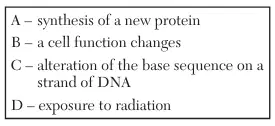
Which is the correct sequence in which these events could occur?
D – B – A – C
B – A – C – D
C – D – B – A
D – C – A – B
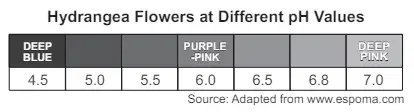
Hydrangea, a commonly used landscaping flower, can have dramatically different colors, depending on the pH of the soil in which it is grown.
Hydrangea, a commonly used landscaping flower, can have dramatically different colors, depending on the pH of the soil in which it is grown.
traits can be expressed differently if the environment changes
flower color is controlled only by genetic information
abiotic factors do not have an effect on flower production
pH is the only factor that affects flower growth
Tourists travel to the Adirondacks in the fall to see the changing colors in the leaves of the trees. The leaves turn from green to many shades of red, yellow, and orange, as the chlorophyll slowly breaks down.
A decrease in green chlorophyll in the chloroplasts will directly result in
an increase in the glucose and oxygen produced
a decrease in the glucose and oxygen produced
an increase in the glucose and a decrease in the carbon dioxide produced
a decrease in the glucose and an increase in the carbon dioxide produced
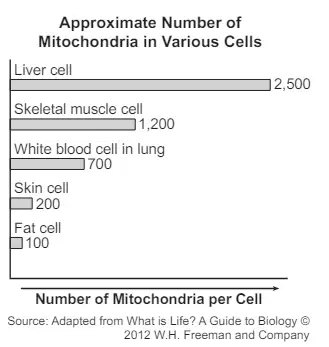
The graph below provides information about the number of mitochondria in various types of cells.
Which type of cells most likely require the greatest input of oxygen?
white blood cells
skin cells
fat cells
liver cells
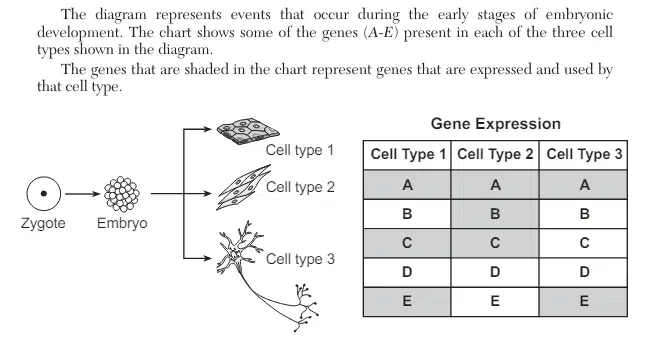
Different cell types can arise from genetically identical embryonic cells because
different cells in the embryo contain completely different genes
fertilization results in new gene combinations, which result in the different cell types
mutations in embryonic cells result in new genes, resulting in the different cell types
different cells have the same genes, but the same genes aren’t expressed in all cells
A substance that is essential to the functioning of all cells is most likely coded for by gene
A
B
C
D
The gel electrophoresis patterns for two species can be compared to reveal similarities and differences in
body structures
gametes produced
base sequences
nutrients required
The differing rates of migration of DNA fragments in a gel electrophoresis procedure is mainly due to
the volume of the DNA sample used
the size of the DNA fragments produced
the number of DNA fragments in the gel
the size of the wells of the gel
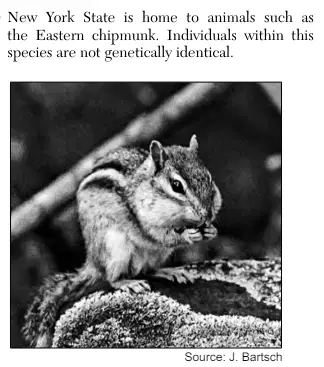
This variability is primarily the result of
asexual reproduction and mutation
mitosis and selective breeding
meiosis and recombination
sexual reproduction and cloning
Myasthenia gravis is an autoimmune disease characterized by weakness of the skeletal muscles. It occurs when normal communication between nerve and muscle cells is interrupted. The weakness is likely due to
the lack of ATP in the muscle caused by a decrease of available carbon dioxide
the brain failing to send the proper hormone signal to vacuoles within muscle cells
the failure of receptor molecules on the muscle to receive the chemical produced by nerve cells
the ribosomes in the muscle cells failing to produce enough sugar for muscle contraction

Using the Universal Genetic Code Chart, how many messenger RNA codons code for the amino acid leucine (LEU)?
6
2
8
4

What is the DNA sequence that codes for the messenger RNA codons shown in Species X?
AAT GGG ATT TCT
ACC AAT GGG TCT
AAT GGG TTA TCT
TCT AAT GGG TCT
State one biological benefit of the breathing rate increasing while exercising.
Allows oxygen to leave the body faster
Allows carbon dioxide to leave the body faster
Allows Carbon Dioxide to enter the body faster
There is no benefit
DNA is formed using four kinds of base subunits. In a double-stranded segment of DNA, the percentage of the base C is 18%. What is the approximate percentage of base T?
18%
36%
32%
64%
One result of the ability of organisms to detect and appropriately respond to stimuli is
an organ malfunction
an allergic reaction
dynamic equilibrium
gene manipulation

The species that has the band containing the smallest DNA fragment for the sample that was sequenced is
A
B
C
D
The fragments of DNA separated into these bands because of their
pH and color
electrical charge and size
charge and radioactivity
color and size
PCR, Polymerase Chain Reaction, is a method for carrying out DNA replication. In order to perform this technique, a scientist would need
a DNA template, ATP, and 20 different amino acid subunits
enzymes, several types of simple sugars, and starch molecules
a DNA template, enzymes, and subunits with A, G, T, and C bases
enzymes, specific receptor molecules, and several hormones
Killer whales are an endangered species. The decline in the whales’ numbers has been linked to poor nutrition, resulting in the inability to maintain a pregnancy. This risk to developing whale embryos is most likely a result of
an environmental factor not associated with the embryo’s genes
an infection caused by the embryo’s exposure to a pathogen
faults in the genes of the embryo itself
toxins that are introduced into the mother from the embryo’s blood
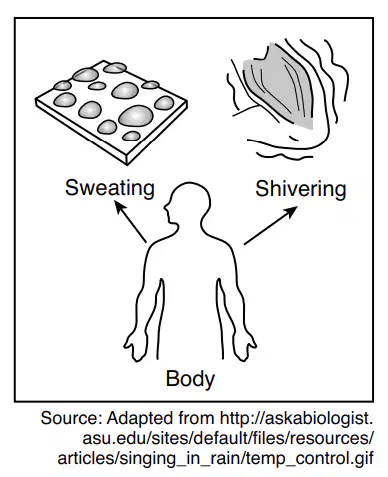
Changes in external temperatures often result in a person either sweating or shivering, as represented in the diagram below.
These responses are one way
to counteract feedback mechanisms that would otherwise be beneficial
to make the body release insulin to control blood circulation
the body is able to maintain dynamic equilibrium
skin and muscle cells are able to disrupt homeostasis
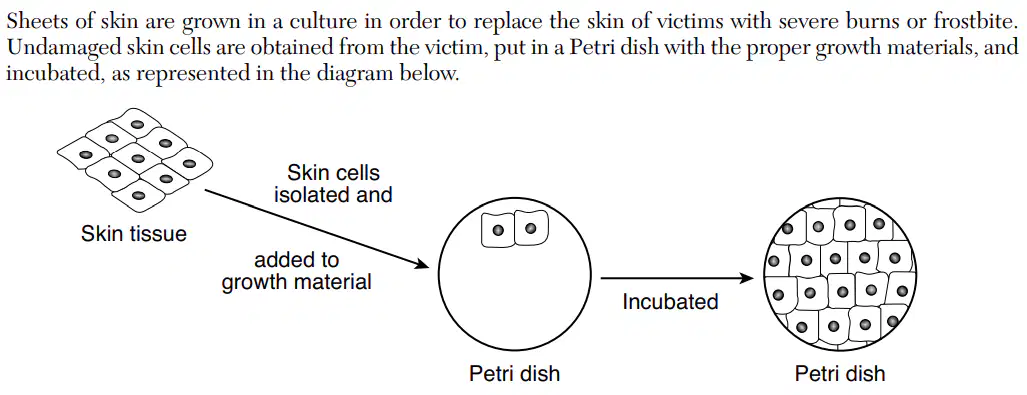
These new skin cells form as a result of
meiotic cell division
mitotic cell division
sexual reproduction
gene recombination

