
 Worksheets
Quizizz Week #30
Total questions: 25
Worksheet time: 50mins
Which graph below best represents the relationship between the relative number of nuclei, genes, and chromosomes in a typical human cell?


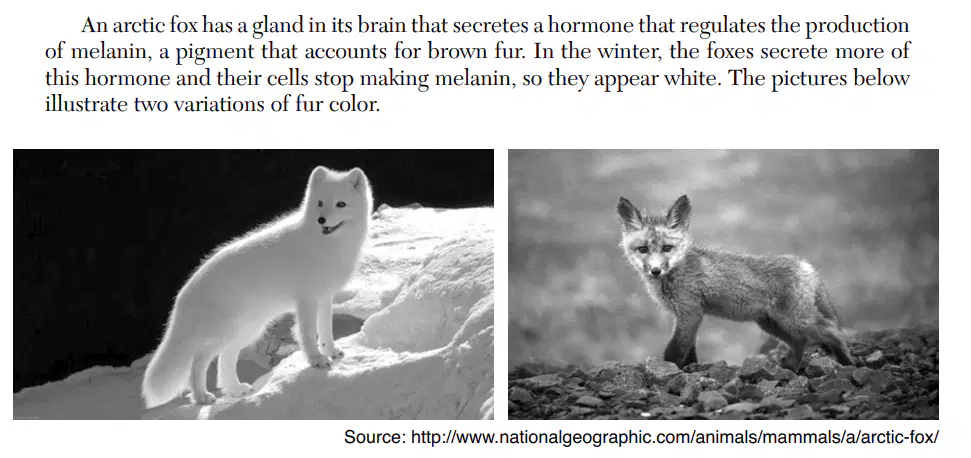
Which statement is the most likely explanation for the color differences in the fur of the fox at different times of the year?
Mutations can be caused by changes in the number of biotic factors in the environment.
The expression of genes can be modified by the external environment.
Hereditary information is contained in genes located in the chromosomes of each cell.
Random changes in DNA can occur to change the expression of a gene.
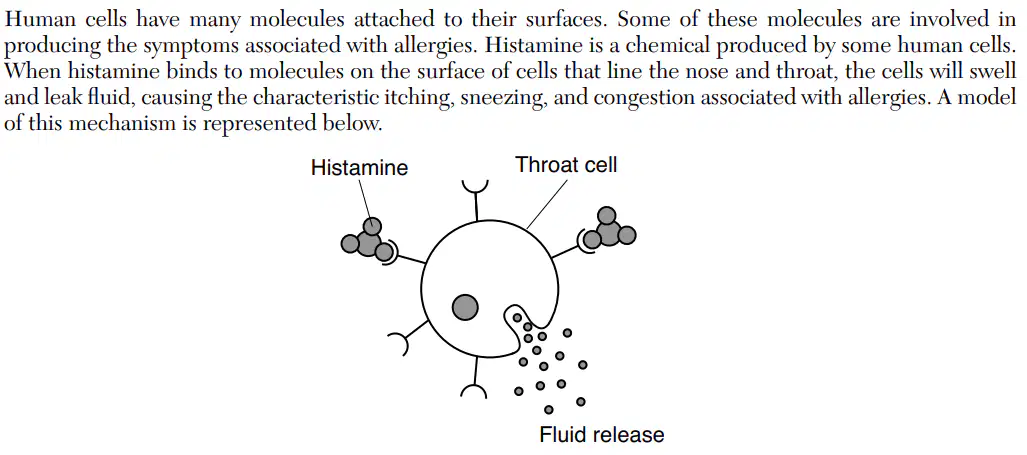
Antihistamines are medications taken to block this reaction. Which of the antihistamine molecules represented below would be the most effective?


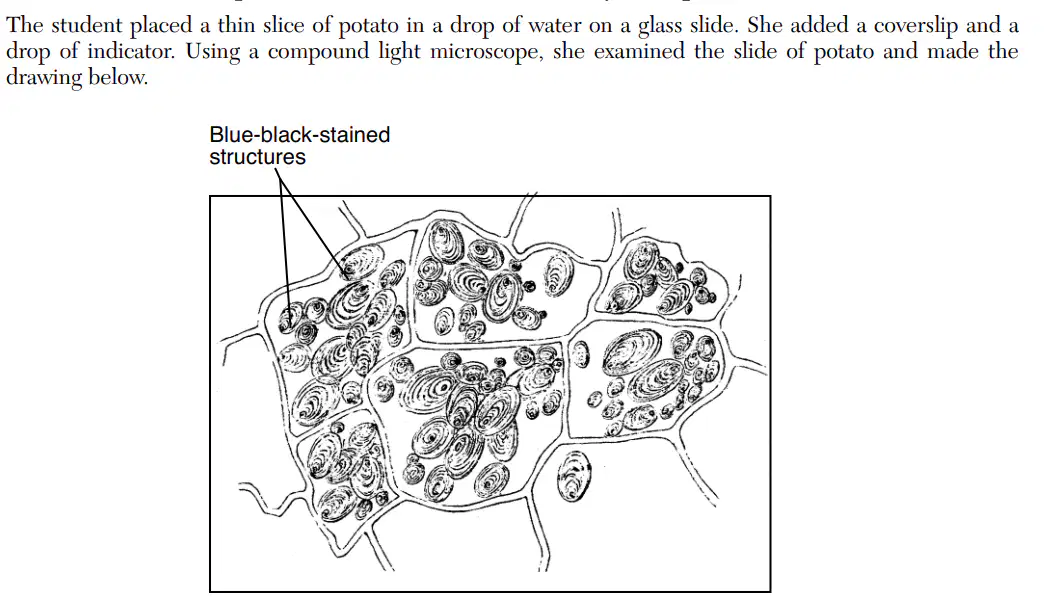
The blue-black-stained structures labeled in her drawing are most likely
chloroplasts
ribosomes
starch grains
sugar molecules
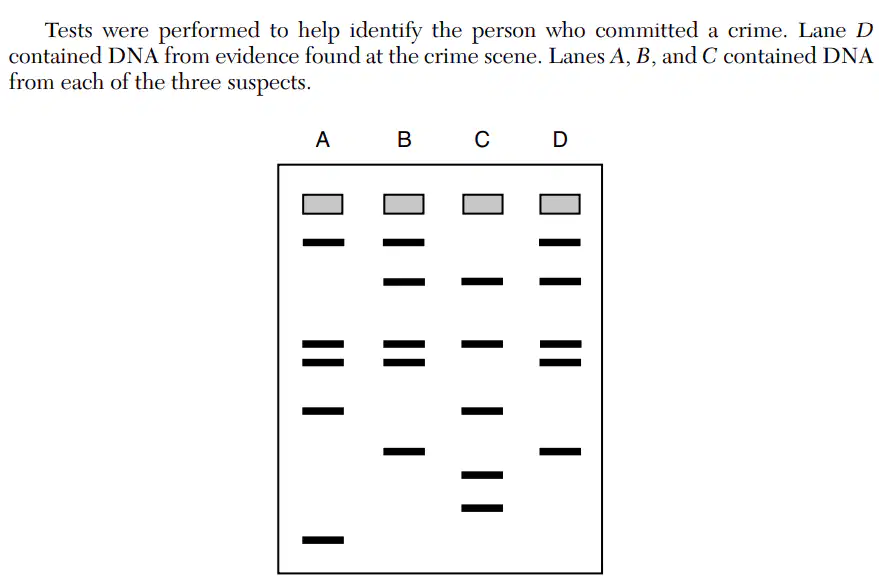
Identify the technique used to obtain the results seen in the diagram.
Cloning
Karyotyping
Chromatography
Gel Electrophoresis
Based on the data, which lane most likely contained DNA from the suspect who committed the crime? Support your answer.
A- because they had the most DNA in common
B- because they had the most Bands in common
C- because they are identical
They do not have the suspect
Identify the lane that contained the band with the shortest fragments of DNA. Support your answer.
A- because the band is the farthest from the wells
B- the band is the farthest from the wells
C- the band is the closest to the wells
D- the band is the closest to the wells
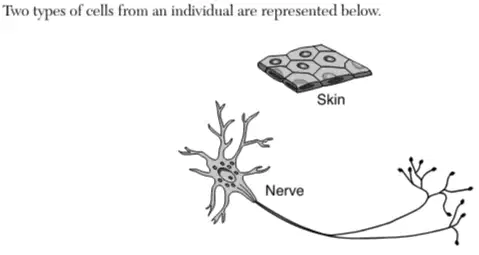
Which model, that shows only some of the chromosomes in each of the two types of cells, best explains why these cells are so different?


Identify the unknown individual as A, B, C, or D by comparing the gel electrophoresis results. Support your answer.
A- the bands are identical
B- The bands are most similiar
C- The bands do not line up
D- The bands are identical
Before conducting an electrophoresis procedure, enzymes are added to DNA in order to
convert the DNA into gel
remove smaller DNA fragments from the samples
cut the DNA into fragments
synthesize larger fragments of DNA
Down syndrome occurs when an individual has an extra copy of chromosome 21. This additional genetic material alters development and results in Down syndrome. This genetic abnormality is
a mutation
a substitution
fertilization
differentiation
A weightlifter has spent years building his muscular strength. His newborn daughter has normal strength for a baby. Which statement best explains this situation?
A daughter inherits most of her traits from her mother. The daughter’s muscles are unlikely to resemble her father’s.
The weightlifter’s wife probably did not lift weights. Both parents must have this trait before the baby can inherit it.
Babies do not have strong muscles. The daughter’s muscles will be unusually strong in a few more months.
The weightlifter’s highly developed muscles resulted from exercise. A characteristic such as this will not be inherited.
One of the largest and oldest organisms on Earth is located in Fishlake National Forest in Utah. Pando is an 80,000-year-old grove of aspen trees that covers 100 acres. Although it looks like a forest, DNA analysis of several of the “trees” has confirmed it is really just one huge organism. Therefore, the “trees” must have been reproduced
sexually and have genetic variability
asexually and have genetic variability
sexually and are genetically identical
asexually and are genetically identical
Genetically identical yarrow plants were grown at different altitudes. Even though their genetic makeup was identical, the plants grew to different heights. One likely explanation for the different heights of the plants at each altitude is that
gene expression was influenced by the environment
genes mutated when the plants were grown at higher elevations
chromosomes increased in number with elevation change
the sequence of DNA bases was altered at different altitudes
The diagram below represents the human female reproductive system.
Label the following Parts
Oviduct
Uterus
Ovary
The diagram below represents the human female reproductive system.
Label the following Functions
Fertilization occurs here
Meiosis Occurs Here
Mitosis & Differentiation
Identical twins were separated at birth and raised by two different families. Years later, one twin was a physically fi t member of the cross-country team, and the other twin was overweight with slightly higher-than-normal blood pressure. The differences in these twins could be explained by the fact that
the genes in the two individuals are completely different
in twins, each individual inherits genes from only one parent
the DNA bases in twins combine differently
the environment can influence the expression of genes
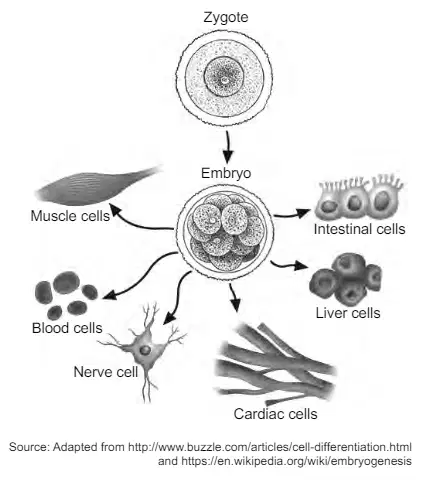
Following fertilization, a zygote divides and soon becomes a multicelled embryo with many different cell types, as represented below.
Which statement best explains this development?
Specialization occurs, resulting in the formation of a great variety of cell types.
Genes are inserted into the zygote to allow for the formation of different cell types.
The expression of genes responsible for the different cell types is controlled by the placenta.
The genetic information in the zygote is divided to produce a complete set for each cell type.

Sailors in the past may have heard the greeting from a passing ship, “Avast ye scurvy dogs.” This greeting would be a reference to a disease known as scurvy, which is due to inadequate intake of vitamin C. Which row in the chart below correctly identifies the cause of this disease and a possible treatment for it?
1
2
3
4
In a DNA molecule, if 38% of the molecular bases are C (cytosine), what percent of the bases are T (thymine)?
12
38
24
62

explain why it would be harmful for a human mother’s blood to pass across the placenta and into the fetus

state how an artifi cial placenta would be of benefi t to the lungs of premature infants

explain why the lambs’ blood must be filtered as it circulates through the artificial placenta

state one reason why premature lambs were likely used as model organisms in this study rather than mice

In order to compare the composition of the pigments on the suspect’s jeans to the pigments of the plants at the home, the forensic scientist should use
restriction enzymes
paper chromatography
genetic engineering
receptor molecules

