
 Worksheets
AP Unit 6 Test Review
Total questions: 70
Worksheet time: 1hrs 6mins
Prokaryotic organisms typically have ________ chromosomes, while eukaryotic organisms typically have multiple ________ chromosomes.
linear, circular
circular, linear

Small, circular, double-stranded DNA molecules that carry accessory genes separate from those of a bacterial chromosome are called what?
Plasmids
Nucleoids
Ribosomes
RNA's
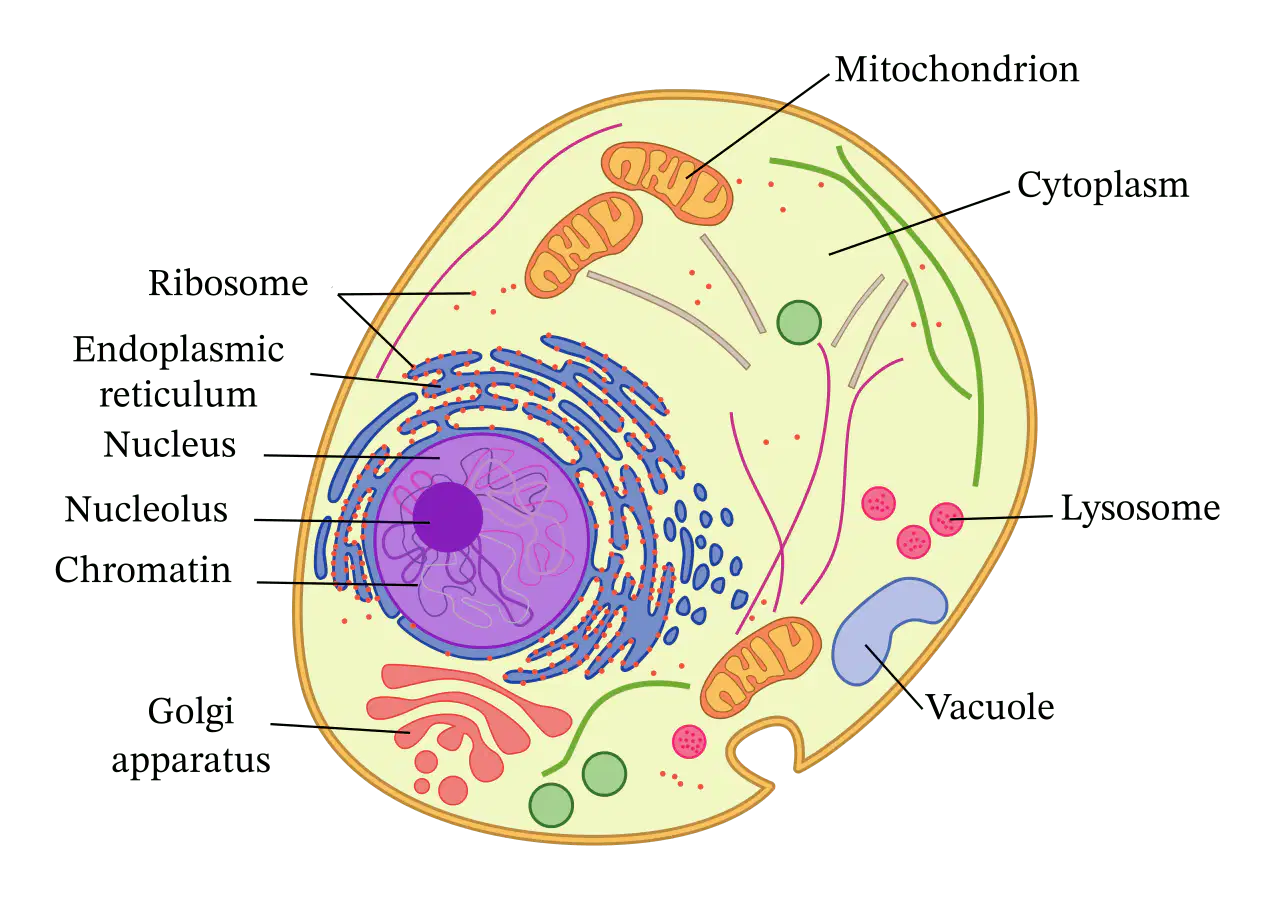
Eukaryotic DNA is located in
the nucleus
the cytoplasm
anywhere in the cell
Which is NOT correct according to base pair rules?
Adenine - Thymine
Cytosine - Guanine
Adenine - Guanine
Adenine - Uracil
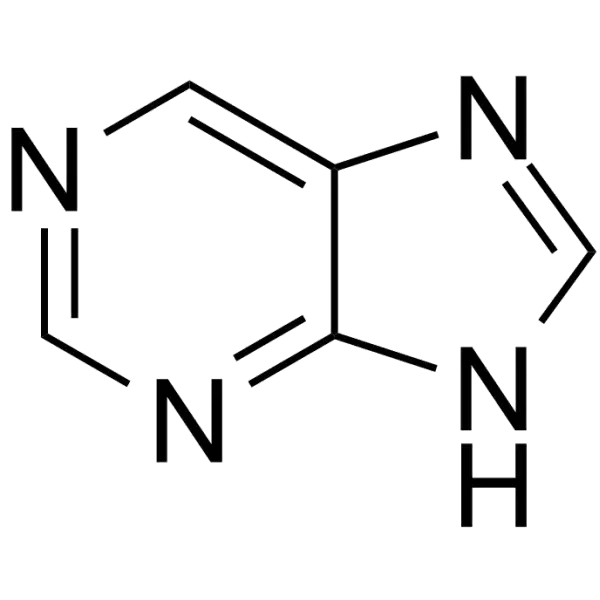
Adenine and Guanine have a double ring structure, so they are called what?
Pyrimidines
Purines
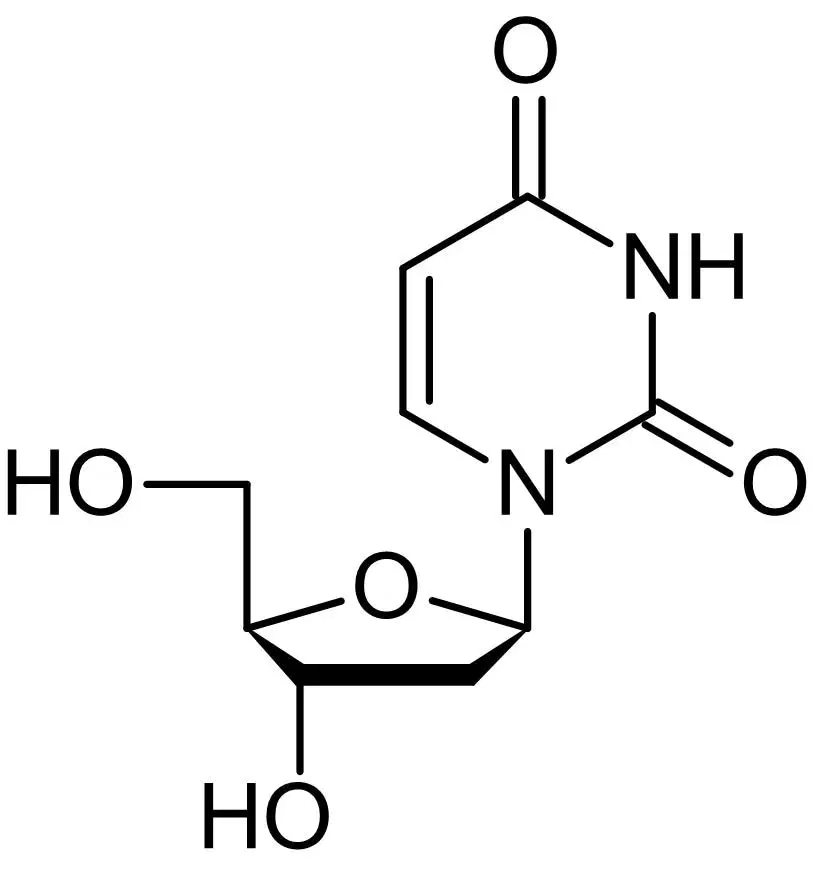
Cytosine, Thymine and Uracil have a single ring structure, so they are called what?
Pyrimidines
Purines
Puritans
Cytosine makes up 38% of the nucleotides in a sample of DNA from an organism.
Approximately what percentage of the nucleotides in this sample will be thymine?
12%
24%
31%
38%
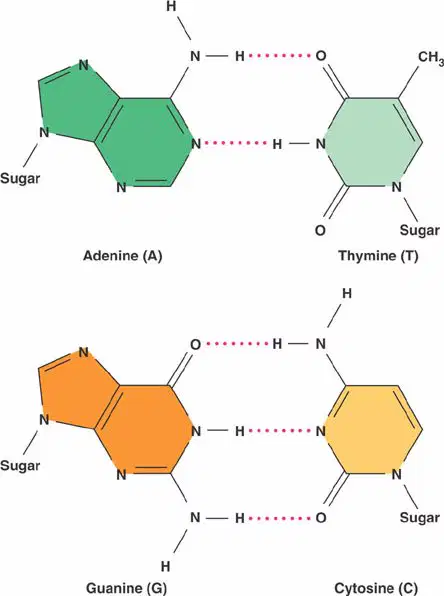
What type of bond holds nitrogen bases to one another forming the "rungs" of the DNA ladder?
Covalent
Hydrogen
Ionic
Phosphodiester

What famous scientists built the first double helix model of DNA?
Hershey & Chase
Avery & MacLeod
Watson & Crick
Wilkins & Franklin
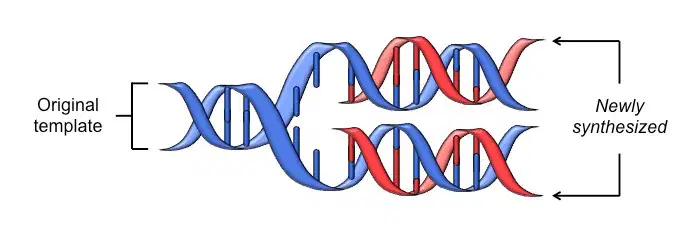
Which of the following best describes the DNA molecules produced by replication
One DNA molecule with two original strands, and a second DNA molecule with two new strands
Two DNA molecules, each containing one original strand and one new strand
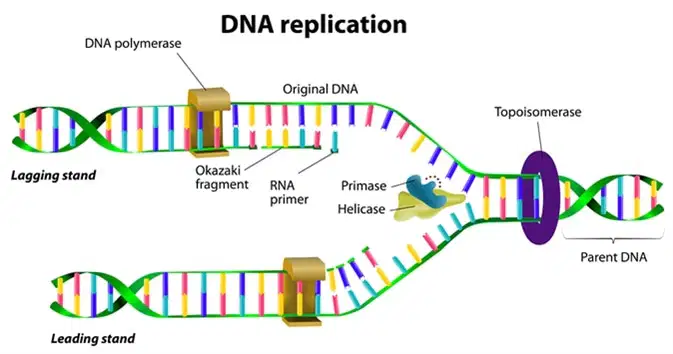
In DNA Replication, which enzyme helps synthesize new strands of DNA?
Helicase
Topoisomerase
DNA Polymerase III
DNA Polymerase I
In DNA Replication, which enzyme unwinds the DNA strands by breaking hydrogen bonds between base pairs?
Helicase
Topoisomerase
DNA Polymerase
Ligase
In DNA Replication, which enzyme joins the fragments on the lagging strand?
Helicase
Topoisomerase
DNA Polymerase
Ligase
In DNA Replication, relaxes supercoiling in front of the replication fork?
Helicase
Topoisomerase
DNA Polymerase
Ligase
DNA is synthesized in the _________________ direction
3' to 5'
5' to 3'
In DNA Replication, which strand is formed continuously?
Leading
Lagging
In DNA Replication, which strand is formed in Okazaki fragments?
Leading
Lagging
Which of the following demonstrates base pairing rules to 5' - CAGGT - 3'?
3' - TGGAC - 5'
3' - GTCCA - 5'
5' - GTCCA - 3'
5' - CAGGT - 3'

RNA --> DNA --> protein
DNA --> RNA --> protein
protein--> DNA--> RNA
RNA --> protein--> DNA
During _____________ Genetic instructions in DNA are rewritten into a messenger RNA molecule.
RNA processing
Transcription
Translation

Which of the following is the enzyme used in the process of transcription?
DNA polymerase
RNA polymerase
Primase
Helicase
Explain the process of transcription INITIATION in eukaryotes.
Replication of DNA
Degradation of RNA by ribonucleases
Assembly of transcription factors and RNA polymerase at the promoter region of the gene
Translation of mRNA into protein
What is the name of the promoter region of a gene in Eukaryotes?
TATA box
Promoter
Initiation Section
RNA Polymerase
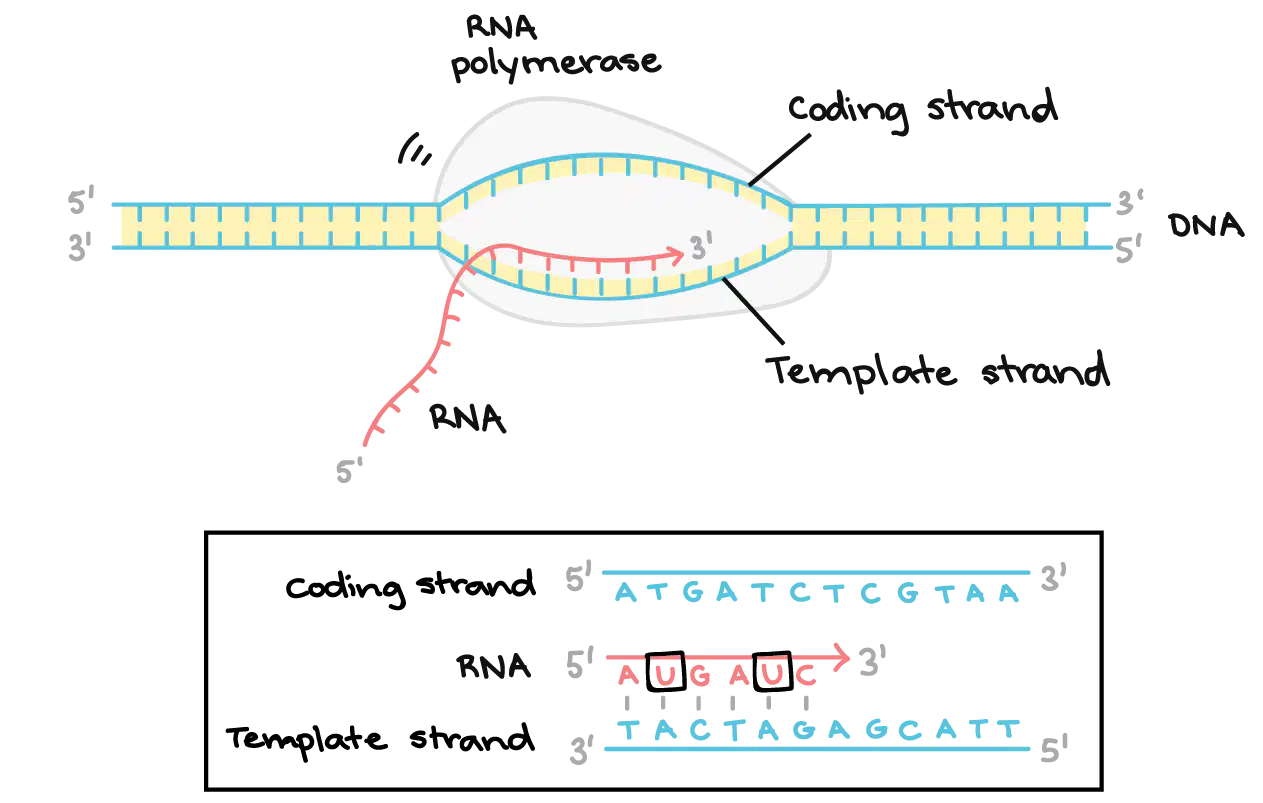
Which of the following is the mRNA START codon?
UGA
AUG
GUA
GAU
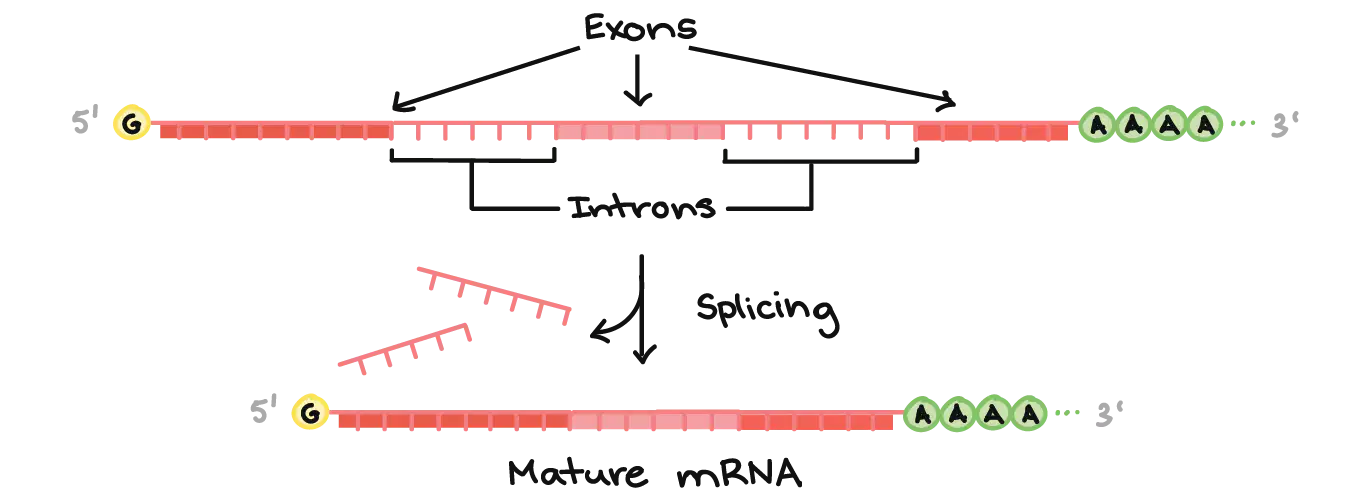
What is RNA splicing and why is it important in gene expression?
RNA splicing is the process of removing introns and joining exons in a pre-mRNA molecule, and it is important in gene expression because it allows for the production of multiple proteins from a single gene.
RNA splicing is the process of adding introns to a pre-mRNA molecule, and it is important in gene expression because it reduces the diversity of proteins produced.
During _____________ tRNA brings amino acids to a ribosome where they are assembled into a polypeptide.
Transcription
Translation
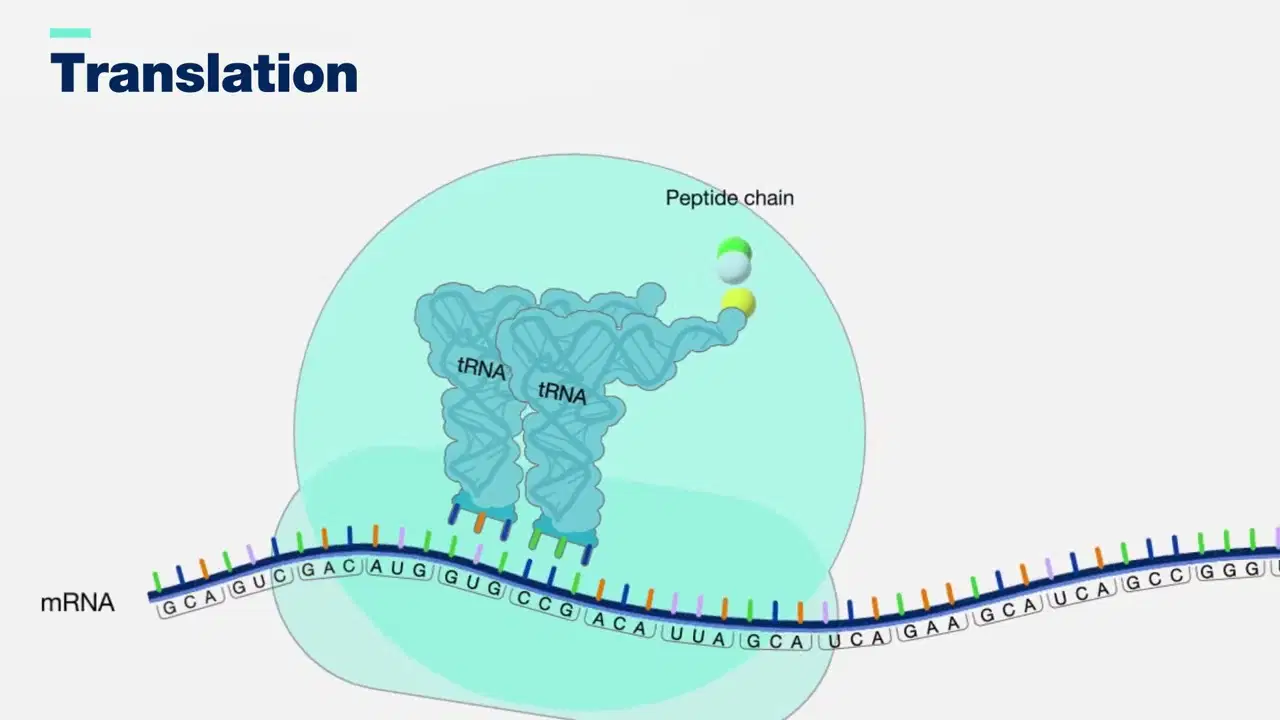
Ribosomes
Mitochondria
Nucleus
Endoplasmic Reticulum

Which of the following describes the conversion factor between nucleic acids and proteins?
3 amino acids = 1 nucleotide
3 amino acids = 3 nucleotides
3 nucleotides = 1 amino acid
3 nucleotides = 3 amino acids
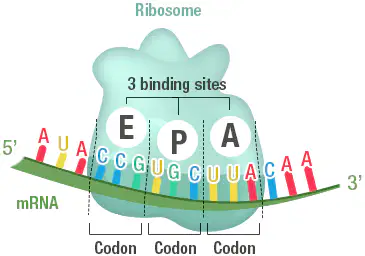
What is the function of the P site in the large subunit?
To phosphorylate the polypeptide
To hold the growing polypeptide
To assist with the tertiary structure of the polypeptide
To perform the base pairing for the polypeptide
Which of the following shows the steps of translation in proper order from start to finish?
Initiation, Elongation, Termination
Elongation, Initiation, Termination
Termination, Initiation, Elongation
Which of the following events in translation occurs during INITIATION in eukaryotes?
the small subunit of the ribosome recognizing and attaching to the 5'cap of mRNA
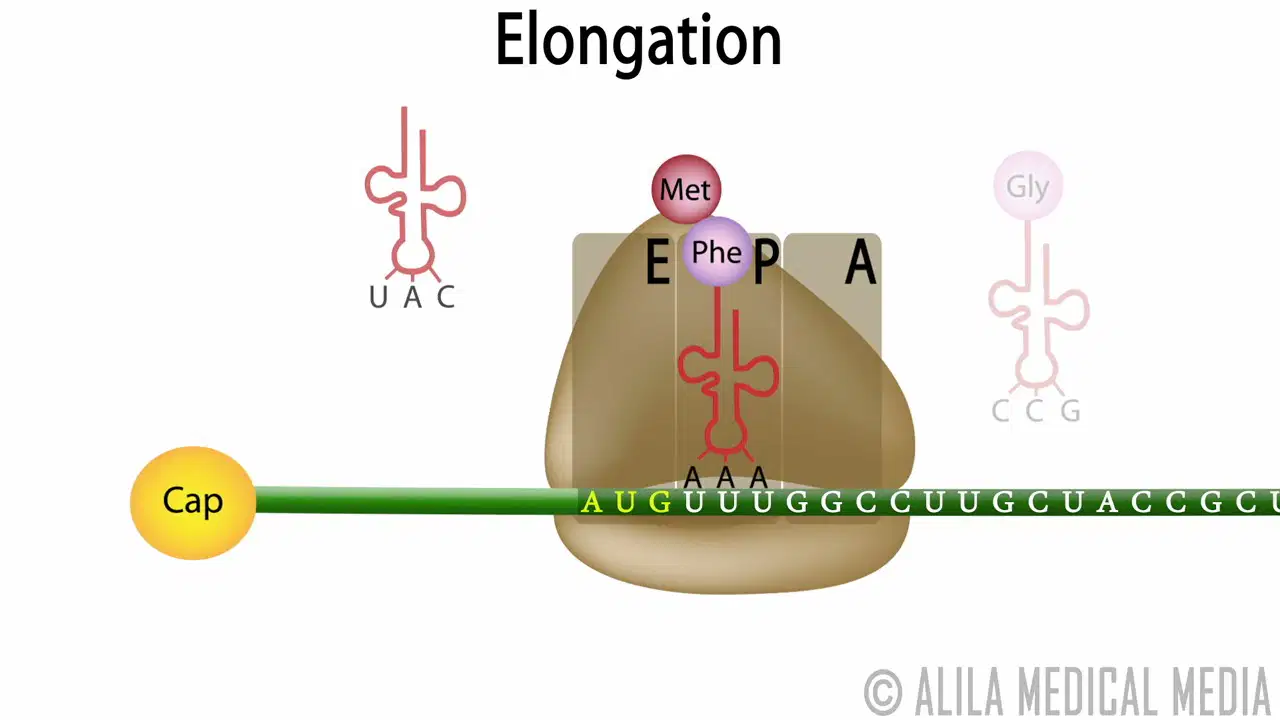
Which of the following describes the process of elongation?
Codon recognition, peptide bond formation, translocation
Anticodon recognition, ionic bond formation, translocation
Codon recognition, ionic bond formation, translocation
Anticodon recognition, peptide bond formation, translocation
What signals the end of translation (termination)?
Start Codon
AUG
Stop Codon
Polyadenylation Signal Sequence
A gene from an organism can theoretically be expressed by any other organism (common ancestry)
True or False: All of your body cells contain the same genes.
True
False
Muscle cells differ from nerve cells mainly because they
express different genes.
contain different genes.
use different genetic codes.
have unique ribosomes
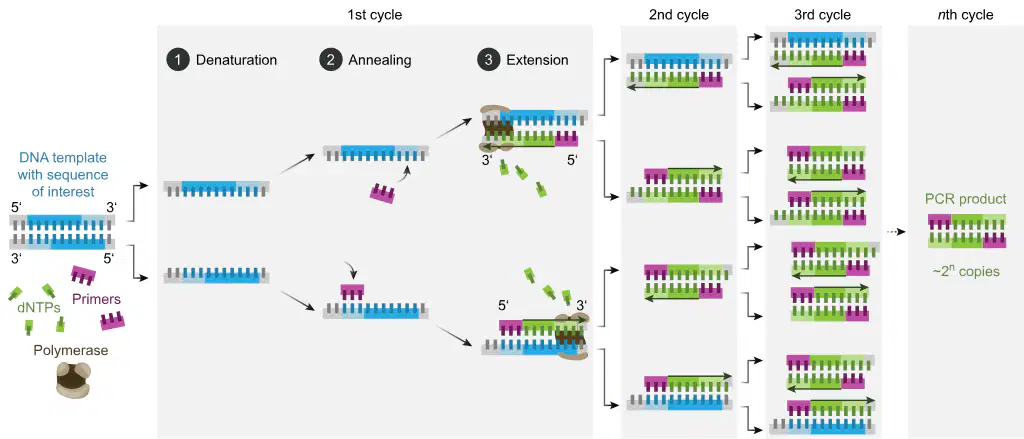
Which of the following biotechnologies allow for amplification (replication) of a DNA fragment?
DNA sequencing
Gel electrophoresis
Polymerase chain reaction
Bacterial transformation

Which of the following biotechnologies is responsible for determining the order of nucleotides in a DNA molecule?
DNA sequencing
Gel electrophoresis
Polymerase Chain Reaction
Bacterial transformation

In gel electrophoresis, the largest DNA fragment will appear
closest to the starting wells
farthest from the starting wells
three quarters away from the starting wells
it depends on how many fragments there are

Which kitten is most likely the offspring of this cat?
1
2
3
4

Operons are found in the cells of which of the following types of organisms?
prokaryotes
eukaryotes
animals only
viruses

What is 1 in the diagram?
RNA polymerase
Inducer
Repressor
Operator
What is 2 in the diagram?
RNA polymerase
Inducer
Repressor
Operator
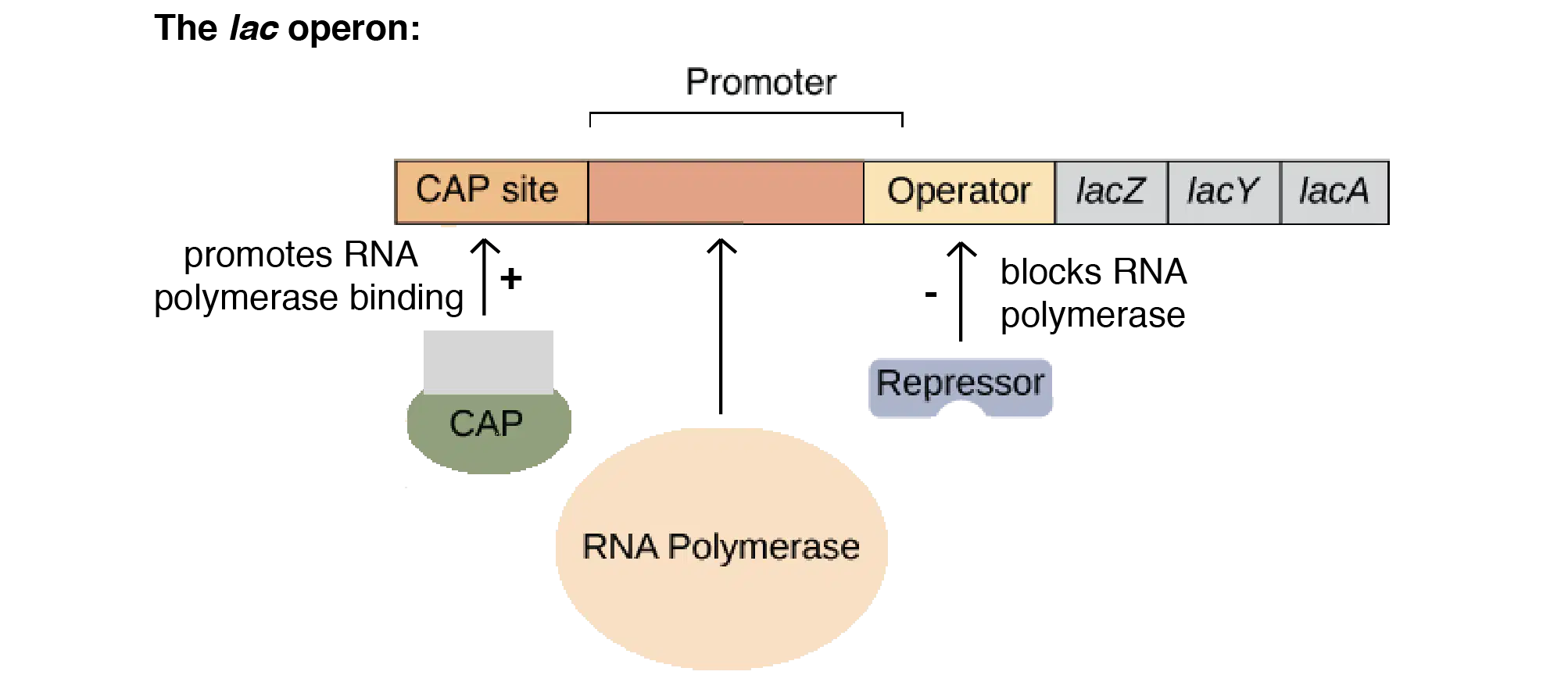
A protein that binds to the operator an operon and blocks the RNA polymerase from transcription.
What is the role of operons in prokaryote gene expression?
Which of the following describes an operon that is inactive but can be activated by a molecule binding to the repressor?
Inducible operon
Repressible operon

The lac operon is an example of an inducible operon. Which of the following describes the process that occurs when lactose is present?
Allolactose binds to the repressor which activates it and the repressor releases from the operator to turn transcription on.
Allolactose binds to the repressor which inactivates it and the repressor releases from the operator to turn transcription on.
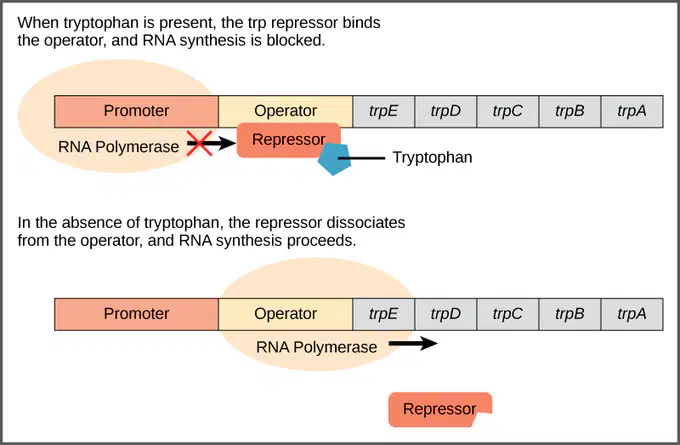
The trp operon is an example of a repressible operon. Which of the following describes the process that occurs when tryptophan is present?
When tryptophan is in high amounts, it binds to the repressor which activates it to bind to the operator. This blocks RNA Polymerase so transcription is turned off.
When tryptophan is in high amounts, it releases from the repressor which inactivates it to prevent binding to the operator. This happens so transcription is turned off.

The "on/off" switch for an operon is called the
Promoter
Operator
Gene
Identify the primary source of genetic variation
crossing over
mutations
random fertilization
independent assortment
ATTTGAGCC- Original
TTTTGAGCC - Mutated
The example above is an example of a
Frameshift Mutation
Point Mutation
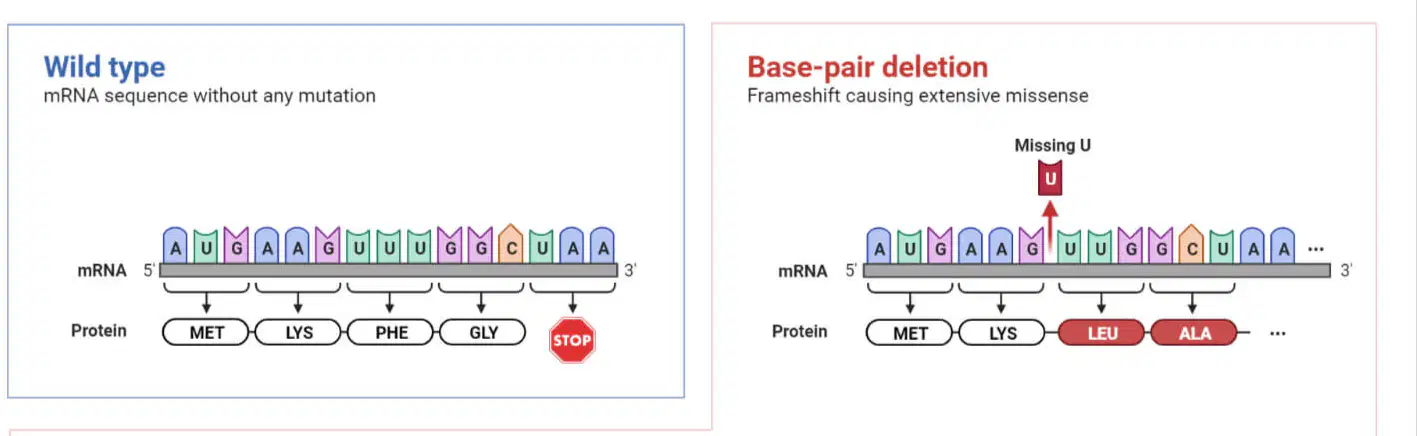
Why are insertion and deletion (frameshift) mutations so harmful?
What is the effect of a nucleotide-pair substitution that results in a nonsense mutation in a gene?

Which of the following terms describes the process of the uptake of recombinant plasmids into bacteria cells?
amplification
insertion
transformation
screening

In a transformation experiment, a sample of E. coli bacteria was mixed with a plasmid containing the gene for resistance to the antibiotic ampicillin (ampr). Plasmid was not added to a second sample. Samples were plated on nutrient agar plates, some of which were supplemented with the antibiotic ampicillin. The results of E. coli growth are summarized above. The shaded area represents extensive growth of bacteria; dots represent individual colonies of bacteria.
Plates that have only ampicillin-resistant bacteria
growing include which of the following?
I only
III only
IV only
I and II

In a transformation experiment, a sample of E. coli bacteria was mixed with a plasmid containing the gene for resistance to the antibiotic ampicillin (ampr). Plasmid was not added to a second sample. Samples were plated on nutrient agar plates, some of which were supplemented with the antibiotic ampicillin. The results of E. coli growth are summarized above. The shaded area represents extensive growth of bacteria; dots represent individual colonies of bacteria.
Which of the following best explains why there is no growth on plate II?
The initial E. coli culture was not ampicillin resistant.
The transformation procedure killed the bacteria.
Nutrient agar inhibits E. coli grow
The bacteria on the plate were transformed.

Part of a chromosome is repeated
Gene Mutation
Point Mutation
Deletion Mutation
Duplication Mutation

Part of a chromosome is reversed.
Inversion Mutation
Deletion Mutation
Translocation
Point Mutation

Failure of homologous chromosomes
to separate during meiosis.
Results in gametes with either one extra or one missing chromosome.
Translocation
Nondisjunction
Replication
Transcription
If a mutation is beneficial to an organism, this mutation is likely to...
increase in the population
decrease in the population
go extinct
have a harmful effect

