Worksheets
DNA & Mitosis Quiz Review
Total questions: 75
Worksheet time: 19hrs 45mins
Division of the cells nucleus
5% of the cells life cycle
Prophase
Interphase
Mitosis
Anaphase


Check the two correct boxes:
Plant Cell - cell plate; Animal Cell - cleavage furrow
Plant Cell - cleavage furrow; Animal Cell - cell plate


Name the previous phase. (The phase that comes before this.)
Prophase
Metaphase
Anaphase
Telophase
The phase wherein sister chromatids align in one place at the center.
Prophase
Metaphase
Anaphase
Telophase

What phase of mitosis is shown in the picture?
Metaphase
Anaphase
Prophase
Telophase

95% of the cells life cycle
Stage where DNA is copied
Interphase
Metaphase
Telophase
Prophase

Nuclear membrane disappears
Chromosomes can now be seen
Centrioles move to opposite sides
Metaphase
Interphase
Telophase
Prophase

Chromosomes line up at the equator of the cell
Spindle fibers extend from the centrioles to the middle of the chromosomes
Prophase
Metaphase
Anaphase
Interphase
Identical copies of chromosomes
Chromosome
Chromatid
Centriole
Centromere
Extend from centriole and pull sister chromatids apart
Spindle Fibers
Replication
Centriole
Interphase

What is the image above:
Replicated Chromosome
Chromotid
Chromosome
Centriole
A chromosome is packaged
DNA
Protein
Carbohydrates
Lipids
The splitting of the cytoplasm and cell membranes is called?
Interphase
Telophase
Centromere
Cytokinesis
During interphase
DNA lines up in the middle of the cell and DNA attaches to spindle fibers
2 new nuclei form
2 new identical cells are created
DNA gets copied
During prophase
DNA lines up in the middle of the cell and DNA attaches to spindle fibers
DNA condenses into chromosomes, centrioles and spindle fibers appear
2 new identical cells are created
DNA gets copied
During metaphase
DNA lines up in the middle of the cell and DNA attaches to spindle fibers
centrioles and spindle fibers appear
2 new identical cells are created
DNA gets copied
During anaphase
DNA lines up in the middle of the cell and DNA attaches to spindle fibers
centrioles and spindle fibers appear
Each DNA gets pull to the opposite sides of the cell
DNA gets copied
During telophase
DNA lines up in the middle of the cell and DNA attaches to spindle fibers
centrioles and spindle fibers appear
Each DNA gets pull to the opposite sides of the cell
2 new nuclei form
During cytokinesis
DNA lines up in the middle of the cell and DNA attaches to spindle fibers
Cell membrane pinches to make 2 new identical daughter cells
Each DNA gets pull to the opposite sides of the cell
2 new nuclei form

Which of these is a reason that the chromosomes in the cell have two chromatids?
Each chromatid contains unique genetic information.
It allows the cell to divide into genetically identical daughter cells.
A chromosome requires two chromatids to initiate protein synthesis.
It allows genetic information to cross over between sister chromatids during mitosis, increasing genetic diversity.

Structure (c) is a ____. Hint: It is one half of the X shape.
chromosome
chromatid
centromere
Where is the genetic material of a eukaryotic cell located?
nucleus
nucleolus
cytoskeleton
chloroplasts
What does DNA stand for
Deoxyribose Nucleic Acid
Don't need anybody
Dioxide nucleus acetate
Dioxyribose Nucleic Acids

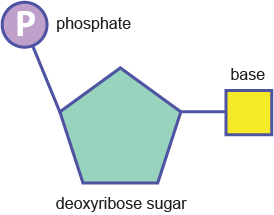
What makes up the SIDES of a DNA ladder?
nitrogen bases
Deoxyribose sugars & phosphates
genes & chromosomes
RNA

What makes up the rungs (center) of a DNA ladder?
sugars & phosphates
nitrogen bases
sugars
genes & chromosomes

What SHAPE is DNA?
single strand
straight ladder
double helix (twisted ladder)
DNA has no shape

In DNA. what base always pairs with A?
A
T
C
G

What is DNA made up of?
nucleotides
cytoplasm
RNA
cells
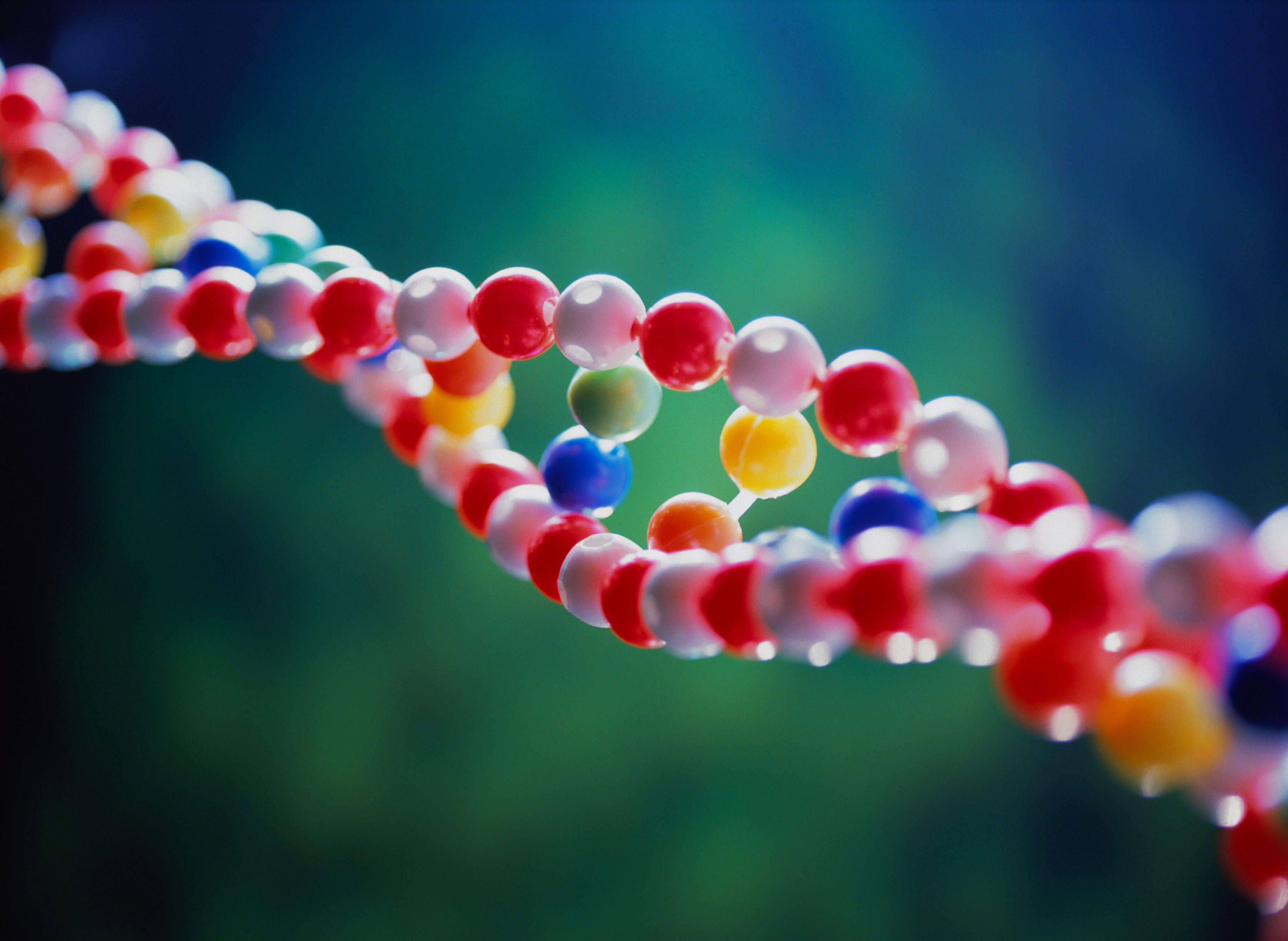
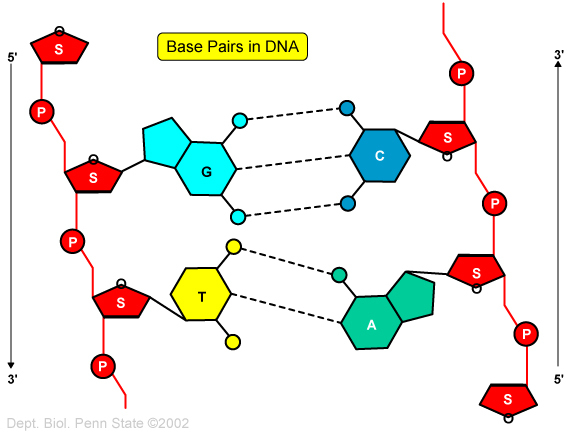

The picture below shows the steps of DNA replication beginning with step one and ending with step three.
Because you are reusing the old, or parent, DNA strand DNA replication is said to be
Semi- Conservative
Semi-discontinuous
Continuous
Fully-Conserveative
Which enzyme is responsible for adding the free nucleotides to the replicating DNA?
DNA Helicase
DNA Ligase
DNA polyermase
RNA Polymerase
Choose the correct complementary nucleotide sequence for the following:
GGG - ACT - TTT
CCC - TGA - AAA
AAA - CAG - GGG
TTT - CAT - GGG
GGG - TGA - CCC
Choose the correct complementary nucleotide sequence for the following:
TTT - GTC - CCC
CCC - TGA - AAA
AAA - CAG - GGG
TTT - CAT - GGG
GGG - TGA - CCC
Choose the correct complementary nucleotide sequence for the following:
AAA - GTA - CCC
CCC - TGA - AAA
AAA - CAG - GGG
TTT - CAT - GGG
GGG - TGA - CCC
Choose the correct complementary nucleotide sequence for the following:
CCC - ACT - GGG
CCC - TGA - AAA
AAA - CAG - GGG
TTT - CAT - GGG
GGG - TGA - CCC
According to the Base pair rule, if a DNA molecule contains 1500 adenines how many thymine's will it contain?
1500
500
0
1000
According to the Base pair rule, if a DNA molecule contains 2 cytosine's how many guanines will it contain?
1500
2
0
1000
According to the Base pair rule, if a DNA molecule is made up of 25% cytosine bases what percentage of the molecule will be Thymine?
0%
22%
25%
50%

Which is the first step?
DNA Helicase unwinds original DNA strand
RNA Primase lays down RNA primer for new nucleotide bases.
DNA polymerase builds new strands by bring in new nucleotide bases.
Ligase knits together fragments on lagging strand
Which is the second step?
DNA Helicase unwinds original DNA strand
RNA Primase lays down RNA primer for new nucleotide bases.
DNA polymerase builds new strands by bring in new nucleotide bases.
Ligase knits together fragments on lagging strand
Which is the third step?
DNA Helicase unwinds original DNA strand
RNA Primase lays down RNA primer for new nucleotide bases.
DNA polymerase builds new strands by bring in new nucleotide bases.
Ligase knits together fragments on lagging strand
Which is the fourth step?
DNA Helicase unwinds original DNA strand
RNA Primase lays down RNA primer for new nucleotide bases.
DNA polymerase builds new strands by bring in new nucleotide bases.
Ligase knits together fragments on lagging strand
The directionality of DNA is said to be ___________, because it is side by side by goes in opposite directions.
Anti-directional
Parallel
Anti-parallel
Anti-uniform
The enzyme that unzips DNA during replication is called:
helicase
zipase
DNA polymerase
ligase
At the end of replication, how many DNA molecules are there?
1
2
12
6


Structure C is
helicase
primase
DNA polymerase III
gyrase

H is the
leading strand
lagging strand
parent strand
none of these