wayground logo

Free Printable Worksheets

NEW

Font size

S
M
L
XL
Worksheets

Astronomy Pre-Test

Total questions: 70

Worksheet time: 35mins

Name
Class
Date
1.
Beginning with a nebulae, which is the next stage in the life cycle of a star?
a)
Supernova
b)
White Dwarf
c)
Protostar
d)
Red Giant
2.
The name of the galaxy that contains the Sun and its components is —
a)
the Zodiac
b)
Perseus
c)
the Milky Way
d)
Andromeda
3.

What would happen if the Earth was not tilted on its axis?

a)

It would be warm all of the time.

b)

It would be the same temperature everywhere.

c)

There would be no seasons

d)

We would not have day and night

4.

What word best describes a full revolution of the Earth around the Sun?

a)

day

b)

year

c)

eclipse

d)

orbit

5.

What is an astronomical unit?

a)

How fast a planet orbits

b)

The distance between the Earth and the sun

c)

200 billion kilometers

d)

The distance between each planet

6.

Which of the following is the smallest type of star?

a)

Red giant

b)

Red super giant

c)

White dwarf

d)

Blue dwarf

7.

By what process does the sun produce energy?

a)

burning fuel

b)

Nuclear Fusion

c)

Chemical repulsion

d)

Nuclear Fission

8.

How long does it take Earth to complete one rotation?

a)

1 day

b)

1 week

c)

1 month

d)

1 year

9.

What two forces affect gravity?

a)

mass and inertia

b)

mass and distance

c)

mass and force

d)

mass and weight

10.
What forces cause a planet to orbit?
a)
gravity and orbit
b)
gravity and inertia
c)
gravity and mass
d)
gravity and weight
11.

If the Earth, the moon, and the sun were in a straight line with the moon in the middle, which of the following would be true?

a)

There would be a solar eclipse

b)

There would be a lunar eclipse

c)

There would be a full moon

d)

There would be an earthquake

12.

Which is the correct order from smallest to largest

a)

Star, planet, solar system, galaxy, universe

b)

Universe, galaxy, solar system, star, planet

c)

Galaxy, star, universe, solar system, planet

d)

Planet, star, solar system, galaxy, universe

13.

Where would you find the super giants on an HR diagram?

a)

Middle

b)

Everywhere

c)

Top Right

d)

Bottom Left

14.

When a high mass (giant) star collapses it creates a ________________

a)

dwarf star

b)

supernova

c)

black hole

d)

shooting star

15.

The only kind of light we can see with our eyes is _________________

a)

microwaves

b)

UV rays

c)

Sound waves

d)

visible light waves

16.

Which type of telescope uses an optical lens to form an image. Typically these telescopes are long and narrow.

a)

Refractor Telescope

b)

Reflector Telescope

17.

Which is the closest galaxy to the Milky Way?

a)

Black Eye Galaxy

b)

Andromeda Galaxy

c)

Sombrero Galaxy

d)

Whirlpool Galaxy

18.

Which of the following is also known as the North Star?

a)

Betelgeuse

b)

Arcturus

c)

Sirius A

d)

Polaris

19.

Which of the following is a theoretical repulsive force that counteracts gravity and causes the universe to expand?

a)

Black Holes

b)

Dark Matter

c)

Dark Energy

d)

Speed of Light

20.

Our galaxy is what shape?

a)

The Milky Way Galaxy is an elliptical galaxy.

b)

The Milky Way Galaxy is a barred spiral galaxy with two arms.

c)

The Milky Way Galaxy is an irregular galaxy

d)

None of these

21.

We measure distances between galaxies in

a)

light years

b)

miles

c)

kilometers

d)

parsecs

22.
How old is the Universe?
a)
4.6 million years 
b)
4.6 billion years 
c)
13.8 million years 
d)
13.8 billion years
23.

How old is the Solar System?

a)

64.6 million years

b)

4.6 billion years

c)

13.8 million years

d)

23.2 billion years

24.
A collection of billions of stars held together by gravity is called a 
a)
star 
b)
galaxy
c)
solar system
d)
planet
25.
Stars are classified by temperature and 
a)
age
b)
size
c)
luminosity 
d)
color 
26.
Currently our Sun is classified as a 
a)
Main Sequence star
b)
White Dwarf star
c)
Super Giant star 
d)
Black Hole 
27.
Most of the universe is occupied by 
a)
black matter
b)
white matter
c)
stars, planets and galaxies
d)
empty space
28.
What is the sun mostly made up of
a)
Helium
b)

Oxygen

c)
Carbon
d)
Hydrogen
29.

Put the stars in order from hottest to coolest.

a)

Blue, White, Yellow, Orange, Red

b)

Red, Orange, Yellow, White, Blue

c)

Red, Orange, Yellow, Blue, White

d)

Red, Yellow, Orange, White, Blue

30.
Stars are formed from big clouds of gas and dust is known as a ______. 
a)
clouds grande
b)
BCOG's
c)
neutron clouds
d)
nebulae
31.

I am the biggest planet in the solar system. All of the other planets could fit inside of me.

a)

Earth

b)

Jupiter

c)

Saturn

d)

Neptune

32.

What is the correct order of the planets in the solar system?

a)

Mercury, Venus, Mars, Jupiter, Earth, Uranus, Saturn, Neptune

b)

Mercury, Venus, Earth, Mars, Jupiter, Saturn, Uranus, Neptune

c)

Mercury, Earth, Venus, Mars, Jupiter, Uranus, Saturn, Neptune

d)

Earth, Mercury, Saturn, Venus, Mars, Jupiter, Uranus, Neptune

33.
What is another way to write 103
a)
10
b)
30
c)
100
d)
1,000
34.

Lightyear is used by scientist to measure what?

a)

Distance

b)

Time

c)

Energy

d)

Volume

35.
 A large cloud of gas and dust in interstellar space; a region in Space where stars are born.
a)
Protostar 
b)
Nebula
c)
Galaxy 
d)
Star
36.
A gigantic explosion in which a massive star collapses and throws its outer layers into space.
a)
Black Hole 
b)
Supernova
c)
Neutron Star 
d)
Nebula 
37.

Gravity is the force objects put on each other because of their ______.

a)

mass

b)

magnetic attraction

c)

acceleration

d)

speed

38.

All planets travel in an _______________ orbit.

a)

circular

b)

round

c)

oval

d)

irregular

39.

The outer planets are also referred to as the _____________

a)

terrestrial planets

b)

The Nebula planets

c)

Gas Giants

d)

Super Planets

40.
Which of the following is true?
a)
The sun is not a star
b)
The sun is bigger than most stars
c)
The sun is made of helium and hydrogen
d)
The sun has a solid surface
41.
What causes seasons?
a)
earth's distance to the sun
b)
earth's tilt and revolution
c)
earth's tilt and rotation
d)
the moon
42.
What is the main function of the ozone layer?
a)
Enables us to have drinking water
b)
Protects Earth from the sun's ultraviolet radiation
c)
Creates heat for the Earth
d)
Enables us to have air to breathe
43.
A vehicle for exploring the surface of an extraterrestrial object.
a)
rover
b)
the International Space Station
c)
Observetory
d)
Space probe
44.
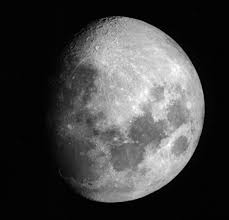
Name the moon phase
a)
waning crescent
b)
waxing crescent
c)
waning gibbous
d)
waxing gibbous
45.
Which moon phase is shown in this diagram?
a)
new moon
b)
first quarter
c)
full moon
d)
last quarter/3rd quarter
46.
A small object that appears as a streak of light as it enters earth's atmosphere.
a)
Asteroid
b)
Comet
c)
Moon
d)
Meteor
47.

Which model of the solar system has the sun in the center with all of the planets orbiting it?

a)

heliocentric

b)

geocentric

48.
His model of the Earth-centered universe was the cornerstone of astronomy for 1,500 years.
a)
Claudius Ptolemy
b)
Nicolaus Copernicus
c)
Charles Messier
d)
Galileo Galilei
49.
What is the name of the day that has the greatest amount of daylight (Northern Hemisphere)?
a)
Summer Solstice
b)
Fall Equinox
c)
Spring Equinox
d)
Winter Solstice
50.
About how long does it take the moon to make one complete cycle around the earth?
a)
65 days
b)
8 days
c)
365 days
d)
28 days
51.

A blue shift of the light from a star indicates that the star

a)

will soon become a giant star

b)

is moving away from Earth

c)

will soon become a main sequence star

d)

is moving closer to Earth

52.

The point directly above the observer's head

a)

rotation

b)

geocentric

c)

apex

d)

zenith

53.
What is the speed of light?
a)
300,000 km per second
b)
300, 000 km per hour
c)
300, 000 meter per second
d)
300, 000 meters per hour
54.
The apparent shift in the position of an object when viewed from different locations is called 
a)
Retrograde motion
b)
Parallax 
c)
Triangulation
d)
Precession
55.
An arcsecond of parallax is know as a parsec and is equal to __________.
a)
3.26 light years
b)
3.26 astronomical units
c)
100 light years
d)
100 astronomical units
56.
The closest star to the sun is the...
a)
Sirius A
b)
Barnard's Star
c)
Luhman16
d)
Proxima Centauri
57.
The blue section of the wave is measuring _________________.
a)
wavelength
b)
crest
c)
trough
d)
amplitude 
58.

As frequency increases on the electromagnetic spectrum, what happens to the wavelength?

a)

It stays the same

b)

It decreases

c)

It increases

d)

It doubles

59.
Select the correct order of waves on the EMS 
a)
Radio, Micro, Infra, Visible, Ultra, X-ray, Gamma
b)
Gamma, X-ray, Ultra, Vis, Infra, Micro, Radio
c)
Vis, Micro, Infra, Ultra, X-ray, Gamma, Radio
d)
Micro, Radio, Vis, Infra, Ultra, X-ray, Gamma
60.
The place where a planet is farthest away from the Sun in its orbit around the Sun is called the
a)
aphelion
b)
perihelion
61.
Which is NOT one of Kepler's laws?
a)
Planets travel in an ellipse
b)
Planets closest to the sun travel faster
c)
The farther a planet is from the sun, the longer it takes to orbit
d)
Planets revolve around the Earth
62.
The kind of rotational spin that causes the sun to appear to rise in the west and set in the east
a)
period of revolution
b)
period of rotation
c)
prograde rotation
d)
retrograde rotation
63.

The tilt of the Earth is said to be -

a)

32.5 degrees

b)

52.3 degrees

c)

23.5 degrees

d)

53.2 degrees

64.
The least dense planet in the solar system is
a)
Jupiter
b)
Saturn
c)
Neptune
d)
Earth
65.

Which ball will require the most force to lift?

a)

The beach ball because it is the largest in size.

b)

The soccer ball because it has the most mass.

c)

The baseball because it has the most material.

d)

The golf ball because it is the smallest in size.

66.

What, in theory, started the expansion of the universe?

a)

Solar eclipse

b)

Gravitational pull

c)

Quick compression

d)

Big bang

67.

What is Kepler's 2nd law?

a)

The planets orbit in an ellipse

b)

The plants move faster when they are closer to the sun and slower when they are further from the sun

c)

The farther a planet is from the sun the slower the orbit

(P2 = a3)

68.

Earth's wobble cause by the gravitational pull from the Sun & Moon. This changes the direction of the Earth's axis and will cause the north star to change over time.

a)

barycenter

b)

precession

c)

nutation

d)

ellipse

69.

What creates gravity?

a)

The motion of the objects.

b)

The mass of the objects.

c)

The energy of the objects.

70.

Calculate the eccentricity of this planet.

a)

5.4

b)

0.67

c)

0.25

d)

0.19