
Font size
 Worksheets
Anatomy: Endocrine System review
Total questions: 57
Worksheet time: 37mins
Endocrine glands secrete _
Hormones
Neurotransmitters
A wide range of chemical substances
What is the main function of the endocrine system?
It creates chemicals, or hormones, that are sent around the body to maintain homeostasis.
It creates electrical messages that are sent around the body to maintain homeostasis.
It maintains the correct level of oxygen in the body to maintain homeostasis.
It releases waste from the body to maintain homeostasis.

Letter J is pointing to
Ovaries
Pineal Gland
Adrenal
Testes

The gland labeled 4 in the diagram is?
the thymus gland
the thyroid gland
the parathyroid glands
the adrenal glands
The process by which an organism’s internal environment is kept stable in spite of changes in the external environment.
Positive Feedback
Negative Feedback
Homeostasis
Targeted Cells

What structure(s) shown in the picture above the kidneys?
Thyroids
Adrenal glands
Testes
Parathyroids

What structure is this?
Pancreas
Thyroid
Parathyroid
Adrenal glands
When you get cut, your skin cells release hormones that signal platelets to come and stop the bleeding. Platelets then release more hormones that signal even more platelets to help stop bleeding. The hormone signals continue until the cut is closed. This is an example of what type of feedback?
Positive Feedback Response
Negative Feedback Loop
Cells that have receptors for a particular hormone.
gland cells
neurons
hormones
target cells
This structure releases what hormones?
insulin and glucagon
calcitonin and estrogen
Parathyroid hormone and antidiuretic hormone
epinephrine and testosterone

What is endocrinology?
Study of organs that receive hormones
Study of organs that secrete (release) hormones
A person who studies organs that receive hormones
A person who studies organs that secrete hormones
Controls long term changes such as growth
limbic system
endocrine system
nervous system
temporal lobe
Which are glands?
Thyroid
Thymus
Throat
Adrenal
If your blood glucose is too high and your body reverses it, this is ______.
positive feedback
negative feedback
neutral feedback
regular feedback
When you eat a burger , your body produces insulin to control blood sugar . What type of feedback is that
Positive feedback
Negative Feedback
None
Both
What is considered the Master Gland of the Body
Brain
Thymus
Pituitary Gland
Thalamus
Match the following hormones to the function it performs.
ACTH
Adrenocorticotropic
Stimulates the adrenal glands
Luteinizing
Hormone
Stimulates the production of sex hormones in people
Calcitonin
Regulates calcium levels in the blood
Oxytocin
Stimulates uterine contractions during labor and bonding after sex
Testosterone
Spermatogenesis and develops male genetalia/features

Which gland is responsible for regulating weight?
1
2
3
none of the above
Cell metabolic rates are controlled by this hormone.
insulin
glucagon
thyroxine
melatonin
Which one here is a hormone to control blood glucose levels?
Glycogen
Glycerol
Glucagon
Glucose

The diagram shows the mechanisms that control the concentration of glucose in the blood.
Which row identifies the glands and hormones labelled W, X, Y and Z?
adrenal gland, adrenaline, adrenal gland, glucagon
adrenal gland, adrenaline, pancreas, insulin
pancreas, glucagon, adrenal gland, insulin
pancreas, insulin, pancreas, glucagon
What hormone triggers sleepiness within humans?
thyroxine
insulin
glycogon
melatonin
A disease in which the body's ability to produce or respond to the hormone insulin is impaired, causing an increase in blood sugar
diabetes
ulcers
asthma
bronchitis
The outer region of the adrenal gland is called the ________.
medulla
cortex
choroid
dermis
Epinephrine is secreted by the ________.
adrenal medulla
anterior pituitary gland
posterior pituitary gland
thyroid gland
What system works with the endocrine system to control and coordinate all other systems of the body?
the cardiovascular system
the lymph system
the nervous system
the digestive system
This hormone stimulates secretion of milk by the mammary glands.
cortisol
glucagon
estrogen
prolactin
This hormone raises the concentration of calcium in the blood.
glucagon
calcitonin
estrogen
parathyroid hormone
This hormone is secreted by the gland that surrounds the larynx.
adrenalin
melatonin
thyroxine
ACTH
Which Pituitary Glans secretes 7 hormones?
Anterior
Posterior
Thymus
Hypothalamus
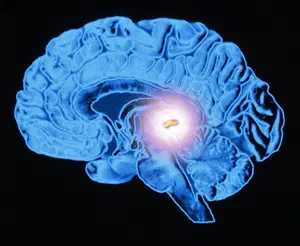
What gland is this?
hypothalamus gland
pineal gland
pituitary gland
thyroid gland
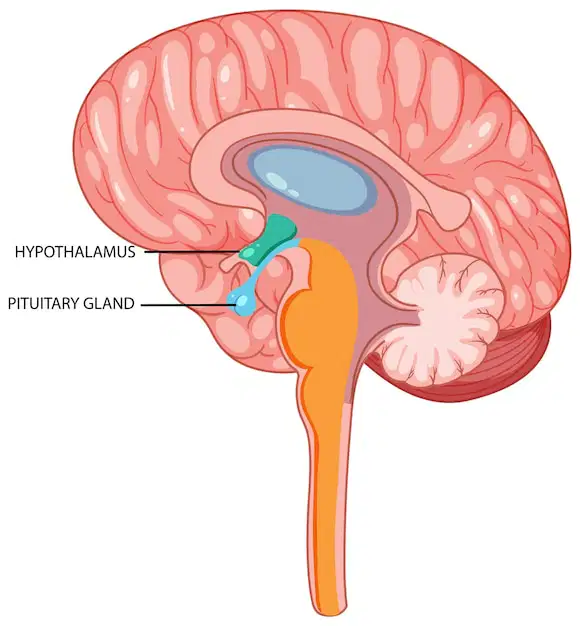
What gland is in green?
pineal
pituitary gland
hypothalamus
thymus

Where is the pituitary gland located?
below the hypothalamus
in the back of the brain
in the neck
in the sex organs
Match the following
lipid soluble hormones
pass directly into target cell
water soluble hormones
bind to receptors on target cells
growth hormone
produced in anterior pituitary gland
antidiuretic hormone
produced in the posterior pituitary
Which hormone is primarily involved in the regulation of metabolism?
Insulin
Adrenaline
Thyroxine
Cortisol
What part of the brain is responsible for regulating thirst and hunger?
Cerebellum
Hypothalamus
Medulla oblongata
Frontal lobe
Which gland is responsible for the regulation of calcium levels in the blood?
Pancreas
Thyroid
Parathyroid
Adrenal
Steroid hormones:
bind with a receptor on the cell wall, triggering a second messenger system.
pass through the cell wall and bind with receptors in the nucleus of the cell.
pass through the cell wall and activate specific enzymes, which trigger a reaction.
attach to the cell wall and act as receptors for circulating hormones.
The posterior pituitary:
Is the larger of the two pituitary glands
Synthesizes multiple important hormones.
Is made of glandular tissue
Stores and secretes antidiuretic hormone.
Chemicals that interfere with the endocrine system, potentially leading to various health issues are called (a)
When __________________ binds to its receptor on the cell membrane, glucose can enter the cell.
glucagon
insulin
glycogen
glucose transport protein
Match the following gland with its hormone
Pancreas
glucagon
thyroid
throxine
testicles
testosterone
adrenals
epinephrine
pituitary
GH, oxytocin
When there is too little glucose in the blood, the __________ releases ___________ which causes glucose to be released from the stored glycogen in the liver.
liver, glucagon
pancreas, insulin
pancreas, glucagon
liver, insulin
Match the endocrine disruptors with sources
Bisphenol (BPA)
plastics and food packaging
Phthalates
Make plastics more flexible, toys and personal care items
Dioxins
byproducts of industrial processes, accumulate in the food chain
PFAS
non-stick cookware and firefighting foams

