
Font size
 Worksheets
Respiratory System Test Review
Total questions: 53
Worksheet time: 2hrs 52mins
How does the volume of the chest cavity change during inhalation and exhalation?
It increases during inhalation and decreases during exhalation
It decreases during inhalation and increases during exhalation
It remains constant during both inhalation and exhalation
It fluctuates randomly during inhalation and exhalation
Through which process does gas exchange across cellular membranes occur?
Which two muscles contract to cause inhalation?
Abdominal and sternocleidomastoid muscles
Pectoral muscles and diaphragm
Internal intercostal muscles and abdominal muscles
Intercostal muscles and diaphragm
Where are the primary bronchi located?
They branch off at the end of the trachea, entering the lungs.
The movement of air into and out of the lungs ________.
Cellular Respiration
External Respiration
Internal Respiration
Pulmonary Ventilation
Respiratory Gas Transport
Gas exchange that occurs between the air in the alveoli and your blood ________.
Cellular Respiration
External Respiration
Internal Respiration
Pulmonary Ventilation
Respiratory Gas Transport
Transport of carbon dioxide and oxygen through the blood to the cells of your body ________.
Cellular Respiration
External Respiration
Internal Respiration
Pulmonary Ventilation
Respiratory Gas Transport
Gas exchange between your blood and tissues throughout your body that need oxygen ________.
Cellular Respiration
External Respiration
Internal Respiration
Pulmonary Ventilation
Respiratory Gas Transport
The reaction that actually uses oxygen, occurs in the mitochondria, and produces ATP energy and CO2 -
Cellular Respiration
External Respiration
Internal Respiration
Pulmonary Ventilation
Respiratory Gas Transport
What are the functions of the nose in respiration?
Olfaction (smell), passage way for air, filters air, moistens and warms air, and resonance chamber for speech
Tasting, hearing, blinking, sneezing, and chewing
Running, jumping, swimming, diving, and flying
Picking, supporting glasses, sniffing, snoring, and dripping
What are conchae, where are they located, and what is their function?
Bony ridges, found in the nasal cavity. They circulate, warm, moisten, and filter the air.
Small fluid filled canals, found in the ear. They assist in hearing and balance.
Cluster of nerve like cells, found in the heart. They initiate a heartbeat.
Small chambers, found in the lungs. They facilitate gas exchange.
Know what substances are supposed to pass through the 3 regions of the throat: Nasopharynx ________, Oropharynx ________, Laryngopharynx ________.
N - Air only; O - Air, Food, Drink; L - Air, Food, Drink
N - Food and Drink; O - Air only: L - Air, Food, Drink
N - Air and Food; O - Air, Food, Drink; L - Food and Drink only
N -Air only; O - Food and Drink only; L - Air, Food, Drink
Why are the pleural membranes important for maintaining the health of your lungs?
They protect your lungs from being punctured.
They filter airborne pathogens before they get inside your lungs
They secrete fluid that reduces the friction between your lungs and the ribs.
They aid in gas exchange and the muscle contractions involved with breathing.
What are the 3 functions of the sinuses?
Produce mucus to filter air
Resonance chambers for speech
Lighten the skull
Gas exchange
Respiratory gas transport
What are the functions of the larynx?
Maintain an open airway
Has a switching mechanism between the trachea and esophagus
Voice production
All of the above
What structures make up the conducting zone?
Nose, Pharynx, Larynx, Trachea, Bronchi, Bronchioles
Terminal bronchioles, Alveoli, Alveolar Ducts, and Alveolar Sacs
Esophagus, Stomach, and Intestines
Heart, Arteries, and Veins
What is the function of the conducting zone?
To transport air into the lungs
To filter, warm, and moisten air and conduct it into the lungs
To exchange gases between lung air spaces and blood
To produce vocal sounds
What structures make up the respiratory zone?
Alveoli, Alveolar ducts, and Respiratory/terminal bronchioles
Trachea, Bronchi, and Bronchioles
Nasal cavity, Pharynx, and Larynx
Diaphragm, Intercostal muscles, and Pleura
What process happens in the respiratory zone?
Exchange of gasses between air and blood
Air passage for breathing
Filtration of air
Sound production
Where are alveoli found, and what is their function during respiration?
In the brain, to assist in neural activity
In the heart, to pump blood
In the lungs, where gas exchange occurs
In the stomach, to digest food
What is the order of structures that inhaled air passes through it get from the nose to the alveoli in the lungs?
Nasal cavity, pharynx, larynx, trachea, bronchi, bronchioles, alveoli
Nasal cavity, larynx, diaphragm, bronchioles, alveoli
Nasal cavity, trachea, diaphragm, bronchi, alveoli
Nasal cavity, mouth, esophagus, stomach, bronchioles, alveoli
What is the role of the cardiovascular system in respiration?
The cardiovascular system performs the transport of oxygen and carbon dioxide during respiration.
What structure forms the Adam's apple / voice box?
Tonsils
Trachea
Larynx
What is the purpose of the surfactant produced by the cells in your lungs?
To increase the surface area of the alveoli.
Binds oxygen and transports it to the body's cells
Keeps lungs tissues moist and aids in diffusion of gasses.
What is the difference between the parietal and visceral pleural membranes?
The parietal pleura lines the rib cage; the visceral pleura directly covers the lungs.
The parietal pleura directly covers the lungs; the visceral pleura lines the rib cage.
Which protein found in red blood cells is necessary for transporting respiratory gasses?
Actin
What happens to the blood if the concentration of carbon dioxide is too high?
The blood becomes less acidic
The blood becomes acidic
Which lung is smaller? Why is this the case?
The right lung is smaller, there is less space on the right side of the chest.
Both lungs are the same size, each side is equally important
The left lung is larger, the left side of the body needs more oxygen.
The left lung is smaller, to make room for the heart.
What are the two reasons that high altitudes make it difficult to breathe?
1. Decreased air pressure results in lower oxygen concentration in the air. 2. Lower pressure slows diffusion of gasses
1. More trees at high altitudes produce extra oxygen. 2. The thicker air is difficult for the lungs to breathe in.
1. Lower temperatures increase oxygen absorption. 2. Lower pressure increases the rate of gas diffusion
1. Increased humidity decreases available oxygen molecules. 2. Lower pressure slows the speed of blood moving through the circulatory system.
What is the epiglottis, and what is its function?
The epiglottis is a cartilage flap that prevents food and liquids from entering the trachea during swallowing.
What are the two reasons that exercise increases your respiratory rate?
When is a cough reflex triggered?
When anything besides air enters the larynx
When the throat is dry and needs moisture
Psychological reasons with no physical component
When carbon dioxide levels rise rapidly
_________ is the main cause of emphysema.
Allergies
What system is malfunctioning when you have an allergic reaction?
Respiratory system
How does emphysema affect the alveoli and respiration?
Emphysema destroys the walls of the alveoli, impairing gas exchange and making breathing difficult
The narrowing of the bronchioles and the restriction of airflow that can occur due to exercise, allergies, or stress is a condition called -
anaphylaxis
pneumonia
emphysema
asthma
What condition involves fluid filling up the respiratory zones inside the lungs?
Influenza
The C-shaped cartilage rings that line the trachea serve what two functions?
Support the trachea and keep it open, Protect the lungs
Support the trachea and keep the airway open, allow flexibility so the esophagus can expand when swallowing
Produce mucus, Filter air
Allow flexibility for movement, Produce mucus
If you are not acclimated to high altitudes what two things will happen to you first when you climb too high?
Enhanced vision and hyperventilation
Hyperventilation and increased heart rate
What changes in a person's body over time to acclimate to high altitudes?
Increased red blood cell production and increased capillary bed
Altered hemoglobin that is more efficient
Mitochondria become more efficient at producing ATP
Lower metabolic rate
All of the above
How do you reverse an anaphylactic reaction?
Why are respiratory viruses the number one cause of disease worldwide?
They are not easily treated with antibiotics.
Airborne transmission is very effective so many viruses have evolved this trait.
The immune system is weaker in the lungs
What are the differences in the symptoms of someone experiencing HAPE vs HACE?
HAPE symptoms include shortness of breath, cough, chest pains, and blood saliva, while HACE symptoms include confusion and ataxia.
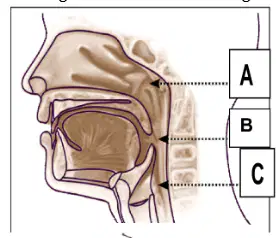
A
pharynx
nasopharynx
laryngopharynx
oropharynx
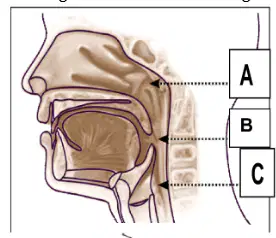
B
Oropharynx
Trachea
Laryngopharynx
Larynx
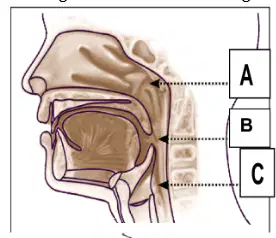
C
Epiglottis
Laryngopharynx
Oropharynx
Larynx

D
Trachea
Hyoid bone
Epiglottis
Thyroid cartilage

E
Tracheal cartilage
Thyroid cartilage
Pharynx
Cricoid bone
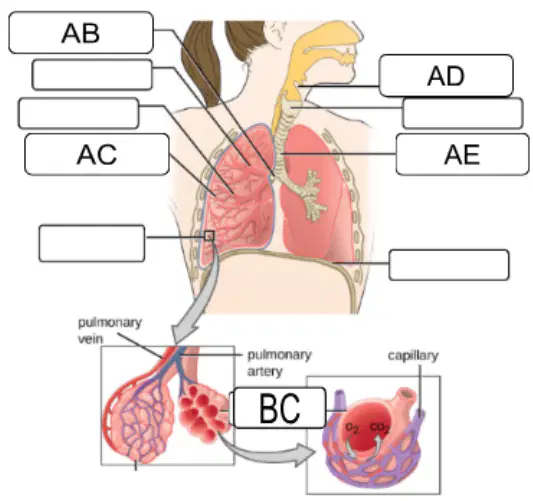
AB
Primary bronchi
Bronchioles
Alveoli
Trachea
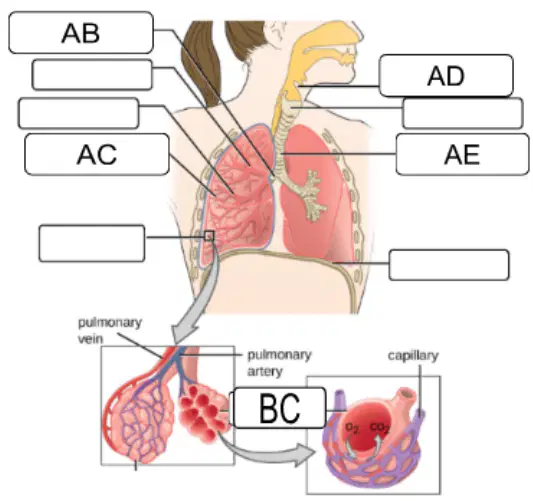
AC
Primary bronchi
Alveoli
Bronchioles
Trachea
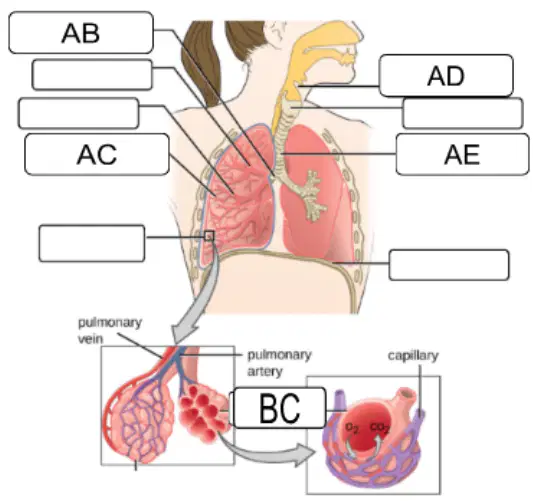
AD
Trachea
Larynx
Epiglottis
Pharynx
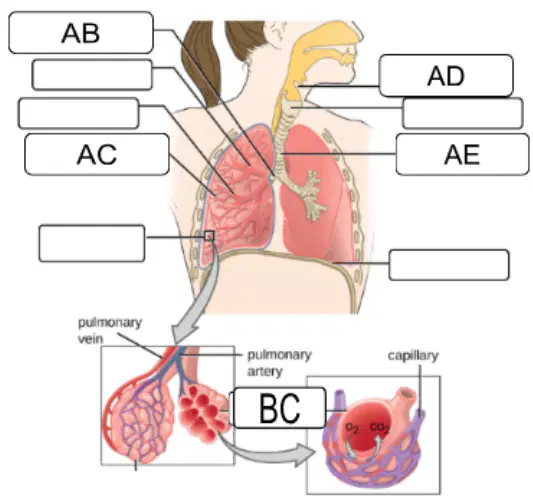
AE
Bronchi
Esophagus
Trachea
Alveoli
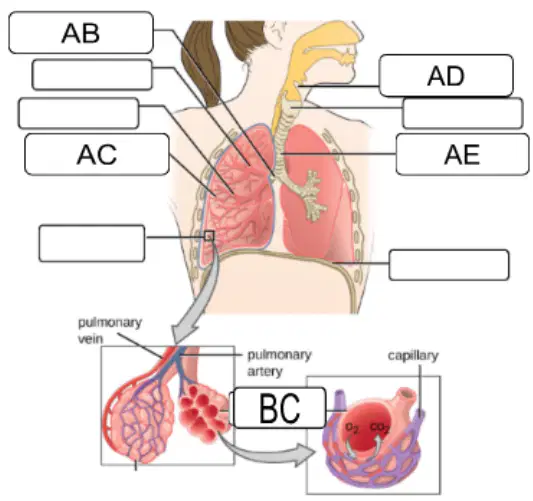
BC
Bronchi
Epiglottis
Bronchioles
Alveoli

