
 Worksheets
Astro 150 Spring 2024 Exam 3 Review (April 12, 2024)
Total questions: 20
Worksheet time: 14mins

When a star FIRST becomes a red giant, what's happening in its core?
It's fusing hydrogen
It's fusing helium
It's compressing
It's expanding

How can we see white dwarfs if they're so small?
They're very hot
Their gravity influences their companion stars
Background light bends around them
We only see them when they explode, and they explode violently
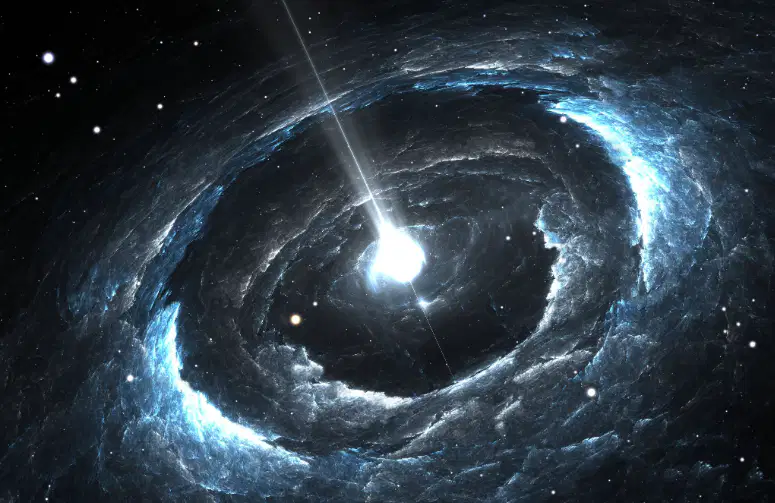
Which mass range of main sequence stars become neutron stars?
< 8 Solar masses
Between 8 and 25 solar masses
Greater than 25 solar masses
Greater than 50 solar masses

Why are black holes only formed from the most massive stars?
Only the most massive stars make big enough supernovae
Only the heaviest elements made in stars can make black holes
No other stars evolve fast enough
Only the most massive stars can overcome neutron degeneracy

The escape velocity of a black hole at the event horizon is...
The speed of sound
Twice the speed of sound
The speed of light
Twice the speed of light

If the sun were to suddenly become a black hole of the same mass as the sun, what would happen to the Earth's orbit?
Nothing
It would decay and Earth would fall in
Earth would orbit farther away
Earth would fly off
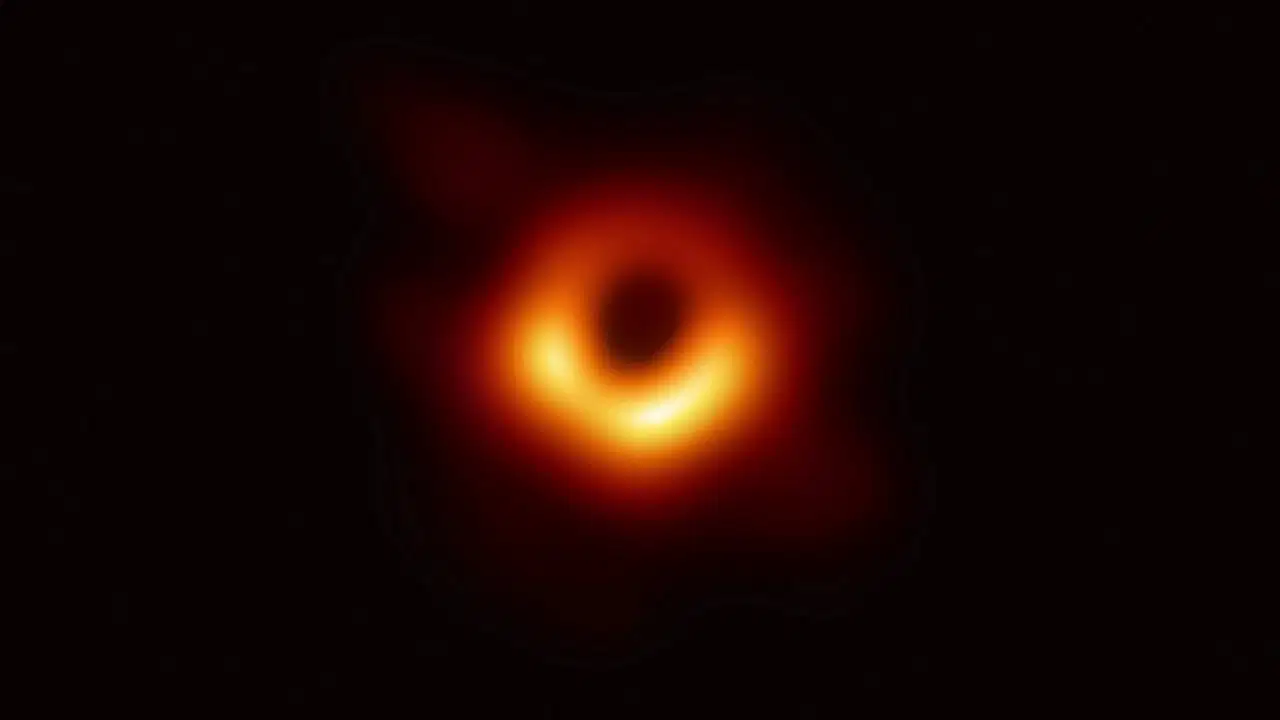
How come light is affected by gravity?
Light has a very tiny mass
It's not affected by gravity
Gravity distorts spacetime

There is a GPS satellite in orbit around Earth and a model one in a museum on Earth's surface. After one hundred years, which is older?
The one in orbit
The one on the surface
They age the same
It depends on how many devices ping the satellite

Which of these will NOT happen to an astronaut that falls into a black hole?
They'll turn redder
They'll age more slowly
They'll relay what the see inside the black hole
They'll get stretched out

How do we detect black holes orbiting each other?
They pulse as they orbit each other
We'll only see the explosion when they merge
We can see the light from background stars ripple from the black holes' gravity
We detect their gravitational waves

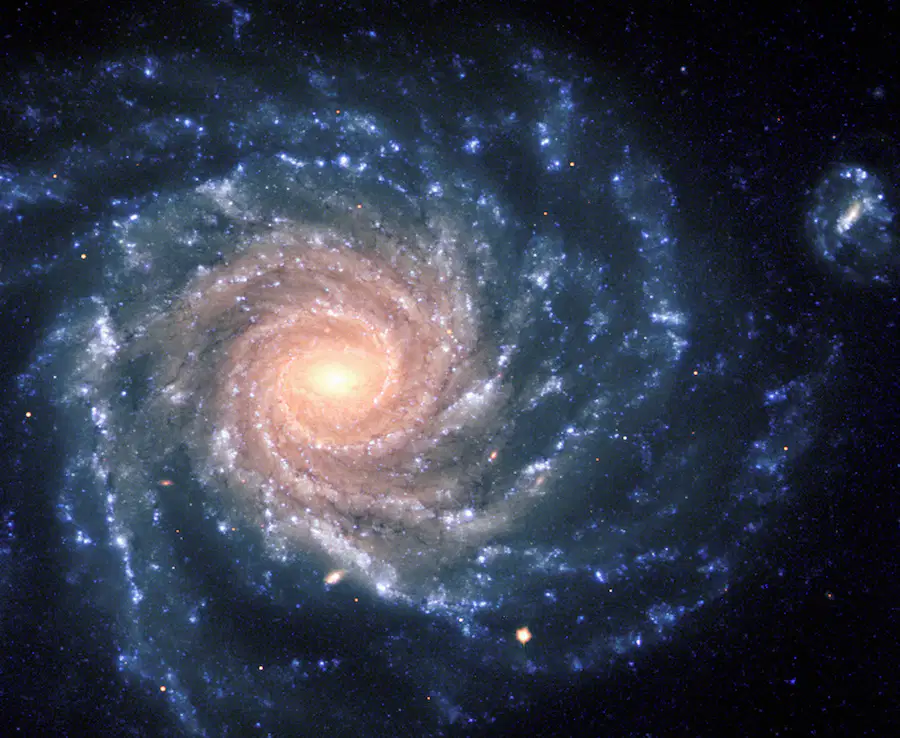
True or False: We can obtain images of the Milky Way, like the one on the left.
True
False

The rotational curve we see looks different from the one we would get if mass follows light. This inconsistency implies the existence of:
Disk
Bulge
Gas
Dark matter
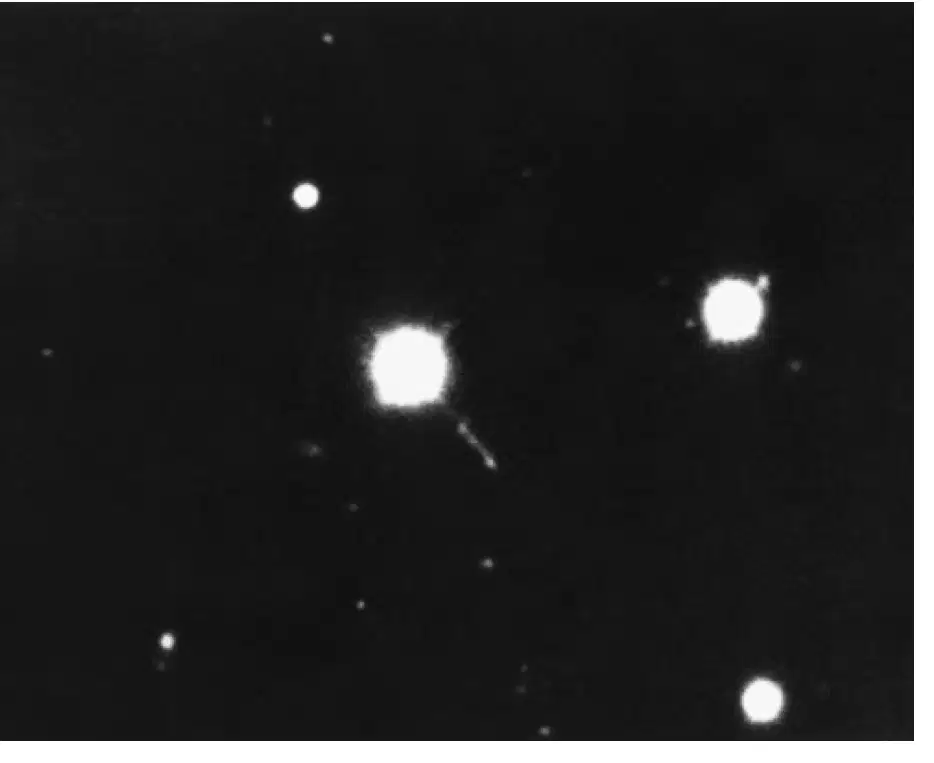
Quasars have extremely fast receding velocity (~ 10% of speed of light or even larger). What does this imply?
They are within our galaxy.
They are falling into a black hole very fast.
They are in the very distant Universe.
They are in local galactic group.

Quasars are supermassive black holes in the center of galaxies that produce extremely large amount of energy. How do the supermassive black holes produce the energy?
Nuclear fusion at the event horizon.
Kelvin-Helmholtz contraction
Material around the black hole falls inward toward it.
Nuclear fission at the event horizon
More distant objects (i.e., the quasars) appear to be more active. From this, what
can you infer about the accretion rate onto supermassive black holes?
There are more jets in nearby galaxies
They were more massive in the past.
They have accreted less and less over time
They did not exist in the early history of the Universe.

True or False: We see different types of AGNs (e.g., quasars, radio galaxies, etc.) because AGNs have different inclinations (i.e., viewing angle).
True
False

Why do astronomers use standard candles to know distance?
They have well defined mass.
They are so close so it's easier to know distance to them.
We can easily figure out their luminosity
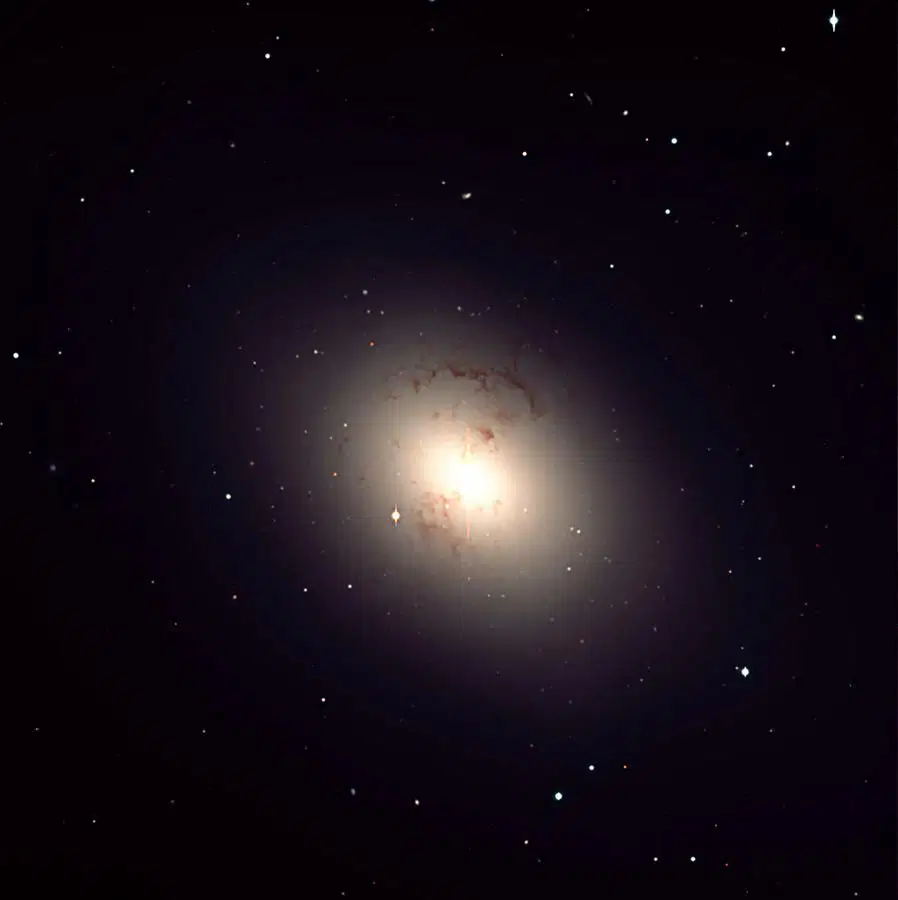
Giant ellipticals are found in dense regions (e.g., in galaxy clusters). What can you infer about the formation of the giant ellipticals from this information?
Nothing. This is just a coincidence
They formed from merging galaxies, which are more likely in
dense areas
They are just spiral galaxies that are much older and evolving into an elliptical galaxy.

Which of the following is true about Hubble expansion?
Every galaxy is moving away from us.
If we were in another galaxy, we would see most other galaxies moving toward us.
More distant galaxies have larger receding velocities.
Why do more luminous galaxies rotate more rapidly?
Luminous galaixes have more dark matter.
More material in these galaxies means that they rotate more rapidly to balance gravity.
More luminous galaxies tend to be sprial galaxies.
More luminous galaxies have younger stars.

