
 Worksheets
Science Notebook Quiz 24-25 OL
Total questions: 75
Worksheet time: 19hrs 45mins
Which of the following is the name of the ancient supercontinent that existed millions of years ago?
Pangea
Gondwanda
Laurasia
Which of the following is NOT evidence to support the theory of continental drift?
Fossils
Rock formations
Sand Erosion
The theory that says Earth's continents once made up an ancient supercontinent, and have been drifting apart ever since, is called the theory of...
Pangea
Continental Drift
Natural Selection
Rift Valley
Mid-Ocean Ridge
Island Arc

Who is the scientist who proposed Continental Drift Theory?
Which one is NOT evidence that proved Alfred Wegener's Continental Drift Theory?
Alfred Wegener explored Greenland.
The continents of South America and Africa seemed to fit together like a puzzle.
Fossils of same plants and animals were found on continents separated by oceans.
Mountain ranges with same rock types were found on continents separated by oceans.
________________ weathering is a process by which softer, less weather resistant rock wear away and leave harder, more weather resistant rock.
Expansion
Mechanical
Chemical
Differential
Weathering is the process of -
Moving sediment from one place to another
Dropping or leaving sediment in a location
Breaking down rocks into sediment

_________is the movement of sediment from one place to another.
Erosion
Weathering
Deposition
Movin on up!

The dropping off of sediments in a new place is called __________.
weathering
deposition
sedimentary rock
drop off zone
Which of these is NOT a type of chemical weathering?
acids in ground water
acids in living things
abrasion
oxidation
Any rock that forms from another rock as a result of changes in heat or pressure (or both) is a:
igneous rock
sedimentary rock
metamorphic rock
Intrusive & extrusive are 2 types of...
sedimentary
metamorphic
Igneous

Limestone forms from sediments and is an example of ___ rock.
Sedimentary
Igneous
Metamorphic
What is the difference between the biotic and abiotic factors?
Biotic factors are living things and abiotic factors are nonliving things.
Biotic factors are nonliving things and abiotic factors are living things.
Biotic factors are on the ground and abiotic factors are in the air.
Biotic factors are in the air and abiotic factors are on the ground.
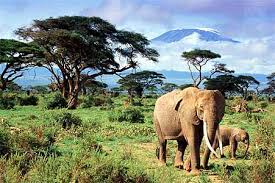
elephants, plants, clouds
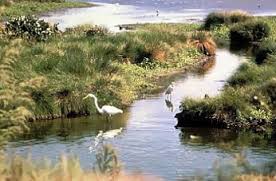
What are the abiotic factors in this image?
water, sunlight, and dirt
birds, trees, and sunlight
water, trees, and birds
water, sunlight, and bugs
Using carbon dioxide, energy from the sun, and water to create glucose and oxygen is
photosynthesis
respiration
chlorophyll
Where does photosynthesis occur?
mitochondria
chloroplast
nucleus
Where does cellular respiration occur?
mitochondria
chloroplast
nucleus
What process occurs when sugar is converted into ENERGY (ATP)
Photosynthesis
Cellular Respiration
Cytoplasm
What is photosynthesis?
The process in which humans eat their food
The process where plants make carbon dioxide.
The process in which plants make their food.

What is the producer in the picture above?
grasshopper
snake
grass

What is the decomposer in the picture above?
grass
fungus/mushrooms
frog

The model above is an example of a ..
food web
food chain
ecosystem

The model above is an example of a ...
food chain
food web
ecosystem
Animals that eat plants are
omnivores.
herbivores.
carnivores.

An animal that feeds on the remains of dead animals are called
predators.
prey.
scavengers.

Which organism provides the energy for the producers in this model?
frogs
corn
none of them, the energy comes from the Sun
Animals that only eat other animals are
carnivores.
herbivores.
omnivores
What do decomposers do in a food chain?
they are the first part of a food chain that feeds all of the other organisms
they break down all other organisms to provide nutrients for the soil to help the producers
they serve as food for the consumers
Animals that eat both plants and animals are
carnivores.
omnivores.
herbivores.
A relationship between two organisms in which both organisms benefit.
Mutualism
Predation
Parasitism
Commensalism
A relationship between two organisms in which one organism benefits and the other is harmed.
Mutualism
Predation
Parasitism
Commensalism
A relationship between two organisms in which one organism benefits and the other is neither helped not harmed.
Mutualism
Predation
Commensalism
Parasitism
A relationship between two organisms in which one organism eats the other.
Commensalism
Competition
Predation
Parasitism
What is the formula for calculating density?
Mass ∗ Volume
Volume * Mass
Mass / Volume
Volume / Mass
Which state of matter has molecules that have fixed positions and vibrate?
Liquid
Gas
Solid
Which state of matter has a fixed shape?
Liquid
Gas
Solid
In what state of matter do particles move most quickly?
solid
liquid
gas
solid, liquid and gas
Which state of matter do the particles fill up the entire space available to them in their container?
solid
liquid
gas
solid, liquid and gas

What state of matter does this picture represent?
solid
liquid
gas

Which physical state does this picture represent?
solid
liquid
gas

Which state of matter do the particles in this picture represent?
solid
liquid
gas

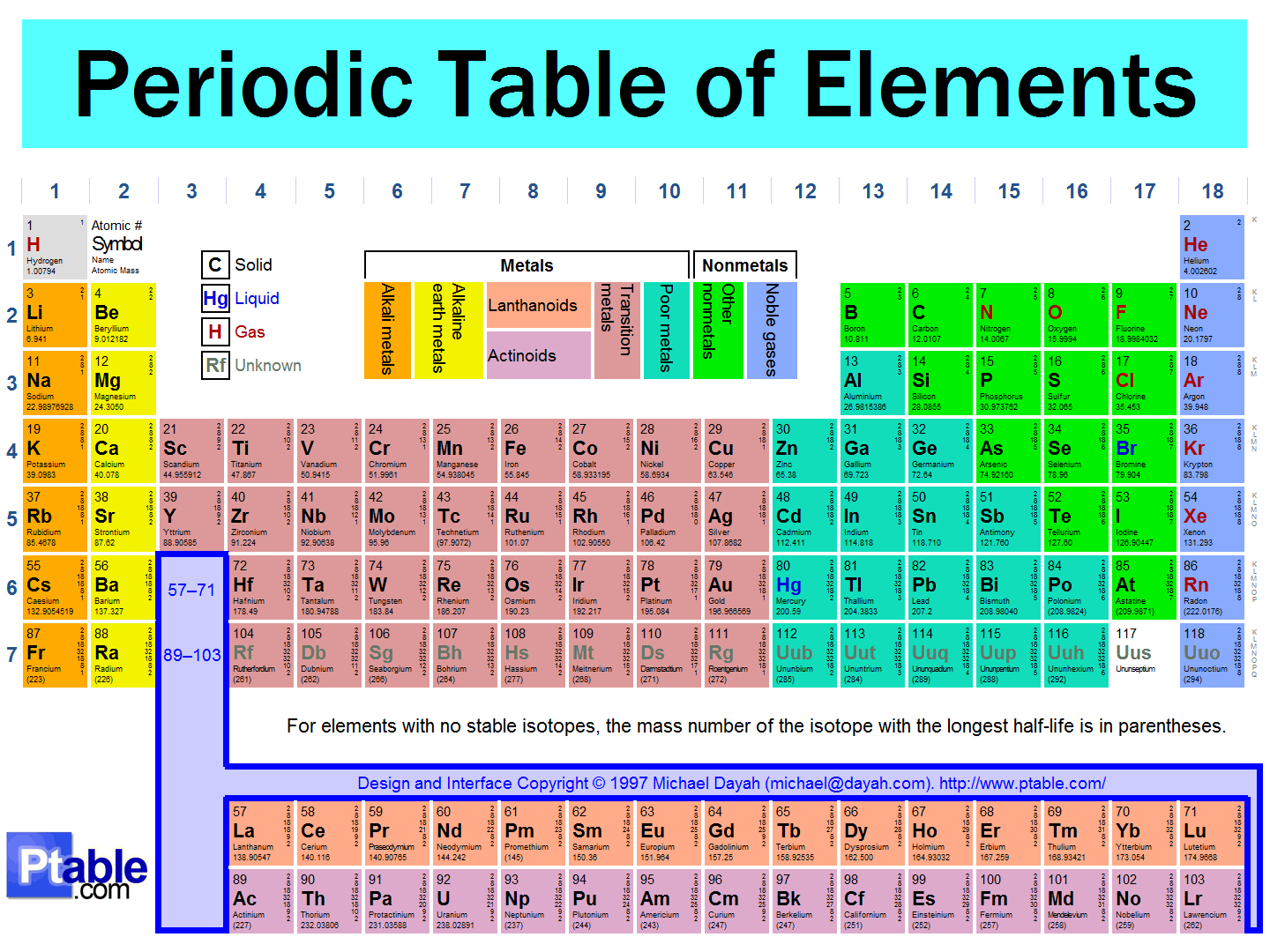
What is the organizational system or chart for elements?
Atomic weight
Families
Periodic table
Atomic number
What do you call the horizontal row of elements in a periodic table of elements?
Group
Family
Period
Column

What does the 6 represent?
atomic mass
atomic number
element name
chemical symbol

What does 12.011 represent?
atomic mass
atomic number
element name
chemical symbol

Which of these is NOT one of the three major classes of element?
metals
nonmetals
metalloids
semimetals

How many elements are on the periodic table?
18
91
118
20

The smallest particle into which an element can be divided and still be the same substance is called
a cell.
an atom.
a compound.
a particle.

Each vertical column of elements on the periodic table is called
a period.
a group.
a row.
a stick.

The periodic table includes 2 _________, 12 _________, and the rest are solids.
gases; liquids
metals; nonmetals
liquids; gases
nonmetals; metals

Each horizontal row of elements is called
a period.
a group.
a branch.
a fork.
changes affecting the form of a chemical substance, but not its chemical identity.
What is a chemical change?
How two chemicals react with one another when combined
A property that we can measure or observe with our 5 senses or other tools
When two chemicals react with one another to form a new substance
When a change occurs but it does not result in the formation of a new substance
You mix two liquids together, bubbles form and the liquid gives off heat. This is a....
Endothermic chemical change
Exothermic chemical change
Endothermic Physical Change
Exothermic Physical Change
You mix a red liquid and a white solid together. They turn yellow and the liquid absorbs heat. This is a...
Endothermic chemical change
Exothermic chemical change
Endothermic Physical Change
Exothermic Physical Change
In the chemical equation below, the product is....
Na + Cl ---> NaCl
Na
NaCL
Cl
NaCl
The Law of Conservation of Mass says that matter can neither be __________ or __________.
created; destroyed
recycled; renewed
subtracted; added
joined; separated
2H2 + O2 --> 2H2O
2H2 + O2 --> 2H2O
What is the total number of atoms present in 2Na3PO4?
5
16
18
8
H2O

How many molecules of KNO3 are shown?
1
2
3
4

How many Hydrogen (H) atoms are in 4NH3?
4
1
3
12

