

wayground logo

Free Printable Worksheets

Font size

S
M
L
XL
Worksheets

TCAP Review Week 1

Total questions: 121

Worksheet time: 1hrs 18mins
Name
Class
Date
1.
Which is the best description of a nomadic group of people?
a)
people who live in a city or state
b)
people who live in houses and drive cars
c)
people who move from place to place in search of food
d)
people who grow crops and stay in one place permanently
2.
Which best describes the Neolithic Era?
a)
Major battles fought between people of Asia and Africa
b)
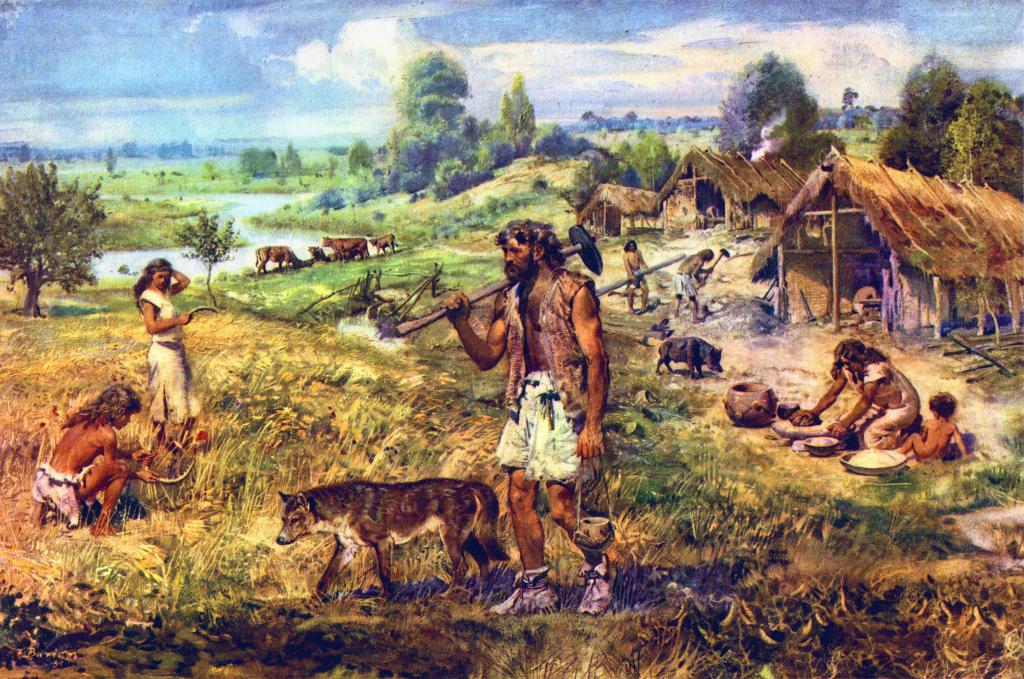
The shift from hunting and food gathering to food producing
c)
The shift from food gathering to hunting
d)
Major battle fought between the people of Asia
3.
How did domestication affect community life?
a)
People did not need tools.
b)
People searched for different foods.
c)
People did not need to hunt for food anymore.
d)
People had less food.
4.
Why did people change from hunter-gatherers to village dwellers?
a)
Game animals became extinct
b)
Farming allowed people to stay in one place
c)
Moving constantly was difficult for most children
d)
People wanted to connect with their family members
5.
What effect did the invention of tools have on early humans?
a)
They required humans to stand close to animals when hunting.
b)
They increased chances for survival.
c)
They decreased chances for survival.
d)
They allowed more animals to graze the fields.
6.
To tame plants and animals
a)
nomad
b)
domesticate
c)
migrate
d)
agriculture
7.
The period of time before written records
a)
Beringia
b)
Prehistory
c)
Migrate
d)
Ancestor
8.
The first part of the Stone Age
a)
Paleolithic
b)
Mesolithic
c)
Neolithic
d)
Terrific
9.
What change marked the beginning of the Neolithic Revolution? 
a)
beginning of hunting and gathering
b)
man learned to write
c)
man began farming
d)
man built towns and cities
10.
Humans are believed to have originated on what continent?
a)
Africa
b)
Asia
c)
Australia 
d)
Antarctica
11.
Who were the earliest humans?
a)
Hunter gatherers
b)
Farmers
c)
Cobblers
d)
Bakers
12.
____________________ was how early people controlled the flow of water to be sure that the crops they planted had enough to grow until they were harvested.
a)
Climate
b)
Environment
c)
Irrigation
d)
Community
13.

What does the word polytheistic mean?

a)

a belief in one god

b)

a belief in one goddess

c)

a belief in many gods

14.

What is this?

a)

Sumerian Art

b)

Pottery

c)

Cuneiform

d)

Latin Writing

15.

Mesopotamia is also called......

a)

The Cradle of Civilization

b)

Mesopotania

c)

The Land Of Art

d)

The Spot of Agriculture

16.

What Is This?

a)

A Temple

b)

A Tower

c)

A Religious Castle

d)

A Zigurat

17.

Which statement best describes the geographical location of Mesopotamia?

a)

in a valley in Southwest Asia

b)

to the east of the Mediterranean Sea

c)

between the Tigris and Euphrates Rivers

d)

along the Persian Gulf

18.

This was a writing system that was developed by the ancient Sumerians of Mesopotamia around 3,500 B.C.

a)

ziggurat

b)

agriculture

c)

uniform

d)

cuneiform

19.
The Epic of Gilgamesh is
a)
a famous Mesopotamian poem
b)
a war in the Middle East
c)
a religion in Mesopotamia
d)
a love song
20.

Which civilization is credited for being the first to invent writing?

a)

Mesopotamia

b)

Egypt

c)

India

d)

China

21.

One of this civilization’s greatest achievements was over 4000 miles long!

a)

Mesopotamia

b)

Egypt

c)

India

d)

China

22.

This civilization was located in East Asia with a coast on the Pacific ocean.

a)

Mesopotamia

b)

Egypt

c)

India

d)

China

23.

This civilization invented a beautiful writing system called hieroglyphics.

a)

China

b)

India

c)

Egypt

d)

Mesopotamia

24.

This civilization was located in northeastern Africa with a coast on the Mediterranean Sea.

a)

Mesopotamia

b)

Egypt

c)

India

d)

China

25.

This civilization created paper from the papyrus plants.

a)

China

b)

India

c)

Egypt

d)

Mesopotamia

26.

This civilization was located in south central Asia closest to the Indian Ocean.

a)

China

b)

India

c)

Egypt

d)

Mesopotamia

27.

This cloth invented by the Chinese helped create a trade route named after it!

a)

cotton

b)

polyester

c)

silk

d)

linen

28.

This civilization was located in the Middle East in the current country of Iraq.

a)

China

b)

India

c)

Egypt

d)

Mesopotamia

29.

This Chinese invention helped their ships go in the right direction and is still used today.

a)

the great wall

b)

silk cloth

c)

the compass

d)

plates and spoons

30.

Who created pyramids?

a)

Egypt

b)

Mesopotamia

31.
What were pyramids?
a)

a place to store food surplus

b)
prisons
c)
tombs for pharaohs
d)
tombs for nobles
32.
What is Egyptian writing called?
a)
cuneiform
b)
hieroglyphic
c)
characters
d)
Sanskrit
33.
What was the most common form of religious practice in Ancient Egypt?
a)
hieroglyphics
b)
polytheism
c)
mythology
d)
monotheism
34.
What is the famous river in Egypt?
a)
Tigris
b)
Euphrates
c)
Nile
d)
Hudson
35.
Who would write and record information?
a)
slaves
b)
scribes
c)
farmers
d)
craftspeople
36.

How did the Nile River benefit Egyptians? (select all that apply)

a)

fresh drinking water

b)

floods destroyed homes and crops

c)

floods provided silt

d)

papyrus grew near the river

e)

a waterway for transportation

37.

Egypt is surrounded by desert, what is a benefit of this?

a)

The temperature is warm

b)

The sand is soft

c)

Protection

d)

Easy to navigate

38.
Why do Pharaos get mummified?
a)
So their body doesn't decay
b)

So they can be put on display

c)

Because they wanted to be like Otzi

d)
To prepare them for the afterlife
39.

An Egyptian king. Also known as a living God.

a)

Nomad

b)

Ruler

c)

Pharoah

d)

Vizier

40.

The process of removing internal organs, dry out the body and wrap in linen.

a)

surgery

b)

cleansing

c)

cuneiform

d)

Mummification

41.

In Ancient Egypt the _________ was both head of the government and religious life.

a)

general

b)

king

c)

pharaoh

d)

pope

42.
80% of the people who live in India, practice the ______________ religion.
a)
Judaism
b)
Christian
c)
Muslim
d)
Hinduism
43.
The mountain range to the north, in India, is the __________________.
a)
Adirondacks
b)
Rockies
c)
Himalayas
d)
Alps
44.
Hinduism started in the ______________.
a)
Indus Valley
b)
Streets of Waupun
c)
Islands of Hawaii
d)
Mississippi River Valley
45.
Hinduism believes in __________ which is the process of birth, life, death, and rebirth.
a)
Karma
b)
Reincarnation
c)
heaven
d)
the afterlife
46.
India is a __________.
a)

Island

b)
Region
c)
Nation
d)
Subcontinent
47.
India's climate is shaped by seasonal winds called ________.
a)
Monsoons
b)
Trade Winds
c)
North winds
d)
Typhoons
48.
According to Buddhism, the end of suffering in life is called _______.
a)
The Noble Truth
b)
Nirvana
c)
Dharma
d)
Reincarnation
49.
The two main rivers in India are the ________ and the _______.
a)
Nile and the Ganges
b)
Ganges and the Indus
c)
Nile and the Indus
d)
There are no major rivers in India
50.
Buddhism is based on the teaching from ________.
a)
God
b)
Asoka
c)
Siddhartha Gautama
d)
Dr. Martin Luther King, Jr.
51.
What Indian invention do we use everyday at school?
a)
The numerals 1-9 and zero
b)
Drawing
c)
Reading poetry
d)
Physical Education
52.
What advancements were found in Mohenjo-Daro and other Indus cities?
a)
Castle walls, and cannons
b)
Sewers, trash chutes, toilets
c)
Public transportation
d)
Ziggurats or temples
53.
Sacred Hymns or songs of the Ancient Indians are:
a)
Dalits
b)
Vedas
c)
Monsoons
d)
Dice
54.
Where did people first settle near India?
a)
Indus River 
b)
Nile River
c)
Himalaya Mts.
d)
Ganges River
55.

A guru is ____________________

a)

a place of worship

b)

a religious object

c)

a private teacher and spiritual guide

d)

a sacred Indian book

56.

Dharma refers to one's ________________________________

a)

family status

b)

personal duty

c)

nirvana

d)

prayer life

57.
Who was able to spread the belief of worshiping only one God, the foundation of the Jewish religion, to many people and places in the world?
a)
Abraham
b)
Zoroaster
c)
Akhenaton
d)
Solomon
58.
Biblical figure; according to the Bible, God led him to Canaan, and his descendants became the Jewish people
a)
David
b)
Abraham
c)
Moses
d)
Solomon
59.
the journey of the Hebrews, led by Moses, from Egypt to Canaan after they were freed from slavery.
a)
Talmud
b)
Passover
c)
Exodus
d)
Torah
60.
according to the Bible, he led the Hebrew people out of Egypt and back to Canaan in the Exodus. 
a)
Moses
b)
Abraham
c)
Solomon
d)
David
61.
the belief in only one god
a)
Torah
b)
Talmud
c)
Ten Commandments
d)
monotheism
62.
the religion of the Hebrews; it is the world’s oldest monotheistic religion
a)
Hinduism
b)
Christianity
c)
Judaism
d)
Buddhism
63.

The ____________________ are a code of ten moral laws.

a)

Israelites

b)

David

c)

Ten Commandments

d)

Judaism

64.

What effect did the geography of Greece have on its early development?

a)

Greece had lots of natural resources, so they never had to trade with other nations

b)

Being located on the Mediterranean Sea limited cultural diffusion

c)

75 % of Greece was covered by mountains, which led to independent city-states (called polis)

d)

Its location limited colonization outside of Greece

65.
Which of the following geographic term best describes Greece?
a)
archipelago
b)
subcontinent
c)
desert
d)
peninsula
66.
Greek achievements in philosophy, science, math, literature and the arts are significant in modern times because...
a)
They helped Greece become a military superpower.
b)
They demonstrate the size of Greek brains.
c)
They strongly effected the development of western civilization (where we live).
d)
They encouraged people to learn to speak and read the Greek language.
67.

What continent is Greece on?

a)

Africa

b)

North America

c)

Asia

d)

Europe

68.

The tallest mountain in Greece; believed to be the home of the Greek Gods is which of the following?

a)

Pindus Mountains

b)

Mt. Parnassus

c)

Mt. Everest

d)

Mt. Olympus

69.

Ancient Greece was a

a)

peninsula with many islands

b)

tropical rain forest

c)

city found in the Arctic Circle.

d)

desert region.

70.

How did living by the sea influence/impact Greek life?

a)

They became great explorers and shipbuilders

b)

They became good traders

c)

They became great sailors, shipbuilders, traders and explorers

d)

They become great sailors and traders

71.

True or false: Greece has many major rivers

a)

true

b)

false

72.

Which letter marks the Mediterranean Sea?

a)

A

b)

B

c)

C

d)

D

73.
Which river runs through Rome?
a)
Po
b)
Tiber
c)
Tigris
74.
How many hills was Rome built upon?
a)
2
b)
5
c)
7
d)
10
75.
Which mountains served as a natural border to the north?
a)
Alps
b)
Apennines
76.
The capital city of Rome was on the  ________ of Italy.
a)
island
b)
peninsula
c)
mountain
d)
river
77.

Followers of Christianity are called

a)

Christians

b)

Lentens

c)

Jews

d)

Muslims

78.

The founding leaders of Christianity were

a)

Muhammad

b)

Moses

c)

Abraham

d)

Jesus

79.

The Sacred Writings of Christians are found an a book called

a)

The Bible

b)

The Tanakh

c)

The Vedas

d)

The Quran

80.

Which religion is polytheistic?

a)

Islam

b)

Buddhism

c)

Hinduism

d)

Judaism

81.

Which religion has holy books called the Tanakh & Talmud?

a)

Buddhism

b)

Hinduism

c)

Judaism

d)

Sikhism

82.

Which TWO religions originated in Israel?

a)

Buddhism

b)

Islam

c)

Judaism

d)

Sikhism

e)

Christianity

83.

What religion/philosophy follows the 4 noble truths

a)

Hinduism

b)

Christianity

c)

Buddhism

d)

Taoism

84.

The belief that when you die your soul finds another body

a)

The Middle Way

b)

Reincarnation

c)

Nirvana

d)

Hajj

85.
The advantages of the physical barriers that surround China might be..
a)
Protection from invaders
b)
Trade options
c)
Interaction with new cultures
86.

Who was credited with developing a code of laws?

a)

Sargon

b)

Hammurabi

c)

Gilgamesh

87.

Who was the first emperor of ancient Mesopotamia?

a)

Hammurabi

b)

Gilgamesh

c)

Sargon

88.

How did ancient Mesopotamians acquire the goods they needed?

a)

Walmart

b)

trade

c)

cash

89.

What was Hammurabi's Code?

a)

a set of rules for programming

b)

a set of laws

c)

a set of building blocks

90.

Mesopotamians and Ancient Egyptians worshiped multiple gods. This is an example of:

a)

Polytheism

b)

Monotheism

c)

Agnosticism

d)

Atheism

91.

What is the specific name of the rulers of Egypt?

a)

Emperor

b)

Czar

c)

Pharaoh

d)

King

92.

Pyramids were monuments that were built to be used

a)

as burial sites for Ancient Egyptian pharaohs

b)

as burial sites for Mesopotamian kings

c)

by Ancient Egyptians for religious ceremonies

d)

by Mesopotamians for religious ceremonies

93.

Ancient Egyptians and Mesopotamians' government was known as a theocracy; they believed the power of their rulers came from

a)

The gods

b)

The people

c)

His parents

d)

His intelligence

94.

Who conquered the Sumerians and formed the world's first empire?

a)

Gilgamesh

b)

Hammurabi

c)

Sargon the Great

d)

Nebuchadnezzar

95.

Which statement below best describes hieroglyphics?

a)

Mesopotamian form of writing using wedge-shaped characters on clay tablets

b)

Ancient Egyptian form of writing using picture symbols on papyrus

c)

Ancient Egyptian form of writing using wedge-shaped characters on clay tablets

d)

Mesopotamian form of writing using picture symbols on papyrus

96.

Which statement below best describes cuneiform?

a)

Mesopotamian form of writing using wedge-shaped characters on clay tablets

b)

Ancient Egyptian form of writing using picture symbols on papyrus

c)

Ancient Egyptian form of writing using wedge-shaped characters on clay tablets

d)

Mesopotamian form of writing using picture symbols on papyrus

97.
A series of rulers from the same family is called a(n) ____________.
a)
cataract
b)
dynasty
c)
regent
d)
pharaoh
98.
The Egyptian pharaohs ruled with absolute power over
a)
all of the people in Africa.
b)
only priests.
c)
only slaves.
d)
all Egyptians.
99.
Religion played an important part in Egyptian life by
a)
encouraging Egypt to make peace with its neighbors.
b)
destroying the power of the pharaoh.
c)
explaining natural events to people.
d)
supporting a democratic government.
100.
How did the ancient Egyptians demonstrate their belief in a life after death?
a)
They believed in only one god.
b)
They preserved the bodies of the dead.
c)
They became famous warriors.
d)
They did not think the bodies of the dead should be preserved.
101.
Name the journey the Hebrews took when they were escaping slavery in Egypt:
a)
Torah
b)
Exodus
c)
Passover
d)
Diaspora
102.
The first part of the Hebrew Bible
a)
Torah
b)
Talmud
c)
Commentaries
d)
Dead Sea Scrolls
103.
Who led the Hebrews out of slavery in Egypt?
a)
Abraham?
b)
Moses?
104.
Where did Abraham settle after her left Mesopotamia?
a)
Egypt
b)
Babylon
c)
Ur
d)
Canaan
105.
What did King David do?
a)
split Israel into 2 kingdoms
b)
built the Second Temple
c)
defeated the Philistines and made Jerusalem the capital
d)
led the Hebrews out of Egypt
106.
The scattering of Jews outside of Israel and Judah
a)
Judah
b)
Solomon
c)
Diapsora
d)
Canaan
107.
King who built a great temple to God in Jerusalem
a)
Judah
b)
Solomon
c)
Diapsora
d)
Canaan
108.
The destruction of _____ in AD 70 was a major blow for the Jews in Jerusalem.
a)
Saphardim
b)
Second Temple
109.
What are the laws called that the Jews believed God gave to Moses?
a)
Torah
b)
Ten Commandments
110.
The first king of Israel
a)
Talmud
b)
Saul
c)
Hebrew Bible
d)
prophets
111.

Put the kings of Israel in order from first to third

a)

Saul, Solomon, David

b)

David, Saul, Solomon

c)

Saul, David, Solomon

d)

Solomon, David, Saul

112.

He is considered the Father of the Hebrews

a)

Abraham

b)

Moses

c)

David

d)

Saul

113.

The Exodus was the migration of the Israelites out of...

a)

Babylon

b)

Israel

c)

Greece

d)

Egypt

114.

The 10 Commandments are stone tablets containing ....

a)

the history of Jewish people

b)

rules for them to follow

c)

a map of the Promised Land

115.

the second king of Israel

a)

Saul

b)

David

c)

Solomon

d)

Han Solo

116.
What did Emperor Qin build that allowed no one to leave, or invade, for thousands of years?
a)
a statue of himself
b)
a fortress
c)
The Great Wall
d)
a model of a dinosaur
117.
What is the major religion in China?
a)
Buddhism
b)
Hinduism
c)
Christianity
d)
Judaism
118.
On which continent is China located? 
a)
Africa
b)
Asia
c)
Europe
d)
Australia 
119.
The right of a Chinese Dynasty to rule with the blessings of the Gods is called...?
a)
The Mandate of Heaven
b)
The Dynastic Cycle
c)
The Heavenly Commandments
d)
The Oracle Bones
120.
How was Chinese civilization affected by mountains and deserts?
a)
They became wealthy.
b)
They were isolated from other civilizations.
c)
They made it easier to travel.
d)
They made China easy to be attacked.
121.

What was the Silk Road?

a)

A road made of silk

b)

A road where you could find silk

c)

A network of trade routes

d)

A road in Ancient China
