
 Worksheets
Review: 7th Grade Science Lessons
Total questions: 26
Worksheet time: 13mins
Name
Class
Date
1.
Students are working together in their school's science lab studying various forms of matter. They just finished studying solids, liquids and gases. Now they must draw a model that represents their observations. Which model BEST represents what happens to gas molecules in a closed container?
a)
Option 1
b)
Option 2
c)
Option 3
d)
Option 4
2.
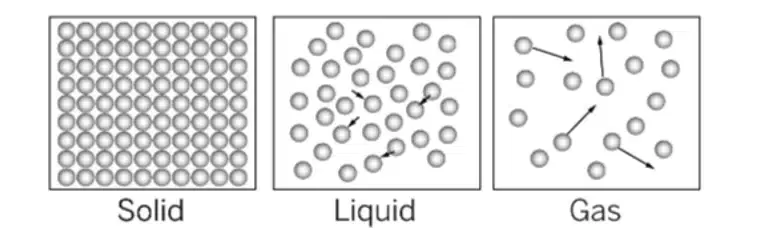
Most substances can exist in a solid, liquid, and gas form. The model below represents the particles and their motion in different phases of matter. Which of the following BEST describes the relative thermal energy among the states of matter?
a)
Solid is less than liquid, which is less than gas.
b)
Solid is the same as liquid, which is less than gas.
c)
Solid is the same as liquid, which is the same as gas.
d)
Solid is greater than liquid, which is greater than gas.
3.
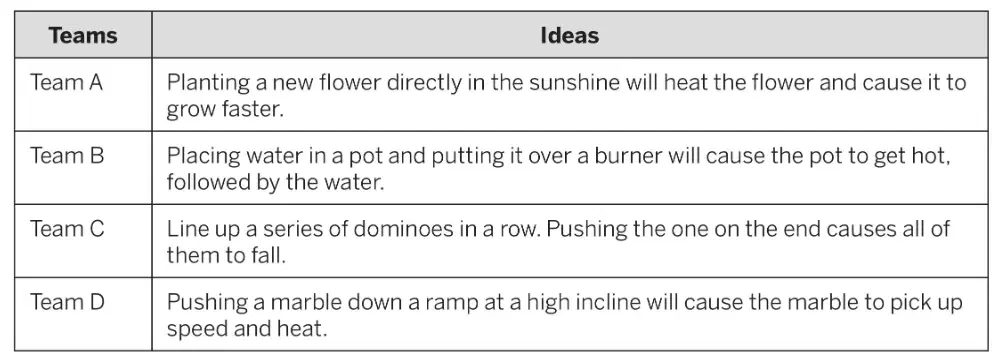
Mr. Teja's class is studying the causes and effects of thermal energy transfer. The class has been divided into four teams. Below is the description of each team's idea for representing thermal energy transfer. Which team has the BEST example of thermal energy transfer?
a)
Team A
b)
Team B
c)
Team C
d)
Team D
4.
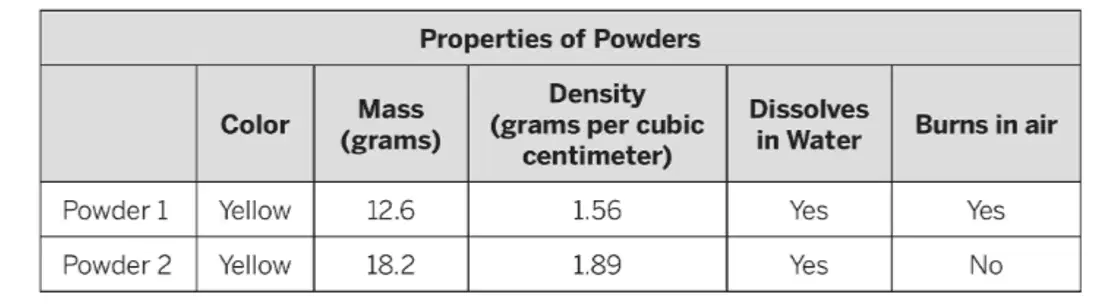
David has two yellow powders. He measured some properties of each of the powders. His data are summarized in the table below. Which measurement CANNOT be used to determine whether two powders are the same substance?
a)
mass
b)
density
c)
burns in air
d)
dissolves in water
5.
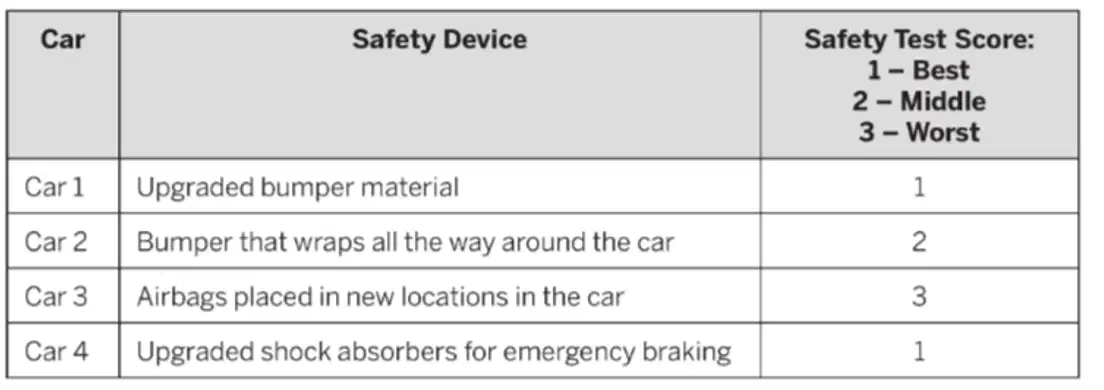
A team of engineers is designing new safety features for cars. The team designs four separate safety devices. To test them, each device is placed on a car, and all of the cars go through a standard collision test. Below is a record of the test findings. Based on the data collected, what can the engineers do to design the safest car?
a)
Create a new design for a car that includes all of the safety features that were tested.
b)
Start over from scratch, since the four safety features did not score consistently in the test.
c)
Keep the new design for the airbags and combine them with the bumper that wraps all the way around the car.
d)
Incorporate upgraded shock absorbers and bumper material into the new car, since these features performed the best.
6.
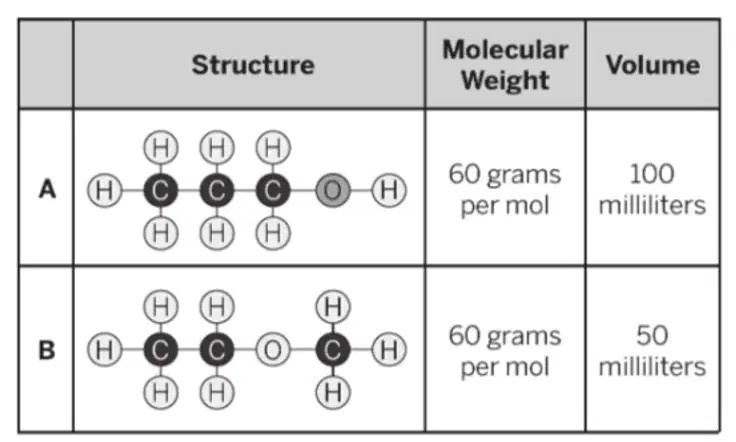
Susan has two clear, colorless liquids, Liquid A and Liquid B. She needs to determine whether they are the same substance. Based on the information below in the table, are Liquid A and Liquid B the same substance?
a)
No. Liquid A and Liquid B have different volumes.
b)
Yes. Liquid A and Liquid B have the same molecular weight.
c)
Yes, the molecules of Liquid A and Liquid B have the same number of atoms.
d)
No, the atoms of the molecules of Liquid A and Liquid B are arranged differently.
7.
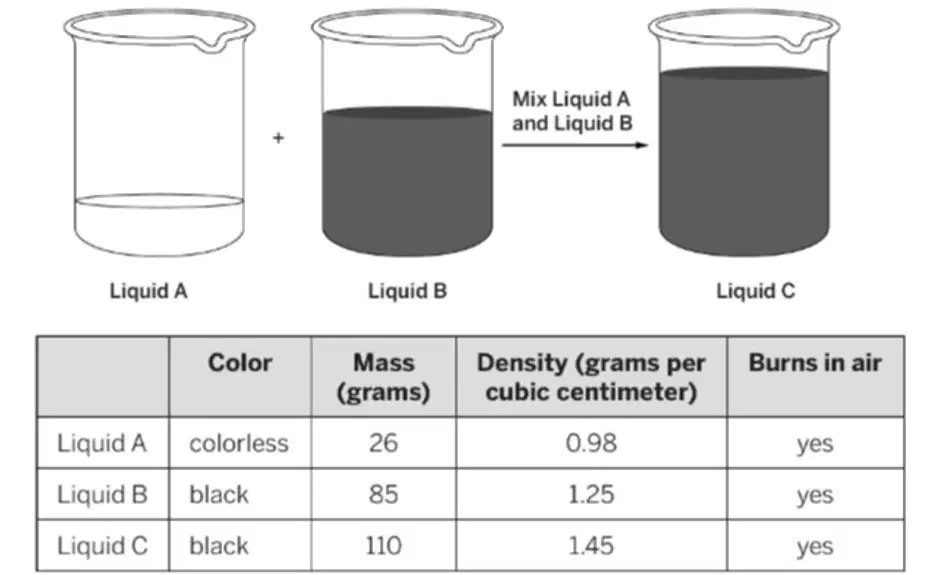
When Tom mixed a clear liquid and a dark liquid together, the mixture got warm and bubbled. Tom wanted to determine whether a chemical reaction occurred, so he measured some properties. His measurement are in the table below. Based on Tom's data, did a chemical reaction occur?
a)
No. Liquid B and Liquid C both burn in air, so they are the same substance.
b)
No. The color of Liquid C is the same as Liquid B, so they are the same substance.
c)
Yes. Liquid C has a different density than Liquid A or Liquid B, so new substance has formed.
d)
Yes. The mass of Liquid C is not the same as Liquid A or Liquid B, so a new substance has formed.
8.
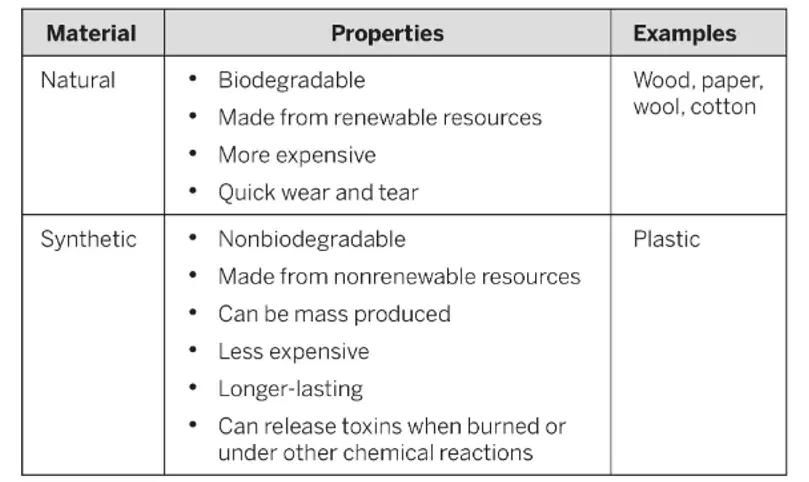
Alexa and her best friend are starting their own clothing company. They want to specialize in using environmentally friendly fabrics. Alexa is in charge of doing research and consults a variety of different sources to ensure accuracy of data. She puts together a table to help better understand the properties of natural and synthetic materials. Based on the information obtained, what does Alexa communicate to her friend about the materials?
a)
Synthetic materials can be reused and recycled to have less of an impact on the environment.
b)
Synthetic materials are better for the environment because they do not use up renewable natural resources.
c)
Synthetic materials can cause more harm to the environment than natural resources but will be less expensive to purchase.
d)
Synthetic materials are engineered by people to have no chemical reactions and to mimic the same properties as natural resources.
9.
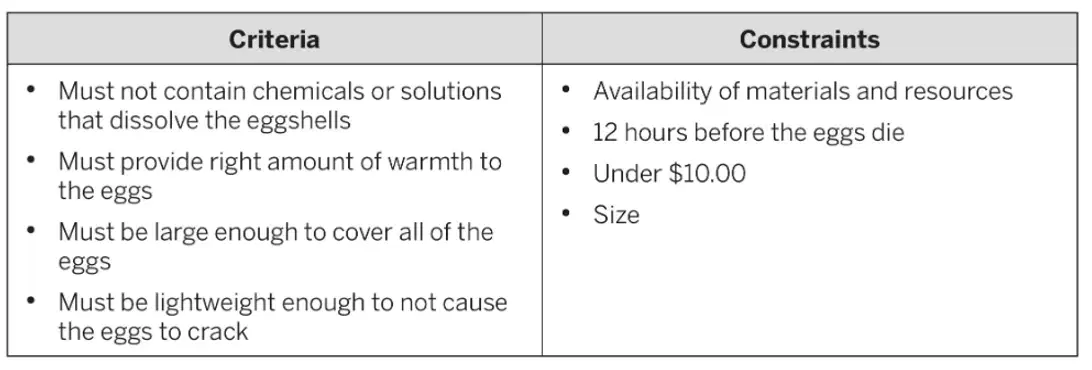
A farmer notices that a mother hen has abandoned several chicken eggs. He must find a way to protect and provide heat to the eggs, as if the mother hen were covering them and keeping them warm. Below is a list of the criteria and constraints the famer identifies for the design. The farmer puts together a very basic device tat might work. What is the most appropriate step that the farmer should take next?
a)
Test the device over materials that resemble the real eggs.
b)
Make a second design that uses fewer materials and is cheaper.
c)
Quickly apply the device over the nest of eggs before time runs out.
d)
Create at least three more versions of the design, with improved features in each.
10.
Science students are designing ways to improve the bus pick-up and drop-off lane at school. Their first design poses some problems with traffic. Their second design solves the problem with traffic but introduces long buses that would not be able to turn around the tight corners of the road. The school principal is giving the group of students one last chance to design a solution. What is BEST way for the students to come up with a final solution?
a)
Have the buses perform a test at the school, and record the results.
b)
Start the final design over from scratch so they are not influenced by the faults from the first two designs.
c)
Identify the characteristics that worked the best in the first and second designs, and then use those for the final design.
d)
Decide whether they want to create a design that addresses the problems with traffic or the problems with the buses turning corners but not both.
11.
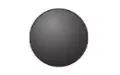
Each of the models can be categorized as a compound, a crystal, a molecule or an element. The picture below is described as
a)
crystal
b)
element
c)
molecule
d)
compound
12.
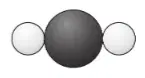
Each of the models can be categorized as a compound, a crystal, a molecule or an element. The picture below is described as
a)
crystal
b)
element
c)
molecule
d)
compound
13.
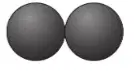
Each of the models can be categorized as a compound, a crystal, a molecule or an element. The picture below is described as
a)
crystal
b)
element
c)
molecule
d)
compound
14.

The model on the left represents a water molecule with one oxygen atom and two hydrogen atoms. The other model represents a one-sided view of a sucrose molecule, which has 12 carbon atoms, 11 oxygen atoms and 22 hydrogen atoms. Which statement about molecules is correct?
a)
Both molecules are compounds.
b)
Neither molecule is a compound.
c)
Water is a compound, but glucose is not.
d)
Sucrose is a compound, but water is not.
15.
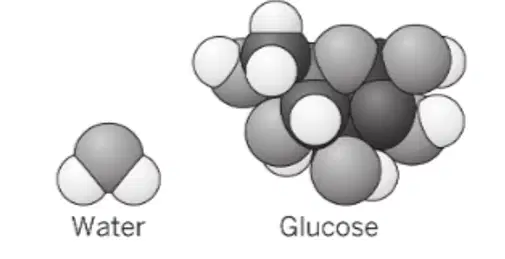
The model on the left represents a water molecule with one oxygen atom and two hydrogen atoms. The other model represents a one-sided view of a sucrose molecule, which has 12 carbon atoms, 11 oxygen atoms and 22 hydrogen atoms. What makes up a molecule?
a)
Two or more molecules make up a compound.
b)
Molecules that have more atoms are compounds.
c)
Molecules made up of exactly two types of atoms are compounds.
d)
Molecules that are made up of two or more types of atoms are compounds.
16.
A substance undergoes a chemical change. The result is a new substance with new properties. However, when a substance undergoes a physical change, it is often reversible. The substance has a new physical properties, but its chemical properties do not change. Based on your observation of the combinations of salt and water as compared to baking soda and vinegar, which statements is TRUE?
a)
Salt and water went through a physical change.
b)
Salt and water went through a chemical change.
c)
Baking soda and salt went through a chemical change.
d)
Baking soda and vinegar went through a physical change.
17.
When a chemical reaction occurs, a new substance forms from other substances, but the total mass stays the same. Which model BEST represents a chemical reaction?
a)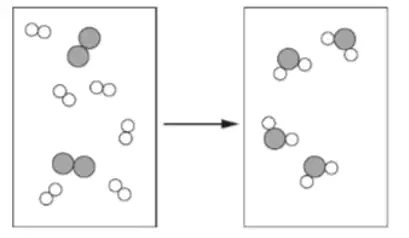
Option 1
b)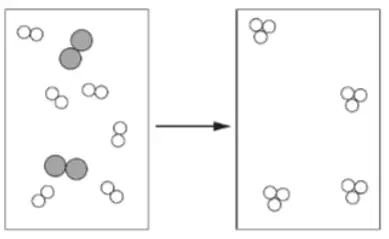
Option 2
c)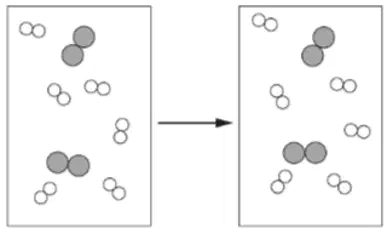
Option 3
d)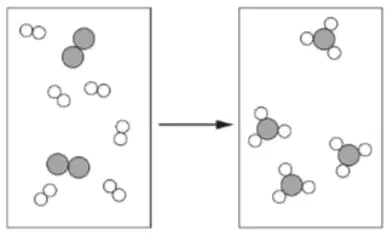
Option 4
18.
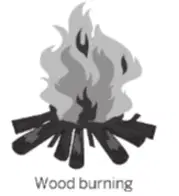
Identify the following pictures as either physical or chemical change.
a)
Physical Change
b)
Chemical Change
19.
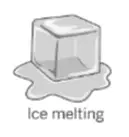
Identify the following pictures as either physical or chemical change.
a)
Physical Change
b)
Chemical Change
20.
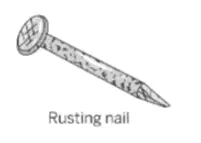
Identify the following pictures as either physical or chemical change.
a)
Physical Change
b)
Chemical Change
21.
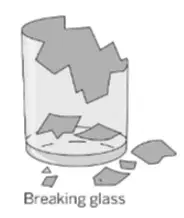
Identify the following pictures as either physical or chemical change.
a)
Physical Change
b)
Chemical Change
22.
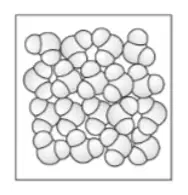
The models below represent the same substance with different amounts of thermal energy. Which of the following describes the amount of thermal energy the model represent?
a)
least thermal energy
b)
moderate thermal energy
c)
most thermal energy
23.
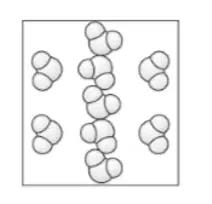
The models below represent the same substance with different amounts of thermal energy. Which of the following describes the amount of thermal energy the model represent?
a)
least thermal energy
b)
moderate thermal energy
c)
most thermal energy
24.
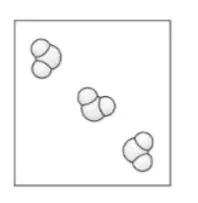
The models below represent the same substance with different amounts of thermal energy. Which of the following describes the amount of thermal energy the model represent?
a)
least thermal energy
b)
moderate thermal energy
c)
most thermal energy
25.
Salt and water is mixed together, identify whether each observation is an evidence of physical or chemical change. OBSERVATION: We could taste the salt in the water.
a)
Physical Change
b)
Chemical Change
26.
Baking soda and vinegar is mixed together, identify whether each observation is an evidence of physical or chemical change. OBSERVATION: Bubbles were created and the bag expanded.
a)
Physical Change
b)
Chemical Change
100 %

