
Font size
 Worksheets
G7 PLANTS AND THEIR SYSTEM
Total questions: 130
Worksheet time: 2hrs 10mins
Diffusion is an active process that requires a cell to expend a great deal of energy.
True
False
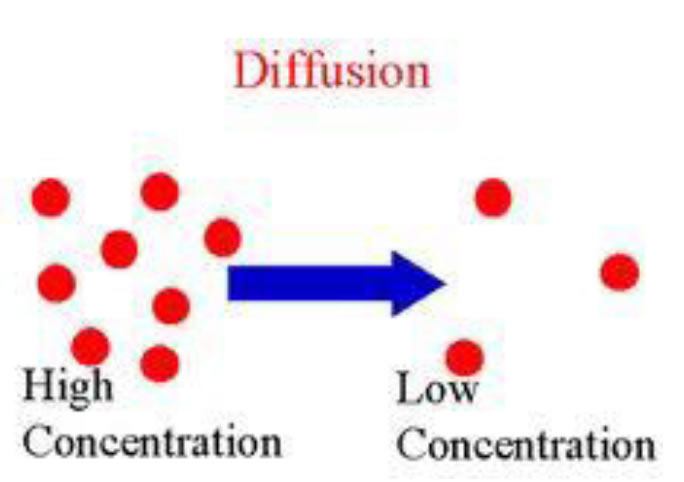
During diffusion, molecules diffuse from a region where their concentration is low to a region where their concentration is higher until they are evenly dispersed.
True
False
A cell placed in a strong salt solution would probably burst because of an increase in osmotic pressure.
True
False
When the concentration of solutes outside the cell is equal to the concentration of solutes inside the cell, the cell solution is isotonic relative to its environment.
True
False
Diffusion occurs only in living systems.
True
False
The transport of specific particles through a membrane by carrier proteins is known as facilitated diffusion.
True
False
Ion channels are usually able to transport only one type of ion.
True
False
Facilitated diffusion moves molecules and ions in one direction only, while active transport moves them in two directions.
True
False
In active transport, energy is required to move a substance across a cell membrane.
True
False
Both the sodium-potassium pump and the proton pump require energy to move particles across the cell membrane.
True
False
The sodium-potassium pump moves sodium and potassium ions against the concentration gradient.
True
False
Exocytosis helps the cell rid itself of wastes.
True
False
During the process of exocytosis, the cell membrane extends to engulf substances that are too big to pass through the cell membrane.
True
False

The following A,B,C and D are considered:
Catabolism
Anabolism
Substates
Enzymes
The unidentified red structures are considered to be a/an:
Catabolism
Product
Substates
Enzymes

Identify the following diagram
Metabolism
Dehydration
Anabolism
Catabolism

Identify the following structure:
Dehydration synthesis
Catabolism
Anabolism
Metabolism
Which of the following terms specifically describes the metabolic process of breaking down large molecules?
Catabolism
Metabolism
Anabolism
Dehydration
Which of the following statements is TRUE regarding anabolic pathways?
They are used for digesting sugars.
They consume energy to build up polymers from monomers.
They release energy by breaking down polymers into monomers.
They increase the entropy of the organism.

What is the purpose of photosynthesis?
To release energy
To create glucose
To grow
To get oxygen for respiration
Photosynthesis is the process in which humans, and animals use energy from sunlight to produce sugar.
True
False

An organism that produces its own nutrients from inorganic substances or from the environment instead of consuming other organisms.
Autotrophs
Heterotroph
Omnitrophs
Herbitrophs
which of the following statements are TRUE about organisms in the Domain Bacteria
consist of bacteria and cyanobacteria
some are photoautotroph
genetic material is single stranded
organelles are not present
Cyanobacteria are…
Photoheterotrophs
Photoautotrophs
Chemoautotrophs
Chemoheterotrophs

Autotrophs that convert light energy into chemical energy are called ____.
photoautotrophs
heterotrophs
chemoautotrophs
omnivores
Using the energy of sunlight to make organic molecules from H2O and CO2
Autotrophs
Photoautotrophs
Chemoautotrophs

What color is chlorophyll?
Green
Blue
Red
Purple
What is the compound that plants use to absorb the energy from sunlight?
Carbon dioxide
Chlorophyll
Nitrogen
H2O

__________ is the process that plants use to breathe and make food.
Photographs
Oxygen
Hydrogen
Photosynthesis
If plants breathe in carbon dioxide, what do they breathe out?
Nitrogen
Oxygen
Carbon monoxide
Helium
Sunlight is the main source of energy that drives photosynthesis process.
True
False
__________ and ______ are the 2 stages of photosynthesis.
Cellular respiration
Citric Acid C
Light Reactions
Calvin Cycle

What 3 things do plants need for the process of photosynthesis?
Sunlight, oxygen and sugar.
Water, soil and oxygen.
Sunlight, carbon dioxide and water.
Sunlight, soil and water.

The plants gets its nutrients from sugar, called __________.
Galactose
Fructose
Sugar
Glucose

This image correspond to___________.
Flower
Oxygen
Carbon dioxide
Sunlight

this image correspond to ___________.
Water
Chlorophyll
Sunlight
Oxygen
Photosynthesis occurs in:
Mitochondria
Chloroplasts
Humans
Animals
Mitochondria and Chloroplasts are:
organelles
cells
only in humans
only in plants


What are the reactants in Photosynthesis?
Sun, CO2, glucose
glucose and oxygen
sun, carbon dioxide, water
water, glucose
In photosynthesis, what kind of molecule does hydrogen start in?
water
oxygen
glucose
carbon dioxide
In cellular respiration, carbon starts out in the glucose molecule, but ends up in a(n)
oxygen molecule
water molecule
CO2 molecule
C6H12O2 molecule
In what process does ATP get created?
photosynthesis
cellular respiration
radiation
chemical
How do humans get glucose so they can live?
breathe it in
photosynthesis
eat food
drink liquids
Cellular respiration happens
only in plants
only in animals
only in humans and animals
in plants and animals
Where in a plant cell does photosynthesis take place
Palisade cells
Chlorophyll
Chloroplasts
Vacuole
The products of cellular respiration are
air and water
carbon dioxide, water, and ATP
glucose and carbon dioxide
ATP, glucose, and oxygen
Foods synthesized in the process of Photosynthesis by plants is stored as
Starch
Protein
Vitamins
Fats
Which of these is the correct equation for photosynthesis?
6O2 + C6H12O6 --> 6CO2 + 6H2O
6O2 + 6CO2 --> C6H12O6 + 6H2O
6CO2 + 12H2O --> C6H12O6 + 6H2O + 6O2
6CO2 + 6H2O --> O2 + C6H12O6
Which of these are limiting factors for photosynthesis? Choose 3 answers.
Light intensity
CO2 concentration
Temperature
Light
CO2 levels
Choose the statement that best describes light reaction.
It converts CO2 to sugar molecule
It converts light energy to chemical energy of ATP and NADPH
It takes place in the stroma

What supplies the electrons during photolysis?
oxygen
water
glucose
rubisco
What is the unit of light?
proton
photon
photosystem
Which part of a flower is known to attract pollinators?
Stem
Leaf
Pollen
Colorful Petals
When the number of water molecules outside of the cell is greater than inside the cell, which will most likely occur?
Molecules of water will NOT MOVE either way.
Molecules of water will move OUT of the cell.
Molecules of water will move INTO the cell.
Molecules of water will EVAPORATE.
A cell that is unable to import substances required to process chemical energy is most likely a result of a malfunctioning of the ____________________.
cell membrane
golgi body
endoplasmic reticulum
nuclear envelope
Cell membranes are described as selectively permeable.
Four students were asked to explain what this means. Which one is correct?
Student 1: Cell membranes prevent all materials from entering the cell.
Student 2: Cell membranes only provide structural support for the cell.
Student 3: Cell membranes regulate which substances can enter and exit the cell.
Student 4: Cell membranes allow water and water-soluble substances to enter the cell.
Which part of the cell controls the movement of substances?
mitochondria
cell membrane
chloroplast
nucleus
The thin, semi-permeable membrane that encloses a cell allows nutrients to enter and wastes to be ____________________.
digested
recycled
protected
removed
All of the following are functions of a cell membrane EXCEPT
surrounding and protecting the contents of the cell.
releasing waste products from the cell.
producing energy for the cell processes.
allowing gases to enter the cell.
Why are water molecules able to enter the egg but NOT the sugar molecules?
Sugar molecules are too heavy.
The holes of the semi-permeable membrane were too small to let sugar molecules through.
Semi-permeable membranes need energy.
Semi-permeable membranes must be under pressure to work.


The fluid mosaic model of the membrane proposed that membranes:
consist of a single layer of phospholipids and proteins
consist of a phospholipid bilayer composed of a variety of fatty acids
Consist of protein molecules embedded in a dynamic bilayer of phospholipids
consist of a phospholipid bilayer between two layers of hydrophilic proteins

Where can carbohydrates be found when part of a plasma membrane?
On the outside of the membrane
On the inside of the membrane
Embedded part of the way into the membrane
Embedded the whole way through the membrane
All of the above
Name the lipid present in cell membrane.
Glycolipid
Phospholipid
Triglyceride
oil
(a) prevents fatty acid molecules from sticking together.
Number of lipid bilayers present in cell membrane
2
3
4
0
Making ATP is an _____________reaction
anabolic
catabolic
What is the function of ATP in living things?
provides energy for cells
stores genetic information
provides structure in the nucleus
uses fat for energy


The transport of food into cells involves the action of the sodium-potassium pump and ____________________ channels.
coupled
tripled
Ox
development.
Oxidation reduction
Which of the following describes oxidation?
Select one:
loss of electrons or gain of oxygen
gain of electrons or loss of H atoms
loss of electrons or gain of hydrogen
loss of electrons or loss of oxygen
Hypertonic
The solution contains a high concentration of solute an and low concentration of water
Hypotonic
The solution contains a low concentration of solute an and high concentration of water
Isotonic
The solution has an equal concentration of solute and water compared to the inside of the cell
Simple Diffusion
When molecules passively cross the plasma membrane through the phospholipid bilayer
Facilitated Diffusion
When molecules passively cross the plasma membrane through a channel protein
Osmosis
The movement of water across the cell membrane
Endocytosis
Bringing in large materials through the cell membrane into a vacuole.
Exocytosis
Moving larger amounts or large quantities of materials through the cell membrane

