
Font size
 Worksheets
EOC Mastery Check
Total questions: 40
Worksheet time: 2hrs 41mins

F
G
H
J

F
G
H
J

F
G
H
J

F
G
H
J
Which table best compares the events that occur during different stages of the cell cycle?


An illustration of how a particular DNA mutation will most likely affect the polypeptide produced is shown. What type of mutation is illustrated?
Insertion
Translocation
Substitution
Deletion
Which diagram demonstrates how crossing-over contributes to genetic variety during meiosis?


The arctic fox inhabits northern areas of North America. The same arctic fox is shown in the drawing at different times of the year. What causes this change in fur color?
A) The alleles for fur color change as the arctic fox grows older.
B) Gene expression for fur color is regulated by latitude.
C) The arctic fox has two traits for fur color that are determined at birth.
D) Gene expression for fur color is regulated by temperature.

Some angelfish colors are determined by codominance. Possible phenotypes and genotypes of angelfish colors are shown.
Which table shows the expected phenotypes of offspring resulting from a cross between a black angelfish and a black-lace angelfish?


Homologous structures are defined as anatomical structures originating from the same structure in ancestral form. For instance, a bird's wing and the front flippers of a seal are examples of homologous structures. Which of the following does the presence of homologous structures in vertebrates suggest?
All vertebrates developed at the same rate.
All vertebrates developed internally.
All vertebrates evolved from different animals.
All vertebrates have a common ancestor.

Scientists can determine relatedness among organisms by comparing partial amino acid sequences. The table shows four partial amino acid sequences from four organisms. Which organism is the LEAST related to the other three organisms?
Organism 1
Organism 2
Organism 3
Organism 4

Blue flying fish live in the upper layers of the ocean. Blue flying fish have enlarged pectoral fins that enable them to glide for 400 meters above the ocean surface and appear to fly. Which statement best describes how natural selection led to enlarged pectoral fins in blue flying fish?
Fish were able to glide out of the ocean and into other bodies of water to mate with other species.
Fish were able to live both on land and in the water as a result of their larger pectoral fins.
Fish with enlarged pectoral fins were able to glide out of the ocean to escape predators, increasing their fitness.
Fish changed their DNA to express enlarged pectoral fins, changing the allele Frequency of the population.
Why is it important to assign each organism a scientific name?
Each scientific name applies to only one species, making it universally identifiable to scientists.
Each scientific name allows scientists to better study the behavior of an organism.
The scientific name allows scientists to develop common names for organisms.
The scientific name describes how an individual looks relative to others of the same genus.

Positive thigmotropism is a response in plants in which they move and grow toward an object the plant comes into physical contact with, usually curling around the object.
This response of the shoot system benefits the plant by allowing the plant to —
produce more pollen for pollinators
take in more carbon dioxide to convert into glucose
absorb more water to transport to the leaves
reach more sunlight for photosynthesis

Students studying the interaction among the reproductive parts of flowering plants make the graphic organizer shown.
Which terms best complete the numbered
blanks in the flowchart?
(1) filaments (2) petals
(3) stigma
(1) petals (2) ovule
(3) stigma
(1) filaments (2) petals (3) ovule
(1) petals (2) stigma (3) ovule

A model of an enzyme and its corresponding substrate is shown.
Which model best represents the molecule at the end of the reaction?


Both the respiratory system and the digestive system involve the uptake of necessary molecules from an animal’s surroundings. Alveoli are tiny sacs that aid in the exchange of carbon dioxide and oxygen in the lungs. Intestinal villi are tiny projections along the lining of the intestines used to take in nutrients from food passing through.
Which system must interact with the respiratory and digestive systems to transport gases and nutrients throughout the body?
Endocrine
Integumentary
Immune
Circulatory

A model of two structures that perform cellular processes is shown.
What are the products of the cellular process in these organelles?
I: glucose and carbon dioxide II: oxygen and water
I: carbon dioxide and oxygen II: glucose and water
I: oxygen and glucose II: water and carbon dioxide
I: carbon dioxide and water II: glucose and oxygen


What would happen if the population of zebras decreased?
There would be less grass for other animals.
Populations of lions & hyenas would decrease.
Termites would have no food.
Baboons would have more competition for food.

Which organism fills more than one role in this ecosystem?
carrots
owls
birds
grasshoppers


Which statement best describes how a virus replicates?
A virus divides into two identical virus particles before infecting the host cell.
A virus enters a host cell and uses the materials from the host cell to produce new virus particles.
Multiple virus particles fuse and form a large particle that breaks apart, releasing new virus particles.
Multiple virus particles break down in component parts, which then reassemble into new copies of the virus.
When a stem cell divides, it produces two daughter cells. One daughter cell will remain a stem cell, while the other daughter cell will differentiate into a specialized cell.
Which factor will most directly determine what type of specialized cell will be produced?
The size of the cell.
The length of the cell cycle.
They number of chromosomes that are replicated.
The genes that are expressed.
Which type of movement across a cell's plasma membrane requires energy supplied by ATP?
Passive Transport
Simple Diffusion
Active Transport
Osmosis
Which property is shared by the cells of all living things?
The cells contain DNA composed of adenine, thymine, guanine, and cytosine.
The cells are surrounded by a phospholipid bilayer and a cell wall made of cellulose.
The cells have chromosomes that are located inside a membrane-bound nucleus.
The cells rely on mitochondria to carry out aerobic cellular respiration.
Snowshoe hares can be found living in the Rocky Mountains of New Mexico. During the summer months, when there is no snow on the ground, the snowshoe hare’s coat color is typically brown. During the winter months, when the mountains are covered in snow, the snowshoe hare’s coat is typically white. Which statement describes the genetic basis for the seasonal changes in coat color?
The snow causes mutations in the genes that regulate coat color so that snowshoe hares are adapted to their environment during the winter months.
The genes that control coat color are regulated by hormone signals that are altered by changes in environmental factors.
Sunlight causes cancer cells to develop in the bodies of snowshoe hares, resulting in an apparent brown-colored coat as a result of hair loss.
The genes that control coat color in snowshoe hares are deleted from the genome during the summer months.
In Texas Longhorn cattle, coat coloration is an inherited trait. What is the genetic basis of coat-color variation in Texas Longhorn cattle?
Differences in the nucleotide sequences of genes
Differences in the numbers of chromosomes in cells
Differences in the diets of individual cattle
Differences in the environmental conditions of different geographic areas
Which characteristic do all organisms in Kingdoms Animalia, Protista, and fungi have in common?
The are eukaryotic.
They are prokaryotic.
They are unicellular.
They are multicellular.
Cross-pollination of flowers from different populations of the same species will most likely result in ---
gene flow as new alleles are introduced
evolution of a different species as alleles mis
hybrid sterility as gametes from different individuals are incompatible
a decrease of genetic variation among individuals
Which sequence represents the levels of organization found in a multicellular organism, from smallest to largest?
cell --> tissue --> organ --> organ system
organ system --> organ --> tissue --> cell
tissue --> organ --> organ system --> cell
cell --> organ system --> organ --> tissue
Which answer choice best describes a community?
praying mantises caring for their young
three-spined sticklebacks living in estuaries
different specifies of lizards occupying the same niche (area) in a desert
roosting mother bats recognizing their offspring
Which statement best describes an interaction between the muscular system and the respiratory system?
The hormone adrenaline causes blood vessels to contract and send more blood to major muscles.
Metabolic wastes generated by muscle cells are eliminated in urine.
The diaphragm contracts causing the chest cavity to expand, which draws air into the lungs.
Nutrients absorbed in the small intestine are transported in blood to the brain.
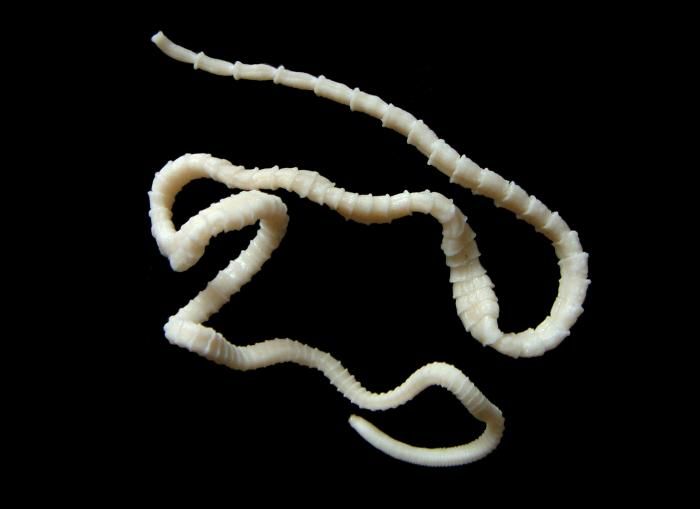
A tapeworm lives in the intestine of a cat absorbing nutrients through its skin. A tapeworm and a cat have this type of relationship.
mutualism
parasitism
commensalism
competition
Decomposer
This is an organism that breaks down and gains nutrients from dead organisms.
Predator
This is an animal that lives by preying on other animals.
Producer
This is an organism that supplies matter and energy, also known as an autotroph.
Consumer
This is an organism that relies on other organisms for its food and energy supply; heterotroph
Parasite
This is an organism which feeds on, but usually does not kill, a larger organism

