
 Worksheets
General Revision (Grade 5 2nd Term)
Total questions: 55
Worksheet time: 18mins


The ___________ is the sphere that contains all of the earth’s rocks.
The process that takes place as rocks are broken down into smaller pieces is called _____
erosion
weathering
climate
10. When rocks have been broken down and are later moved by wind, water, or ice, that's called _____
erosion
mechanical weathering
chemical weathering
Which aquatic ecosystem has large bodies of saltwater that are divided by continents?
oceans
estuaries
lakes
ponds
Which aquatic ecosystem is found where the freshwater rivers meet the ocean?
ocean
estuary
lake
pond

A saltwater ecosystem the appears at low tides and disappears at high tides (____________________).
Shallow area

What are the 3 key parts of the water cycle?
Evaporation, Precipitation, Gravity
Evaporation, Condensation, Precipitation
Trees, Rivers, Clouds

Rain
stream
Rain
shallow area

The diagram shows a situation.
What will happen if we don't prevent this activity?
Rubbish will decrease
Pollution will happen
Rubbish will turn into natural fertilizer
Sand, charcoal and cotton can be used to remove all the following materials.
from wastewater, except .......
a. small pieces of plastic.
. b. salt dissolves in water.
c. small particles of mud.
d. small pieces of rocks.
Water covers nearly ........... of the Earth planet.
1/2
3/4
1/5
1/7
Which of the following is found between porous of rocks below Earth's surface? .......... .
Ice.
Groundwater.
Oceans.
Water vapor.
All the following are characteristics of abyssal zones, except.........
they are very deep areas
sunlight cannot reach them.
they are dark areas.
they are shallow areas.
Water lilies can live in .......... .
ponds.
seas.
oceans.
deserts.
The correct flowing of water bodies that are connected with others is ......
bigger rivers ➡️tributaries➡️oceans
tributaries➡️ bigger rivers ➡️oceans.
oceans➡️tributaries➡️bigger rivers .
bigger rivers ➡️oceans➡️ tributaries.
Prevent developing of Ras Mohammed Protectorate is considered as an example of .......
preservation.
sustainability.
pollution.
consumption
When you push or pull something, you are creating_________________.
Weight
a speed
a force
a surface
What is gravity?
Gas
A force
A mass
The atmosphere
What would happen if there was no gravity?
Everything would float
Everything would be the same
Nothing would change
Everything would sink
What is gravitational pull on Earth?
A force that pulled objects around us towards the centre of Earth
A force that pushes objects around us towards the centre of Earth
A force that pulled objects around us towards the bottom of Earth
Any object with mass has gravity.
True
Sometimes
False
Never
The force that opposes the movement of objects as they pass through air is known as.......
Magnetism
Air resistance
Gravity
Electric
The force of......... keeps the planets on their paths around the Sun.
Air resistance
Friction
Gravity
Electricity
Magnetism is a force that attracts objects made of the following materials, except ..........
Iron
Nickel
Wood
Cobalt
........... is considered as a type of friction force.
Gravity
Air resistance
Electric force
Magnetism
Gravity depends on the ............of an object.
Speed
Mass
Length
Age
Gravitational force of Earth is affected by.......
Mass only
Mass and speed
Distance only
Mass and distance
If there is no Earth's gravity, the moon would ...........
revolve faster around Earth.
still orbit Earth.
float off into space.
attract to Earth.
As mass increases, gravitational forces:
Increase
decrease
stay the same
disappear

Which model has greater gravitational attraction.
model A
model B
both models have equal gravity
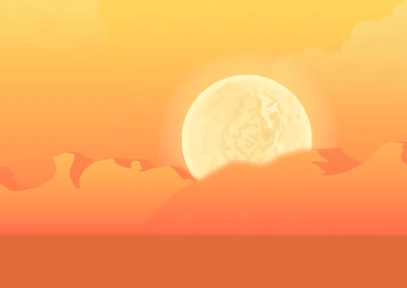
The sun rises in the east and sets in the west.
True
False

What is the name of this shape of the moon?
new moon
crescent moon
full moon

Where is the sun at noon?
in the middle of the sky
in the east
in the west
What word is used to describe stars patterns in the sky?
moons
circles
constellations
suns
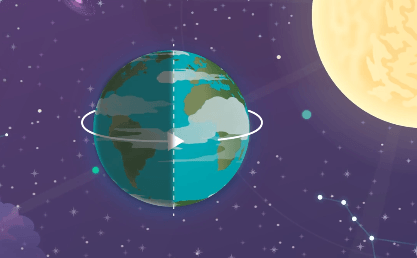
the year
the cycle of seasons
the cycle of day and night

the Earth on its axis
The sun is the only star in our solar system?
False
True
Earth's spinning around its axis is called:
Rotation
Revolution
Summer
Fall
Earth's movement around the sun is called:
Rotation
Revolution
Summer
Fall
Shadows are the longest during _______.
morning and before sunset
noon only
night
Shadows are the shortest around______.
morning and evening
noon
night
Why do shadows made by the Sun move throughout the day?
Because the weather changes
Because someone moves the objects
Because the sun appears to move across the sky
Because it's magic!

A pattern of stars in the sky is called a _____________.
combination
star shape
universe
constellation
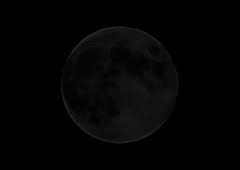
Second Quarter
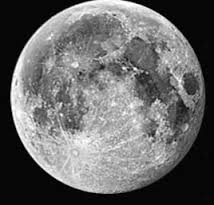
Second Quarter
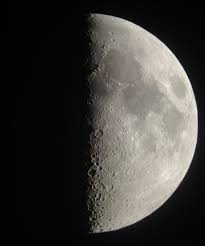
Name the moon phase.
Second Quarter

name the picture
gibbous moon
new moon
full moon
crescent moon

