
 Worksheets
Macromolecules, Cells and DNA
Total questions: 40
Worksheet time: 25mins
What macromolecule is made up of C,H,O,N?
Carbohydrates
Lipids
Proteins
Nucleic acids
What is the function of Carbohydrates?
Long-term energy
Muscle development
Short-term energy
enzyme activity
Which macromolecule has amino acids as monomers?
Carbohydrates
Lipids
Proteins
Nucleic acids
Which one of the macromolecules are instrumental in the cell membrane?
Carbohydrates
Lipids
Proteins
Nucleic acids
Which one of our macromolecules would you consume in order to receive long-term energy?
Carbohydrates
Lipids
Proteins
Nucleic acids
My monomers are glycerol and fatty acids. Which macromolecule am I?
Carbohydrates
Lipids
Proteins
Nucleic acids
My monomers are monosaccharides. Which macromolecule am I?
Carbohydrates
Lipids
Proteins
Nucleic acids

Which macromolecule has this structure?
Carbohydrate
Lipids
Proteins
Nucleic acids

Which macromolecule is structured this way?
Carbohydrates
Lipids
Proteins
Nucleic acids

Which of the macromolecules are structured in this way?
Carbohydrates
Lipids
Proteins
Nucleic acids
What is the definition of OSMOSIS?
Diffusion of water through a selectively permeable membrane
Molecular structure that surrounds the cell and controls what enters and leaves the cell
Movement of molecules across the cell membrane against the concentration gradient
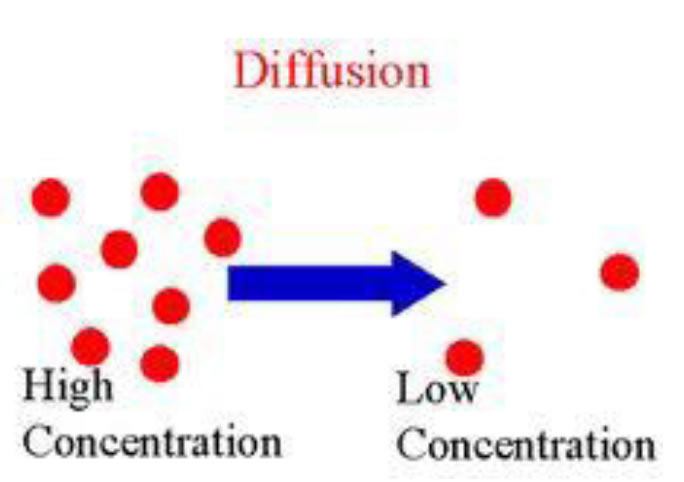
Movement of molecules across the cell membrane from an area of high concentration to low concentration
What is the definition of ACTIVE TRANSPORT?
Movement of molecules across the cell membrane against the concentration gradient
Diffusion of water through a selectively permeable membrane
Molecular structure that surrounds the cell and controls what enters and leaves the cell
Movement of molecules across the cell membrane from an area of high concentration to low concentration
In passive diffusion, substances always move...
from an area of higher concentration to an area of lower concentration
from an area with more of the molecules to an area with fewer of the molecules
from an area of lower concentration to an area of higher concentration
from an area with fewer of the molecules to an area with more of the molecules
What is the definition of FACILITATED DIFFUSION?
Movement of molecules across the cell membrane from an area of high concentration to low concentration
Diffusion of water through a selectively permeable membrane
Movement of molecules across the cell membrane against the concentration gradient
Molecular structure that surrounds the cell and controls what enters and leaves the cell

The organelle that is the control center of the cell and contains nearly all of the cell’s DNA:
Ribosome
Centriole
Nucleus
Rough Endoplasmic Reticulum

The organelle that assembles proteins in the cytoplasm:
Ribosome
Nucleus
Mitochondrion
Rough Endoplasmic Reticulum

The organelle where lipids are synthesized along with proteins and other materials that are exported from the cell:
Endoplasmic Reticulum
Golgi Apparatus
Vacuoles & vesicles
Nucleus

The organelle that modifies, sorts, and packages proteins and other materials from the ER for storage in the cell or release from the cell:
Endoplasmic Reticulum
Golgi Apparatus
Vacuoles and Vesicles
Ribosome

The organelle that breaks down lipids, carbohydrates, and proteins into small molecules that can be used by the rest of the cell:
Lysosome
Cytoskeleton
Golgi Apparatus
Chloroplast

The organelle that captures the energy from sunlight and converts it into chemical energy stored in food during photosynthesis:
Chloroplast
Mitochondrion
Cell Wall
Nucleus

The organelle that converts the chemical energy stored in food molecules into compounds that are more convenient for the cell to use:
Cell Wall
Cell Membrane
Mitochondrion
Centrioles
Animal cells can be distinguished from plant cells easily because of which of the following?
Animal cells have mitochondria and plant cells do not.
Plant cells have lysosomes and animal cells do not.
Only plant cells have centrioles around their nucleus.
Only plant cells have large central vacuoles and cell walls.
Jared observes a cell in biology lab with the light microscope. The cell has the following structures: nucleus, cell wall, and chloroplast. Identify the type of cell that Jared is observing.
animal
plant
fungus
bacteria

Identify this type of cell.
animal
plant
protist
bacteria
Carrie observes an electron micrograph of a cell during biology lab. The cell has a flagellum, ribosomes, cell wall, and no apparent nucleus. Which of the following is likely true of the cell that Carrie is observing?
The cell also contains mitochondria.
The presence of the organelles proves that the cell is eukaryotic.
The cell is a plant because of the cell wall.
The cell is prokaryotic.
Which structure in the cell destroys invaders such as bacteria and viruses, while also helping with the digestion of food particles?
cell membrane
endoplasmic reticulum
Golgi apparatus
lysosomes
Prokaryotes do not have a nucleus. Which of the following organelles is also NOT found in a prokaryote?
cell wall
ribososme
flagellum
mitochondria

This organelle is more often found in animal cells, and is known as the clean up crew or recycling center. It has a pH of 5 and uses enzymes to break down materials.
ribosome
rough ER
smooth ER
lysosome
What molecules make up the backbone of DNA?
nucleotides and phosphates
nucleotides and sugars
sugars and nucleotides
sugars and phosphates
Why is DNA replication considered to be semi-conservative?
the parental strands are conserved in one of the new DNA molecules
each new strand contains a parental strand and a new daughter strand
nucleotides are conserved on the leading strand
nucleotides are conserved on the lagging strand
The molecule DNA contains the four bases listed below.
A – adenine
C – cytosine
G – guanine
T – thymine
Which base pairings normally occur during DNA replication?
Guanine pairs with cytosine. Thymine pairs with thymine.
Adenine pairs with thymine. Cytosine pairs with guanine.
Thymine pairs with guanine. Cytosine pairs with adenine.
Cytosine pairs with cytosine. Thymine pairs with thymine.
The instructions for the genetic traits of an organism are directly determined by the
numbers of A, T, C, and G units in a sugar molecule
sequence of bases in DNA molecules
length of a DNA molecule
way the bases are paired in the two strands of a DNA molecule
Which statement is an accurate description of genes?
Proteins are made of genes and code for DNA.
Genes are made of proteins that code for nitrogen bases
DNA is made of carbohydrates that code for genes.
Genes are made of DNA and code for proteins.
In the early 1900s, experiments were conducted on two caterpillar species. The members of the two species were each divided into two groups. One group of each species was placed under red light, while the other group of each species was kept in the dark. When the caterpillars developed into butterflies, their wings showed extreme color differences. Exposure to red light resulted in intensely colored wings, while those kept in the dark had paler wing colors. The color differences were most likely due to
mutations in the color-producing genes
the caterpillars in the red light producing more DNA
gene expression being affected by the environment
the caterpillars in the dark evolving less than those in the light

Base your answer to this question on the Universal Genetic Code Chart and on your knowledge of biology.
When provided with a sequence of bases in one segment of mRNA, the Universal Genetic Code Chart is
used to
directly identify the DNA from an animal cell
determine the sequence of amino acids in a protein
change the RNA sequence of a protein into DNA
identify the specific mutations in the genetic material in a cell
In a cell, protein synthesis is the primary function of
ribosomes
mitochondria
chloroplasts
vacuoles
Which shows the correct complementary DNA strand of ATG?
ATG
TAC
TAG
CGC
Transcribe the following template strand into mRNA: AGGTTTCGA
UCCAAAGCU
TCCAAAGCT
AGCTTTGGA

