
 Worksheets
Biology STAAR Review B4 to B9
Total questions: 35
Worksheet time: 1hrs 2mins
4A. Students created note cards comparing characteristics of eukaryotic and prokaryotic cells. Which set of note cards most accurately compares these cells?


4C. An illness caused by a certain virus includes fever, rash, joint pain, red eyes, and headache. The virus is transmitted to people by infected mosquitoes. Symptoms quickly occur within three to twelve days after contracting the virus. There is no vaccine for this virus.
Which description best explains the reproductive cycle of this virus?
Lytic, because the virus is transmitted by mosquitoes
Lysogenic, because there is no way to vaccinate against it
Lytic, because of the quick incubation time
Lysogenic, because the virus causes a fever
4C Which statement best describes how a virus replicates?
A virus divides into two identical virus particles before infecting the host cell.
A virus enters a host cell and uses the materials from the host cell to produce new virus particles.
Multiple virus particles fuse and form a large particle that breaks apart, releasing new virus particles.
Multiple virus particles break down in component parts, which then reassemble into new copies of the virus.
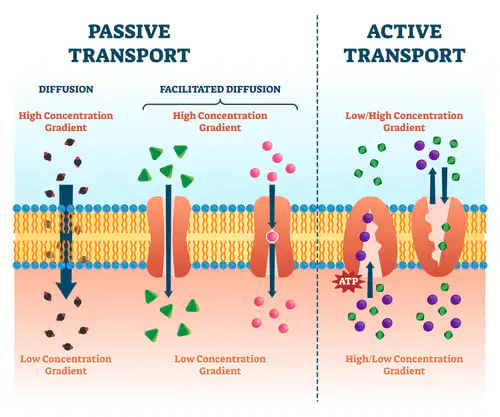
Which statement best describes the difference between active and passive transport?
Active transport occurs only in cells that require large amounts of energy
Passive transport occurs in all cells
Active Transport requires ATP(energy)
Passive Transport doesn't require ATP(energy)
Active transport moves substances along the gradient and Passive transports moves substances against it.
Facilitated diffusion needs what to get particles from one side of the membrane to the other?
a membrane-spanning protein
a surface protein
a phospholipid
a carbohydrate
These are considered to be living organisms _________________.
Viruses
Bacteria
Both viruses and bacteria
These are considered to be non-living particles __________________.
Viruses
Bacteria
Both viruses and bacteria
Which model accurately shows a cell progressing through mitosis? Remember PMAT


The activities in the cell cycle occur during specific phases. In which phase of the cell cycle is DNA replicated?
G1 Phase
S Phase
G2 Phase
Cytokinesis
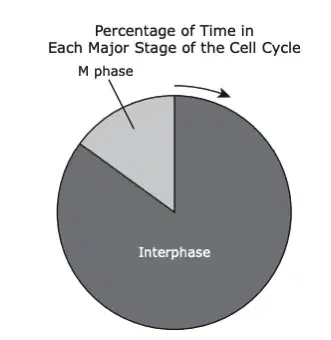
The diagram shows the major stages of the cell cycle and the percentage of time spent in each phase. Which statement best describes why a cell spends the majority of its time in interphase?
(5.A 2021)
The cell is growing and carrying out processes such as metabolism and DNA replication.
The cell is aging and processes are stopping as lysosomes clear dead cell matter away.
The cell needs time to synthesize spindle fibers to complete mitosis.
The cell needs time to complete cytokinesis.

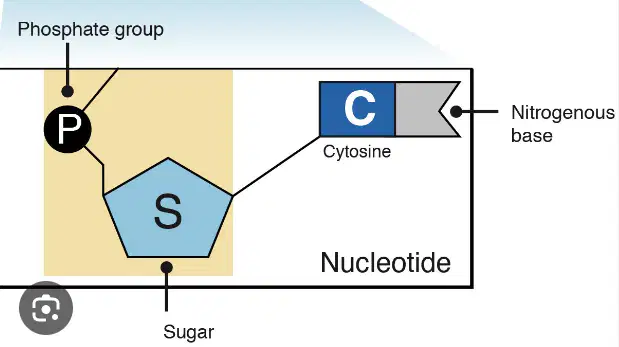
Which part of the DNA model is most directly associated with the coding of genetic information?


Which of these properties is found only in cancer cells?
Unregulated cell division
Regulated gene expression
Response to signals outside of the cell
Presence of mitochondria

Which base sequence correctly completes DNA Strand 2?
ATACGT
GCGTAC
CGCATG
TATGCA

In Texas Longhorn cattle, coat coloration is an inherited trait. What is the genetic basis of coat-color variation in Texas Longhorn cattle?
Differences in the nucleotide sequences of genes
Differences in the numbers of chromosomes in cells
Differences in the diets of individual cattle
Differences in the environmental conditions of different geographic areas
Which property is shared by the cells of all living things?
The cells contain DNA composed of adenine, thymine, guanine, and cytosine.
The cells are surrounded by a phospholipid bilayer and a cell wall made of cellulose.
The cells have chromosomes that are located inside a membrane-bound nucleus.
The cells rely on mitochondria to carry out aerobic cellular respiration.

An illustration of how a particular DNA mutation will most likely affect the polypeptide produced is shown. What type of mutation is illustrated?
Insertion
Translocation
Substitution
Deletion
Original DNA: TTA CGC AAG
Mutated DNA: TTC GCA AG.
This is an example of which type of gene mutation?
Substitution
Deletion
Insertion
Translocation
Original DNA: TGA CCA
Mutated DNA: TGA TCC A
This is an example of which type of gene mutation?
Substitution
Deletion
Insertion
Translocation

What type of chromosomal mutation is shown in the picture?
Inversion
Translocation
Deletion
Duplication
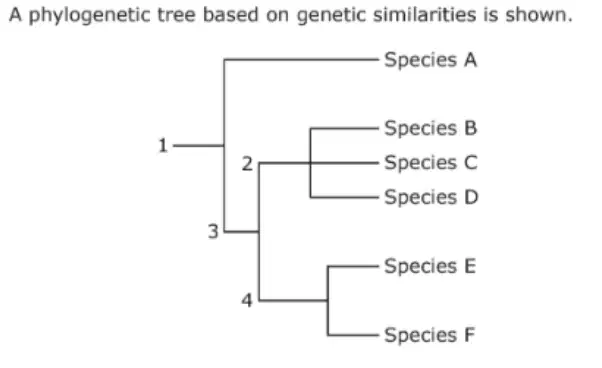
Which numbered location on the phylogenetic tree identified characteristic shred by species B,C, and D?
Location 1
Location 2
Location 3
Location 4
Natural Selection: Why are advantageous traits, like camouflage, more likely to be passed onto offspring?
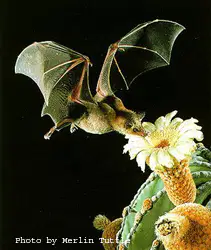
7E The Mexican long-nosed bat roosts in Big Bend National Park in West Texas. The bat feeds on nectar and pollen and hovers while it feeds. Additionally, its tongue can extend up to eight centimeters. The features of Mexican long-nosed bats are evidence of natural selection because the features are adaptations that —
lead to an increase in predation by other species of animals
show that most DNA mutations are necessary and advantageous but do not increase survival or reproductive success
help individuals outcompete other individuals for food resources to increase survival, reproductive success, and fitness
are the result of intentional breeding
Which graphic organizer best compares the energy inputs and outputs of cellular respiration
and photosynthesis?


parasitism

The picture shows what type of succession? This happens when a Volcano erupts or a glacier(ice) melts)

What type of succession is shown going from figure A to figure B?( you have soil)

Select the correct term for the following definition:
"The water transport system in plants."
Villi
Bronchi
Bolus
Xylem

Select the correct term for the following definition:
"The nutrient/glucose/carbs transport system in plants."
Enzyme
Guard cells
Phloem
Proteins

When the plant responds to touch this is an example of______?
(plant hormones cause them to move)
phototropism(light)
Thigmotropsim(touch)
hydrotropism(water)
geotropism(gravity)

The diagram shows the reproductive system of a plant.
Which of the following best describes the interaction that occurs between a plant’s reproductive parts during self-fertilization?
A.
Pollen is released from the anther and is transferred to the stigma. A pollen tube forms and grows through the style. The pollen tube reaches the filament, where the sperm fertilizes the egg.
Pollen moves from the ovule up through the style and is released from the stigma. The pollen is transferred to the anther, where the sperm fertilizes the egg.
Pollen is released from the anther and is transferred to the stigma. A pollen tube forms and grows through the style. The pollen tube reaches an ovule within the ovary, where the sperm fertilizes the egg.
Pollen is released from the stigma and is transferred to the anther. A pollen tube grows down from the anther through the filament and fuses with the ovule, where the sperm fertilizes the egg.

