
 Worksheets
State Test Review
Total questions: 90
Worksheet time: 52mins
The U.S. government opened an immigration station in 1892, over the next 62 years 12,000,000 immigrants passed through it. Where was this station?
Kelly Island
Long Island
Ellis Island
Oak Island
The Dawes Act changed the lives of the Native Americans by
breaking up reservations and turning Native Americans into individual property owners.
authorizing removal of Indians from their traditional lands to reservations
authorizing the U.S. Army to encourage people to kill buffalo.
creating the Bureau of Indian Affairs, which was responsible to teaching new farming skills to Native Americans.
A machine called the ________________ could produce legible documents very quickly.
telephone
telegraph
typewriter
There was little concern for workers in the climate of _________________ capitalism where there was little interference by the government.
Capitalism
mercantilism
free-market
Laissez-faire
Unions used ____________ to achieve their goals.
petitions
strikes
Created and enforced segregation.
Thomas Edison
Chief Joseph
Jim Crow Laws
Populist Party
Economic system in which most businesses are privately owned.
free-market
laissez-faire
mercantilism
capitalism
"New" immigrants in the late 1800s mainly came to the United States from northern and western Europe.
True
False
Native American children were sent to government funded boarding schools where they would be assimilated into US culture.
True
False
Labor organizations faced violent backlash from business owners that sometimes led to government intervention.
True
False

These were journalists who wrote book and articles that exposed corruption in business and government:
Progressives
Muckrakers
Sensationalists
Investigative reporters

This time period focused on social and political reforms in the United States in the early 1900s:
Civil War Era
Industrialization Era
Progressive Era
Reconstruction Era

People who were trying to get the 19th Amendment passed were supporting what?
Right to vote for 18 year olds
Right to vote for African Americans
Right to vote for women
Right to vote for those in prison

Those who wanted to make economic reform may have been concerned about which issue?
the influence of monopolies and trusts
eliminating political machines/bosses
conservation of natural resources
ending racial discrimination
Why would people go on strike?
To demand better working conditions
To demand for more money
To demand to work less hours
All of these are correct
What is a boycott?
When employees refuse to work.
When customers refuse to buy a product from a certain company.
When employers refuse to open their business
When everyone just goes to work on a normal day.
Why was The Jungle an important book?
It wasn't a book
It showed the poor condition of factories
It showed poor conditions of meat factories
It showed the poor condition of tenements
What did the 16th Amendment do?
Allowed the government to tax people's income
Allowed the government to relocate immigrants
Allowed the government the right to vote
Allowed people the right to vote
What did the 17th Amendment do?
Allowed the government to tax their income
Allowed people to vote
Allowed citizens the right to vote for their senators
Allowed citizens to vote for their governors

Suffrage is -
the right to vote
the right to suffer
the right to live
the right to speak
What was an unintended consequence of the Eighteenth Amendment?
It enabled criminal organizations to gain power and wealth.
It led to large changes in government as the voting population doubled.
It caused an increase in nativism and xenophobia in the country.
It weakened the power of labor unions to collectively bargain for workers.

The African-Americans in this painting are taking part in the --
Great Migration
Progressive Movement
Great Depression
Suffrage Movement
What was the cause of speakeasies and bootleggers?
Prohibition
Progressive Movement
Suffrage
Industrial Revolution
Which of the following was a result of Prohibition in the 1920s?
Fall of the stock market
More jobs on farms
Less unemployment in cities
Growth of organized crime
How was Henry Ford able to reduce the sale price of the Model T?
with the use of the assembly line
changing locations
importing all raw materials
increasing the wages of his workers
Period in the 1920s when suspected communists and other radicals were arrested due to the fear of the spread of communism.
Red Scare
Teapot Dome Scandal
Scopes Trial
KKK
This increased because of the radio, advertisements, and use of credit.
consumerism
national debt
immigration
education
Secret organization that hated African Americans, Jews, Catholics, and immigrants.
Ku Klux Klan
Kool Kids Klub
Kit Kat Kandy
Anti-Defamation League

A title given to the time of great artistic contributions by African-American musicians, writers, and artists.
The Great Migrations
The Great Depression
The Roaring 20's
The Harlem Renaissance


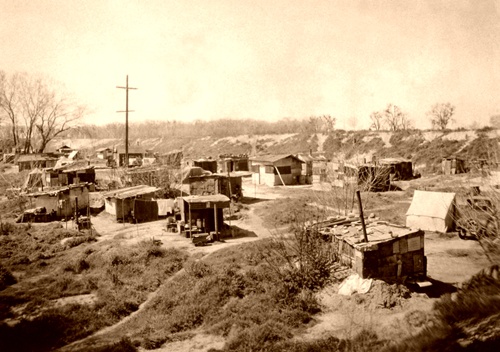
a nickname for the Great Plains regions hit by drought and dust storms in the early 1930s
the Great Depression
the Dust Bowl
the New Deal
Fireside Chats
What happens in the US in October 1929?
They elect a new president.
There is a huge earthquake that destroys a vast area.
The whole system crashes.
They invent penicillin.
How did Americans on the homefront contribute to the war effort during World War II?
They donated rubber and metal goods to scrap drives.
They purchased war bonds to help pay for the war effort.
Women worked in factories during the war
All of the above.
According to Order 9066, which people on the west coast were to be relocated?
People of Japanese ancestry
People of Hawaiian ancestry
People of Native American ancestry
People of French ancestry
Congress passed these acts to prevent US involvement in WW2
neutrality acts
isolationist acts
Roosevelt Acts
nuclear acts
spread of ideas for the purpose of helping or damaging a cause
propaganda
isolationism
appeasement
super bowl commercials
glorifies nation or race above individual rights
fascism
socialism
democracy
communism
Why did the US enter World War II?
Germany was attacking other nations.
The United States wanted to be allies and fight with Japan.
There was pressure from Congress to join the war.
The Pearl Harbor attack was unprovoked and put Americans in danger.
How did the role of women change during World War II?
Women were expected to enlist in the military as soldiers.
Women were needed to start working in jobs that used to belong to men.
Women were expected to run for political office to start negotiating for peace.
Women were expected to leave jobs and start staying home with their children.

Which describes the Lend-Lease Act?
Allowed the US to give military supplies to countries they felt had to be defended to protect US interests.
Let Allied powers purchase military ships if they paid in cash and carried them back home themselves.
Forced men of certain ages to register for military service.
Allowed the U.S. to bring back migrant farmers from Mexico to work in US farms.

Which choice below is synonymous with the poster seen here? (Hint...the name should give it away)
"Freedom" was being sought in Europe and on the homefront
Democracy was won in Europe but not in Germany
Victory was won in the U.S. but not in the rest of the world
Democracy was achieved after WWII for all countries

Look at the image here...one could argue that Bracero Program (designed to be a positive) actually hurt which minority group from WWII?
Blacks
Asians
Women
Hispanics
Policy adopted by the United States in 1939 to preserve neutrality while aiding the Allies. Britain and France could buy goods from the United States if they paid in full and transported them.
Lend Lease Act
Atlantic Charter
Neutrality Act
Cash and Carry
Incident that started the Spanish American war
The Maine blew up
The Lusitania blew up

TR's addition to the Monroe Doctrine that allowed US intervention was called the
Gentleman's Agreement
Treaty of Porstmouth
Roosevelt Corollary
Great White Fleet

What did Americans fear after the end of WWII?
The spread of democracy
The spread of NATO
The spread of communism
The spread of capitalism
Why did the United States send troops to Vietnam?
To stop the spread of NATO
To stop the spread of communism
To stop the spread of capitalism
To stop the spread of democracy
The Soviet Union place missiles in Cuba that were pointed toward the U.S. Why did this worry the United States?
The U.S. worried that Cuba would become communist
The U.S. worried that Nikita Khrushchev would get hurt
The U.S. worried that they would lose the territories that they gained during the Spanish American War
The U.S. worried that a nuclear war might start
What happened as an effect of the end of the Korean War in 1953?
The U.S. gained South Korea as a territory
North Korea and South Korea reunited
North Korea and South Korea remained divided
South Korea dropped an atomic bomb on North Korea
The Cold War was a war between the United States and the Soviet Union, but there was not actual combat involved. The war between these two countries was a rivalry between which of the following?
capitalism vs. facism
communism vs. dictatorship
socialism vs. communism
communism vs. capitalism
Which of the following events brought the world close to a nuclear war in the 1960s?
Space Race
Dropping of the atomic bomb
Cuban Missile Crisis
Construction of the Berlin Wall
An alliance called the North Atlantic Treaty Organization (NATO) was formed in 1949 by the leaders of several non-communist countries. Why was NATO formed?
to drop supplies to the people of East Berlin by the Berlin Airlift
to turn the Cold War hot
to keep the USSR from forcing communism on other countries
to encourage all of Western Europe that they should have a democratic government and a capitalist economy
Ended segregation in public places
Voting Act
Emancipation Proclamation
Civil Rights Act
Black Tuesday
Brown v. Board of Education was a decision by the Supreme Court that said...
Segregation in schools was unconstitutional
Segregation was legal as long as they were "separate but equal"
Black and white children could go to the same school but had to be in different classes
Black students had to use a separate bathroom

This planned communities sprang up after WWII. They were usually located outside major market cities; families would commute to work with their new luxury cars and homes were "cookie cutter" and affordable
Suburbs
Inner City
Ultraburbs
Shopping Malls

After the war, the ___?___ replaced radio and movies as the main entertainment for American families.
television
YouTube
internet
community swimming pool
The immigration Act of 1965
ended the previous quotas on immigration that discriminated against Asians, Africans, and Hispanics
ended immigration to the U.S. from Eastern Europe
resulted in new regulations on the industries of America
brought about Medicare and Medicaid
What was one outcome of the security impact of 9/11?
Increased international travel restrictions
Improved airport security measures
Decreased funding for defense systems
Enhanced diplomatic relations with other countries
Global communication increased in the 1990s due to use of
internet
flat screen TVs
cell phones
gaming systems
International trade, transnational business organizations, and overseas competition led to an increase in manufacturing jobs in the US.
True
False
Which of the following is not an impact of the 9/11 attacks?
formation of the TSA
Patriot Act
increase in Islamophobia
debates over health care
In this form of government, citizens elect representatives to make laws.
Federalism
Representative Democracy
Checks and Balances
Separation of Power
This system gives each branch of government some ability to check on the actions of the other two branches.
Due Process of Law
Separation of Power
Checks and Balances
Federalism
This idea was the basis for dividing the government into three branches.
Separation of Power
Checks and Balances
Federalism
Representative Democracy
This system assigns some powers to the national government and other powers to the state governments.
Checks and Balances
Federalism
Separation of Power
Due Process of Law
Why is the opening phrase of the Constitution, "We the people," important?
It shows who wrote it
It shows that the power of the government comes from the people
It shows who the Constitution rules over
It shows that the people don't care about the government
Which amendment in the Bill of Rights gives the people the right to due process of law, protection from double jeopardy, and the right to not incriminate oneself?
1
3
5
Which amendment in the Bill of Rights gives the people the right to freedom of speech, press, religion, assembly, and petition?
1
3
5
The Bill of Rights is the first...
10 articles
6 amendments
10 amendments
7 articles
The first article of the Northwest Ordinance and Amendment 1 of the U.S. Constitution both guarantee:
Freedom of religion
The right to peaceably protest
Freedom of the press
The right to own a firearm
What did the Northwest Ordinance say about punishments?
Only men could be punished under the law
Wronged citizens could choose the punishments of criminals
No cruel or unusual punishments were allowed
Criminals would be executed
Which of the following did the Northwest Ordinance of 1787 set land aside for in every township?
Police stations
A fort
City Halls
Schools

According to the Declaration of Independence who institutes or creates governments?
The King
The People
The Pope
The President
Which argument most logically follows from Jefferson's expressed ideas in the Declaration of Independence?
The rights of men should be supported over those of women.
Monarchy is a bad form of government because rulers
are not elected.
All forms of government destroy human rights and should be abandoned.
Any form of government that suppresses people's freedoms should be overthrown.
What are unalienable rights?
rights that can't be taken away
rights that can be denied
rights that are temporary
rights that can be removed at any time

