
 Worksheets
7th Science TN Ready Review
Total questions: 195
Worksheet time: 33mins
The amount of matter in an object is called ___________.
Volume
Density
Mass
Energy
What is the smallest piece of matter?
Atom
Molecule
Compound
Density
What is a substance that cannot be broken down into another substance?
molecule
compound
mixture
element
What is a group of two or more atoms held together by a chemical bond?
molecule
mixture
compound
element
What is a group of two or more different elements held together with a chemical bond?
mixture
atoms
molecule
compound
What does the law of conservation of matter state?
Matter can be made but not destroyed.
Matter cannot be made but can be destroyed.
Matter cannot be made or destroyed.
Matter can always be destroyed.
What state of matter has a definite shape and volume?
Solid
Liquid
Gas
Plasma
What state of matter has no shape or volume?
Solid
Liquid
Gas
Plasma
What state of matter has no shape but a definite volume?
Solid
Liquid
Gas
Plasma
If you want to change from a solid to a liquid to a gas, what must you add?
water
energy
acid
matter
How do atoms in a gas move?
They slide past each other.
They move very quickly all over the place.
They vibrate
They are frozen in place.

What state of matter is pictured?
Solid
Liquid
Gas
Plasma

Silverware tarnishing is an example of a _____ change
Physical
Chemical
Which of these is an element?
Salt (NaCl)
Water (H20)
Oxygen (O)
Carbon Dioxide (CO2)
Which of these is a compound?
Aluminium (Al)
Carbon Dioxide (CO2)
Nitrogen (N)
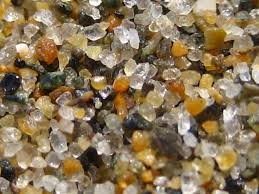
Sand
Air is:
An element
A compound
A mixture
None of these
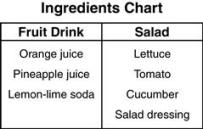
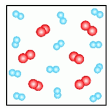
Using the information in the chart, which statement is the BEST description of the drink and salad?
A particle that moves around the nucleus of an atom is an _______.
Proton
Neutron
Electron
Quark
Particles in an atom that are neutral which means they have no charge are _____.
negatrons
electrons
neutrons
protons
The positive particles of an atom are called _____.
electrons
positrons
neutrons
protons

An atom has an atomic number of 15 and a mass number that rounds to 31. How many protons are there in the atom?
15
31
16
47

If an atom's atomic number is 2 and has a mass of 4, how many neutrons does the atom have?
2
4
6
0
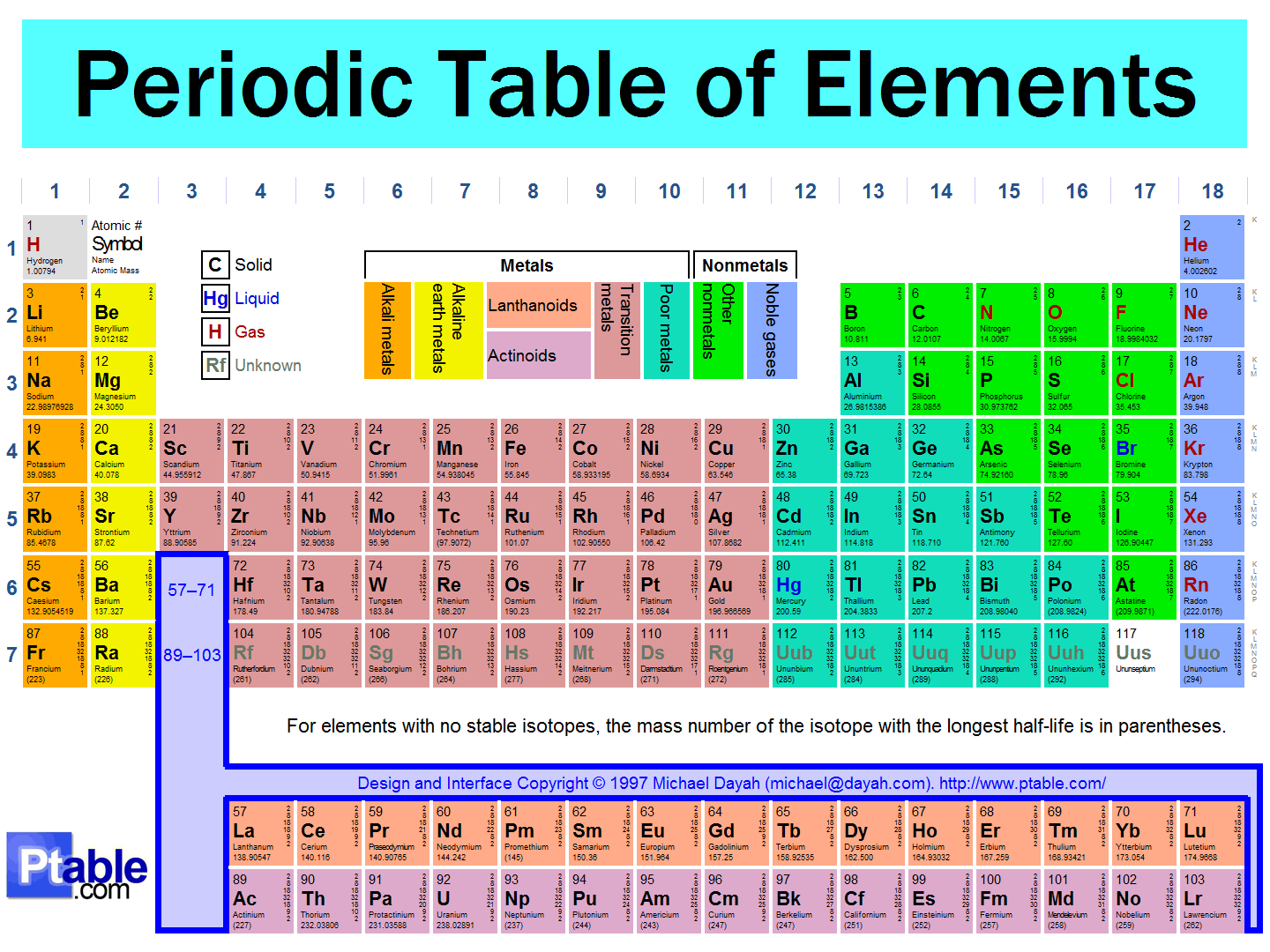
The vertical (up and down) columns in the Periodic Table are called
groups
towers
periods
atomic numbers
Elements in a .................. have similar chemical properties.
period
group
row
Which group of the periodic table is composed of inert (not reactive) gases?
answer choices
alkali metals
alkaline earth metals
halogens
noble gases
Which of the following converts food into energy for the cell?
vacuole
mitochondria
cytoplasm
cell membrane
Which organelle takes in "sun showers" and helps plants with the process or photosynthesis?
Vacuole
Mitochondria
Cytoplasm
Chloroplast
What type of cell has a nucleus?
eukaryotic
prokaryotic
neither
both
Prokaryotes do NOT have....
membrane bound organelles
DNA or RNA
Cell membrane
Life
Bacteria are considered what?
Eukaryotes
Prokaryotes

Which do BOTH prokaryotes and eukaryotes contain?
nucleus
mitochondria
ribosomes
cell wall
Which list of characteristics describes organisms classified as animals?
Unicellular, prokaryotic, autotrophic
Multicellular, eukaryotic, heterotrophic
Unicellular, eukaryotic, heterotrophic
Multicellular, eukaryotic, autotrophic

What kingdom am I? When you think of eukaryotic, mostly multi-cellular decomposers, you should think of me!
Plant
Fungi
Animal
Protist

In order to conduct photosynthesis, plant-like protists must contain a _______________.
Chloroplast
Mitochondria
Nucleus
None of the above

John received a microscope for his birthday and decided he would observe one of his mother’s plants. John tore a leaf from one of the plants and placed it under his microscope. The picture is what he observed:
organ
cell
organisn
tissue
Which diagram represents the most complex level of organization?


Why are diffusion and osmosis important to cells?
It allows them to take in materials/substances without using energy.
It allows them to reproduce.
It allows them to absorb sunlight.
It allows cells to use all energy.
What does selectively-permeable mean?
Allow certain things to enter and leave the cell
Nothing gets through
The cell lets only large substances through


What is the function of a chloroplast?
makes proteins for animal cells
allows materials in and out of the cell
provides structure and support
absorbs sunlight for photosynthesis
A large central vacuole is found in a _____ cell.
animal
plant
Which type of transport uses protein channels to help the particles move across the cell membrane?
endocytosis
osmosis
facilitated diffusion
exocytosis
In the given scenario, what will happen? An egg with a dissolved shell is placed in pure water for 48 hours.
Water will move in and out of the cell equally, and the cell with neither shrink nor swell.
The egg will gain water and swell.
The egg will lose water and shrink.
What is cellular respiration?
the breakdown of glucose to release ATP
the breakdown of glucose to release carbon
Which of the following is the correct equation for PHOTOSYNTHESIS?
6CO2 + 6H2O → 6O2 + C6H12O6
6CO2 + C6H12O6 + 6H2O → O2
6O2 +6H2O → 6CO2 +C6H12O6
C6H12O6 + 6O2 → 6H2O + 6CO2

Which of the following vocabulary words can be used to describe the grass in this food chain?
heterotroph, primary consumer
autotroph, producer
decomposer, secondary consumer
primary consumer, autotroph

Which of the following vocabulary words can be used to describe the frog in this food chain?
secondary consumer, heterotroph
heterotroph, tertiary consumer
autotroph, secondary consumer
decomposer, heterotroph

Fungi and bacteria would play which of these roles in a food web?
producer
heterotroph
autotroph
decomposer

How much energy is passed on to the next trophic level in an energy pyramid?
5%
1%
100%
10%

If the grass in this example had 10,000 Kcal of energy, about how much of that energy would be stored in trophic level 3?
100 Kcal
100,000 Kcal
10 Kcal
1,000 Kcal

What does the arrow actually represent in a food web or food chain?
Who is being eaten
Who is eating
The flow of energy
the direction of food
Why is it better to have more biodiversity in an ecosystem?
because biodiversity can help make ecosystems more sustainable
because biodiversity provides more energy
because biodiversity provides less energy
because it gives us more animals for the zoo
Main purpose is to produce new body cells
mitosis
meiosis
both
Main purpose is to produce sex cells
mitosis
meiosis
both
Main purpose is to produce new body cells
mitosis
meiosis
both
Main purpose is to produce sex cells
mitosis
meiosis
both
One cell division
mitosis
meiosis
both
Two cell divisions
mitosis
meiosis
both
Produces two new cells
mitosis
meiosis
both
Produces four new cells
mitosis
meiosis
both
Produces identical copies of the parent
mitosis
meiosis
both
Produces cells with half the number of chromosomes as the parent cell
mitosis
meiosis
both
Daughter cells identical to parent cell
mitosis
meiosis
both
Daughter cells NOT identical to parent cell
mitosis
meiosis
both
Daughter cells identical to each other
mitosis
meiosis
both
Daughter cells are gametes
mitosis
meiosis
both
In humans, produces cells with 23 chromosomes
mitosis
meiosis
both
Involves cellular division
mitosis
meiosis
both
In humans, produces cells with 46 chromosomes
mitosis
meiosis
both
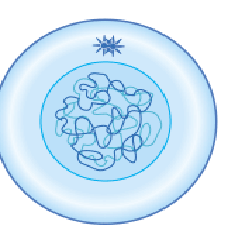
What phase am I?
Interphase
Prophase
Metaphase
Anaphase
Telophase
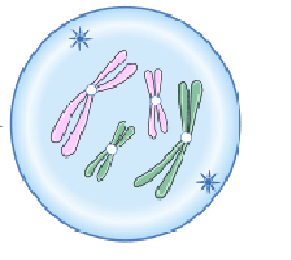
What phase am I?
Interphase
Prophase
Metaphase
Anaphase
Telophase
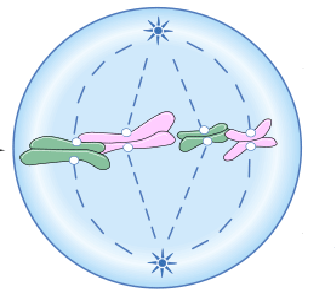
What phase am I?
Interphase
Prophase
Metaphase
Anaphase
Telophase
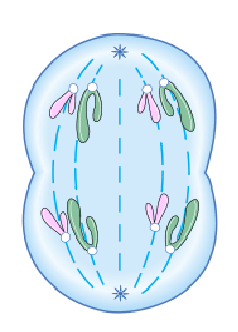
What phase am I?
Interphase
Prophase
Metaphase
Anaphase
Telophase
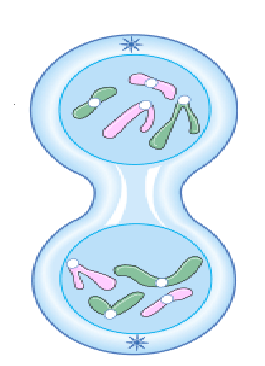
What phase am I?
Interphase
Prophase
Metaphase
Anaphase
Telophase
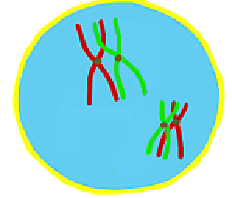
what phase am I?
Prophase 1
Metaphase 1
Anaphase 1
Telophase 1
Cytokinesis
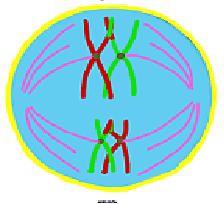
what phase am I?
Prophase 1
Metaphase 1
Anaphase 1
Telophase 1
Cytokinesis
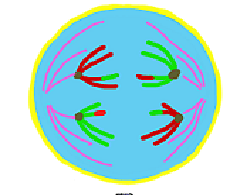
what phase am I?
Prophase 1
Metaphase 1
Anaphase 1
Telophase 1
Cytokinesis
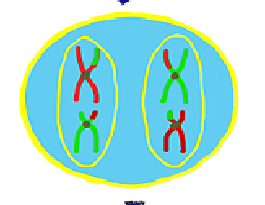
what phase am I?
Prophase 1
Metaphase 1
Anaphase 1
Telophase 1
Cytokinesis
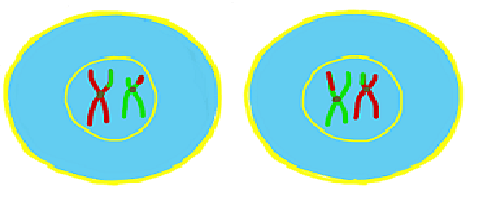
what phase am I?
Prophase 1
Metaphase 1
Anaphase 1
Telophase 1
Cytokinesis
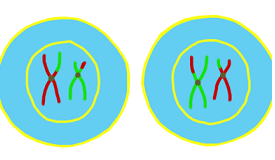
what phase am I?
Prophase II
Metaphase II
Anaphase II
Telophase II
Cytokinesis
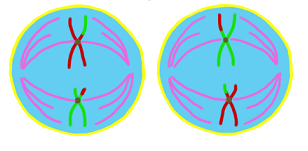
what phase am I?
Prophase II
Metaphase II
Anaphase II
Telophase II
Cytokinesis

what phase am I?
Prophase II
Metaphase II
Anaphase II
Telophase II
Cytokinesis
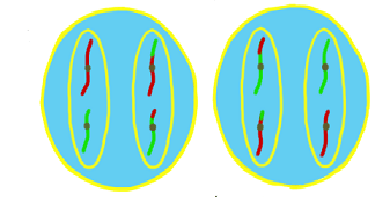
what phase am I?
Prophase II
Metaphase II
Anaphase II
Telophase II
Cytokinesis
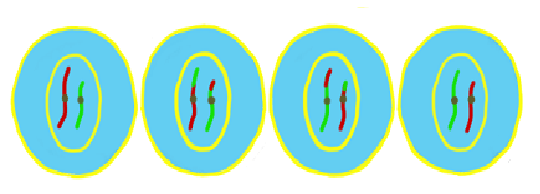
what phase am I?
Prophase II
Metaphase II
Anaphase II
Telophase II
Cytokinesis
When the cells completely split it is call what?
Telophase
Cytokinesis
Anaphase
Involves only one parent
Asexual Reproduction
Sexual Reproduction
Diverse
Uniform
occurs when a second organism develops from an outgrowth of the original.
Vegetative propagation
Budding
Fragmentation
Binary Fission
A type of cell division where the cell divides into two copies
Vegetative propagation
Budding
Fragmentation
Binary Fission
a piece of an organism develops into a fully grown copy.
vegetative propagation
budding
fragmentation
binary fission
Which results in offspring that are genetically unique and display a combination of traits from each parent?
Sexual
Asexual
Neither
Both
Which type of reproduction results in offspring that are identical to the parent?
Sexual
Asexual
Neither
Both
Which type of reproduction tends to be a longer process?
Sexual
Asexual
They occur at the same rate
Both are slow processes
Which type of reproduction tends to produce more offspring?
Sexual
Asexual
They occur at the same rate
A tree branch breaking off and growing from the broken part is called
Budding
Fertilization
Vegetative Propagation
What is an advantage of asexual reproduction?
it's fast- no need to look for a mate
It uses a lot of energy.
There are a lot of predators to face.
Structural adaptation
are physical features of an organism like the bill on a bird or the fur on a bear
Mental adaptation, of the thinking of the animal

In the punnett square, what is the probability for white fur?
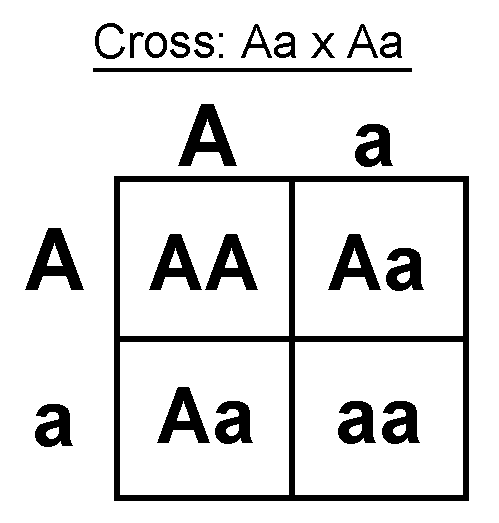
If a heterozygous parent and a homozygous recessive parent mate, what percentage of their offspring will be dominant?
25%
50%
75%
100%

Which of the following have you inherited completely from your parents? Choose the best answer.
The shape of your blood cells
Your intelligence
Your personality
Your weight

What is heredity?
The passing of traditions from parents to their children
A type of asexual reproduction.
The passing of traits from parents to offspring.
Another term for sexual reproduction.

If a brown-eyed mother and a blue-eyed father have four children, three will probably have brown eyes. What can you conclude from this?
Brown eyes are a successful trait
Brown eyes are a submissive trait
Brown eyes are a recessive trait
Brown eyes are a dominant trait

A male heterozygous for widow’s peak marries a female without a widow’s peak.
Widow’s peak is a dominant trait (H) not having a widow’s peak is recessive (h).
Use the Punnett Square on Widow's Peal to answer the following question:
What percent of the children will have widow's peak?
25%
50%
75%
100%
An organism’s physical appearance of visible traits is a _____________.
Genotype
Phenotype
Homozygous
Heterozygous
An organism’s genetic makeup is a _________________.
Genotype
Phenotype
Homozygous
Heterozygous
Has 2 of the same alleles is __________________.
Genotype
Phenotype
Homozygous
Heterozygous
Has 2 different alleles is _____________________.
Genotype
Phenotype
Homozygous
Heterozygous
Carries oxygen and nutrients to all parts of the body.
Integumentary
Nervous
Circulatory
Respiratory
Allows movement in the body
Integumentary
Nervous
Skeletal
Muscular
Protects the body, regulates body temperature
Integumentary
Nervous
Skeletal
Muscular
Supplies blood with oxygen and rids the body of carbon dioxide
Integumentary
Nervous
Circulatory
Respiratory
Supports and provides structure for the body
Skeletal
Muscular
Circulatory
Respiratory
Receives stimuli and transports impulses, coordinates actions and reactions in the body
Integumentary
Nervous
Circulatory
Respiratory
Main Organs: Skin
Integumentary
Nervous
Skeletal
Muscular
Main Organs: Heart and blood vessels
Integumentary
Nervous
Circulatory
Respiratory
Main Organs: Brains, spinal cord, nerves
Integumentary
Nervous
Circulatory
Respiratory
Main Organs: Bones and joints
Skeletal
Muscular
Circulatory
Respiratory
Main Organs: Lungs
Integumentary
Nervous
Circulatory
Respiratory

Integumentary
Nervous
Circulatory
Respiratory

Integumentary
Nervous
Skeletal
Muscular

Integumentary
Nervous
Skeletal
Muscular

Integumentary
Nervous
Circulatory
Respiratory

Skeletal
Muscular
Circulatory
Respiratory

Integumentary
Nervous
Circulatory
Respiratory
What is it called when a solid reaches a specific temperature and becomes a liquid
Liquification
Melting Point
Boiling Point
Charles's Law
As pressure increases the boiling point of water increases.
True
False
Trying to cook macaroni on the top of a mountain will take much longer than cooking macaroni at sea level. Why is this?
The boiling point of water is much lower on the top of a mountain so the water does not get as hot.
The boiling point of water is much higher on the top of a mountain so the water will be too hot to cook macaroni.
Who cooks macaroni on a mountain? This question is pointless.
The boiling point of water at sea level is is much lower on the top of a mountain so the water does not get as hot.
When water falls from clouds in liquid or solid form
precipitation
condensation
accumulation
evaporation
Water than flows downward on land
runoff
transpiration
evaporation
condensation
water vapor given off by plants
runoff
transpiration
evaporation
condensation
What word do we give to water when it is the form of a gas
ice
rain
snow
water vapor
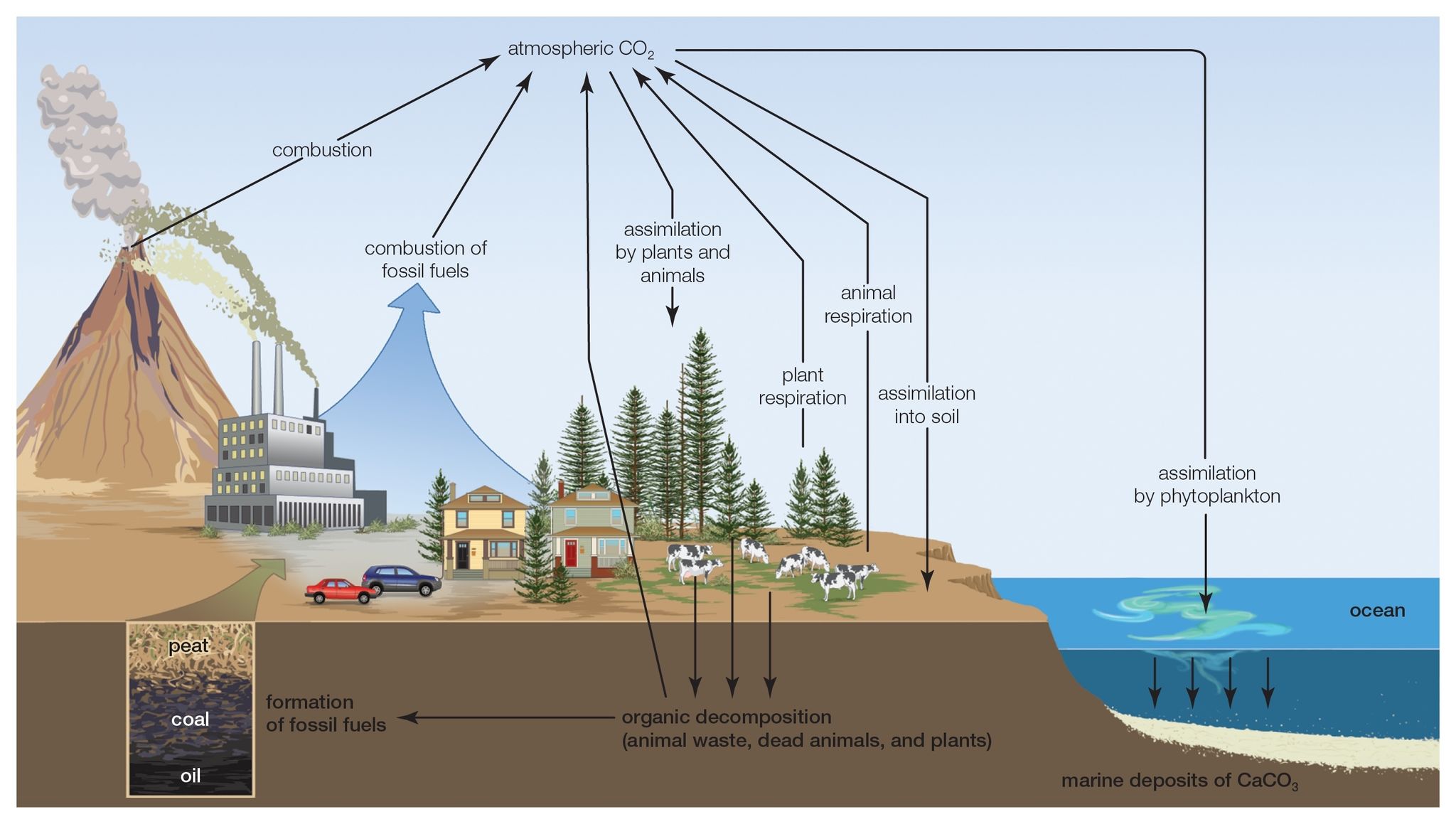
Which process removes carbon dioxide from the atmosphere?
deforestation
tree farms
burning fossil fuels
cellular respiration
Nitrogen fixation...
animals eat the plants and other animals that contain nitrogen and release it through their waste
Bacteria in the soil and lightning in the atmosphere “fix” the nitrogen
Once in the ground, bacteria in the soil also nitrify the nitrogen
plants absorb nitrogen through their roots and return it back to the atmosphere
Organisms need nitrogen in order to...
To breathe
To obtain water for growth
To build proteins & DNA
To regulate temperature
Which of these nitrogen cycle processes converts atmospheric nitrogen to a soil form of nitrogen that is usable by plants?
nitrogen fixation
nitrification
denitrification
ammonification
How do animals get the nitrogen they need?
From the air they breathe
From the water they drink
From the food they eat
From the sun

