wayground logo

Free Printable Worksheets

Font size

S
M
L
XL
Worksheets

Chapter 2 Astronomy Test

Total questions: 194

Worksheet time: 3hrs 31mins
Name
Class
Date
1.
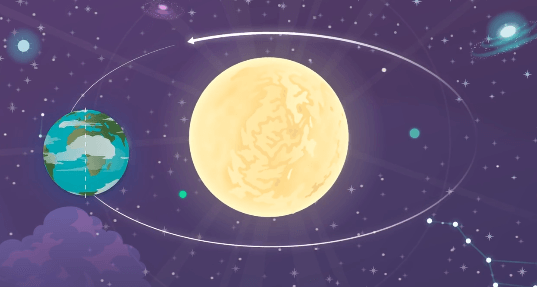
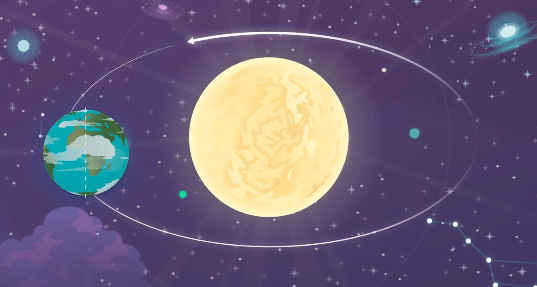
How long does it take for the Earth to make one full orbit around the Sun?
a)
one day
b)
one week
c)
one month
d)
one year
2.
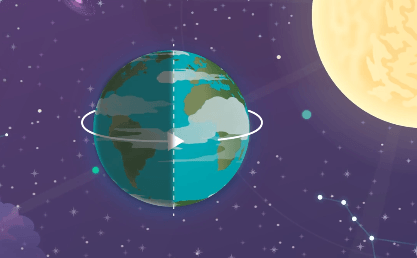
The Earth is rotating on its axis, creating _____
a)
the 12 months
b)
the years
c)
the seasons
d)
day and night
3.
As the Earth travels around the Sun, it creates a pattern that makes _____
a)
the months
b)
the years
c)
the seasons
d)
day and night
4.
When the Earth completes a full orbit around the Sun, it has completed _____ rotations or days
a)
7
b)
30
c)
91
d)
365
5.
The spinning movement of the Earth about its axis is called the Earth's _____
a)
revolution
b)
rotation
c)
precession
d)
orbit
6.
The movement of the Earth around the Sun is called its _____
a)
revolution
b)
rotation
c)
precession
d)
gyration
7.
When the part of the world that you're living in is leaning towards the Sun, its _____
a)
winter
b)
spring
c)
summer
d)
fall
8.
When the part of the world that you're living in is leaning away from the Sun, its _____
a)
winter
b)
spring
c)
summer
d)
autumn
9.
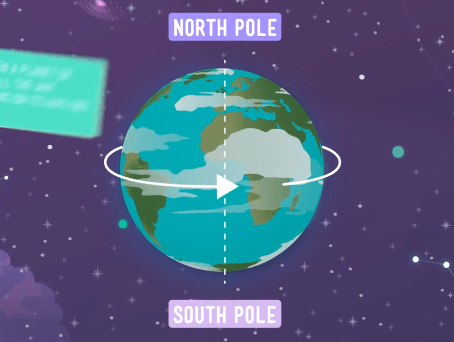
The invisible line that passes through the North Pole and the South Pole is called Earth's ____
a)
axis
b)
equator
c)
ecliptic
d)
prime meridian
10.

The length of an Earth day is determined by the time required for approximately one

a)

Sun revolution

b)

Earth rotation

c)

Earth revolution

d)

Sun rotation

11.
About how much time does it take the Earth to complete one rotation?
a)
24 hours
b)
7 days
c)
28 days
d)
1 year
12.

The spinning of Earth is know as

a)

rotation

b)

revolution

c)

east west

d)

turnout

13.

The motion of one object around another object is

a)

rotation

b)

movement

c)

revolution

d)

motion

14.

What is caused by the tilt of Earth's rotational axis

a)

Earth's rotation

b)

Earth's orbit

c)

Earth's seasons

d)

Earth's revolution

15.

What produces Earth revolution around the Sun?

a)

counterclockwise

b)

temperature

c)

gravity

d)

light

16.
When the visible (lit) portion of the moon is increasing, the moon is:
a)
waning
b)
full
c)
waxing
d)
new
17.
When the Earth is between the moon and sun, it is most likely a:
a)
new moon
b)
full moon
c)
waxing crescent
d)
waxing gibbous
18.
Define Waxing
a)
Moon is increasing and light part appears to be growing
b)
Completely illuminated
c)
dark side is facing earth
d)
Moon is decreasing and light part appears to be shrinking
19.
Define Gibbous
a)
Less than half of moon visible
b)
More than half of moon visible
c)
All of moon visible
d)
None of moon visible
20.
Define Full Moon
a)
None of moon is visible
b)
Half moon phase is visible
c)
Complete moon face is visible
d)
Less Than half of moon is visible
21.
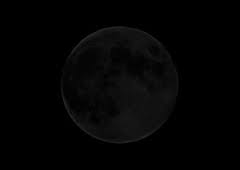
Define New Moon
a)
None of moon is visible from Earth
b)
All of moon visible from Earth
c)
Moon is 1/2 visible from Earth
d)
Moon is more than Half Visible from Earth
22.
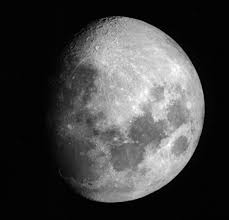
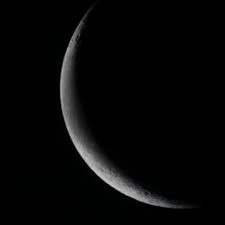
Name the moon phase
a)
Waxing Gibbous
b)
Waxing Crescent
c)
Waning Crescent
d)
Waning Gibbous
23.
Name the moon phase
a)
Waning Crescent
b)
Waxing Crescent
c)
Waning Gibbous
d)
Waxing Gibbous
24.
T/F The moon can be seen from Earth because it reflects the sun's light
a)
TRUE
b)
FALSE
25.
When only a small part of the moon is visible, it is probably in what phase?
a)
waxing or waning crescent
b)
first quarter
c)
new moon phase
d)
waxing or waning gibbous phase
26.
Define Waning
a)
Moon appears to be gradually increasing in size
b)
Moon is completely illuminated
c)
Moon appears to be gradually decreasing in size
d)
More than half illuminated
27.
What causes the seasons to change?
a)
The warming and cooling of Earth's core.
b)
The distance from the sun.
c)
Earth's tilt in relation to the sun.
d)
Earth's rotation on its axis.
28.
What season is it in the Southern Hemisphere when it is fall in the Northern Hemisphere?
a)
winter
b)
spring
c)
summer
d)
fall
29.
What happens when the area in which you live tilts away from the sun?
a)
It is summer.
b)
It is spring.
c)
It is winter.
d)
It is fall.
30.
Which season is taking place in the Southern Hemisphere in Position 1?
a)
Winter
b)
Spring
c)
Summer
d)
Fall
31.
Which season is taking place in the Northern Hemisphere in Position 2?
a)
Winter
b)
Spring
c)
Summer
d)
Fall
32.
As the Earth orbits around the sun, the direction of the tilt of its axis changes.
a)
True
b)
False
33.
The Earth's axis is tilted _____ degrees.
a)
23.5
b)
25.3
c)
30.2
d)
24
34.
At position A, which hemisphere would have summer?
a)
Northern hemisphere
b)
Southern hemisphere
35.
At position C, which hemisphere would have winter?
a)
Northern hemisphere
b)
Southern hemisphere
36.
At position D in the Northern hemisphere it would be _____?
a)
Summer
b)
Winter
c)
Spring
d)
Fall
37.
At position A, which hemisphere would have summer?
a)
Northern hemisphere
b)
Southern hemisphere
38.
There is less daylight in the winter.
a)
True
b)
False
39.
What do June 21 and December 21 have in common?
a)
equinox dates
b)
the moon is full
c)
solstice dates
d)
the cold fronts blow in
40.
The term equinox means....
a)
equal amount of day light and equal amount of night
b)
Equal amount of winter and summer
c)
Equal amounts of hot dogs for everyone
d)
The longest day of the year
41.
What is the longest day of the year?
a)
winter solstice
b)
summer solstice
c)
fall equinox
d)
spring equinox
42.
What does the rotation of the earth cause us to experience?
a)
seasons
b)
year
c)
day & night
d)
eclipse
43.
Why do we experience the changing of the season on the earth?
a)
distance from the sun
b)
rotation of the earth
c)
change in solar output
d)
tilt of the earth's axix
44.
Day and night is caused by the _____________ of earth on its axis.
a)
revolution
b)
orbit
c)
rotation
d)
Tilt
45.
What about the Earth makes seasons possible? Choose two answers
a)
The Earth's size
b)
The Earth's tilt
c)
The way the Earth rotates on its axis
d)
The way the Earth orbits the Sun
46.
Why is the Equator warmest?
a)
Because it is closest to the sun.
b)
Because it receives the most direct sunlight
c)
Because no clouds form here.
d)
Because it is far from the sun
47.
Where on Earth can you experience entire days of darkness?
a)
The equator
b)
The poles
c)
The Tropic of Cancer
d)
The Tropic of Capricorn
48.

The sun is the closest ________ to the Earth.

a)

star

b)

moon

c)

planet

d)

asteroid

49.

The sun is mostly made of matter that is

a)

plasma

b)

liquid

c)

solid

d)

cold

50.

It takes light ________ to get from the sun to the Earth.

a)

one lightyear

b)

eight minutes

c)

ten seconds

d)

24 hours

51.

What is the sun?

a)

A medium sized star.

b)

The star nearest to Earth.

c)

A burning ball of hot gases.

d)

All of the above

52.
What is responsible for the moon's illumination?
a)
infrared rays
b)
sunlight reflecting on the surface of the moon
c)
sunlight bouncing off the earth's atmosphere
d)
gamma rays
53.
Which is the MAIN cause of the ocean's tides?
a)
the tilt of the Earth's axis
b)
The earth's rotation on it's axis
c)
the gravitational pull of the moon,
d)
the uneven heating of the oceans by the sun
54.
What is the phase of this moon?
a)
Third Quarter
b)
Waning Crescent
c)
First Quarter
d)
Waning Gibbous
55.
Does the moon revolve?
a)
yes
b)
no
56.
Does the moon rotate?
a)
yes
b)
no
57.
Does the moon have an atmosphere?
a)
yes
b)
no
58.
What is at the center of the Solar System?
a)
Earth
b)
Moon
c)
Sun
d)
Jupiter
59.
When the moon appears to be "getting smaller", we call this _______________.
a)
Waxing
b)
Waning
c)
Shrinking
d)
Disappearing
60.
What is the phase of the moon in the picture?
a)
New Moon
b)
Third Quarter
c)
First Quarter
d)
Waxing Gibbous
61.
The sun appears to move across the sky each day.  What causes this?
a)
the spinning of the Earth's axis
b)
The path of the sun around the Earth
c)
the production the nuclear energy around the sun
d)
the tilt of the Earth on its axis
62.
Seasons are a results of_______________.
a)
The Earth's rotation on its axis
b)
The tilt of the Earth on its axis and the revolution  of Earth around the Sun.
c)
The moon blocking the sunlight from the Earth.
d)
The Earth's distance from the Sun.
63.
The sun is a glowing ball of _______.
a)
water
b)
liquid
c)
gases
d)
rocks
64.
The sun is a _______.
a)
star
b)
planet
c)
satellite
65.
What is the sun mostly made up of
a)
Helium
b)
Core
c)
Carbon
d)
Hydrogen
66.
What is the sun made from?
a)
Heat
b)
Hydrogen and Helium gas
c)
Nitrogen gas
d)
Fire and heat
67.

what color is the sun

a)

blue

b)

pink

c)

brown

d)

yellow

68.
The energy from the sun is created by a process called:
a)
nuclear fission
b)
nuclear fusion
c)
nuclear reaction
d)
nuclear core
69.
The middle layer of the sun's interior that contains very tightly packed gas is called the _____________.
a)
photosphere
b)
chromosphere
c)
radiation zone
d)
convection zone
70.
In which area of the sun does gas rise as it heats up, then fall back down as it cools?
a)
the core
b)
the radiation zone
c)
the convection zone
d)
the corona
71.
When we look at the sun, what layer are we viewing?
a)
photosphere
b)
chromosphere
c)
corona
d)
convection zone
72.
What layer gives the sun it's reddish color during a solar eclipse?
a)
convection zone
b)
corona
c)
chromosphere
d)
photosphere
73.
What layer of the sun's atmosphere gives the sun its "white halo" during a solar eclipse?
a)
chromosphere
b)
photosphere
c)
corona
d)
atmosphere
74.
The particles of the corona extends into space for millions of kilometers and spreads into streams of electrically charged particles called:
a)
coronal discharge
b)
solar flares
c)
coronal ejection
d)
solar winds
75.
Areas of gas on the sun's surface that are cooler than gases around them are called:
a)
corona
b)
prominences
c)
sunspots
d)
solarspots
76.
The number of sunspots on the sun varies in a cycle that is about how long?
a)
6-8 years
b)
10-11 years
c)
12-15 years
d)
365 days
77.
Huge loops of reddish gas that connect sunspots are called:
a)
prominences
b)
solar flares
c)
coronal loops
d)
solar wind
78.
When prominences erupt into space releasing gas and energy we call this: 
a)
solar winds
b)
coronal outburst
c)
solar flares
d)
auroras
79.
The sun makes up about _________ percent of the solar system's total mass.
a)
98
b)
95
c)
99.8
d)
98.9
80.

Group of phases where the light is decreasing and the light is on the left side of the moon.

a)

waning

b)

waxing

c)

phase

d)

orbit

81.

Group of phases where the light is increasing and the lights is on the right side of the moon.

a)

waxing

b)

waning

c)

phase

d)

inertia

82.

Phases where more than half of the moon is lit.

a)

gibbous

b)

crescent

c)

waxing

d)

quarter

83.

Phases where half of the moon is lit.

a)

quarter

b)

full

c)

gibbous

d)

crescent

84.

Phases where less than half of the moon is lit

a)

crescent

b)

gibbous

c)

moon

d)

quarter

85.

Occurs when the moon passes directly between Earth and the Sun.

a)

Solar eclipse

b)

lunar eclipse

c)

orbit

d)

tide

86.

Occurs when the moon moves into Earth's shadow and is no longer reached by direct sunlight.

a)

lunar eclipse

b)

solar eclipse

c)

tide

d)

crescent

87.

The rise and fall of the ocean's surface.

a)

tide

b)

eclipse

c)

phase

d)

waning

88.

Is a force of attraction, or pull, between any two objects.

a)

gravity

b)

inertia

c)

waxing

d)

rotation

89.

Is the path one object takes around another object

a)

orbit

b)

inertia

c)

eclipse

d)

gravity

90.
During the phases of the Moon, the Moon appears to change shape.  This change in appearance is due to the Moon...
a)
physically changing size and shape.
b)
moving closer and then farther away from Earth.
c)
reflecting a different amount of light due to alignment with Earth and the Sun.
d)
having craters on its surface.
91.
What part of the moon do we see from Earth?
a)
all of it
b)
the same side
c)
none of it
d)
only one quarter
92.
The moon seems to change shape from day to day in a cycle that lasts about a month as it goes through _.
a)
revolutions
b)
phases
c)
rotations
d)
eclipses
93.
Which moon phase is when you can't see the moon at all?
a)
Waning crescent
b)
Full moon
c)
Waxing gibbous
d)
New moon
94.
What causes the phase of the Moon to change each night?
a)
The Moon changes its acutal shape throughout the course of the month.
b)
The alignment between the Earth, Moon, and Sun determines the amount of light reflected by the Moon.
c)
The season of the year determines the phase of the Moon.
d)
The closer the Moon is to Earth, the more light the Moon reflects.
95.
Name the moon phase
a)
waning crescent
b)
waxing crescent
c)
waning gibbous
d)
waxing gibbous
96.
Name the moon phase
a)
waning crescent
b)
waxing crescent
c)
waning gibbous
d)
waxing gibbous
97.
Name the moon phase
a)
waning crescent
b)
waxing crescent
c)
waning gibbous
d)
waxing gibbous
98.
Name the moon phase
a)
waning crescent
b)
waxing crescent
c)
waning gibbous
d)
waxing gibbous
99.
Name the moon phase
a)
waning crescent
b)
waxing crescent
c)
waning gibbous
d)
waxing gibbous
100.
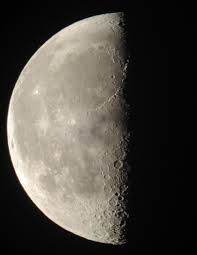
Name the moon phase
a)
First Quarter
b)
Last Quarter
c)
New Moon
d)
Full Moon
101.
Name the moon phase
a)
First Quarter
b)
Last Quarter
c)
New Moon
d)
Full Moon
102.
Name the moon phase
a)
First Quarter
b)
Last Quarter or (third quarter)
c)
New Moon
d)
Full Moon
103.
Name the moon phase
a)
First Quarter
b)
Last Quarter
c)
New Moon
d)
Full Moon
104.
How much of the moon is always lit?
a)
can't tell
b)
always changes
c)
half
d)
3/4
105.
Name the moon phase that would come AFTER this moon.
a)
waning crescent
b)
waxing crescent
c)
waning gibbous
d)
waxing gibbous
106.
What moon phase came right BEFORE this one?
a)
First Quarter
b)
Last Quarter
c)
New Moon
d)
Full Moon
107.
What is the difference between a gibbous moon and a crescent moon?
a)
The gibbous shows more than half of the bright side of the moon.
b)
The crescent shows more than half of the bright side of the moon.
c)
The gibbous shows less than half of the bright side of the moon. 
108.
How many phases does the moon go through?
a)
4
b)
8
c)
10
d)
16
109.
As the moon's shape appears to get smaller, we say that the moon is _.
a)
swelling
b)
waxing
c)
waning
d)
disappearing
110.
Phases of the moon in which the moon appears to be getting larger are referred to as _.
a)
waxing
b)
waning
c)
new
d)
eclipse
111.
Phases of the moon in which the moon appears to be getting larger are referred to as _.
a)
waxing
b)
waning
c)
new
d)
eclipse
112.
Name the moon phase that would come AFTER this moon.
a)
waning crescent
b)
waxing crescent
c)
waning gibbous
d)
waxing gibbous
113.
The moon ____________ around the Earth.
a)
revoloves
b)
rotates
c)
up
d)
down
114.
Which moon phase is when you can't see the moon at all?
a)
Waning crescent
b)
Full moon
c)
Waxing gibbous
d)
New moon
115.
What Moon phase is this?
a)
Full Moon
b)
Waxing Gibbous
c)
New Moon
d)
Half Moon
116.
What Moon phase is this?
a)
Full Moon
b)
Waxing Gibbous
c)
New Moon
d)
Half Moon
117.
What Moon phase is this?
a)
Waxing Crescent
b)
Waning Gibbous
c)
Waning Crescent
d)
Waxing Gibbous
118.
What Moon phase is this?
a)
Last Quarter
b)
New Moon
c)
Third Quarter
d)
First Quarter
119.
What Moon phase is this?
a)
Waxing Gibbous
b)
Waning Crescent
c)
Waning Gibbous
d)
Full Moon
120.
What Moon phase is this?
a)
Old Moon
b)
Far Side of the Moon
c)
New Moon
d)
Waxing Gibbous
121.
What Moon phase is this?
a)
Waning Crescent
b)
Waxing Crescent
c)
Waxing Gibbous
d)
Waning Gibbous
122.
What Moon phase is this?
a)
Waxing Crescent
b)
Waning Gibbous
c)
Waxing Gibbous
d)
Waning Crescent
123.
What phase comes AFTER this one?
a)
Waning Crescent
b)
Waning Gibbous
c)
Waxing Crescent
d)
Third Quarter
124.
What phase comes BEFORE this one?
a)
Waxing Gibbous
b)
Waxing Crescent
c)
Waning Gibbous
d)
Waning Crescent
125.
What phase comes BEFORE this one?
a)
Full Moon
b)
Third Quarter
c)
New Moon
d)
First Quarter
126.
What phase comes BEFORE this one?
a)
Waxing Crescent
b)
Waxing Gibbous
c)
Waning Gibbous
d)
Waning Crescent
127.
What phase comes BEFORE this one?
a)
New Moon
b)
Third Quarter
c)
Waxing Crescent
d)
Full Moon
128.
What phase comes AFTER this one?
a)
Waxing Crescent
b)
Waning Gibbous
c)
Waxing Gibbous
d)
Third Quarter
129.
What is this moon phase?
a)
This is the waxing crescent phase.
b)
This is the full moon phase.
c)
This is the waxing gibbous phase.
d)
This is the last quarter moon.
130.
What moon phase is this picture?
a)
This is the waning crescent phase.
b)
This is the waxing gibbous phase.
c)
This is the waning gibbous phase.
d)
This is the new moon phase.
131.
What moon phase is this picture?
a)
This is the full moon phase.
b)
This is the waxing gibbous moon phase.
c)
This is the waning gibbous moon phase.
d)
This is the first quarter moon phase.
132.
What is this moon phase?
a)
This is the waxing gibbous moon phase.
b)
This is the last quarter moon phase.
c)
This is the first quarter moon phase.
d)
This is the new moon phase.  
133.
What moon phase is this picture?
a)
This is the full moon phase.  
b)
This is the waxing crescent moon phase.
c)
This is the waning gibbous moon phase.
d)
This is the waning crescent moon phase.
134.
What moon phase is this picture?
a)
This is the new moon phase.
b)
This is the waxing crescent moon phase.
c)
This is the waxing gibbous moon phase.
d)
This is the waning crescent moon phase.
135.
What moon phase is this image?
a)
This is the full moon phase.
b)
This is the last quarter moon phase.
c)
This is the waxing gibbous moon.
d)
This is the new moon phase.
136.
What phase of the moon is this image?
a)
This is the last quarter moon phase.
b)
This is the full moon phase.
c)
This is the first quarter moon phase.
d)
This is the waxing gibbous moon phase.
137.
The moon seems to change shape from day to day in a cycle that lasts about a month as it goes through _.
a)
revolutions
b)
phases
c)
rotations
d)
eclipses
138.
How long is a lunar month?  
a)
30
b)
29.5
c)
27
d)
27.3
139.
A solar eclipse only happens during a ________ moon.
a)
New
b)
Cresent
c)
Gibbous
d)
Full
140.
What do we call the sun's outer atmosphere that you see during a solar eclipse?
a)
an umbra
b)
a corona
c)
an orbit
d)
a shadow
141.
Which of the following is not true about a total solar eclipse?
a)
It can be viewed once a year from every spot on earth
b)
It is dangerous to look at without the proper device
c)
When it happens, the moon blocks all of the sun except the corona
d)
You must be within the moon's umbra to see it
142.
A solar eclipse only occurs during which moon phase?
a)
1st Quarter
b)
New Moon
c)
Full Moon
d)
3rd Quarter
143.
a)
solar eclipse
b)
lunar eclipse
144.
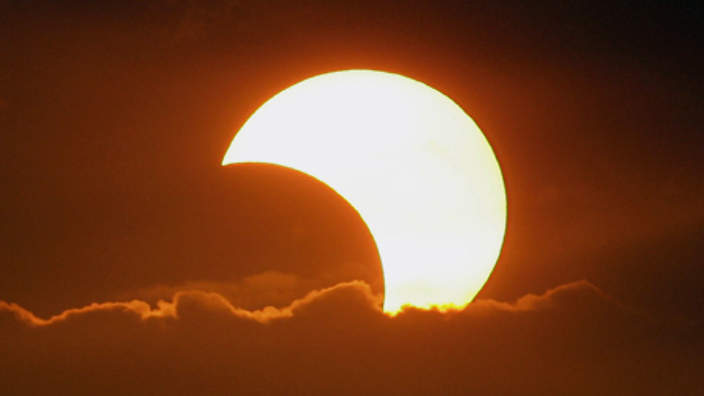
This image is an example of
a)
Lunar Eclipse
b)
Full Moon
c)
New Moon
d)
Solar Eclipse
145.
In order to have an eclipse, the Moon, Sun and Earth have to be?
a)
Below each other
b)
Above each other
c)
In alignment
146.
Which type of eclipse occurs when the Moon comes directly between Earth and the Sun?
a)
Lunar eclipse
b)
Solar eclipse
147.
What is the darkest inner part of the shadow cone called, where a total eclipse can be viewed.
a)
Total
b)
Umbra
c)
Penumbra
148.
a)
solar eclipse
b)
lunar eclipse
149.
During a solar eclipse...
a)
The sun is blocked by the moon
b)
The Earth is blocked moon
c)
The moon is blocked by the sun
d)
You are blocked
150.
An eclipse in space is when....
a)
one object passes through the shadow of another object.
b)
two shadows collide.
c)
the moon is in the waxing crescent phase.
d)
the Sun and Moon are side by side.
151.
What is the order during a lunar eclipse
a)
sun, moon, earth
b)
sun, earth, moon
152.
To view totality, where do you have to be located?
a)
Within the Moon's full shadow
b)
Within the Sun's full shadow
c)
Within the Moon's partial shadow
d)
Within the Earth's partial shadow
153.
What is the darkest inner part of the shadow cone called, where a total eclipse can be viewed.
a)
Total
b)
Umbra
c)
Penumbra
154.
What is the larger outer lighter part of the shadow cone called, where a partial eclipse can be viewed?
a)
Partial
b)
Umbra
c)
Penumbra
155.
A lunar eclipse can occur only during the _________________.
a)
Full moon
b)
New moon
c)
Waxing moon
156.
In order to have an eclipse, the Moon, Sun and Earth have to be?
a)
Below each other
b)
Above each other
c)
In alignment
157.
Which type of eclipse occurs when the Earth comes directly between the Sun and Moon?
a)
Lunar eclipse
b)
Solar eclipse
158.
What does number 1 in the image to the left represent?
a)
Umbra
b)
Penumbra
159.
What does number 2 in the image to the left represent?
a)
Umbra
b)
Penumbra
160.
During what phase of the moon can a lunar eclipse occur?
a)
3rd Quarter
b)
1st Quarter
c)
New Moon
d)
Full Moon
161.
When the Earth's shadow falls on the moon, the shadow causes what to happen?
a)
Lunar eclipse
b)
Solar eclipse
c)
Partial eclipse
162.
This type of eclipse occurs when the moon blocks the sunlight from reaching Earth?
a)
Solar eclipse
b)
Lunar eclipse
c)
Total eclipse
163.
Tides are caused mainly by what?
a)
Moon’s gravitational pull
b)
Sun’s gravitational pull
c)
Earth’s gravitational pull
164.
Most places on Earth experience about how many high and low tides in 24 hours?
a)
2 high and 2 low tides
b)
4 high and 4 low tides
c)
1 high and 1 low tides
165.
What type of tide occurs during a new and full moon?
a)
Neap tides
b)
Spring tides
c)
Normal tides
166.
What type of tide occurs during the first or third quarter moon?
a)
Neap tides
b)
Spring tides
c)
Normal tides
167.
If the Sun, Earth, and Moon are in perfect alignment, the Earth would have a _______ tide.
a)
Spring
b)
Neap
c)
Normal
168.
If the Sun, Earth, and Moon create a 90 degree angle, the Earth would have __________.
a)
Spring tides
b)
Neap tides
c)
Normal tides
169.

An eclipse occurs when one object in space moves in the ___________ of another.

a)

reflection

b)

shadow

c)

orbit

d)

rotation

170.

During a lunar eclipse

a)

Earth's shadow covers the moon

b)

the sun's shadow covers the moon

c)

the moon covers the sun

d)

Earth's shadow covers the sun

171.

The position of the Earth, moon and Sun during a lunar eclipse is

a)

sun--moon--Earth

b)

Earth--sun--moon

c)

sun--Earth--moon

d)

moon--sun--Earth

172.

What is being shown in the diagram?

a)

Solar Eclipse

b)

Lunar Eclipse

c)

Full Moon

d)

Supernova

173.

What is shown in the diagram?

a)

Solar Eclipse

b)

Lunar Eclipse

c)

New Moon

d)

Nebula

174.
The definition of eclipse is:
a)
The planets line up
b)
The Sun, Earth and Mars line up
c)
The Sun, Earth and Moon line up
d)
The Earth, Moon and Venus line up 
175.
Why don't we have a solar eclipse every month? 
a)
The Sun is tilted on its axis
b)
The moon's tilt
c)
The speed of the moon's rotation
d)
The speed of the Earth's rotation
176.

During a lunar eclipse

a)

Earth's shadow covers the moon

b)

the sun's shadow covers the moon

c)

the moon covers the sun

d)

Earth's shadow covers the sun

177.

The reason there isn't a lunar eclipse every month is because

a)

the moon only gets full every few months, so there can't be eclipses more often.

b)

the moon gets frightened after an eclipse and stays away from Earth, but it forgets soon.

c)

there isn't enough planets and moons in the solar system for it to happen more.

d)

the moon's tilted orbit doesn't put it in Earth's shadow very often.

178.
A[n] ______________ tide occurs when the sun is at right angles to the line between Earth and the moon. 
a)
high
b)
neap
c)
low
d)
spring
179.
Differences in the moon's and sun's pull on different sides of the Earth cause _________.
a)
gravity
b)
lunar phases
c)
tides
d)
dabbing
180.
A[n] ___________ tide occurs when the sun, Earth, and the moon are nearly in a line. 
a)
spring
b)
high
c)
low
d)
neap
181.
The bulge of water on the side of the Earth closest to the moon produces ___________.
a)
high tide
b)
low tide
c)
neap tide
d)
spring tide
182.
Water flows toward the high tides, halfway between them causing ____________.
a)
neap tide
b)
high tide
c)
spring tide
d)
low tides
183.
Tides are the cycle of rising and falling ocean water that repeats automatically every
a)
24 hours
b)
12.5 hours
c)
25 hours
d)
6.25 hours
184.
Tides are caused mainly by the differences in how much gravity from the moon and the sun pulls on different parts of the Earth. 
a)
True
b)
False
185.
Which body has the greater effect on Earth's tides?
a)
Sun
b)
Saturn
c)
Moon 
d)
Venus
186.

Wha type of tide would this arrangement of earth-moon-sun create?

a)

full moon tide

b)

new moon tide

c)

neap tide

d)

spring tide

187.
What type of tides would this arrangement of earth-moon-sun create?
a)
neap tide
b)
spring tide
c)
new moon tide
d)
full moon tide
188.
Tides are caused by
a)
strong winds that blow over ocean waters.
b)
the interaction of Earth, the moon and the sun.
c)
the shifting of the plates on the ocean floor.
d)
variations in the salinity of ocean water
189.
What causes tides?
a)
gravity
b)
wind
c)
spring
d)
neap
190.
If tides alternate from high to low and there are two of each type of tide a day, about how many hours will generally be between each different tide?
a)
2 hours
b)
6 hours
c)
12 hours
d)
24 hours
191.
How many low tides and high tides happen in a day?
a)
1 low tide, 1 high tide
b)
4 low tides, 4 high tides
c)
3 low tides, 3 high tides
d)
2 low tides, 2 high tides
192.
You visited the beach at 12 pm (noon) and it is high tide. If you return 6 hours later what tide will you see? 
a)
high 
b)
low 
c)
none
d)
spring 
193.
The Moon has a greater influence on Earth tides than the Sun because...
a)
it is smaller than the Sun
b)
it revolves around the Earth
c)
it is closer to the Earth
194.
Differences in the moon's and sun's pull on different sides of the Earth cause _________.
a)
gravity
b)
lunar phases
c)
tides
d)
dabbing