
 Worksheets
Unit 7
Total questions: 189
Worksheet time: 4hrs 23mins

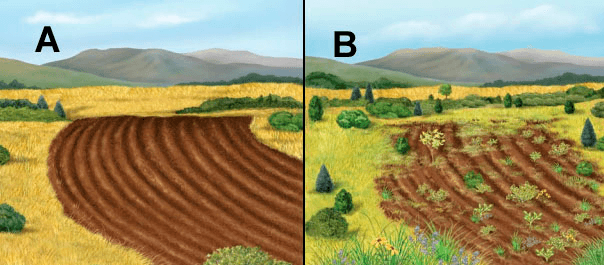
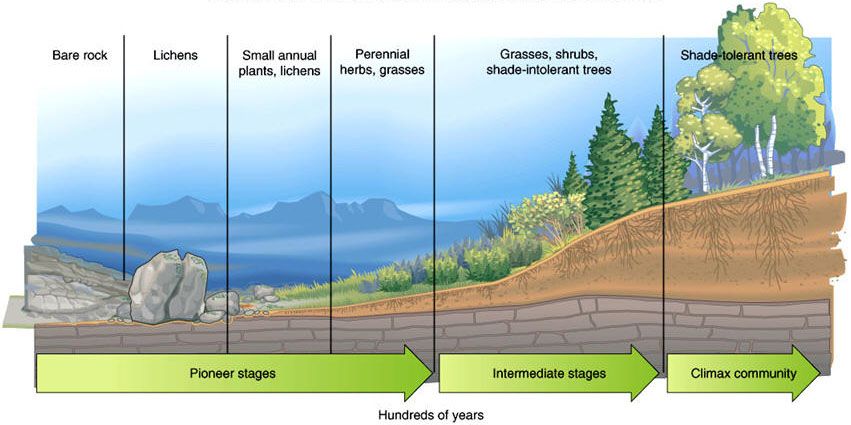
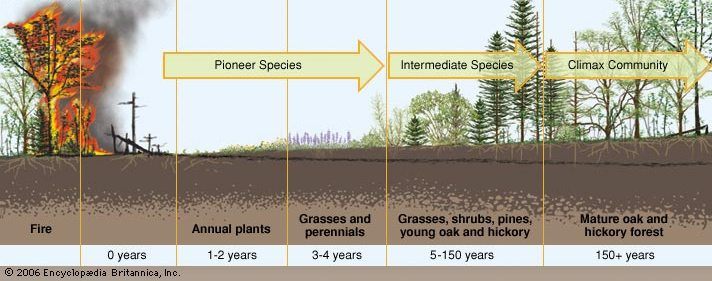
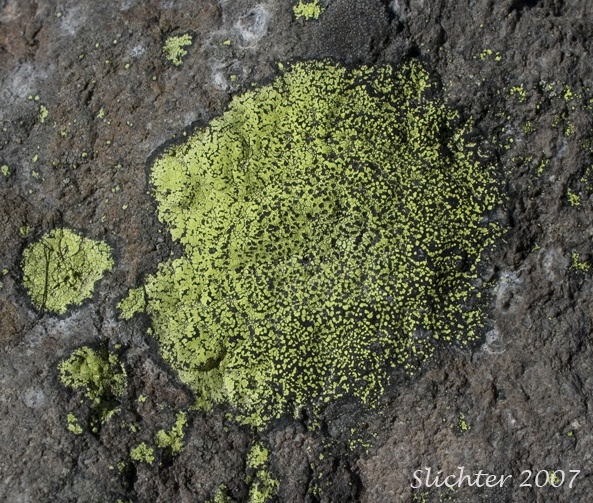
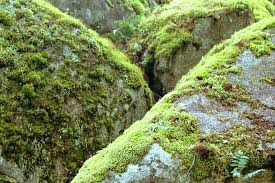


Why does primary succession typically occur over a longer period of time (as compared to secondary succession)?
Because trees do not perform respiration
Because the climax community is usually a forest.
Because primary succession already has soil
Because primary succession does not begin with soil being present
What is an example of an area that is likely to undergo primary succession?
Glaciers melt and leave exposed rock
Plants die from drought and decompose
Land is bulldozed and soil remains
A forest fire occurs
The final stage of ecological succession can typically be observed when evidence of a _____________________ is present.
Mature Tree Growth
Climax Community
Pioneer Community
housing community

Primary or secondary ecological succession?


Primary or secondary ecological succession?

Primary or secondary ecological succession?
Primary or secondary ecological succession?
Primary or secondary ecological succession?


An area that begins with bare rock and takes longer to become a forest is ...
Primary Succession
Secondary Succession

An area that is faster to become a forest due to the presence of soil is ...
Primary Succession
Secondary Succession

During a forest fire most vegetation (plants) burn. Which ecological succession will take place after a forest fire?
Primary
Secondary

The Sun is the source of all energy within an ecosystem. Plants depend on light from the sun in order to perform the process of photosynthesis. Sunlight is an example of what type of factor?
Biotic
Abiotic

Termites are tiny insects that can cause severe damage to homes and other structures that consist of wood. Termites are an example of what type of factor.
Biotic
Abiotic

Water is a compound that consists of 2 hydrogen atoms and 1 oxygen atom. Up to 60% of an adult human is made up of water. Water is an example of what type of factor?
Biotic
Abiotic

Air is a mixture of colorless gases. The air that makes up the Earth's atmosphere consists primarily of nitrogen and oxygen. Air is an example of which type of factor?
Biotic
Abiotic

An arctic blast pushed its way through several of the Northern state in the United State. The temperatures dropped below freezing for several days. Temperature is an example of which type of factor?
Biotic
Abiotic

An angler fish has a fleshy growth on its head that gives off light. This part acts as a lure to help the angler fish catch its prey. An anglerfish is an example of which type of factor?
Biotic
Abiotic
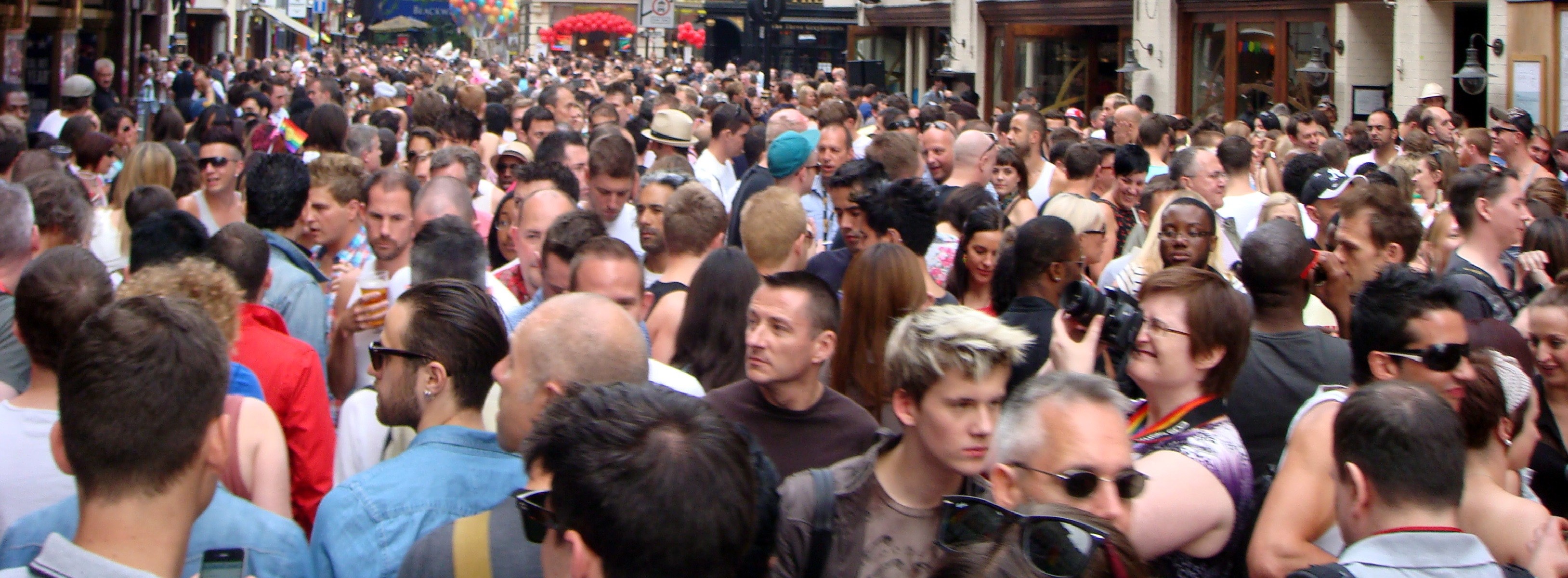
All living things or organisms in an ecosystem are
None
biotic factors
abiotic factors

Is a deer an abiotic or biotic factor?
abiotic
biotic

Is a rose an abiotic or biotic factor?
abiotic
biotic

Is a tree considered abiotic or biotic?
Biotic
Abiotic
Neither

Is a rock considered abiotic or biotic?
Abiotic
biotic
neither
What is the difference between the biotic and abiotic factors?
Biotic factors are living things and abiotic factors are nonliving things.
Biotic factors are nonliving things and abiotic factors are living things.
Which is an example of an abiotic factor in a pond environment?
The water
A frog
A grasshopper
A snake
Which is an example of a biotic factor in the environment?
The climate in the region
Carnivores that consume other animals
Amount of helium gas in the air
Flow of water in a river
Which of the following shows an abiotic factor interacting with a biotic factor in the environment?
Lamprey eels survive by attaching themselves to trout.
Water temperature affects its oxygen level.
Low light intensity affects the growth of forest pine trees.
Gypsy moth caterpillars eat the leaves of apple tree.
Which of these is a biotic factor in a river ecosystem?
the types of microorganisms that live in the river water
the amount of soil and other particles carried by the river
the speed at which the river water flows toward the ocean
the amount of rain that flows off the land and into the river
Which of the following is a biotic factor in an ocean ecosystem?
the salt content of the water
the temperature of the water
the fish in the water
the oxygen in the water


Plants produce their own food through...
symbiosis
photosynthesis
genetics
magic
The second link in a food chain is a...
consumer
producer
herbivore
carnivore
A herbivore is a...
consumer that eats both plants and other animals
consumer that only eats other animals
consumer that only eats plants
A herbivore is also known as...
primary consumer
secondary consumer
tertiary consumer
The second consumer in the food chain is called...
primary consumer
secondary consumer
tertiary consumer
The secondary consumer is a carnivore which means...
a consumer that eats both plants and other animals
a consumer that eats only plants
a consumer that eats only other animals
The third consumer in the food chain is called...
primary consumer
secondary consumer
tertiary consumer
An omnivore is a...
consumer that eats both plants and other animals
consumer that eats only other animals
consumer that eats only plants
Examples of decomposers are...
plants
animals
bacteria and fungi
What is a food chain?
The flow of energy from one thing to another
The way animals eat each other
The way the sun makes everything
How the plants grow

*Remember Humans are on the top of all food chains because we do not get hunted.
What is a decomposer?


Which of the following is a producer?


What is a fitting description for this diagram?

The Mayfly is a food source for which 3 organisms?

The trout is a source of food for the human and the eagle. When there are more than one organism vying for the same source we call this____?


Which of the following is producer/autotroph?
rabbit
frog
tree
worm

Using the food web which of the following is a primary consumer?
butterfy
snake
fox
frog

Using food web which of the following is a secondary consumer?
snake
worm
butterfy
squirrel

Using the food web which of the following is a tertiary consumer?
frog
bird
eagle
worm

Using the food web what would happen if the eagle became extinct?
The frog population would decrease.
The frog population would increase.
The butterfly population would increase.
The snake population would decrease.
What % of energy is passed from organism to organism?
100%
10%
5%
25%

Which two animals below are primary consumers
moth and ant
mushroom and moth
ant and hawk
spider and mouse

Which of the following is a tertiary consumer?
hawk
mouse
moth
spider
A relationship between two organisms in which one organism benefits and the other is unharmed.
Mutualism
Competition
Parasitsm
Commensalism
Two organisms that are so similar they can interbreed in nature and produce fertile offspring.
biotic factor
herbivore
ecosystem
species
Silverfish live and hunt with army ants. They share the prey. They neither help nor harm the ants.
Mutualism
Parasitism
Commensalism
Predation

A cuckoo and a warbler are both birds. A cuckoo will find the nest of warbler instead of building her own, and she harms the warbler by knocking a warbler egg out of nest and laying her own. When the warbler mother returns, she isn’t aware of the switch. The warbler will then raise the baby cuckoo bird instead of her own baby. Which term best describes this relationship?
Predation
Parasitism
Commensalism
Mutualism
Barnacles are sea creatures that create a home by attaching themselves to whales. The whales are unaffected by the barnacles. Which term best describes this symbiotic relationship?
Commensalism
Parasitism
Predation
Mutualism
Ostriches and gazelles are two animals that live in Africa. They graze for food near each other because they help each other spot predators. The gazelle has excellent eyesight, but poor hearing, and the ostrich has excellent hearing, but poor eyesight. These two animals will alert one another when danger is near. Which term best describes this relationship?
Predation
Commensalism
Mutualism
Parasitism
A group of the same organisms living together in the same place at the same time is:
An organism
A population
A community
A biome
What are groups of different populations living togther in the same place at the same time called?
An organism
A population
A community
A biosphere
What is it called when you have groups of different populations along with their abiotic factors?
An organism
A population
A community
An ecosystem
What is a group of ecosystems that share similar climates and types of organisms called?
A community
A biome
An ecosystem
A biosphere
The organisms in a community, as well as all of the nonliving aspects of the environment are a(n):
Population
Community
Habitat
Ecosystem
Living factors or organisms that affect an ecosystem are
abiotic factors
species
trophic level
biotic factors

What are the biotic factors in this image?
sunlight, elephants, and grasses
sunlight, water, and air
elephants, plants, trees

What are the abiotic factors in this image?
water, sunlight, dirt, air
birds and plants
water, plants, and birds
An ecosystem contains living and nonliving things.
True
False
Which of the following is a population?
hawks, barred owls, and eagles on NC coast
mountain stream
all the frogs in a pond
blue-tailed skinks (lizards) around a barn

What level of organization can be seen here?
Species
Population
Community
Ecosystem


At what population was carrying capacity met?
250
1000
400
720

Exponential population growth can be described as
growth when resources are limited
a j-shaped curve
a s-shaped curve
growth that reaches carrying capacity
Logistic population growth can be described as
growth when resources are limited
a s-shaped curve
reaching carrying capacity
all of the above
What limits Population Growth?
birth rates increasing
resources being used up
natural selection taking place
none of the above

Density-independent limiting factors to population growth includes
stress from overcrowding
parasitism
competition
natural disasters
As resources become less available the growth of a population
slows or stops
decreases or increases
up or down
in or out

What is a condition that halts population growth?
limiting factors
renewable resources
climate
conservation

Exponential Growth occurs when-
populations have plenty of food/space
home to keystone species
have few evasive species in a habitat
have little to no competition or predators
Three factors can affect population size
births, deaths,leaves or enters population
deaths, birth, buildings
photosynthesis, weather, deaths
houses, weather, heath
Factor that causes population growth to decrease.
growth factor
limiting factor
density factor
environmental factor

Why would advances in medicine lead to population growth?
Curing deadly diseases allows people to live longer
People are unable to have babies without medical help
Babies do not grow if they don't take their medicine
New drugs allow mothers to have multiple births, like octuplets

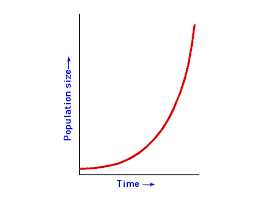

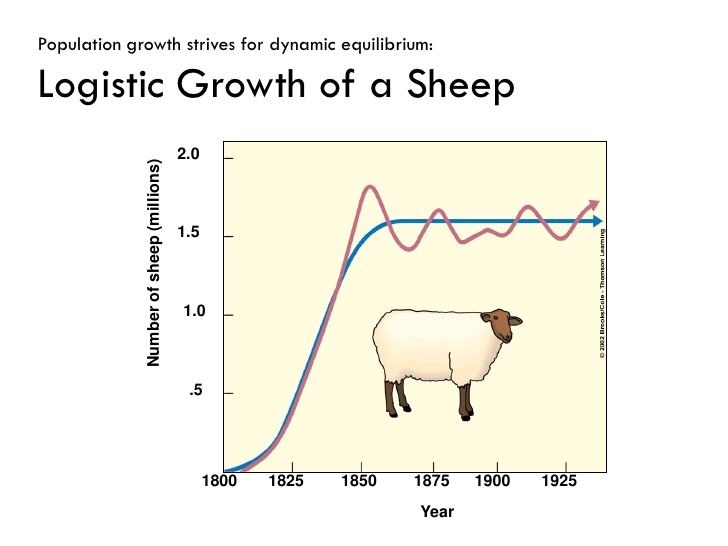


What point on the graph represents the carrying capacity?
A
B
C
D
Which limiting factor is density independent?
water
food
natural disasters
An environmental factor such as amount of space, disease, and availability of mates that depends on the number of members in a population is called
density- dependent factor
density- independent factor
Food, water, sunlight, shelter, and space are resources that are called
limiting factors
species
biotic
none of the above
Food, water, sunlight, shelter, and space are resources that are called
limiting factors
species
biotic
none of the above
Which of the following is a density dependent factor?
volcanic eruption
earthquake
disease
hurricane
Review: What is the carrying capacity of a population?
The most individuals a population that can be supported from the environment
How much weight a population can carry
The amount of food needed to fee a population
When a population grows without stopping
What is a limiting factor?
Something that causes the growth of a population to decrease
Something that causes a population to grow a lot
Limiting factors that affect large, dense populations more than small, scattered populations are called ________________.
Density dependent limiting factors
Density independent limiting factors
Which of the following would be considered a density dependent limiting factor?
Floods
Tornadoes
Predators
Earthquake
Arctic foxes eat Arctic hares. What would happen to the hare population if the fox population increased rapidly?
The hare population would decrease
The hare population would increase
There would be no change on the hare population
An earthquake occurs in California and kills 500 people. Is this an example of a density dependent or independent limiting factor?
Independent
Dependent

Review: What type of growth curve is shown in the picture?
Logistic
Exponential

_____________- the number of individuals in a given area
Dispersion
Population density
Population size
_____________- the number of individuals in a population
Dispersion
Population density
Population size
Factors that affect population size:
INCREASE: Number of ___________ & ____________
(Choose 2 answers)
Birth
Death
Immigration
Emigration
Factors that affect population size:
DECREASE: Number of ___________ & ____________
Choose all that applies.
Birth
Death
Immigration
Emigration

Exponential growth displays a ____-shaped curve which indicates a steady increase of population size.
J
S
C
V

Logistic growth displays a ____-shaped curve which indicates a population size capped at carrying capacity.
J
S
C
V
Example of Density Dependent Factors are:
Choose all that applies.
Food
water
shelter
weather

What cycle is shown in the diagram?
The Life Cycle
The Nitrogen Cycle
The Carbon Cycle
The Water Cycle

How do decomposers help the carbon cycle?
Carbon is leaked into the atmosphere when fossil fuels are burned.
Dead, organic matter is broken down and release carbon dioxide into the air
Volcanoes and fires release large amounts of carbon dioxide.
Decaying organisms are needed for carbon to be released

When a consumer dies, it will likely get consumed by _________. (nature's recyclers)
wolves and bears
mice and rabbits
foxes and coyotes
bacteria and fungi

What is the largest reservoir for water?
the ocean
rocks and minerals
the atmosphere
glaciers
The water cycle is driven by
water
wind
the sun
Earth's rotation

