
 Worksheets
Earth Science Final Review
Total questions: 190
Worksheet time: 3hrs 10mins

What do the inner planets have in common?
They are all the same size
They are made of gas.
They rotate at the same speed.
They are all rocky.

If it's ____ in the Northern hemisphere, then it's summer in the Southern hemisphere.
spring
summer
fall
winter


nuclear fission
nuclear fusion
nuclear reaction
nuclear core

Swirling Galaxy
Milky Way Galaxy
Andromeda Galaxy
Pinwheel Galaxy

The initial explosion that resulted in the formation and expansion of the universe is called __________________.
the Big Bang
the start of the universe
the beginning
the formation of space

The Sun is...
one of many stars in our solar system
only one planet away from Earth
not moving
a star in the center of our solar system

Due to rotation, only one side of the Earth faces the Sun at a time. This causes...
seasons
climate changes
day and night
months of the year

Their mass and the distance between them
The shape of the object
The sum of their masses
The mass of the larger object only

Galaxies are classified according to:
shape
size
color
temperature

How does our star, the Sun, compare to other stars in the Universe?
Cooler than most
Dimmer than most
Brighter than most
Average in every way

Why do planets orbit the Sun?
The Sun is the only celestial object that has a gravitational pull.
The Sun’s chemical composition makes it attract planets.
Only celestial bodies that emit light, like the Sun, can be at the center of an orbit.
The Sun is the most massive object in our solar system, so it exerts the greatest gravitational pull.

What is the definition of a dwarf planet?
A dwarf planet is a solar system body that has a spherical shape and an orbit around the Sun that is not cleared of other objects.
A dwarf planet is a small planet that is smaller than Mars.
A dwarf planet is a planet that is further than 2 AU from its orbiting star.
transpiration
25%
72%
97%
100%
Where is most of the freshwater located on Earth?
in the oceans
in polar ice and glaciers
in rivers, streams, and lakes
under the ground

How do air masses form into clouds? Clouds form when
cold, moist air rises and then cools
warm, moist rises, expands and then cools
cold air reaches the lifted condensation level

Warm air tends to ______
Rise
Sink

Dry
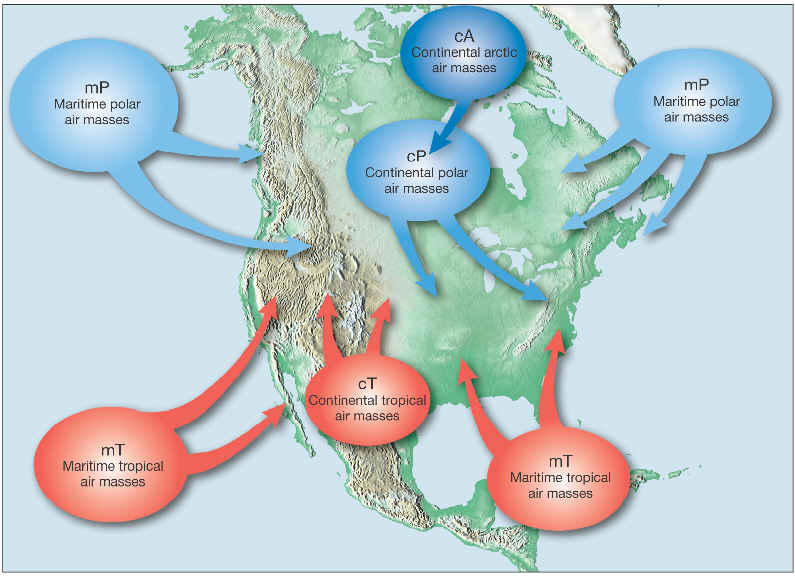
An air mass is a large mass of air that is defined by its temperature and ____________________.
Elevation (altitude)
Water vapor content (humidity)
Strength
Weather
What does salinity measure?
ocean temperature
amount of salt in water
ratio of mass to volume
cloudiness of water
Temperature and salinity together are called the _______ circulation.
hot-salt
Coriolis Effect
wind currents
thermohaline

The energy and motion from waves is caused by
currents
tides
wind
gravity
What are the three factors that contribute to water scarcity?
Climate change, overuse of groundwater, and water pollution.
Climate change, ocean droughts, and water pollution.
Hurricanes, overuse of groundwater, and water pollution.
El niño, hurricanes, and ocean evaporation.
How do oceans influence the temperature of the tropics and poles?
They keep it warm by bringing more rain.
They help to distribute heat to the poles.
The oceans do not play a role in temperature.
They cool the poles by creating wind.
Why is biodiversity important?
To create stable ecosystems
To decrease predator numbers
To increase atmospheric temperatures
To stabilize non-renewable resources
Coal, natural gas & oil
What best defines biodiversity?
Amount of biomass
Total # of organisms
Variety and number of organisms
Animals & plants dying
CFCs
Which term refers to consequences of extra nutrients being added to a body of water?
eutrophication
decomposers
parasites
nitrogen fixing
Oil, coal and natural gas
are renewable
are called biomass
can be recycled
are non-renewable
Which of the following is NOT considered a renewable resource
Natural Gas
Wind
Solar
Hydropower (water)
What pollutant forms when automobile emissions react with oxygen gas and ultraviolet rays?
smog
carbon dioxide
radon
sulfur dioxide
colon cancer
hearing loss
asthma
sun burn

Which one of these does not add CO2 to the atmosphere?
cooking with gas
planting trees
burning wood
riding in a bus

divergent boundary
convergent boundary
transform boundary

divergent boundary
convergent boundary
transform boundary

divergent boundary
convergent boundary
transform boundary
The process that causes the tectonic plates to move is called.....
subduction
transform
convection
In some areas of the world, like California and Japan, earthquakes are a common occurrence. How can this best be explained?
The strong ocean currents are undermining both areas causing earthquakes.
Both areas are located near the edge of the Pacific Ocean, the unstable sand causes earthquakes.
Both areas are subjected to strong ocean wind and waves that causes earthquakes.
Both areas are on the boundary of active plates, the motion of the plates causes earthquakes.
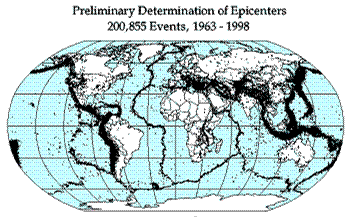
Earthquake epicenters (center of where the earthquakes started) were mapped for a 35 year period in the diagram above. The black dots indicate these epicenters. The black dots appear along what feature on Earth?
hot spots
plate boundaries
rift zones
sea floor spreading
What is the process by which rock is broken into fragments called sediments?
Deposition
Erosion
Weathering
Lithification
Rock that forms when pressure and heat change existing rock.
Igneous Rock
Sedimentary Rock
Metamorphic Rock
Rock Cycle

Which wave can travel through solids, liquids, and gases?
P-Waves
S-Waves
Surface Waves
What are two categories of seismic waves?
body and surface waves
P and S waves
Love and Rayleigh waves
Transverse and compression waves
Which seismic wave cannot travel through liquids (outer core)?
P waves
S waves
Love Waves
Rayleigh waves
Hotspots are volcanoes that form...
at convergent plate boundaries.
at divergent plate boundaries.
at transform plate boundaries.
in the middle of a tectonic plate.

What does the term carrying capacity describe?
The maximum number of birth rates for a population.
The ability of a population to accept new immigrants.
The ratio of birth rates to death rates in a population.
The population size that the environment can sustain.

Rocks that have formed from being compacted and made up of sediment that have cemented together
Sedimentary
Metamorphic
Igneous

Rocks that have formed from magma that has cooled
Sedimentary
Igneous
Volcanic
Metamorphicc
Rocks are always changing and the process of change is called
Morphing
Evolving
Rock Cycle
Sediments
Galaxies are __________ from where the Big Bang occurred.
Expanding
Shrinking
Not Moving
________ is the turning or spinning of a body on its axis.
Revolution
Nutation
Barycenter
Rotation
What is the term that refers to Earth when it is closest to the Sun?
Perihelion
Aphelion
Nutation
Barycenter
What causes the seasons?
Earth's Rotation
Earth's Revolution
Earth's tilt
Earth doesn't have seasons
What is the slight movement over a period of 26,000 years that changes where Earth's axis points?
Nutation
Precession
Barycenter
Rotation
What is the oscillatory movement of the axis of a rotation body or a wobble?
Precession
Rotation
Nutation
Barycenter
The point between two objects where they balance one another is called?
Nutation
Rotation
Barycenter
Precession
What is the shape of Earth's orbit?
Circular
Oval
Ellipse
Diamond
Who discovered three (3) laws of planetary motion?
Galileo
Newton
Kepler
Ptolemy
These are the daily rise and fall of Earth's waters.
rivers
waves
tides
geysers
Which is most responsible for Earth's tides?
the sun
the moon
mars
humans
How does energy from the Sun reach Earth?
conduction
seismic waves
electromagnetic radiation
convection
When the Sun, Earth and Moon are in a straight line you will see which type of tide?
a spring tide
a neap tide
a fall tide
a summer tide
A desert and a lake receive the same amount of radiant energy from the Sun, at the same solar angle. Which of the following is most likely to happen?
The temperature of the desert and the lake go up at the same rate.
The temperature of the lake goes up faster than the desert.
The temperature of the desert goes up faster than the lake.
The temperature of the lake will not change at all.
Trench
Subduction Zone

The place where an earthquake originates inside the Earth's surface is called...
Epicenter
Focus
Underground
Crust

Which city is closest to the epicenter?
A
B
C
5. Which type of wave travels the fastest?
Primary Wave
Secondary Wave
Surface Wave





water, ice, wind or gravity
moves fragments of rock
and soil.
water, ice, wind or gravity
deposit rock sediments
and soil in a new place.
Earth’s crust into smaller
and smaller pieces.
Which soil horizon typically contains the least organic matter?
A horizon
B horizon
C horizon
O horizon

30% Sand
10% Silt
60% Clay
Sand
Underlying force behind all mass movements
gravity
pressure
water
volcanoes
Which of the following factors are important in triggering mass movements?
earthquakes
the removal of vegetation
the saturation of the soil with water
gravity
What is urban sprawl?
Uncontrolled expansion of urban areas into surrounding rural lands
The controlled expansion of rural areas into surrounding urban lands
The process of reducing urban areas and increasing rural areas
Planned development of urban areas into surrounding rural lands
What are the environmental impacts of urban sprawl?
Loss of natural habitats, increased air and water pollution, increased energy consumption, and increased greenhouse gas emissions.
Increased air and water pollution, decreased energy consumption, and decreased greenhouse gas emissions.
Decreased air and water pollution, increased energy consumption, and decreased greenhouse gas emissions.
Increased natural habitats, decreased air and water pollution, and decreased energy consumption.
What is the main cause of urban heat islands?
Increased air pollution
Deforestation and loss of vegetation
Climate change and global warming
Replacement of natural surfaces with buildings, roads, and other infrastructure
Deforestation causes an increase in atmospheric carbon dioxide
true
false

increased green house gases
Where can people drill and install a well to obtain groundwater?
above the water table
into an aquifer
into the unsaturated zone
into the impermeable layer
When water is removed from an aquifer faster than it is replenished, it can result in which of the following?
Land Subsidence
Groundwater replenishment
Saltwater Intrusion
Increased amounts of water
If the soil is saturated, and precipitation increases, there will be
decreases in the amount of runoff
increases in the amount of runoff
decreases in the amount of groundwater
increases in the amount of transpiration

In the diagram, letter A best represents:
Runoff
Watershed
Water Table
Confining Layer
A stream or river that flows into a larger river
lake
mouth
tributary
estaury

In a meander, where does water flow fastest?
The middle of the river
The outside bend
The inside bend
What stage of the river moves the fastest?
youthful
mature
old
They all move at the same speed

A ___________________ is the area of land that collects runoff and channels it into a main river.
peninsula
tributary
groundwater
watershed
All water eventually empties into ---
an ocean
a river
the ground
a lake
What is one use of an estuary to help increase biodiversity?
Used as a place to help predators capture their prey
Used as a "nursery" to help organisms raise babies
Used as a place the filter sediment and trap pollution
Used as an "overflow" area to prevent flooding
This zone is found at the bottom of a lake
Littoral
Limnetic
Profundal
Benthic
Which of the following is NOT a negative consequence of building a dam?
they can fail and break, causing dangerous floods
they can change weather patterns and cause climate change
they can flood otherwise useful land and cause people to move
they block the movement of dirt by river


A ship carrying gasoline runs into shore and spills large amount of gasoline.
Point
Non-Point

Acid Rain
Point
Non-Point
Which of the following is NOT an environmental impact of mining?
Destroys natural communities over large areas.
Acid drainage pollutes groundwater.
Decreases runoff.
Causes erosion
Eutrophication is caused by
excess nutrients building up in the water.
industrial point-source pollution.
unlined landfills and septic tanks.
wastewater from homes mixing with drinking water.
How does eutrophication cause the death of aquatic organisms
the build up of carbon dioxide in the water
the lack of nitrogen in the water
the lack of carbon dioxide in the water
the lack of oxygen in the water
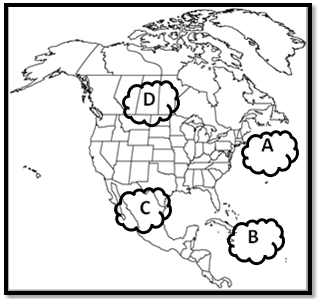
Which kind of pressure system results in clear skies and no wind?


SELECT ALL THAT APPLY: Which of the following will produce some type of precipitation?
A High pressure system
A Low pressure system
A cold front
A warm front
The most likely stage for large hail and damaging winds in a thunderstorm is the...
How would you strengthen a hurricane?
move over cold water
move over land
move over warm water
What scale is used to measure tornadoes?
Saffir-Simpson Scale
Enhanced Fujita Scale
Richter Scale
Doppler Scale

What is the barometric pressure?
1097.9 mb
979.0 mb
23.0 mb
997.9 mb

Which city has the greatest temperature?
Niagara Falls
Rochester
Syracuse
Which is a MAJOR cause of acid rain?
spraying pesticides on crops
burning fossil fuels for energy
dumping sewage in rivers
using Nuclear power stations
The concerns with acid rain are all of the following EXCEPT:
a decrease in lake and river pH
an increase soil pH
respiratory problems in humans
corrosion of buildings and metal structures
Which of the following is NOT a way to reduce photochemical smog?
Using renewable energy sources
Increasing the use of coal for electricity
Using less gasoline
Switching from coal to natural gas
What is the name of the international agreement committing parties to phasing out ozone depleting substances and phasing out chlorofluorocarbons (CFCs)?
Vienna Protocol
Paris Agreement
Montreal Protocol
Antarctic Convention
The depletion in the Ozone layer is caused by:
Carbon dioxide
Nitrous oxide
Methane
Chlorofluorocarbon
Why do the fisherman of Peru and South America not welcome a strong El Nino?
El Nino poisons the fish
El Nino causes strong winds and currents which move fish westward
El Nino bring cold water to the surface which kills the base of the food chain
El Nino shuts off upwelling and nutrients needed for the marine food chain do not rise to the surface

Does this dark asphalt road reflect or absorb light?
Reflect
Absorb
Ways that Earth's climate changes NATURALLY
solar activity-more sunspots
changes in Earth's tilt/axis
burning of fossil fuels
mining of coal and oil
Climate of an area could change when large amount of gas or ashes block sun's radiation and cause a cooling of Earth
solar activity
volcanic eruptions
Earth's tilt
La Nina

Which of the following are greenhouse gases?
Carbon dioxide
Methane
Water vapor
All answers are correct
Which of the following does NOT happen to solar energy when it reaches Earth?
Some solar energy reflects off the atmosphere, back to space
Some solar energy passes through Earth and comes out the other side
Some solar energy is absorbed by land and water
Some solar energy is radiated from the Earth's surface and trapped by the atmosphere
How do scientists believe plant and animal life will be affected by increasing levels of acidity in the ocean?
there will be more food for them to eat, making it easier to survive
there will be less diversity in plants and animals, making survival more difficult
the earth will correct the problem itself and the oceans' biodiversity will remain the same
the plants and animals will adapt to the increasing acidity and continue to thrive in the oceans
Arrows in a food web represent...
eating
sunlight
energy
matter

Which of the following organisms is a primary consumer?
grass
rabbit
fox
snake

What would happen to the rabbit population if the fox population moved out of the area represented by the food web?
The rabbit population would increase
The rabbit population would decrease
The rabbit population would neither increase nor decrease
Which biome consists of warm weather year-round, a dry season and a rainy season, and diverse trees, shrubs, and grasses?
tropical rainforest
temperate grassland
savanna
desert
Which biome consists of long bitter winters, cool summers, and diverse coniferous trees?
Taiga
Tundra
Temperate forest
Grassland
The primary causes of extinction (and endangerment and threatened status) is...
polar ice cap melting
global warming
habitat loss and degradation
burning of fossil fuels
Which of the following is NOT a cause for the current decline in the biodiversity of our ecosystem?
overexploitation of resources
increasing human populations
pollution of water sources
regenerating forests
A possible way to prevent species from becoming endangered is?
increased use of fossil fuels
more habitat converted to farms
designating more areas as wildlife preserves
increased urban expansion
Geothermal energy uses heat from ____ to produce electricity.
the earth
coal
oil
natural gas
Which of the following is not a benefit of GMOs
Increases pest resistance
Decreases biodiversity
Increases drought resistance
Reduces cost of manufacturing
What does monoculture mean?
A game to acquire as much money and property as possible
The growing of multiple crops in one particular area
The growing of multiple types of animals in one particular area
The growing of a single crop in one particular area
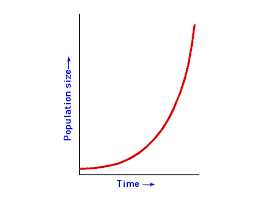
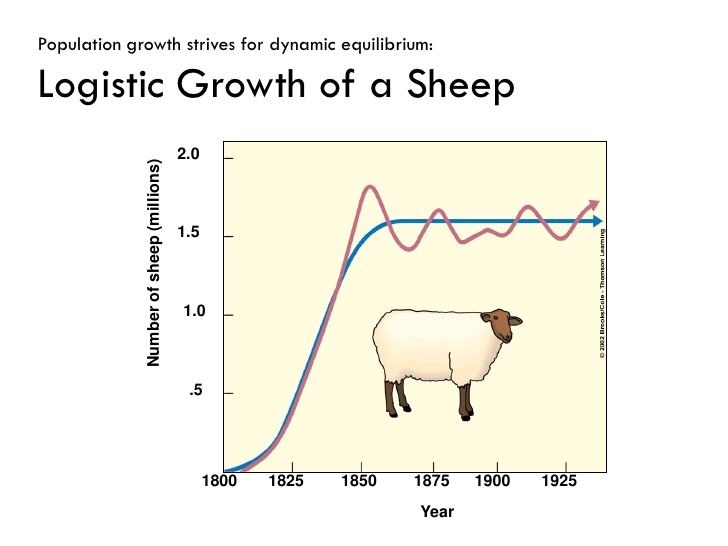
1.0 million

What does "reduce" mean?
use more
use less
make new things
save the Earth
Which statement describes how recycling aluminum cans positively affects the environment?
Recycling makes solid waste.
Recycling produces air pollution.
Recycling uses energy.
Recycling conserves mineral resources.

