
 Worksheets
G9 Quiz 2 Revision
Total questions: 191
Worksheet time: 3hrs 44mins
Rows on the periodic table are called...
groups
periods
families
shells

The Periodic Table is organized by increasing
charges
atomic number
mass number
electronegativity
The elements in the middle of the table are called the _____________ metals because their properties change from metallic to nonmetallic.
positive
negative
magnetic
transition
The _________________ are a small group of elements that have both metallic and nonmetallic properties.
Oxygen Group
Nitrogen Group
Metalloids
Halogens
The vertical columns on the periodic are called _______________.
Rows
Periods
Groups
Valence
The horizontal rows of the Periodic Table are called ______________.
Periods
Groups
Families
Halogens
The _______________electrons are the electrons on the outer most energy level of the atom.
valence
core
excited
ground state
Elements of the same ______________ have the same number of valence electrons, which determines the elements chemical properties.
Period
Row
Group
This element does not match the properties of any other group so it stands alone. It is placed above Group 1 but it is not part of that group. It is very reactive, colorless, odorless, and a gas at room temperature.
Hydrogen
Helium
Nitrogen
Oxygen
Group 1: These metals are extremely reactive. They all have one valence electron. They are shiny and silver in color. They are soft and can be cut with a knife.
Transition Metals
Alkali Metals
Alkaline Metals
Lanthanides
Group 2: Slightly less reactive because they have 2 valence electrons. They are silver colored and more dense that Group 1 metals.
Transition Metals
Alkali Metals
Alkaline-earth Metals
Actinides
Groups 3-12: These metals have a moderate range of reactivity and a wide range of properties. They are shiny and good conductors of heat and electricity. They have higher densities and melting points than Groups 1 and 2. These have 1 or 2 valence electrons.
Transition Metals
Alkali Metals
Alkaline-earth Metals
Lanthanides
Elements with atomic numbers 57-70 and 89-102: These metals were taken out and placed at the bottom of the table so the table wouldn't be so wide. Some are shiny and reactive. Others are radioactive and unstable. Elements 95-103 do not exist in nature but have been manufactured in the lab.
Alkali Metals
Alkaline-earth Metals
Lanthanides and Actinides
Boron Group
Group 13: Contains on metalloid and 4 metals. They are reactive. All have 3 valence electrons (Group # minus 10).
Boron Group
Nitrogen Group
Oxygen Group
Carbon Group
Group 14: Contains one nonmetal, two metalloids, and two metals. These all have 4 valence electrons (Group # minus 10) and have varied reactivity.
Boron Group
Carbon Group
Nitrogen Group
Oxygen Group
Group 15: Contains two nonmetals, two metalloids, and one metal. They have varied reactivity. These elements have 5 valence electrons (Group # minus 10).
Boron Group
Carbon Group
Nitrogen Group
Oxygen Group
Group 16: Contains three nonmetals, one metalloid, and one metal. They are a reactive group. These elements all have 6 valence electrons (Group # minus 10).
Boron Group
Carbon Group
Nitrogen Group
Oxygen Group
Group 17: All nonmetals. Very reactive. Poor conductors of heat and electricity. Tend to form salts with metals. Example NaCl: sodium chloride which is known as table salt. These elemtns have 7 valence electrons (Group # minus 10).
Boron Group
Oxygen Group
Nitrogen Group
Halogens
Group 18: Unreactive nonmetals. All are colorless, odorless gases at room temperature. These elements have a full outer energy level, usually 8 valence electrons, except for Helium which only has 2 valence electrons.
Nitrogen Group
Oxygen Group
Noble Gases
Halogens
The elements on the right side of the Periodic Table are classified as ________________.
Metals
Nonmetals
The elements on the left side of the periodic table are classified as ________________.
metals
nonmetals
The periodic table is organized by _________________
Atomic Number
Mass Number
Average Atomic Mass
Alphabetical Order

The periodic table is broken into Rows and Columns.
The Rows are called _____
Periods
Groups

The periodic table is broken into Rows and Columns.
The Columns are called _____
Periods
Groups

Who is considered the Father of the Periodic Table?
Dimitri Mendeleev
John Dalton
Antoine Levoisier
Mr. Hanrahan

What do you call the electrons that are the furthest away from the nucleus?
Valence Electrons
Exterior Electrons
Outer Electrons
Perimeter Electrons
What is the largest group on the periodic table?
Transition Metals
Noble Gases
Metalloids
Alkaline Earth Metals

Which of the following is NOT a metalloid?
Aluminum
Silicon
Boron
Arsenic

Which of the following is a Metal?
Sodium
Carbon
Oxygen
Argon

Which of the following is a Nonmetal?
Sulfur
Gold
Iron
Calcium

What is the name of the group that contains unreactive nonmetals, each with 8 valence electrons?
Noble Gases
Halogens
Alkaline Earth Metals
Rare Earth Metals

What is the name of the group that contains highly reactive metals, each with 1 valence electron?
Noble Gases
Halogens
Alkali Metals
Rare Earth Metals

What is the name of the group that contains reactive metals, each with 2 valence electrons?
Transition Metals
Halogens
Alkaline Earth Metals
Rare Earth Metals

What is the name of the group that contains highly reactive nonmetals, each with 7 valence electrons?
Noble Gases
Halogens
Alkaline Earth Metals
Metalloids

What is the name of the group that contains radioactive metals, that can each form multiple ions?
Alkali Metals
Noble Gases
Alkaline Earth Metals
Inner Transition Metals
What does the Atomic Number of an element represent?
# of Protons
# of Neutrons
# of Electrons
# of Neutrinos
What element is Period 6, Group 2?
Yrituim
Barium
Osmium
Hafnium
What element is Period 4, Group 8?
Os
Ca
Fe
Ti
What element is Period 6, Group 18?
Radon
Tungsten
Cesium
Xenon
What element is Period 3, Group 16?
Scandium
Germanium
Oxygen
Sulfur
What element is Period 5, Group 6?
Tantalum
Molybdenum
Arsenic
Barium
What is the Period number of Silicon?
2
3
13
14
What is the Period Number of Bromine?
4
5
16
17
What is the Group Number of Titanium?
4
5
6
7
What is the Group Number of Argon?
3
4
17
18
What element has the same Period Number and Group Number?
Na
W
N
O
What state is Calcium?
solid
liquid
gas
What state is Hg?
solid
liquid
gas
What state is N?
solid
liquid
gas
What state is Xe?
solid
liquid
gas
What state is K?
solid
liquid
gas


What subatomic particles are in the nucleus?
Protons
Neutrons
Electrons
Photons
What subatomic particle has a negative charge?
Electrons
Neutrons
Protons
Nucleus
Which subatomic particle has the least mass?
Electron
Neutron
Proton
Which subatomic particle has no charge?
Electron
Neutron
Proton
Neutrons have the same mass as which subatomic particle?
Electrons
Protons
Which part of the atom has the most mass?
The electrons
In the nucleus
It is evenly spread out
On the outside
Atomic number is a measure of the...
Number of electrons
Number of neutrons
Number of protons
Number of protons and neutrons
To have a charge of zero, what two particles must be balanced in an atom?
Protons and Electrons
Protons and neutrons
Electrons and neutrons
What subatomic particle is different between isotopes?
Electrons
Protons
Neutrons
Mass number is a measure of an atom's
Electrons and protons
Electrons and neutrons
Neutrons and protons

What is the Atomic Number of Nitrogen?
7
14.007
14
21
What is the Atomic Mass of Nitrogen?
7
14.007
14
21
What is the Mass Number of Nitrogen?
7
14.007
14
21
How many electrons are in an atom of Nitrogen?
7
14.007
5
2
How many VALENCE electrons are in an atom of Nitrogen?
7
14.007
5
2
How many energy levels of electrons are in an atom of Nitrogen?
7
14
5
2
How many electrons are in the first energy level of an atom of Nitrogen?
7
14
5
2
What period is Nitrogen in on the Periodic Table?
7
15
5A
2
What group is Nitrogen in on the Periodic Table?
7 (7B)
15 (5A)
5 (5B)
2
How many electrons will Nitrogen gain to fill its outer shell?
2
3
5
8
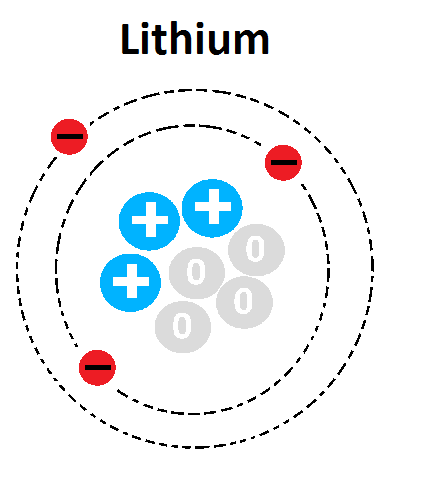
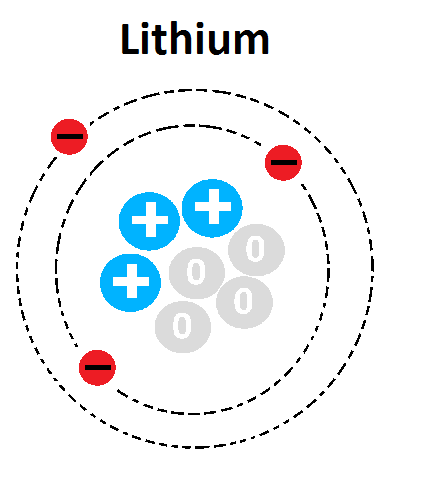
What is the mass number of this atom?
1
3
4
7
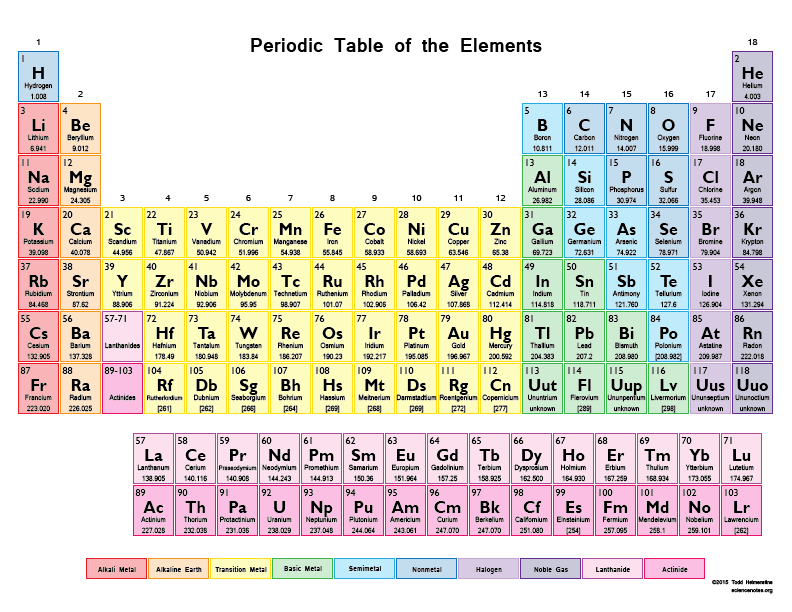
What is the atomic number of Barium, Ba? (enlarge the periodic table)
20
38
56
88

What is the atomic number of Nickel? (enlarge the periodic table)
110
28
46
78
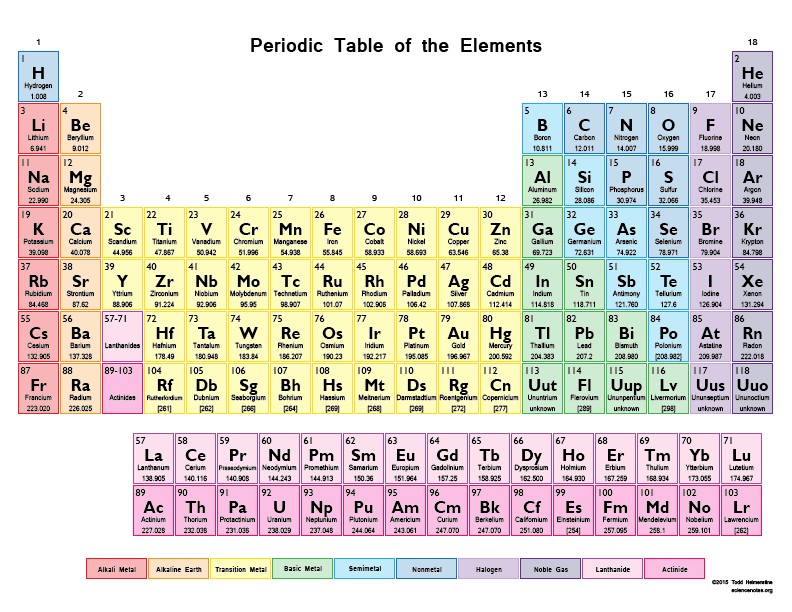
How many protons are in a sodium atom, Na? (tap to enlarge the periodic table)
Sodium has 1 proton.
Sodium has 3 protons.
Sodium has 11 protons
An element has the mass number 12 and atomic number 6. The number of neutrons in it is:
6
10
4
8
Atoms of the same element which have a different number of neutrons are called _________________.
ions
isotopes
quarks
molecules
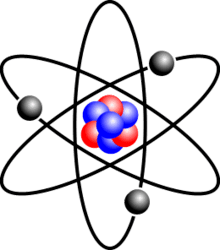
Which subatomic particle has a negative charge in the atom?
proton
neutron
electron
quark
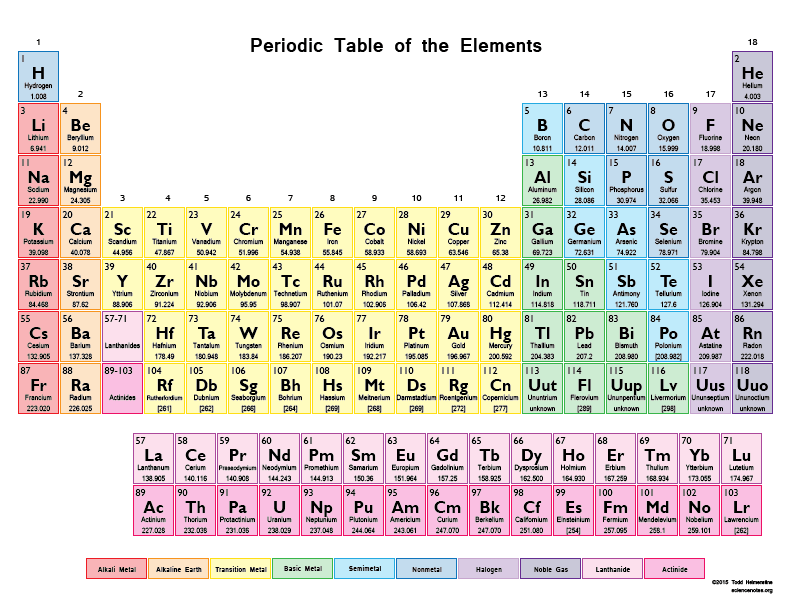
How many neutrons does C-14 [atomic #6] contain? (tap to enlarge the image)
6
7
14
8
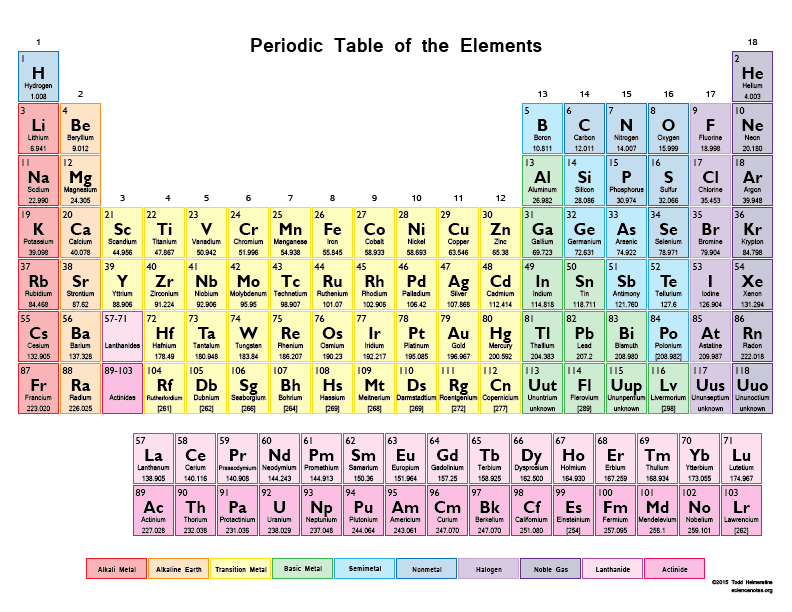
How many neutrons does an atom of the isotope Neon-22 have? (tap to enlarge the image)
12
10
22
20

How many neutrons does an atom of Nitrogen-13 have? (tap to enlarge the image)
6
7
13
5
Isotopes have different numbers of
protons
neutrons
electron
properties
The number in Kr-84 represents what about Krypton?
The number of electrons
The number of protons
The mass number
If an atom has 10 electrons, how many protons does it have?
0
1
10
5

How many electrons are in an atom with an atomic number of 50? You will need a periodic table to help you.
5
8
50
2
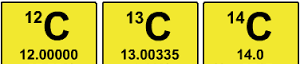

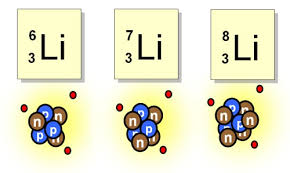
How many neutrons does the isotope of lithium - 8 have?
8
3
4
5
Which of the following is a property of an acid
bitter taste
sour taste
slippery feeling
turns red litmus blue
Which of the following is a property of a base?
feels soapy
corrodes metals
causes burns on skin
tastes sour
Which would cause burns to the skin?
HCl (hydrochloric ACID)
NaOH (sodium hydroxide BASE)
What types of chemical compounds would corrode a metal?
acids
bases
Which types of substances have pH values that are LOW (below 7)?
acids
bases
Which types of substances have pH values that are HIGH (above 7)?
acids
bases
A pH of 7 is considered to be
acidic
basic
neutral
A substance is found to have the following characteristics:
Very bitter taste
Feels slippery to the touch
Produces OH- ions when dissolved in water
In what category would the substance be classified?
acid
base
enzyme
fatty acid
Which of these pH values represent an acid?
4
8
10
12

Milk is a very weak acid. What might its pH value be?
6.5
7.8
4.2
12.2
Which of the following are properties of acids?
They conduct electricity when dissolved in water
They taste sour
They react with metals to produce hydrogen gas
All of the answer choices are correct
Which of the following is a property of a base?
bitter taste
reacts with metals
salty
sour taste
Bases have many uses. They are mainly used to make
cleaning products
soaps
concrete
all of the answer choices
All bases have a sour taste.
True
False
Which of the following pH values represents a base?
2.1
4.6
6.8
8.1
The strongest bases have pH values close to
0
14
7
5
Which of the following is a base?
baking soda in water
orange juice
vinegar
lemonade
If the substance is neutral, what would the pH be?11
3
5
7
9
11
A bond between a nonmetal and a nonmetal is called a(n)
covalent bond
ionic bond
metallic bond
transfer bond
What is Covalent Bonding?
Bonding that is the result of two nonmetals sharing electrons
Bonding between two metals
Bonding that is the result of a nonmetal and a metal exchanging electrons
Bonding between more than two elements
Which particle is responsible for bonding?
Protons
Electrons
Neutrons
Nucleus
Which of the following is true about Ionic Bonds? (select ALL TRUE options)
High melting point
Low melting point
Can dissolve in water
Cannot dissolve in water
Can conduct electricity
Potassium Chloride is...
Ionic
Covalent
Water (H2O) is...
Ionic
Covalent
Ammonium (NH4) is...
Ionic
Covalent


Ionic bonds are formed between...
Non - metals
A metal and a non-metal
Metals
Ionic bonds are formed between...
Non - metals
A metal and a non-metal
Metals
Which of the below is an ionic compounds?
Ni
MgCl2
H2O
CH4
How is an ionic bond formed?
Sharing of electrons
Delocalised electrons
Transfer of electrons
An example of an ionic compound is Sodium Chloride, which is made from Na+ and Cl- ions. Why do these ions form an ionic bond?
They have like charges
They are from the same group
They are from the same period
They have opposite charges
Lead Chloride is an ionic compound, made up from Pb2+ ions and Cl- ions. Which is the correct formula for this compound?
PbCl3
PbCl
PbCl4
PbCl2
Which of the following is true for ionic bonding & ionic compounds? (3 correct statements)
They must be made of ions with like charges.
The negative ion must be written first.
Compounds must have an overall charge of zero.
They are made of metals and nonmetals.
The positive ion must be written first.

Which properties are all characteristics of ionic compounds?
solids with high melting and boiling points
soft solids which are highly malleable
when solid, the ions are held in place so the compounds cannot conduct electricity
conduct electricity when dissolved or molten
What properties does an ionic compound have?
A low boiling point and it conducts electricity when dissolved in water
A high melting point and it conducts electricity when molten or dissolved
A high boiling point and it conducts electricity when solid

Why do ionic compounds NOT conduct electricity when they are in their solid state?
Their ions are free to move.
Their ions are held in fixed positions.
Their electrons are free to move
Their electrons are held in a fixed state
Ionic compounds conduct electricity when dissolved in water. Which statement below best explains the property?
Ions are free to move.
Electrons are free to move.
Bonds are strong.
There are weak intermolecular forces of attraction.

Why do ionic compounds have high melting and boiling points?
Their ions are free to move.
Their ions are held in fixed positions.
They have many strong bonds which require a large amount of heat energy to overcome these strong bonds.
They have weak bonds which require a little amount of heat energy to overcome these weak bonds.
Which three of the following are features of ionic compounds? (click 3 boxes)
They have bonds between metals and non-metals.
They have bonds between two non-metals.
They form simple molecular structures.
They form giant ionic lattices.
They involve the transfer of electrons.
Be and F can combine to form BeF2, an ionic compound. Select ALL the true statements.
Each Be atom loses two electrons from the outer shell.
Each F atom gains two electrons from Be.
The force holding the ionic compound together is electrostatic attraction.
Each F ion has a charge of -1

Select all the true statements:
Each outer shell electron in Cl is represented by a cross.
In Na, the total charge is -2.
Na+ and Cl- are held together by electrostatic attraction.
Na+ has a full outer shell of electrons.
A single crystal of table salt (Sodium Chloride) is one giant ionic lattice, the Na+ and Cl- ions are held together in a (a) lattice.
Match the following to form true statements:
When solid, ionic compounds
cannot conduct electricity
When melted ionic compounds
can conduct electricity
Ionic compounds have
high melting and high boiling points
There are many strong bonds
between ions in an ionic compound.
Elements in group 1 of the periodic table form ions
with a charge of 1+
Sodium Oxide is Na2O. Meaning there are 2 Na present for every O in the ionic compound. As the Oxygen ion has a charge of -2, what charge does each Sodium ion have?
-1
-2
+2
+1

This is an image of the giant ionic lattice representing Sodium Chloride, what is represented by the +?
Cl ion
Cl atom
Na atom
Na ion
What is the correct formula for aluminium oxide? Aluminium is in group 3 and oxygen is in group 6.
Al₂O₃
AlO
AlO₄
Al₂O
Al₃O₂
Is the following compound ionic or covalent?
Exists as a solid, liquid or gas
Ionic
Covalent
Is the following compound ionic or covalent?
A material that has a low boiling point
Ionic
Covalent
Is the following compound ionic or covalent?
A material with a high melting point
Ionic
Covalent
Is the following compound ionic or covalent?
PBr5
Ionic
Covalent
Is the following compound ionic or covalent?
LiBr
Ionic
Covalent
Is the following compound ionic or covalent?
A material that has a low boiling point
Ionic
Covalent
Is the following compound ionic or covalent?
A material that forms a crystal lattice
Ionic
Covalent
Is the following compound ionic or covalent?
A material that is hard and brittle
Ionic
Covalent
Is the following compound ionic or covalent?
A material that SHARES electrons
Ionic
Covalent
Is the following compound ionic or covalent?
A material that LOSES and GAINS electrons
Ionic
Covalent
The following properties are all characteristics of ionic compounds EXCEPT
high melting and boiling points
soft
crystal lattice structure
conduct electricity when dissolved in water

