
 Worksheets
Vegetable Industry #2C: Nutrients and Deficiencies
Total questions: 32
Worksheet time: 17mins
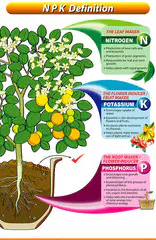
The 3 most important soil macronutrients for plant growth. They often leach out of soil or may be removed when plants are harvested, so must be replaced. Also, the 3 numbers on a fertilizer bag. Their most important functions for a plant can be remembered by the phrase, "Up, Down, and All Around."
CHO
CaMgS
NPP
The most abundant element in the air is _______________ .
However, it is not in a form that is available to plants until soil microorganisms convert it.

Which 3 elements do plants use in large amounts (macronutrients) and are obtained from the atmosphere (air) and water around the plant?

The nutrient represented by the first number on a fertilizer label. Supports plants' rapid growth and encourages the healthy development of dark green foliage and fruit, so it is especially appropriate for young plants. It is the "UP" nutrient because it is so important for the leafy green growth of the leaves, especially in young plants that need to grow "UP".
Which macronutrient is responsible for making plants green?
Nitrogen
What nutrient is abundant in the atmosphere as a gas, and is responsible for the dark green color of healthy plant growth?
Don't forget it CANNOT be absorbed directly by plants, it depends on bacteria and fungi in the soil to convert it to a form the plant's roots can absorb.

Organic gardeners add N to soil by adding composted manure or bood meal to the soil, planting a green manure cover crop, planting nitrogen fixing plants like peas or beans (legumes), or adding coffee grounds to the soil .


In nitrogen deficiencies, plant leaves turn yellow from the ___________________ . (3)
inside out (veins and then leaves)
older leaves first
interveinal chlorosis
tip to the margins
This nutrient is present in the soil and is the second number on a fertilizer label. It is the "DOWN" nurient because it primarily affects root growth. Transplanted plants and seedlings need this nutrient to help them establish their roots. It is also very important for flowering and fruit production.
Which macronutrient is responsible for strong root growth?
selenium
potassium
nitrogen
phosphorus

Which macronutrient is responsible for strong stems (for flowing nutrients up and down)?
selenium
potassium
nitrogen
phosphorus
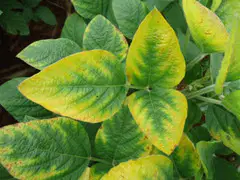
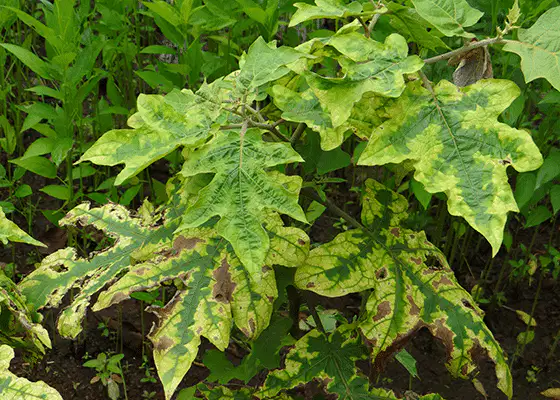
In potassium deficiencies, the leaves turn yellow from the __________________ . (2)
inside out
outside in
interveinal chlorosis
roots to tops
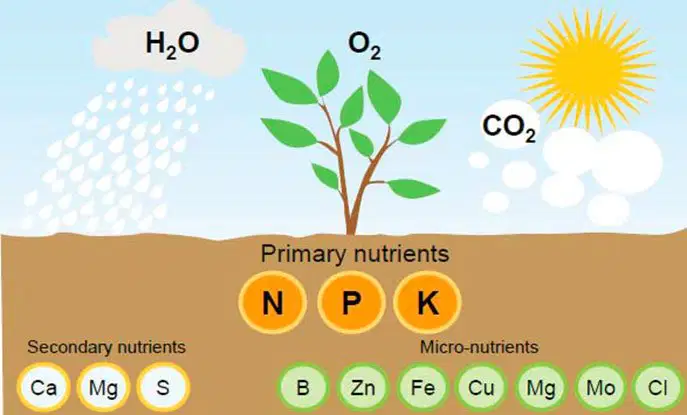
How many macronutrients are required by plants?
Nine macronutrients
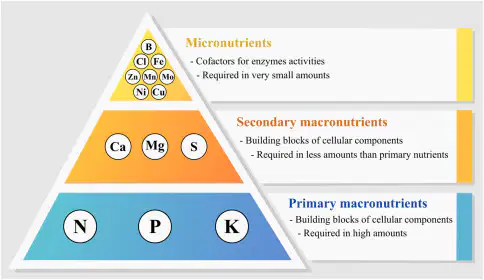
Macronutrients are the major nutrients needed for healthy plant growth. There are 3 primary SOIL macronutrients: NPK.
What are the 3 secondary soil macronutrients ?

Plant nutrients needed in small amounts are called __________________ , and there are 7-8 of them.

How many nutrients total (macro and micro) do plants need?
16-17 nutrients (9 macro and 7-8 micro)

Nitrogen should be added to which corn sample to correct the deficiency (top = 1, 2, 3, 4... bottom = 8)?
1
2
3
4

Phosphorus should be added to which corn sample to correct the deficiency (top = 1, 2, 3, 4... bottom = 7)?
1
2
3
4
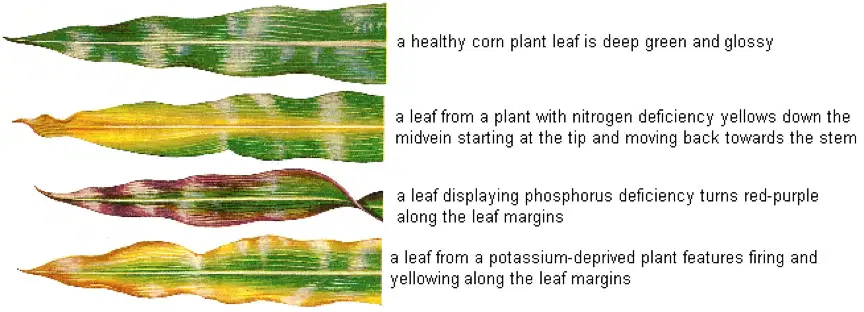
Potash (K) should be added to which corn sample to correct the deficiency (top = 1, 2, 3, bottom + 4)?
1
2
3
4

Which nutrient deficiency is illustrated? (2 answers)
N
P
K
Potash
What could you add to the soil to help with this nutrient deficiency?
poultry manure
phosphate powder
wood ash from fires
blood meal

Which nutrient deficiency is illustrated?
N
P
K
Potash

What could you add to the soil to help with this nutrient deficiency?
poultry manure
phosphate powder
wood ash from fires
blood meal
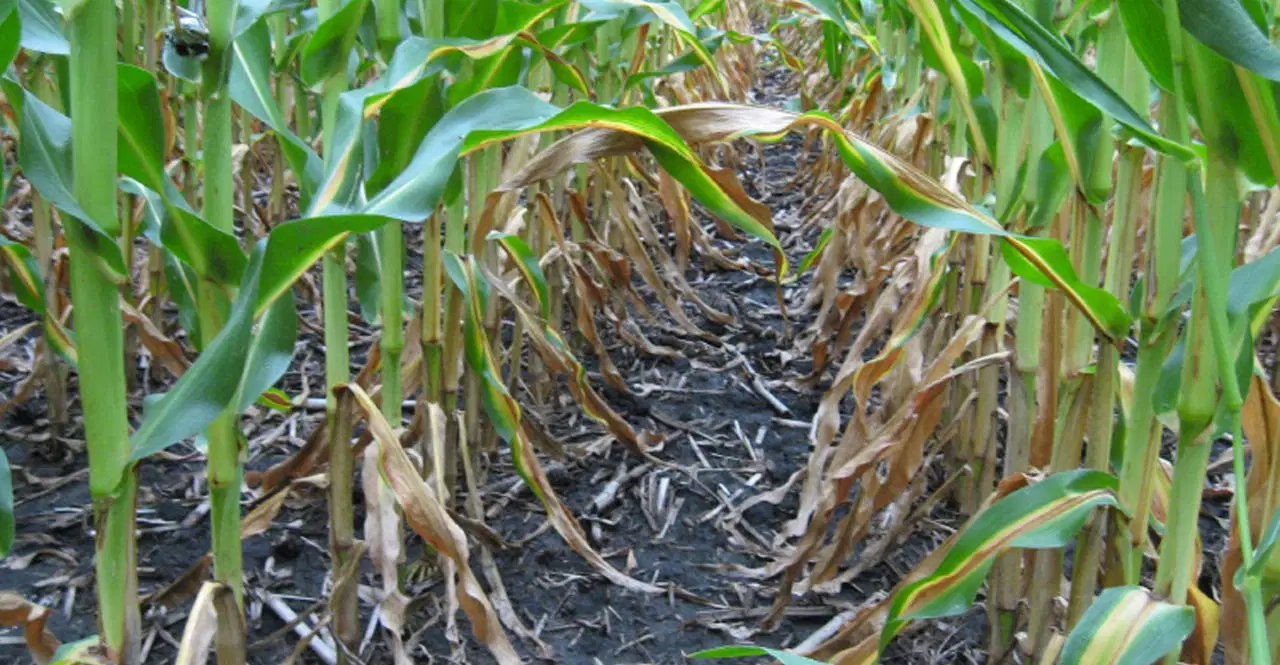
Which nutrient deficiency is illustrated?
N
P
K
Potash
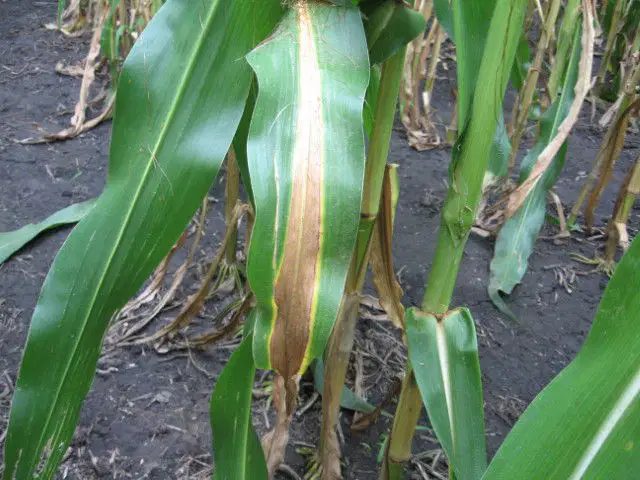
What could you add to the soil to help with this nutrient deficiency? (3 answers)
poultry manure
phosphate powder
wood ash from fires
blood meal
coffee grounds, legumes, compost...

