
NEW
Font size
 Worksheets
Final review quiz 202
Total questions: 50
Worksheet time: 2hrs 37mins
The heat absorbed by melting a solid is known as
latent heat of fusion
latent heat of solid
latent heat of liquid
latent heat of vaporisation
Water molecules have the greatest kinetic energy in
Ice at 0 ⁰C
Water at 90 ⁰C
Water at 373 K
Steam at 150 ⁰C
Calculate the energy absorbed by 30 g of 100 ⁰C water that is turned into 100 ⁰C.
67 800 J
6 7800 J
678 J
67.8 J
The SI unit for ................. is Joule, J.
heat
temperature

It is possible to cook food much faster with a pressure cooker as shown above. Why is it easier to cook food using a pressure cooker?
More heat energy can be supplied to the pressure cooker
Heat loss from the pressure cooker can be reduced.
Boiling point of water in the pressure cooker is raised
Food absorbs more heat energy from the high pressure steam
How much heat energy is required to raise the temperature of a 4kg iron bar from 320C to 520C? (Specific heat capacity of iron = 452 Jkg-1 0C-1).
57 kJ
36 kJ
94 kJ
152 kJ
14.275 L of 7 mol of SF6 is held at -25.8oC. At what pressure is it being held at?
-1.04 atm
41.4 atm
9.95 atm
-4.32 atm
Convert -40 degrees C to F degrees
-40 degrees F
-8 degrees F
A 2-C charge and 4 -C charge attract each other with 10 N of force. How much will a 2-C charge and 8-C charge attract each other when placed the same distance apart?
5 N
12 N
10 N
20 N


The equation represents the mathematical relationship between charge and distance, where Coulomb's Constant k = 9.0 x 10⁹ N•m2/C2. Solve the following problem using this equation: Two point charges, one with a charge of +0.75 Coulomb and the other with a charge of +1.5 Coulomb are separated by a distance of 1.50 meter. Determine the magnitude of the electrical force of repulsion between them.
Felect = 4.5 x 10⁹ N
Felect = 9.0 x 10⁹ N
Felect = 5.5 x 10¹⁰ N
Felect = 6.5 x 10⁸ N
Electric Charge is a basic property of elementary particles of which all matter is composed (electrons, protons). There are two types of charge: Positive charges are carried by ________, while negative are carried by __________.
protons, electrons
protons, neutrons
neutrons, electrons
electrons, protons
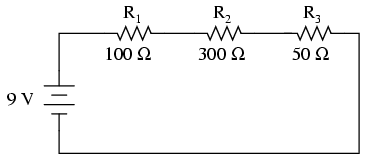

What is the total resistance (RT) across this circuit?
3 kΩ
10 kΩ
13 kΩ
18 kΩ


If switch 1 and 2 were open, which device(s) would turn on?
none
A and B
C, D, E, F, G
all of them
If a circuit had 4 D-Cell batteries (each 1.5 V) and a lightbulb with resistance of 2 ohms, what is the current that flows through the circuit?
2 A
3 A
6 A
8 A
The capacity of a parallel plate condenser is C . Its capacity when the separation between the plates is halved will be
4C
2C
C/2
C/4
Two condensers of capacity 0.3 μ F and 0.6 F respectively are connected in series. The combination is connected across a potential of 6 Volts. The ratio of energies stored by the condensers will be
1/2
2
1/4
4

Three equal capacitors, each with capacitance are connected as shown in figure. Then the equivalent capacitance between and is
C
C/3
3C
3C/2

The resultant capacitance between and in the following figure is equal to
1 μ F
3 3 F
2undefined F
1.5undefined F
If 4μF and 2μF capacitors are conneced in series, the equivalent capacitor is ___________.
1.33μF
0.75μF
6μF
2μF
A 130 mF capacitor and a 150 mF capacitor are each connected across a 6 V dc source. The voltage
across the 330 pF capacitor is ?
8 Volts
6 Volts
4 Volts
2 Volts
An uncharged capacitor of capacitance 8.0 μF is connected to a battery of e.m.f. V and negligible internal resistance. If the charge on each plate of the capacitor is 24 μC , what is the value of V?
3.0 V
6.0 V
10 V
14 V

flint glass n=1.70
barium glass n=1.60
crown glass n=1.523
water n=1.33
diamond n=2.45

20.4 degrees
21.2 degrees
22.1 degrees
23.1 degrees

4.69 cm
8.67 cm
5.79 cm
7.69 cm
A ray of light travels from air into glass at an incident angle of 30o. Find the angle of refraction. (The refractive index of glass is 1.5)
19.7o
19o
19.5o
19.3o
A pool of water is 10m deep. If the bottom of the pool is viewed perpendicularly from air, how deep does it appear? (refractive index of water = 1.33)
7 m
7.52 m
6.6 m
5.52 m

What happens to light during total internal reflection?
The light reflects back into the original medium at the same angle.
The light refracts closer to the normal line.
The light refracts farther away from the normal line.
The light reflects at the angle it would have refracted at.

_____ cables transmit beams of light without allowing any of the light to escape until it gets to the end of the cable.
Ethernet
Fiber optic
Armored
Coaxial

