wayground logo

Free Printable Worksheets

Font size

S
M
L
XL
Worksheets

Test Prep

Total questions: 77

Worksheet time: 2hrs 36mins

Name
Class
Date
1.
Which of the following is produced when sugar is digested in an animal cell?
a)
carbon dioxide
b)
chlorophyll
c)
oxygen
d)
sunlight
2.
A group of students are building a model of an ecosystem.  Which of the following organisms should the students select to act as a decomposer?
a)
turtle
b)
flower
c)
mushroom
d)
spider
3.
Decomposers are important in the food chain because they
a)
produce their own food using light from the sun
b)
stop the flow of energy from one organism to another
c)
break down dead organisms and recycle nutrients into the soil.
d)
are microscopic and other organisms cannot consume them.
4.
Salt concentration, water temperature, plankton, and the whale shark might all be used in a description of an ocean?
a)
climate
b)
food web
c)
ecosystem
d)
population
5.
What object is opaque?
a)
glass window
b)
ice cube
c)
sun glass lens
d)
wooden door
6.
What object is opaque?
a)
glass window
b)
ice cube
c)
sun glass lens
d)
wooden door
7.
What is another word for protective coloration?
a)
camouflage
b)
habitat
c)
hibernation
d)
migration
8.
Which describes a change that takes place when a chocolate bar melts?
a)
A solid becomes a gas
b)
A liquid becomes  a gas
c)
A solid becomes a liquid
d)
A liquid becomes a solid
9.
Which shows an effect of humans on an environment?
a)
a nest made of dead branches
b)
a river eroding away from a river bank
c)
a trail built by cutting down trees
d)
a group of butterflies landing on flowers
10.
A farmer notices that the leaves on some sunflower plants have holes caused by insects. The seeds of these sunflowers are planted. How many of the new sunflower plants will inherit leaves with holes?
a)
all
b)
none
c)
one-half
d)
three-fourths
11.
Which event caused the change to the mountain?
a)
eruption
b)
flood
c)
hurricane
d)
landslide
12.
Which bird foot is the best for swimming?
a)
foot 1
b)
foot 2
c)
foot 3
d)
foot 4
13.

Match the following

a)
1.

primary consumer

b)
2.

secondary consumer

c)
3.

tertiary consumer

d)
4.

Apex predator

14.

This food chain is one part of a _____ within an ecosystem.

a)

biome

b)

community

c)

population

d)

species

15.

What would all of the large-mouth bass living in Lake Lure, North Carolina comprise?

a)

community

b)

population

c)

ecosystem

d)

abiotic factors

16.

What is an abiotic factor

a)

A piece of wood

b)

cow

c)

A herd of cows

d)

The water in a swamp

17.

Reorder the following pictures in order from individual, population, community, ecosystem, biome

a)
b)
c)
d)
e)
1)
2)
3)
4)
5)
18.
What does the nucleus of an atom contain?
a)
Electrons and neutrons
b)
Protons and neutrons
c)
Neutrinos and positrons
d)
Electrons and megatrons
19.
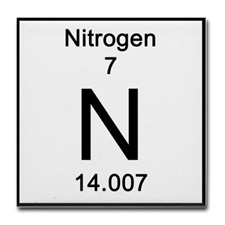
What is the number of protons that the element in this image contain?
a)
14
b)
7
c)
15
d)
18
20.
Choose the particle that has no charge.
a)
nucleus
b)
neutron
c)
proton
d)
electron
21.
Which particle has a positive charge?
a)
electron
b)
orbital
c)
proton
d)
neutron
22.
what does the 6 represent?
a)
Atomic mass
b)
atomic number
c)
chemical symbol
d)
element name
23.
What is the element symbol for boron? 
a)
B
b)
Bo
c)
Bn
d)
W
24.
Atoms with similar properties are most likely located...
a)
in the same period.
b)
in the same group.
c)
in different periods.
d)
to the right and left of each other.
25.
Elements which are shiny, conduct electricity and heat are called
a)
metal
b)
nonmetal
c)
metalloid
d)
nonexistent
26.
Which of the following cannot be broken down into something simpler?
a)
A compound
b)
An element
c)
A mixture
d)
A chemical formula
27.
What needs to occur in order for elements to form a compound?
a)
An elemental reaction
b)
An atomic reaction
c)
An electric reaction
d)
A chemical reaction
28.
What defines a mixture?
a)
described by a chemical formula
b)
can be broken down into its basic substances through physical means
c)
created through a chemical reaction
d)
cannot be broken down into simpler substances
29.
What is a compound?
a)
an atom with more electrons than protons
b)
a substance in which the atoms of two or more elements are combined together
c)
an atom with more neutrons than protons
d)
a substance in which the atoms of three or more elements are combined together
30.

True or False:


Mendeleev left blank spaces on the periodic table to be filled by elements that he predicted would later be discovered.

a)

True

b)

False

31.

Using water as an example, explain why elements can have very different properties than the compounds they make.

4 lines
32.
What are the building blocks of proteins?
a)
amino acid
b)
fatty acid
c)
nucleotide
d)
lipid
33.
What type of cell has a nucleus? 
a)
eukaryotic
b)
prokaryotic 
34.

What is the full name of DNA?

a)

Departmental Network Administrator

b)

Does Not Apply

c)

Deoxyribonucleic Acid

d)

Ribonucleic Acid

35.
The control center that controls all the functions of the cell
a)
cytoplasm
b)
cell wall
c)
cell membrane
d)
nucleus
36.
I am only found in a plant cell. What am I?
a)
cell wall
b)
mitochondria
c)
cytoplasm
d)
chloroplast
37.
I store water in both plant and animal cells. What am I?
a)
cytoplasm
b)
ribosomes
c)
vacuole
d)
lysosomes
38.
I am the outer most layer of an animal cell. What am I?
a)
cell wall
b)
nucleus
c)
cell membrane 
d)
cell skin
39.
Consists of a jellylike substance that contains many organelles.
a)
ribosomes
b)
cytoplasm
c)
chloroplasts
d)
cell wall
40.
Gives the cell a rigid, box-like shape; outside of the cell membrane; in plants.
a)
cytoplasm
b)
chromatin
c)
cell wall
d)
cell membrane
41.
Sac within the cytoplasm that is full of fluid; plants have one large; stores food, water, etc.
a)
vacuole
b)
cell wall
c)
lysosome
d)
ribosome
42.
2 tons = _____ lbs
a)
2,000 lbs
b)
4,000 lbs
c)
1,000 lbs
d)
3,000 lbs
43.

400 grams =____kilograms

a)

0.4kg

b)

4kg

c)

40kg

d)

40,000kg

44.

Most asteroids are in the ......

a)

Sun

b)

Earth

c)

Moon

d)

Asteroid Belt

45.
What is the jet stream?
a)
Precipitation in North Carolina
b)
Weather over a long period of time
c)
Strong winds above the Earth's surface
d)
Football flying over the Earth
46.
The change of state from a gas to a liquid.
a)
Condensation
b)
Precipitation
c)
Evaporation
d)
Sublimation
47.
What is A?
a)
Evaporation
b)
Condensation
c)
Precipitation
d)
Runoff
48.
What is      D?
a)
Evaporation
b)
Condensation
c)
Precipitation
d)
Runoff
49.
Why do hurricanes lose so much of their power when they hit land?
a)
they run into high pressure which kills hurricanes
b)
land is cooler than water therefore the hurricane loses the energy it needs from warm temperatures
c)
the land breezes shear the hurricane therefore making it harder for it to stay together
d)
the hurricane no longer receives heat and moisture from the warm ocean it uses for fuel
50.
As altitude increases, temperature:
a)
decreases
b)
increases
c)
stays the same
d)
has no affect
51.
What weather instrument measures air pressure?
a)
barometer
b)
thermometer
c)
rain gauge
d)
wind vane
52.
What kind of information is NOT recorded on a seismograph?
a)
strength of an earthquake
b)
information about when the next earthquake will occur
c)
when the earthquake occured
d)
how long the earthquake lasted
53.
How do volcanoes change Earth's landforms?
a)
They release pressure that has built up under Earth's crust.
b)
They blow ash and lava high into Earth's atomosphere.
c)
They form over hot spots.
d)
They form mountains of ash and lava.
54.
Which of Earth's layers is the thinnest?
a)
Mantle
b)
Outer Core
c)
Crust
d)
Inner Core
55.
As depth beneath Earth's surface increases, temperature and pressure ________.
a)
Both increase
b)
Both decrease
c)
Stay the same
d)
Move in opposite directions
56.
Earth's crust is completely stationary and doesn't move at all. 
a)
True
b)
False
57.
Branch of Earth Science that deals with objects beyond the Earth's atmosphere.
a)
Meterology
b)
Astronomy
c)
Geology
d)
Climatology
58.
Branch of Earth Science that deals with weather and the Earth's atmosphere.
a)
Astronomy
b)
Climatology
c)
Geology
d)
Meterology
59.
Branch of Earth Science that deals with the rocks that make up the Earth's crust and processes in shaping the Earth's crust.
a)
Geology
b)
Hydrology
c)
Oceanography
d)
Astronomy
60.
Branch of Earth Science that deals with the oceans, ocean currents, salinity, and ocean floor features.
a)
Hydrology
b)
Meterology
c)
Oceanography
d)
Geology
61.
The inherited combination of alleles is called the ______
a)
genotype
b)
phenotype
c)
chromosome
d)
DNA
62.
An organism's inherited appearance is called _______.
a)
genotype
b)
phenotype
c)
chromosome
d)
DNA
63.
Purple flowers are dominant to white flowers. What would the phenotype for a flower with genotype pp be?
a)
purple
b)
white
c)
pink
d)
yellow
64.
Purple flowers are dominant to white flowers. What would the phenotype for a flower with genotype Pp be?
a)
purple
b)
white
c)
pink
d)
yellow
65.
Purple flowers are dominant to white flowers. What would the phenotype for a flower with genotype PP be?
a)
purple
b)
white
c)
pink
d)
yellow
66.
If a gene has dissimilar pairs of alelles for any hereditary characteristic it is called
a)
homozygous
b)
heterozygous
c)
codominant
d)
dominant
67.
What characteristic would a child NOT inherit from parents?
a)
freckles
b)
eye color
c)
hair style
d)
dimples
68.
Which of the following alleles is purebred dominant?
a)
Tt
b)
tt
c)
TT
d)
T
69.
The passing of genetic traits from parent to offspring.
a)
heredity
b)
probablity
c)
gene
d)
genetics
70.
A dog gives birth to 5 puppies. What percentage of the chromosomes does each puppy share with the mother?
a)
25%
b)
50%
c)
75%
d)
100%
71.
What happens when light hits an object you can see?
a)
The light turns corners.
b)
The light curves around the object.
c)
The object reflects the light.
d)
The light and the object do not form a shadow.
72.
What is a property of a transparent object?
a)
Almost all of the light rays that reach it are scattered.
b)
Almost all of the light rays that reach it are absorbed.
c)
Almost all of the light rays that reach it are reflected.
d)
Almost all of the light rays that reach it pass through it.
73.
Which is translucent?
a)
tissue paper
b)
air
c)
wood
d)
clear plastic
74.
What is most likely to happen to light that hits an opaque object?
a)
All of the light passes through the object.
b)
None of the light passes through the object.
c)
Most of the light disappears.
d)
Some of the light passes through the object.
75.
What does it mean to refract?
a)
bounce off
b)
to bend
c)
curve outward
d)
reflect
76.
What is a prism?
a)
a transparent object that separates white light
b)
an opaque object that appears black
c)
a translucent object
77.
Why do we see objects as black?
a)
They absorb all the light
b)
They reflect all the light
c)
They absorb some light and reflect