
 Worksheets
Life Science Review
Total questions: 20
Worksheet time: 40mins
jelly like material that protects cell organelles
cell membrane
cell wall
chloroplast
cytoplasm
Which of these is not found in the animal cell and is found in the plant cell? Pick more than one
cell membrane
cell wall
chloroplast
cytoplasm
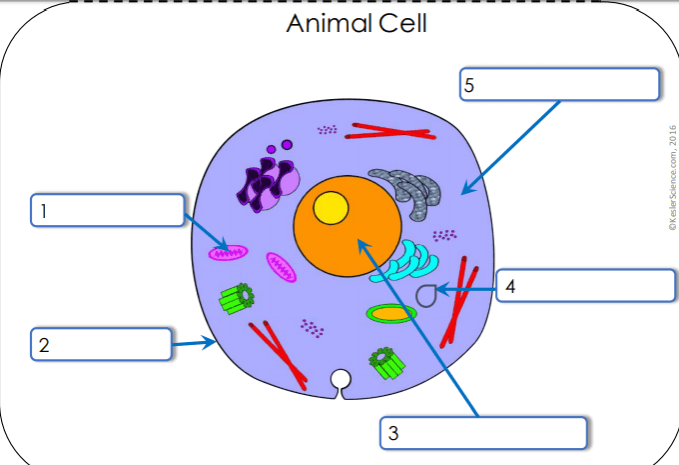
What is #2 in the diagram?
vacuoles
cell membrane
chloroplast
nucleus
A microscope is used to view cells because
cells are constantly moving
cells are too small to be seen with human eyes
cells are too large to see all at once
cells are too dark to be seen without light
Which organelle in plant cells forms photosynthesis, or produces food for the plant?
nucleus
cytoplasm
chloroplast
mitochondria
1. Which of the following is an inherited behavior?
knowledge of how to play the piano
infant babies breathing as soon as they are born
kindergarten students sharing different toys
birds that nest near highways not responding to traffic noise
Which of the following characteristics would a dog have to learn because it could not be inherited from the dog's parents?
color of its fur
ability to fetch a ball
color of its eyes
length of its tail
Which of the following is an inherited trait of the rose?
the presence of thorns on the rose's stem
the shape of the rose's petals
the color of the rose's petals
all of these
Which of the following physical features is most likely a result of inheritance?
A plant in a nutrient-rich area is taller than a plant that is in a nutrient-deprived area.
A man has very large muscles and his son is thin with no large, developed muscles.
A diseased plant has fewer branches and leaves than a healthy plant.
A human newborn has type O blood, and its mother also has type O blood.
Invertebrates do NOT have a
brain.
heart.
stomach.
backbone.
Which group of vertebrates possesses gills, two sets of paired fins, and is generally adapted to living in water?
fish
reptiles
mammals
amphibians
Animals that are warm blooded, have body hair, and produce milk for their young are grouped into which of the following classes?
amphibians
mammal
birds
reptiles
Ms. Daley takes her class on a field trip to a pond. The class sees a bald eagle and a salamander near the pond. How are these two animals alike?
They both have offspring that is very different from the adults.
They both lay eggs.
They both are warm-blooded.
They both are able to breathe through their skin.
Which group of plants would be considered spore producing?
Tulip, sunflower, rose
Pine tree, oak tree, apple tree
Moss, fern, tiger fern
Shrubs, daisies, sweet gum trees
Tulips and oak tree are both plants that look different. However, they both belong to the classification of plants that make
leaves
pine cones
flowers
seeds
Microorganisms are both helpful and harmful
True
False
What are the shapes of plant cells
Circles
Squares
Rectangles
Triangles
Which of the following would have a cell wall?
bone cell
skin cell
carrot cell
hair cell

