
 Worksheets
Midterm Study Guide
Total questions: 95
Worksheet time: 4hrs 35mins
How should the dish washing sinks be set-up?
a. ____________ and ____________
b. ____________ and ____________
c. ____________ and ____________
When walking with a knife in the kitchen, how should it be held and what do you yell?
Hold it by the handle with the tip pointing down and yell 'Knife!'
Hold it by the blade with the tip pointing up and remain silent
Carry it loosely in hand and yell 'Watch out!'
Place it in a sheath and do not yell anything
When walking with something hot in the kitchen, what should you yell?
Coming through!
Hot, hot, hot!
Be careful!
Watch out!
How many people should be working on the stovetop at one time?
Why is it important for certain zones to check the fridge and freezer temperatures and record them?
To ensure food safety and prevent spoilage
To save energy
To monitor appliance performance
All of the above
What brigade is responsible for setting up the sinks?
What are the two things that every brigade has to do?
What is the first thing you should do when entering the kitchen?
Wash your hands
Turn on the oven
Open the refrigerator
Check the pantry
What is our uniform?
If you have long hair it should be pulled __________ into a __________ or __________.
back, ponytail, bun
up, braid, twist
down, loose, flowing
forward, cap, hat
Shoes should be (a) .
No jewelry should be worn in the kitchen on lab days, why?
To prevent contamination of food
To avoid damage to jewelry
Both to prevent contamination of food and to avoid damage to jewelry
None of the above
Which of the following correctly lists three different types of kitchen hazards along with an example of each?
Biological (mold), Chemical (cleaning agents), Physical (broken glass)
Physical (slippery floor), Psychological (stress), Environmental (poor lighting)
Biological (bacteria), Chemical (soap), Physical (sharp knives)
Mechanical (malfunctioning appliances), Biological (pests), Chemical (pesticides)
Where is the first aid kit located?
What should you do if you get burned or cut?
Apply a sterile bandage
Leave it untreated
Use ice directly on the burn
Apply butter on the burn
What should you do if you have nail polish on?
What is the first thing you should do to your station before beginning a lab?
Who is responsible for cleaning and putting away the dishes?
Stainless steel pans can be cleaned with a __________ but non-stick pans should be cleaned using a __________.
scouring pad and soft sponge
soft sponge and scouring pad
steel wool and dishcloth
dishcloth and steel wool
Name a flammable item or food item that should be kept away from an open flame (the stove).
(a)
What way should a pot handle be facing on the stove?
Towards the user
Away from the user
To the left side
To the right side
A __________ knife is safer than a __________ knife.
(a)
Always use a __________ when cutting with a knife. What should be underneath it to make sure it can’t slip?
cutting board
plate
cloth
bare table
What type of spills should you not clean up immediately in the kitchen and why?
Oil spills, because they can cause slipping and further accidents.
Water spills, because they are harmless.
All spills should be cleaned immediately to prevent accidents.
Chemical spills, because professional cleaning is required.
Name the three ways to put out an oil fire, an extinguisher cannot be one of them.
Every time you touch your face or clothes you should (a) .
What should you do if you come to class with a cut or bandaid already on your hand?
Name 3 things you should never do in the kitchen.
What is the main type of knife we use in the kitchen?
What is the name of the smaller knife that we use for detail work, normally on vegetables and fruits?
A grater is used to grate cheese and vegetables, but a (a) is a smaller version that is used to zest the outside of citrus.
Name the two main types of pans that we use.
What is an induction burner and how does it work?
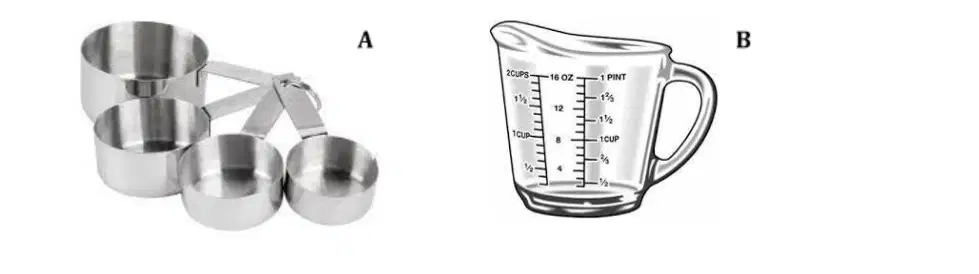
A is used to measure __________ ingredients whereas B is used to measure __________.
What is the name of the stainless steel equipment above the ovens and stove and what does it do?
T stands for __________ because it is bigger. t stands for __________ because it is smaller.
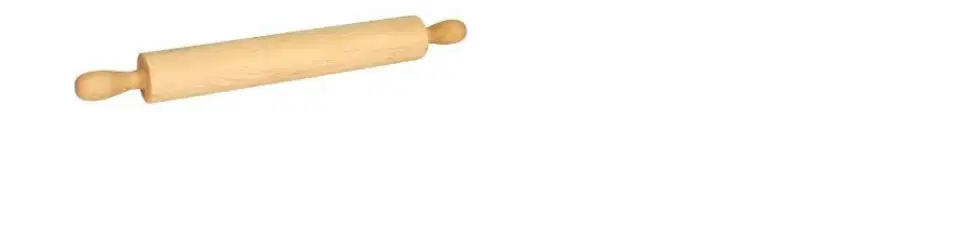
What is this? What does it do?

What is this? What does it do?

What is this? What does it do?

What is this? What does it do?

What is this? What does it do?
What is this? What does it do?
What is this? What does it do?
Which of the following is a reason why lessons and techniques learned in culinary could benefit any career path?
Improves problem-solving skills
Enhances teamwork and communication
Fosters creativity and innovation
All of the above
Name two jobs in the kitchen and describe what they do.
Chef, who cooks food and Sous Chef, who assists the head chef
Dishwasher, who cleans dishes and Line Cook, who prepares ingredients
Pastry Chef, who bakes desserts and Kitchen Manager, who oversees operations
Food Expeditor, who coordinates orders and Grill Cook, who handles grilling
Name two jobs in the front of house and describe what they do.
Host or hostess who greets and seats guests, and waiter or waitress who serves food and drinks
Chef who cooks meals and dishwasher who cleans dishes
Manager who oversees restaurant operations and cleaner who maintains cleanliness
Bartender who mixes and serves drinks and bouncer who manages security
Tell me two other careers on the culinary or hospitality industry.
Chef and Hotel Manager
Bartender and Pastry Chef
Restaurant Owner and Sommelier
Caterer and Event Planner
About how much do people in the culinary and hospitality industries make?
Less than $30,000 per year
$30,000 to $60,000 per year
$60,000 to $90,000 per year
More than $90,000 per year
What types of second degree education is available for people looking to join the culinary and hospitality industry?
Culinary arts programs
Hospitality management degrees
Hotel administration degrees
Restaurant management courses
What is a stage?
Who designs and creates the menu for a restaurant?
Head Chef
Restaurant Manager
Sous Chef
Food Critic
Who pays the bills at a restaurant?
What is a restaurant trying to do as a business?
Provide food and beverage services
Offer transportation services
Sell clothing and accessories
Conduct educational courses
How many teaspoons are in a tablespoon?
2 teaspoons
3 teaspoons
4 teaspoons
5 teaspoons
How many oz. are in a tablespoon?
0.5 oz
1 oz
0.5 tbsp
1 tbsp
How many oz. are in a cup?
4 oz
6 oz
8 oz
12 oz
Can I measure liquid and dry ingredients the same?
Yes, because they have the same volume.
No, because they have different properties and require different measuring tools.
Yes, using the same measuring cups is sufficient.
No, but only if the quantities are small.
How many cups are in a pint?
1 cup
2 cups
3 cups
4 cups
How many pints are in a quart?
1 pint
2 pints
3 pints
4 pints
How many quarts are in a gallon?
2 quarts
3 quarts
4 quarts
5 quarts
Using the above information: a. How many cups are in a quart?
2 cups
3 cups
4 cups
5 cups
Would sifting flour change the weight?
Yes, it increases the weight
No, it does not change the weight
Yes, it decreases the weight
Name one other ingredient that could change in weight and tell me how.
What is in a poaching liquid to help the egg come together?
How should the center of a poached egg look?
What is the difference between a French omelet and an American omelet?
Which way should the rolled side of a French omelet go? Facing the customer or away?
How should scrambled eggs look?
What temperature should we cook scrambled eggs and French omelets? Why?
What is a crepe?
What method did we use to make muffins? Name the two ingredients that had to be mixed together.
What types of ingredients could go together when prepping our muffins?
What is mise en place?
Where is the best place to store fruit once you have cut it up?
in a bowl at room temperature
eat right away
tightly sealed in regrigerator
Oc October 24th, a food handler sees a correctly covered and labeled pan of fried poultry in the cooler. The food is dated October16th. The poultry should be
thrown out.
put into the freezer
used for salad
correctly reheated and served.
Which food preservation method uses brine and heat processing to create products with a very long shelf life?
dehydration
fermentation
pasteurization
canning
pickling
Dairy products need to be kept refrigerated.
True
False
Milk being heated to destroy harmful bacteria is which process?
Homogenization
Pasteurization
French term for having all your ingredients measured, cut, peeled, sliced, grated, etc. before you start cooking.
Cuisine
Mise en Place
Contamination
Cross-Contamination
How should cooked grains be stored for food safety?
in a loosely sealed container
in the freezer
in the refrigerator
Vegetables such as potatoes, onions, and garlic should be stored:
In the refrigerator
in the freezer
in a cool, dry, and dark place
on the counter
Which of the following vegetables does NOT need to be stored in the refrigerator:
Carrots
Spinach
Celery
Potatoes
David found fresh peaches on sale at the farmer's market. He purchased more than he will use in one week. What should David do?
freeze as is
package and freeze
refrigerate until he uses them all
throw the extra away
Vegetables such as potatoes, onions, and garlic should be stored:
In the refrigerator.
In the freezer
In a cool, dry, and dark place
on the counter
(a) help prevent cheese from spoiling.
This refers to the processes you use to prepare food for safe, long-term storage, whether you plan to use it at home, for prep in a commercial kitchen, or to sell directly to consumers.
Food Technology
Food Innovation
Food Preservation
Food Science
Vegetables such as potatoes, onions, and garlic should be stored:
In the refrigerator
in the freezer
in a cool, dry, and dark place
on the counter
Some fruits, like apples and citrus fruits, are best stored at room temperature.
True
False
Why is it important to avoid cross-contamination in the kitchen?
It can lead to the loss of nutritional value in food
It can cause food to cook unevenly
It can result in the transfer of bacteria from one food item to another
It makes food less appealing in appearance
What is the most important reason for using a sharp knife in the kitchen?
It makes cutting faster.
It reduces the risk of injury.
It makes the knife last longer.
It impresses others in the kitchen.
At what temperature should poultry be cooked to ensure food safety?
145°F (63°C)
155°F (68°C)
165°F (74°C)
175°F (79°C)
Where should you store underripe fruit?
freezer
refridgerator
room temperature
If food is held in the danger zone for ______ hr.(s), throw it out.
1
2
3
4
In order to prevent cross-contamination in storage, where should food handlers store raw pork sausage patties?
Next to raw, ground chicken patties
Next to fresh vegetables and fruits
Grouped with other breakfast items
Below breaded pork items

