
 Worksheets
dkbq
Total questions: 100
Worksheet time: 2hrs 21mins
Which of the following substances would conduct electricity if dissolved in water to form a solution?
C6H12O6
CH4
KI
CO2
A conductivity tester is placed in a solution of water and an unknown solute. The bulb doesn't light up. What can you determine about the unknown solute?
It is an ionic compound.
It is a metallic compound.
It is a covalent compound.
Not enough information is given to answer this question.

Which solution will have a higher conductivity?
Left one, since it is concentrated
Right one, since it is concentrated
Left one, since it is diluted
Right one since it diluted.
Which of the following will conduct electricity when dissolved to make a solution?
KCl
NH3
CO2
C12H22O11
A light bulb connected to two electrodes is immersed in the following solutions. Which one will make the light bulb light up the brightest?
1 g of sugar in 1 cup of water
1 g of salt in 1 cup of water
10 g of salt in 1 cup of water
10 g of sugar in 1 cup of water.
When the amount of solute increases, the concentration and conductivity (a) . (One word)
Which of the following will produce ions to conduct electricity when dissolved in water?
CaCl2
NH3
CH4
P2O5

What can you conclude based on the diagram? There could be more than one correct answer.
Liquid A a concentrated ionic solution
Liquid B is a concentrated ionic solution
Liquid A is a concentrated covalent solution.
Liquid B is a concentrated covalent solution.
A beaker of uncovered salt water is left in the lab. What happens to the conductivity after a week?
The conductivity decreases since the concentration decreases as the water evaporates
The conductivity increases, since the concentration decreases as the water evaporates.
The conductivity decreases, since the concentration increases as the water evaporates.
The conductivity increases, since the concentration increases as the water evaporates.
What happens to the concentration and conductivity, when you increase the amount of solvent in a solution?
The concentration increases and conductivity increases.
The concentration increases and the conductivity decreases.
The concentration decreases and the conductivity decreases.
The concentration decreases and the conductivity increases.
What happens to the concentration and conductivity, when you increase the amount of solute in a solution?
The concentration increases and conductivity increases.
The concentration increases and the conductivity decreases.
The concentration decreases and the conductivity decreases.
The concentration decreases and the conductivity increases.
What happens when KBr is dissolved in water?
Br - ions are attracted to positive K ions
Br - ions are attracted to the oxygen atom of water
K+ ions are attracted to the hydrogen atoms of water
no attractions are involved
Which of the following is dilute?
10 g of sugar in 10g of water
10 g of sugar in 20 g of water
20g of sugar in 20 g of water
20 g of sugar in 10 g of water
Which of the following solutions is concentrated?
10 g of sugar in 10g of water
10 g of sugar in 20 g of water
20g of sugar in 20 g of water
20 g of sugar in 10 g of water
Which of the following increase the rate of conductivity?
Large surface area
Large temperature difference
Small surface area
Small temperature difference
If a metal has fewer free electrons than it's conductivity is lower
TRUE
FALSE
If the particles in a conductor are more tightly packed it will have a smaller conductivity
TRUE
FALSE
The best insulator would have...
Loosely bound particles that are spread out.
Tightly bound particles that are close together.
Tightly bound particles and lots of free electrons.
No particles at all, it would be a vacuum.

Select ALL the pieces of evidence that a chemical reaction has occurred.
Precipitate formation
Mass
Change in smell/color
Gas produced
Change of properties
A ________________ forms from two liquids mixing in a chemical reaction.
reaction
product
reactant
precipitate

What are the reactants in the picture?
2 sodium and 2 chlorine
1 sodium and 1 chlorine
1 sodium and 2 chlorine

A mystery powder was found on the counter of the science classroom. Use the information to identify the powder. The powder is soluble in water, does not change color in iodine and has a density of 1.6.
The substance is salt.
The substance is sugar.
The substnce is flour.
The substance is cornstarch.

Which type of chemical reaction evidence is shown in the picture?
Change in odor
Change in color
Formation of precipitate
Gas produced

What are the products in the picture?
sodium and water
sodium and sodium hydroxide
water and hydrogen
sodium hydroxide and hydrogen

Choose which types of chemical reaction evidence are shown in the picture.
Change in odor
Change in color
Formation of precipitate
Gas produced
A mystery powder was found on the counter of the science classroom. Use the information to identify the powder. The powder is insoluble in water, does change color in iodine and has a melting point of 257.
The substance is salt.
The substance is sugar.
The substnce is flour.
The substance is cornstarch.

Which type of chemical reaction evidence is shown in the picture?
Change in odor
Change in color
Formation of precipitate
Gas produced

Suzie wants to buy a ring for her mother. The ring she finds is not magnetic and a density of 11.35. What melting point should she test for?
660.3
961.8
449.5
327.5

The image shows 3 vials that appear to be unchanged. How could you determine if a chemical reaction occurred when you cannot observe a visible change? Select all that are correct.
I could find the density of the reactants and compare to the product.
I could find the mass of the reactants and compare to the product.
I could smell of the reactants and compare to the product.
I could find the boiling point of the reactants and compare to the product.

Which type of chemical reaction evidence is shown in the picture?
Change in properties
Change in color
Formation of precipitate
Gas produced
Suzie wants to buy a ring for her mother. The ring she finds is not magnetic and a melting point of 660.3. What should the density test show?
10.49
7.31
2.7
11.35
Solubility (dissolves)
Physical Proeprty
Chemical Property
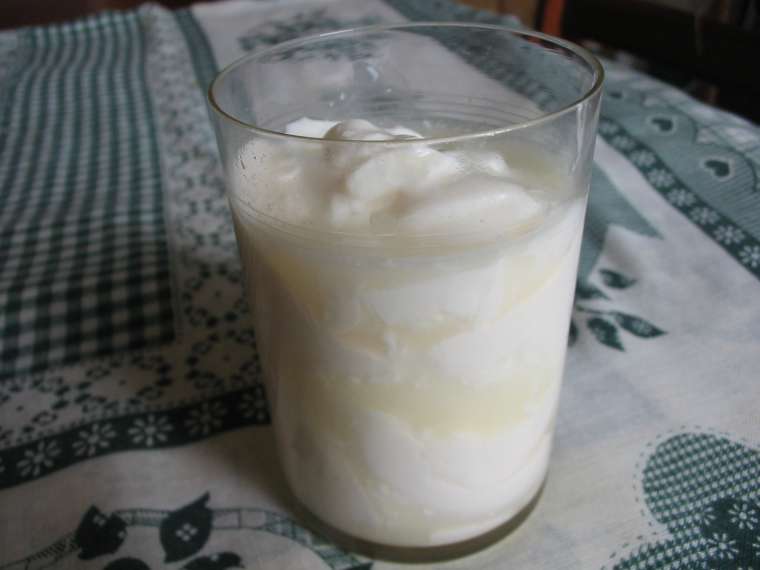


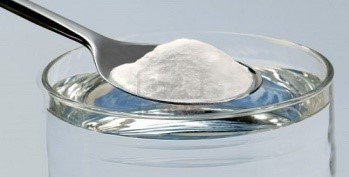
Identify the solute

A group of students were working on an investigation involving the states of matter. During the investigation they filled two beakers with different amounts of water, as shown below.
A student stirs 2 grams salt into each beaker. After a few minutes, which of the following will most likely happen?
The salt will dissolve in Beaker A but not in Beaker B.
The salt will dissolve in both beakers.
The salt will not dissolve in Beaker A but will dissolve in Beaker B.
The salt will not dissolve in either beaker.
Which of the following mixtures could NOT be separated using a magnet?
A mixture made up of iron filings and sand
A mixture made up of a steel ball bearings and water
A mixture of copper pennies and sand
A mixture of copper pennies and iron filings

A student made four mixtures during science class. The table below lists the ingredients used in each mixture.
Which two mixtures are made up entirely of solids?
Mixture M and Mixture N
Mixture N and Mixture O
Mixture O and Mixture P
Mixture M and Mixture P

Some ways to separate mixtures are listed below.
A student is given a solution of water and sugar. She then added sand to the mixture. Which two steps would she most likely use to separate the mixture back into water, sugar, and sand?
First 1 then 2
First 2 then 3
First 3 then 4
First 2 then 4
A student had two beakers which he labeled X and Y. He filled both beakers with the same amount of water. He stirred two teaspoons of sugar into Beaker X and two teaspoons of sand into Beaker Y. He then set both beakers on a table and left them there for several minutes. When he returned, he
observed that sand was on the bottom of Beaker Y, but there was no sugar on the bottom of Beaker X. Which of the following best explains the student’s
observations?
Both beakers contained solutions.
Neither beaker contained a solution.
Beaker X contained a solution but Beaker Y did not.
Beaker Y contained a solution but Beaker X did not.

A group of students placed the items shown below on their lab table.
The students placed all of the items into a container and mixed them up. The mixture would be easy to separate because all of the items –
are solids
are more dense than water
are attracted to a magnet
all of the above

For an investigation, a student put 100 mL of water into each of three beakers. Then the student added a copper cube to Beaker W, 5 g of salt to Beaker X, and 10 mL of vegetable oil to Beaker Z. The student stirred the contents of the beakers and then left them sitting on a lab table for 5 minutes.
Which of the following will most likely be the result of this investigation?
Both the copper cube and the salt powder will dissolve, and the vegetable oil will settle on the top of the water.
The copper cube will sink to the bottom, and both the salt powder and the vegetable oil will dissolve.
Both the copper cube and the salt powder will sink to the bottom, and the vegetable oil will dissolve.
The copper cube will sink to the bottom, the salt powder will dissolve, and the vegetable oil will settle on the top of the water.

A student places several plastic beads in a beaker of water.
Which statement best describes the outcome of this procedure?
The beads and the water traded physical properties.
The beads and the water mixed their physical properties.
The beads and the water kept the physical properties they already had.
The beads and the water took on new physical properties neither had.

Several students mixed different substances with water.
Which student, or students, produced a solution with a color different from that of water?
1 only
1 and 4
3 only
2, 3 and 4

A teacher mixes a gray powder and a black powder. A student examines the mixture and sees black and gray grains.
What conclusion does the student’s observation support?
The powders kept their physical properties after mixing.
The powders had the same density.
The powders were both insoluble in water.
The powders both had the same physical properties after mixing.
Which of the following describes covalent bonds?
Bonds form because of opposite charges
electrons are shared to fill outer electron shells
Electrons are transferred between atoms
Covalent bonds are magical

Ice has less density as compared to water due to ___________ bonds.
ionic
hydrogen
covalent
metallic
Water molecules tend to make _____________ bonds with each other.
ionic
polar covalent
metallic
hydrogen

Which of the following ionic compounds would have the highest lattice energy?
LiCl
BeCl2
CCl4
What properties does an ionic compound have?
A low boiling point and it conducts electricity when dissolved in water
A high melting and it conducts electricity when liquid
A high boiling point and it conducts electricity when solid
Universal indicator is added to a solution. The solution turns purple. The solution contains
citric acid
hydrochloric acid
sodium hydroxide solution
only water
This substance releases OH- into solution
Acid
Base
Neutral
Which solution releases H+ in solution?
Base
Acid
Buffer
Water
6. Which of these processes is always exothermic?
A. evaporation
B. burning
C. insulation
D. melting
1. Equal amounts of four different substances (A-D) where added separately to equal amounts of an acid and a thermometer placed in the mixture. For which substance is the reaction the most exothermic?
A. temperature rises by 3 °C
B. temperature falls by 5 °C
C. temperature falls by 3 °C
D. temperature rises by 5 °C
Temperature is...
A measure of the potential energy stored in a substance
The same as heat
A measure of the random motions of the components of a substance

What type of reaction is this?
Exothermic
Endothermic
Energy Producing
No way to tell
The law of conservation of energy states that
energy can be created or destroyed
energy cannot be created or destroyed
energy can be potential or kinetic only
heat energy is kinetic energy
During an endothermic reaction, heat is ________ and chemical bonds _______.
released, formed
absorbed, broken
released, broken
absorbed, formed
During an exothermic reaction, heat is _________ and chemical bonds __________.
released, formed
absorbed, broken
released, broken
absorbed, formed
deliquescence substances are ____________
a) dissolve in water
b) do not dissolve in water
hygroscopic substances is ________
a) do not dissolve in water
b) dissolve in water
Which type of reaction can be a precipitate reaction?
synthesis reaction
single replacement reaction
double replacement reaction
combustion reaction
Solids whose particles are not arranged in any particular pattern
Amorphous
Crystalline
Concentrated
Dilute
A force acting on the surface of a liquid that causes dew drops to be spherical
Gravity
Friction
Surface Tension

