Wayground logo

Free Printable Worksheets

Font size

S
M
L
XL
Worksheets

Evolution Review

Total questions: 55

Worksheet time: 47mins
Name
Class
Date
1.
This scientist came up with the idea of natural selection.
a)
Jean Baptiste Lamarck
b)
Gregor Mendel
c)
Charles Darwin
d)
Thomas Malthus
2.
Inherited trait that helps an organism survive is a(n) __________.
a)
Fossil
b)
Adaptation
c)
Ancestor
d)
Natural selection
3.
Survival of the fittest or when favorable adaptations reproduce faster is called what?
a)
Evolution
b)
Adaptation
c)
Natural selection
d)
Fossilization
4.
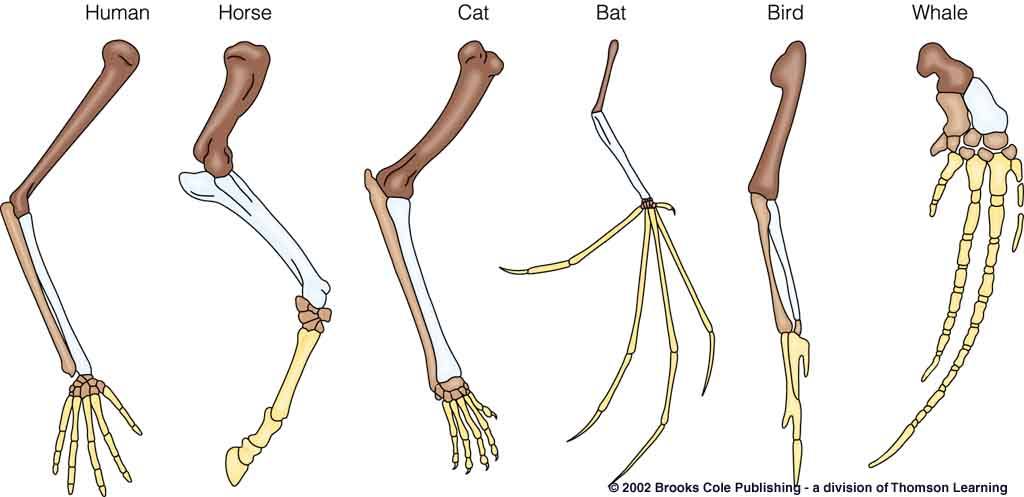
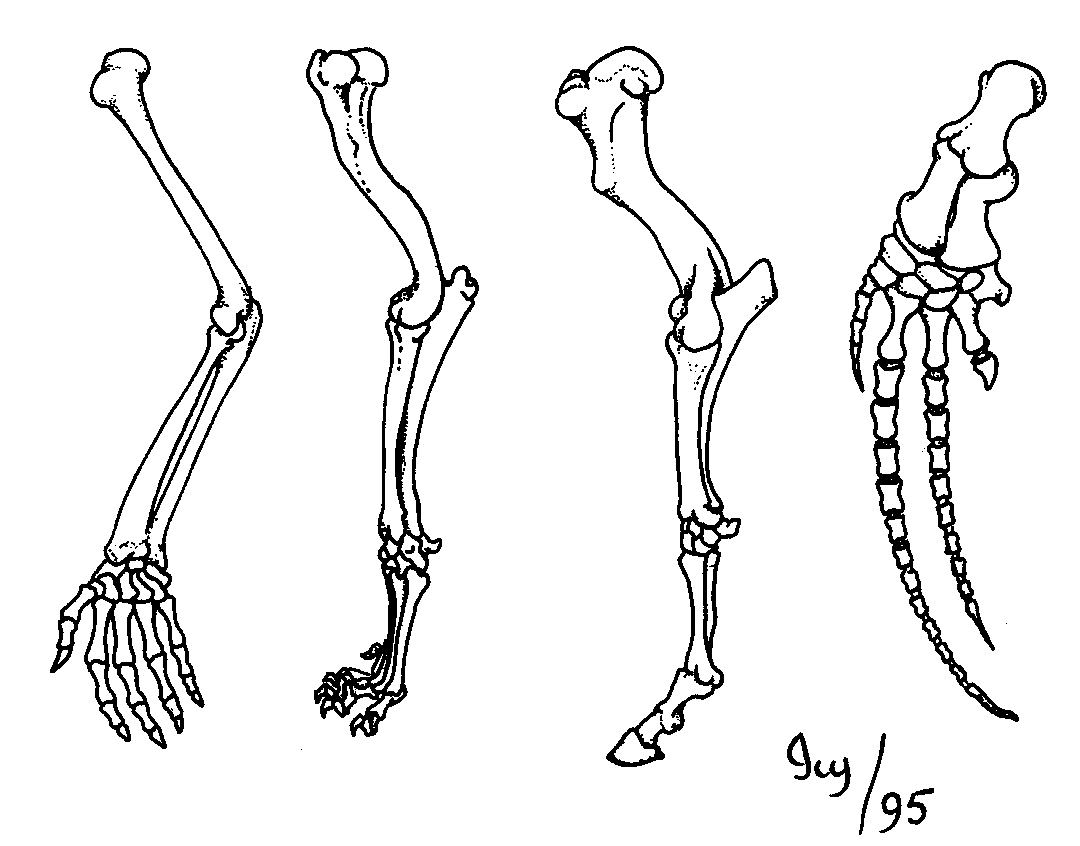
Structures with the same parts have different functions; suggests that organisms share a common ancestry
a)
vestigial structures
b)
homologous structures
c)
adaptive radiation
d)
fossil
5.
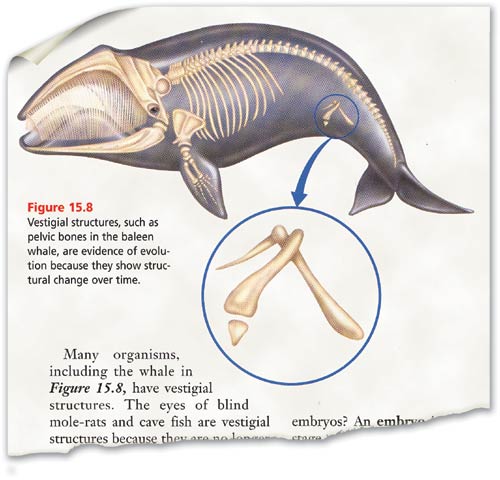
Which of the following is an example of a vestigial structure?
a)
the wings of a red-tailed hawk
b)
the hind limbs of a house cat
c)
the fins of sharks
d)
the tailbone of a human
6.
The diagram shows fossils in different rock layers. Which of these statements about the age of these fossils is most likely correct?
a)
Fossil A and C are the same age
b)
Fossil B is older than fossil C
c)
Fossils A is older than fossil B
d)
Fossil D is older than fossil C
7.

What do we call a change in a species over time?

a)

Adaptation

b)

Evolution

c)

Extinction

d)

Environmental influences

8.
Ostrich wings are examples of
a)
homologous structures
b)
vestigial structures
c)
adaptations
d)
traits
9.
Why do embryologist study embryos?
a)
to see if they are related
b)
to understand adaptations
c)
to determine the age
d)
to learn what parents are vestigial
10.
What is embryology?
a)
the age of organisms
b)
the oldest stage of development
c)
the life span of an organism
d)
the earliest growth stage of development
11.
The environment around Manchester, England, changed during the Industrial Revolution.  How did this change affect peppered moths living in the area?
a)
Natural selection favored moths with dark wings because predators could not see them on the soot-colored trees.
b)
Natural selection favored moths with white wings that were easy for predators to see.
c)
Natural selection favored moths with white wings because predators could not see them on the soot-colored trees.
d)
Natural selection caused moths with white wings to become extinct.
12.
When an organism completely dies out, it is called.....
a)
Adaption
b)
Extinction
c)
Fossilization
d)
Mutation
13.
Two organisms that are closely related would have
a)
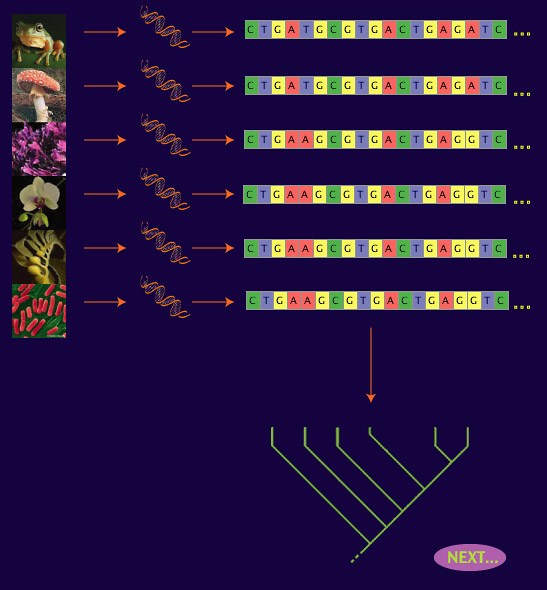
very similar DNA sequence
b)
exactly the same DNA sequences
c)
no proteins in common
d)
completely different DNA sequence
14.
Comparing human hemoglobin of chimpanzees, horses, kangaroos, and chickens, reveal that humans have the fewest amino acid differences with 
a)
Kangaroos
b)
Horses
c)
chickens
d)
chimpanzees
15.
Which layer is oldest?
a)
A
b)
W
c)
G
d)
Z
16.
The structures shown are_________
a)
homologous
b)
heterologous
c)
analogous
d)
vestigial
17.
The disappearance of a species.
a)
Evolution
b)
Extinction
c)
Migration
d)
Mutation
18.

_________ is the process of change by which species of organism change over time.

a)

Nucleotides

b)

Evolution

c)

Mutation

d)

Carbon

19.

Birds are eating all the green beetles. Because the brown beetles are surviving they reproduce more and make more brown beetles. This is called ___________

a)

Artificial Selection

b)

The Theory on the Origin of Species

c)

Natural Selection

d)

Mutation

20.

Darwin wrote that the organisms best suited to their environments will .....

a)

Increase in Number

b)

Go Extinct

c)

Mutate More often

21.

Which trait did Darwin pay most attention to about the finches in the galapagos islands?

a)

Their Feathers

b)

Their Horns

c)

Their Size

d)

Their Beak Shape

22.

Why were the beaks on Darwin's finches so Important?

a)

They showed the finches always existed as Darwin found them.

b)

They showed that the finches could mutate their beaks whenever they want.

c)

They showed variability in the finches species. All finches were equally adaptable to all islands.

d)

They show that the finches adapted to their environments. Their beak shape matched the food available on each island.

23.

4. When the industrial revolution started, the trees have been covered in soot from coal factories. Which moth will be more successful in this environment?

a)

White Moth

b)

Dark Moth

c)

Both are Equally Successful in this Environment

24.

Which of the following do scientists not use as evidence for evolution?

a)

Fossils

b)

Vestigial Structures

c)

Embryology

d)

Radiation

25.

When we examine this whale fossil, we can see that the whale has a pelvic bone that doesn't seem to be used by the whale. What do scientists infer?

a)

The whale had an ancestor with legs

b)

The whale must use the pelvis for an unknown reason

c)

The whale was born with an extra bone and has a disorder

d)

The whale had an ancestor with wings

26.

In evolution, these are body parts of species that have similar features.

a)

Adaptable features

b)

Vestigial Structures

c)

Nucleal Structures

d)

Homologous Structures

27.

Why are homologous structures important to the theory of evolution?

a)

Scientists use them as evidence that many species must have had a common ancestor.

b)

Scientists use them as evidence that many species must have independently evolved and are not related to other species.

c)

Scientists use them as evidence to show that all kinds of structures in our bodies work to help us survive.

28.

Why are vestigial structures evidence for evolution?

a)

They are useful in the organism and show natural selection at work.

b)

They are not useful in the organism but they were probably useful in some ancestor of that species.

c)

They show that these organs or behaviors help an organism adapt to new environments

29.

How do scientists use embryology to support the theory of evolution?

a)

Embryos of many species have a lot of similar characteristics when they are first forming showing different creatures must have a common ancestor

b)

Embryos of many species have very little in common until they start developing for long periods of time

c)

Features like gills and tails prove that all animals are really just fish

30.
Which best describes mutations?
a)
Always helpful
b)
Always harmful
c)
Can be helpful or harmful
d)
Always neutral
31.
A theory has significant evidence to support it.  True or False
a)
True
b)
False
32.
The ability of an organism to survive and reproduce in its specific environment 
a)
diversity.
b)
evolution
c)
adaptation
d)
 fitness
33.
Genetic differences between organisms of the same species
a)
Variation
b)
Adaptation
c)
Behavior
d)
Environment
34.
_______ believed that organisms develop traits needed for survival and that traits that were unused would become weaker and gradually disappear. 
a)
Darwin
b)
Lamarck
c)
Mendel
d)
Watson
35.
____________ believed that those organisms that were best suited for their environment would survive and pass on their beneficial traits to their offspring. 
a)
Darwin
b)
Lamarck
c)
Watson
d)
Mendel
36.
Charles Darwin’s observation that finches of different species on the Galápagos Islands have many similar physical characteristics supports the hypothesis that these finches 
 
a)
have the ability to interbreed.
b)
acquired traits through use and disuse.
c)
all eat the same type of food.
d)
descended from a common ancestor.
37.
According to Darwin’s theory of natural selection, individuals who survive are the ones best adapted for their environment. Their survival is due to the 
a)
possession of adaptations developed through use.
b)
 possession of inherited adaptations that maximize fitness.
c)
lack of competition within the species.
d)
choices made by plant and animal breeders.
38.

Why are advantageous traits more likely to be passed onto offspring?

a)

Because they are more likely to survive and reproduce.

b)

Because they come from dominant alleles.

c)

Because they come from recessive alleles.

d)

Because the organism knew it needed that trait, survives, and passes it on.

39.

Mutations are important because they bring about

a)

death of the organism in which they develop

b)

genetic variation needed for a population to evolve

c)

benefits for the individual, not for the population

d)

changes in genotype, but not phenotype

40.

Why is competition important for natural selection?

a)

It shows which variations are more successful, allowing the organisms with those variations to survive.

b)

It causes organisms, regardless of which traits they have, to die out, reducing the population size.

c)

It causes organisms to get stronger due to having to outcompete other species.

d)

Competition is not important for natural selection.

41.

According to the diagram, what is the common ancestor of ALL organisms on the phylogenetic tree?

a)

B

b)

C

c)

D

d)

E

42.

Using the diagram, is organism 4 MORE closely related to organism 3 or 5?

a)

3

b)

5

43.

Who is most closely related to Taxidea taxus?

a)

Lutra lutra

b)

Panthera pardus

c)

Canis latrans

d)

Canis lupus

44.

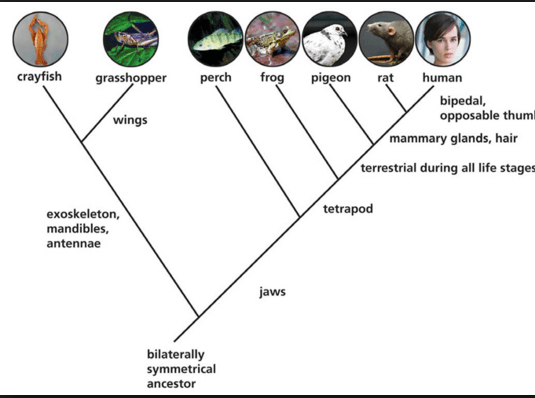
According to the cladogram, which organism is most distantly related to the human?

a)

crayfish

b)

grasshopper

c)

perch

d)

frog

45.

In a phylogenetic tree, the branching points represent common ancestors.

a)

Yes

b)

NO

46.

The lizard has all these derived characteristics EXCEPT

a)

Jaws

b)

Lungs

c)

Bipedal

47.
The term for the formation of new and distinct species over the course of evolution is...
a)
speciation
b)
biological species concept
c)
reproductive barrier
d)
natural selection
48.
A flash flood carried a raft of Amazon ants away from their original population. There is enough distance between the two groups, that they will never meet in nature again. What type of reproductive barrier is this?
a)

behavioral isolation

b)

temporal isolation 

c)

gametic isolation

d)

geographic isolation 

49.
When a population becomes divided by an event such as a new river forming, ____________ has occurred.
a)
Differentiation 
b)
Isolation
c)
Adaptation
d)
Separation
50.

Direct evidence of speciation is when interbreeding to produce viable and fertile offspring is no longer possible. This is known as _ isolation.

(a)  

51.
When populations are capable of breeding but have differences in reproductive behaviors
a)
Reproductive Isolation
b)
Behavioral Isolation
c)
Temporal Isolation
d)
Geographic Isolation
52.

Artificial selection is...

a)

the process by which humans determine which traits to pass on and which traits to eliminate based upon breeding.

b)

the process by which natures selects who lives and dies.

c)

the process by which animals adapt to their surroundings.

d)

the process by which people take over ecosystems.

53.
Natural selection can best be defined as the _____.
a)
survival of the biggest and strongest in a population
b)
survival and reproduction of those in the largest area
c)
elimination of the smallest organism by the biggest
d)
survival and reproduction of those that are best adapted
54.

Organisms with the most beneficial traits will survive and reproduce. This is commonly known as ______.

a)

DNA

b)

variations.

c)

fitness.

d)

ecosystems.

55.

A herd of elephants uses their trunks to get food more than another heard. Since they are using their trunks so much they get longer and stronger. Then those elephants pass on long strong trunk genes to their kids because they used them so much. Whose idea is this and is it right or wrong?

a)

Lemark; wrong

b)

Lemark; right

c)

Darwin; wrong

d)

Darwin; right