
 Worksheets
PHYS U6 Test Review (Energy)
Total questions: 61
Worksheet time: 2hrs 53mins
_ is the energy it takes to apply a force that moves an object.
Work
Power
Watts
Kinetic Energy
Potential Energy
_ is how fast work is done or how fast energy is used.
Work
Power
Energy
Force
Conservation
_ is the ability to do work or move objects.
Work
Power
Watts
Energy
Calories
_ is the metric unit for measuring energy.
horsepower
Newtons
Watts
Joules
Calories
_ is the metric unit for measuring power; it’s equal to 1 J/s.
horsepower
kiloWatt⋅hour
Watts
Joules
Calories
_ is the power of a typical horse being used to turn a capstan; it’s equal to 746W.
Imperial horsepower
kiloWatt⋅hour
Watts
Joules
Calories
_ is the imperial unit for measuring energy in food.
horsepower
Newtons
Watts
Joules
Calories
_ is the energy due to motion.
Kinetic energy
Potential energy
chemical potential energy
work
thermal energy
_ is the stored energy due to position or condition.
Kinetic energy
Potential energy
calories
work
pendulum
A _ is a freely swinging weight hung from a fixed point.
Rube Goldberg Machine
horsepower
calorie
fulcrum
pendulum
_ energy is heat, which measures particle motion.
Thermal
Vibrational
Nuclear
Chemical
Radiant
_ energy comes from vibrations in air molecules.
Heat
Sound
Nuclear
Chemical
Radiant
_ energy is energy in the form of waves, like light.
Thermal
Vibrational
Nuclear
Chemical
Radiant
_ potential energy is energy stored in chemical bonds, like food and fuel.
Thermal
Vibrational
Nuclear
Chemical
Radiant
_ potential energy is the energy stored in the atom.
Thermal
Vibrational
Nuclear
Chemical
Radiant
_ energy is the energy of moving electrons in wires.
Electric Current
Electric Potential
Elastic
Gravitational
Magnetic
_ energy is the energy stored in a battery.
Electric Current
Electric Potential
Elastic
Gravitational
Magnetic
_ potential energy is energy stored due to height above the Earth’s surface.
Electric Current
Electric Potential
Elastic
Gravitational
Magnetic
_ energy comes from the attractive & repulsive forces between charged particles.
Electric Current
Electric Potential
Elastic
Gravitational
Magnetic
_ potential energy is energy stored in something that bends, stretches, or deforms.
Electric Current
Electric Potential
Elastic
Gravitational
Magnetic
_ energy is the sum of the kinetic and potential energies on an object.
Kinetic
Potential
Mechanical
Total
Net
This states that the total work done on an object equals the change in its
kinetic energy.
Work-Energy Theorem
Law of Conservation of Energy
First Law of Thermodynamics
Hooke’s Law
none of these
This states that energy cannot be created nor destroyed.
Work-Energy Theorem
Law of Conservation of Energy
First Law of Thermodynamics
Hooke’s Law
none of these
Work and Energy are both ____ quantities.
scalar
vector
none of these
If you punch a wall with 50N of force and the wall does not move, how much work is done to the wall?
0 J
50 J
none of these
100J
unknown
Work is done only when the applied force is (or partially is) ___ direction as the
direction of motion.
…in the same…
…in the opposite…
none of these
…perpendicular to the…
unknown
The total energy in the universe is ___.
constant
increasing
decreasing
fluctuating
unknown
Friction converts some useful energy into __ and __ energy. (Select 2 answers)
thermal (heat)
vibrational (sound)
elastic
potential
chemical
If a 1kg ball has 100J of Potential Energy at the top of a hill, how much Kinetic Energy will it have when it rolls to the bottom of the hill?
100 J
-100 J
0 J
50 J
unknown
You carry a 14N cat horizontally by 2m. What is the work done on the cat? W=Fx
28 J
7 J
0 J
274 J
unknown
A cat is climbing a bookcase to catch a bug on the top. On which shelf will the cat have the most potential energy?
the highest shelf
the lowest shelf
a middle shelf
they are all equal
The same cat jumps off of the bookshelf to the floor. The cat will land with the highest speed if it jumps from __.
the highest shelf
the lowest shelf
a middle shelf
they are all equal
To increase an object’s Kinetic Energy, you can increase its mass or ____.
velocity
height
gravity
time
To increase an object’s Potential Energy, you can increase its mass or ___
velocity
height
gravity
time
To increase power, you can increase all of the following EXCEPT ___.
velocity
force
time
energy
What does kWh (kiloWatt-hours) measure ?
momentum
force
time
energy
power
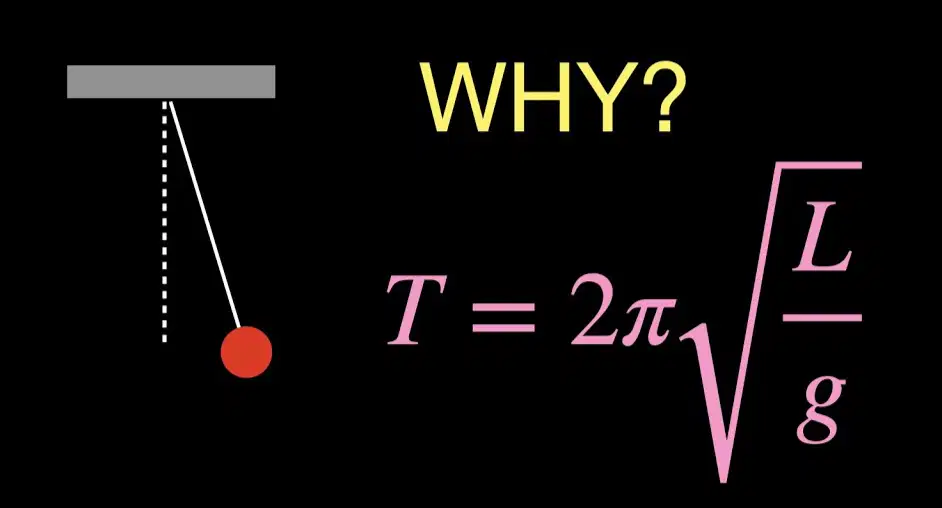
If a grandfather clock is running too slow, how can you improve its timing?
Increase the length (L)
decrease the length (L)
increase the mass of the bob
decrease the mass of the bob
none of these

At which point on the diagram does the pendulum's bob have the most Kinetic Energy (KE)?
A
B
C
all of these
none of these
At which point on the diagram does the pendulum's bob have the most Potential Energy?
A
B
C
all of these
none of these
At which point on the diagram does the pendulum's bob have the least Potential Energy?
A
B
C
all of these
none of these
At which point on the diagram does the pendulum's bob have the least Kinetic Energy?
A
B
C
all of these
none of these
At which point on the diagram is the pendulum's bob is moving the fastest?
A
B
C
all of these
none of these
At which point on the diagram is the pendulum's bob is moving the SLOWEST?
A
B
C
all of these
none of these
Short Answer Question on test: Why does the pendulum eventually stop swinging?
Friction in the air and fulcrum converts all its energy into heat and sound.
All of the potential energy gets converted into work energy.
Gravity pulls it down until it stops.
It stops swinging when a person stops pushing it.
none of these

At which point on the diagram does the roller coaster car have the most Kinetic Energy?
A
B
C
all of these
none of these
At which point on the diagram does the roller coaster car have the least Kinetic Energy?
A
B
C
all of these
none of these
At which point on the diagram does the roller coaster car have the least Potential Energy?
A
B
C
all of these
none of these
At which point on the diagram does the roller coaster car have the most Potential Energy?
A
B
C
all of these
none of these
At which point on the diagram is the roller coaster car traveling the fastest?
A
B
C
all of these
none of these
At which point on the diagram is the roller coaster car traveling the SLOWEST?
A
B
C
all of these
none of these
SHORT ANSWER: Do you think a real Hotwheels roller coaster car can travel through the loop without falling off if it starts at point A? Explain your reasoning.
NO because there is too much friction; the lift needs to be 2.5 times taller than the loop.
NO because a real roller coaster is too heavy with people.
YES because the lift is taller than the loop.
YES because real roller coasters have engines to propel them.
UNKNOWN. Not enough information.

At what point(s) does the ball have the most Potential Energy?
a
b
c
d
e
At what point(s) is the ball's GPE converted into Kinetic Energy?
a
b
c
d
e
The ball's Kinetic Energy is converted into what three forms of energy at point c (when it hits the floor and bounces)?
EPE
(elastic)
CPE
(chemical)
TE
(heat)
VE
(sound)
RE
(radiant)
Why does the ball eventually stop bouncing?
(This is a short answer question on your test.)
It stops when all of its initial GPE is converted to heat and sound from friction.
Gravity eventually pulls it down.
It stops when all of its initial energy is converted into Potential Energy.
It stops when the chemical bonds of the ball break down.
none of these
A ball rolls down a hill from a height of 10m. GPE=mgh and KE=½mv².
What's the correct equation for calculating the ball's velocity at ground level?
v=2gh
v = 2gh
v=m2KE
v = 2KE/m
none of these
A car that weighs 15000N traveled 30m in 0.5s. How powerful is the car? P=tFΔx
900 000 Watts
250 Watts
1000 Watts
225 000 Watts
none of these
A car that weighs 15000N collides with a tree with an impact velocity of 20m/s (45mph). How powerful was the collision? P=Fv
300 000 Watts
750 Watts
3 000 000 Watts
675 000 Watts
none of these
Convert 300000 Watts into horsepower. 1hp=746Watts.
402 hp
223800000 hp
300 hp
408 hp
none of these
Convert 5 Watts into kiloWatts.
0.005 kWatt
0.05 kWatt
5000 kWatt
500 kWatt
none of these
A child's night light is 5 Watts. Electricity costs $0.15/kWh. If the night light runs continuously for 30 days, how much does that cost? Cost = (Power in kWatts)(time in hours)(price per kWh)
$0.54
$540
$22.50
$0.60
none of these

