
 Worksheets
Forces & Motion
Total questions: 59
Worksheet time: 2hrs 58mins
Combination of all the forces acting on an object...
net force
friction
applied force
gravity
Force that a person or thing exerts on to an object...
net force
gravity
applied force
friction
Push or pull acting on an object...
newton
force
friction
inertia
Forces that produce a net force of zero...
unbalanced forces
newton
gravity
balanced forces
Force that opposes motion between any two surfaces...
orbit
newton
gravity
friction
Scientist who proposed the law of universal gravitation...
Isaac Newton
Amedeo Avogadro
Albert Einstein
Richard Marx
Combination of all the forces acting on an object...
inertia
net force
mass
friction

A stack of coins resting on a piece of cardstock is placed on the top of a glass as shown in the diagram below. When the cardstock is rapidly flicked away, the coins drop into the glass. The two properties of the coins which best explain their fall are weight and...
temperature
volume
electrical resistance
inertia

Two forces are applied to a 2.0-kg block on a frictionless, horizontal surface, as shown in the diagram below. The acceleration of the block is:
5.0 m/s², to the right
5.0 m/s², to the left
3.0 m/s², to the right
3.0 m/s², to the left

A student with a weight of 500. newtons sits on a chair. The chair exerts a force on the student of...
5 newtons
50 newtons
500 newtons
5000 newtons

The diagram below shows a 4.0-kg object accelerating at 10. m/s² on a rough horizontal surface. What is the magnitude of the frictional force acting on the object?
5.0 N
10. N
20. N
40. N

An object on the end of a string rotates clockwise in a circle as shown in the diagram. If the string breaks when the object is at point X, which arrow below best represents the path of the object after the string has broken?


Which diagram represents the directions of the velocity, v, and acceleration, a, of a toy car as it moves in a clockwise, horizontal, circular path at constant speed?


An object traveling with uniform circular motion has a centripetal acceleration due to the change in...
speed
direction
kinetic energy
mass

The diagram below represents a mass of 1.0 kg traveling at 8.0 m/s in a circular path of radius 4.0 m. What is the centripetal acceleration of the object?
10 m/s²
2.0 m/s²
16 m/s²
4.0 m/s²

A motorcycle with a mass of 100. kg travels around a flat, circular track of radius 10. meters with a constant speed of 20. m/s. What force is required to keep the motorcycle moving in a circular path at this speed?
200 N
400 N
2000 N
4000 N

The diagram below shows a student spinning a 0.10-kg ball at the end of a 0.50-m string in a horizontal circle at a constant speed of 10. m/s. Which is the best description of the force keeping the ball in the circular path?
perpendicular to the circle and directed toward the center of the circle
perpendicular to the circle and directed away from the center of the circle
tangent to the circle and directed in the same direction that the ball is moving
tangent to the circle and directed opposite to the direction that the ball is moving

The diagram below shows a student spinning a 0.10-kg ball at the end of a 0.50-m string in a horizontal circle at a constant speed of 10. m/s. The magnitude of the centripetal force required to keep the ball in this circular path is:
5.0 N
10 N
20 N
200 N

The diagram below shows a student spinning a 0.10-kg ball at the end of a 0.50-m string in a horizontal circle at a constant speed of 10. m/s. If the magnitude of the force applied to the string by the student's hand is increased, the magnitude of the acceleration of the ball in its circular path will:
decrease
increase
remain the same

The gravitational force between two objects is inversely proportional to:
mass squared
mass
distance
distance squared

If the distance between a spaceship and the center of the Earth is increased from one Earth radius to 4 Earth radii, the gravitational force acting on the spaceship becomes approximately:
1/16 as great
16 times greater
1/4 as great
4 times greater

Force diagrams depicting the magnitudes and directions of the forces acting upon four objects are shown below. Each object has the same mass, approximately 5 kg. Rank these objects in order of their acceleration, from smallest to largest. List the four letters in their proper order.
A<B<C<D
C<B<D<A
B<A<D<C
D<C<B<A

The net force and the resulting acceleration as experienced by four objects are listed below. Rank the objects in order of increasing mass, beginning with the least massive. List the letters in their proper order.
C<B<D<A
A<B<C<D
D<C<B<A
B<A<D<C
Acceleration due to gravity...
9.8 m/s²
22.4 L/mole
299,792,458 m/s
1225 kmh/
An object’s motion will not change unless an unbalanced force acts on it...
law of inertia
law of mass
law of net force
law of nature
Factor that determines the inertia of an object...
inertia
unbalanced force
mass
law of inertia

Given the FBD, which of the following must be true?
The frictional force must be accelerating the system to the left.
The box must be accelerating to the right.
The box must be moving to the right.
The FBD is incorrectly drawn. This situation isn't possible

How much does a 29-kg weigh on the surface of the moon (where the acceleration of gravity is 1/6th that of Earth)?
47.4 N
284.2 N
19.6 N
290 N
4.8 N
A 31-kg mass is accelerated by a net force of 81 N. What is the acceleration of the mass?
2.6 m/s2
10 m/s2
0.39 m/s2
0.25 m/s2
4 m/s2
A force of 8 Newton’s is applied to a crate so that it moves at a constant velocity of 1.5 m/s. What is the net force?
1.5 N
8 N
12N
0 N
A force of 8 Newton’s is applied to a crate so that it moves at a constant velocity of 1.5 m/s. What is the magnitude of the frictional force?
1.5 N
8 N
12N
0 N

Is this object in equilibrium?
Yes and it's moving right
Yes and its at rest
No, it's accelerating right
No, it's at rest
Which of these is a correct sum statement for Fnet?
Fa - Ff = ma
Fnet = Ff
Fn/Fg
Fa = ma

Here are 3 FBD diagrams for an elevator. Consider them to be A, B, C. Which one shows an elevator accelerating upward?
A
B
C
none of these
Here are 3 FBD diagrams for an elevator. Consider them to be A, B, C. Which one shows an elevator at rest?
A
B
C
none of these

Is it possible for the object in the diagram to be moving to the right and have this FBD?
Yes. It's possible that the x forces were just left off the diagram.
Yes. It could be moving at a constant velocity.
No. The FBD shows that the system is in equilibrium.
No. An FBD shows all F.
Here are 3 FBD diagrams for an elevator. Consider them to be A, B, C. Which one shows an elevator moving at a constant rate of 2.5 m/s?
A
B
C
none of these
A forward force of 15 N is counteracted by a backwards frictional force of 6 N. The mass of the object is 2 kg. what is the acceleration?
it cannot be determined
4.5 m/s/s in the direction of the larger force
7.5 m/s/s in the direction of the larger force
3 m/s/s in the direction of the smaller force.
A student has a weight of 155 lb. What is this in Newtons?
70.5 N
690 N
155 N
none of these is corrected
Is it possible for the normal force to be equal to the gravitational force?
Yes. If the surface is horizontal and Fg is perpendicular to the surface.
Yes. If the surface is vertical and Fg is parallel to the surface.
No. FN will always be less than Fg
No. Fg will be less than FN.
Which object has the most inertia?
A 5kg tennis ball traveling at 10m/s.
A 30kg book resting on a desk.
A 0.2kg leaf falling from a tree.
A 20kg brick thrown at 15m/s.
An object falling through the air at terminal speed experiences ______.
a net force of 0
equilibrium
no acceleration
all of the above
An object sliding across a surface will experience ______ friction.
static
potential
kinetic
no
Magnitudes of forces are measured in Newtons. What is a Newton equal to?
kg
kg*m
kg*m/s
kg*m/s^2

Sam is hover boarding down they hall at a constant velocity. Assuming there is friction, which of the following must be true?
The force applied by the board must be greater than the frictional force
The frictional force must equal the force applied by the board
The force applied must equal zero
There is not enough information
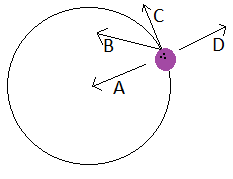
Which represents the acceleration of the bowling ball?
A
B
C
D
What would the force between them be if the distance between them were doubled?
What would the force between them be if one of the masses were doubled?
What would the force between them be if the distance between them were doubled?
What would the force between them be if both of the masses were doubled?

What's the centripetal acceleration of a 0.2 kg yoyo spun in a circle with a radius of 0.7 meters at a velocity of 3.0 m/s?
8.23 m/s2
10.54 m/s2
12.86 m/s2
17.39 m/s2
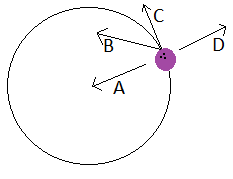
Which of the following depict the speed of the bowling ball?
A
B
C
D

