
NEW
Font size
 Worksheets
Pre-AP Bio Unit 3 Cell Systems, Part 1 (Biochem, Cells, Transp)
Total questions: 60
Worksheet time: 49mins
The four classes of orgnaic macromolecules are...
proteins, carbohydrates, lipids, and nucleic acids
amino acids, carbohydrates, lipids, and nucleic acids
water, carbon dioxide, lipids, and nucleic acids
photosynthesis and cellular respiration
What are two types of Nucleic acids?
DNA & BNA
DNA & NNA
RNA & fRNA
DNA & RNA
What are the 4 main elements that make up Organic Molecules?
H, O, B, P
H, C, O, N
H, C, O, He
H, P, O, K
What are simple sugars that serve as a building block for carbohydrates?
Monosaccharides
Disaccharides
Polysaccharides
I have no clue. I'm just selecting random answers waiting for the game to be over
DNA is a polymer consisting of repeating units known as
dipeptides
nucleotides
amino acids
organic acids
Macromolecules are polymers that are made of specific, smaller subunits called
hydrolysis
monomers
dehydration synthesis
enzymes
The monomer of a carbohydrate is a(n)_____
amino acid
glycerol & fatty acid
nucleotide
monosaccharide
The monomer of a lipid is a(n)
monosaccharide
nucleotide
amino acid
glycerol & fatty acid
The monomer of a protein is a(n) ____.
Glycerol & fatty acid
monosaccharide
amino acid
nucleotide
The monomer of a nucleic acid is a(n) ____.
Glycerol & fatty acid
monosaccharide
amino acid
nucleotide
________ serve as the primary source of energy for organisms in the forms of glycogen and starch and as structural support in plant cell walls in the form of cellulose
carbohydrates
lipids
nucleic acids
proteins
_____ are used as a source of energy and as building blocks of cell membranes
proteins
nucleic acids
carbohydrates
lipids
_____ are responsible for numerous cellular functions, such as catalyzing reactions, providing structure and aiding in cell transport
carbohydrates
proteins
nucleic acids
lipids
______ are responsible for storing and transferring genetic information in the form of DNA and RNA.
protein
lipids
carbohydrates
nucleic acids

Enzymes are
Lipids
Protein
Carbohydrates
Nucleic Acids
Enzymes are responsible for-
Speeding up reactions
Giving the body energy
Slowing down reactions
Which of these is most likely an enzyme?
Sucrose
Galactose
Fructose
Amylase
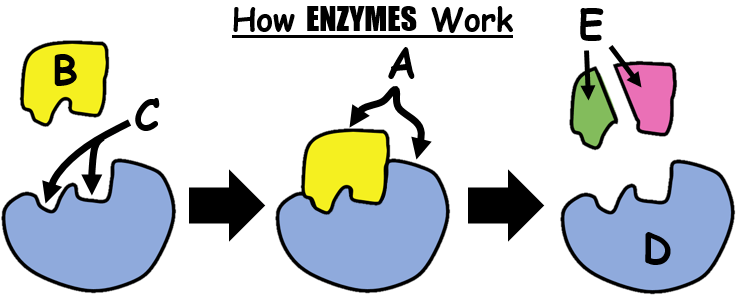
Letter D...
active site
enzyme
substrate
products
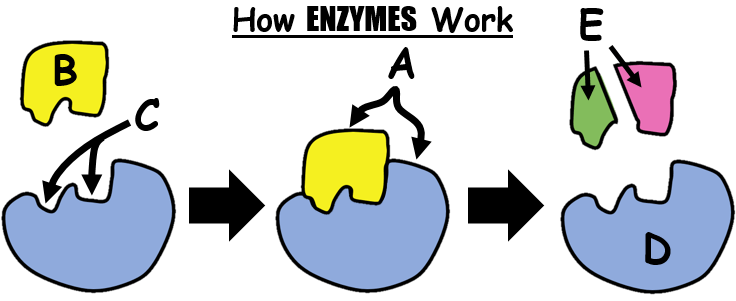
Letter B...
active site
enzyme
substrate
products
Letter c...
active site
enzyme
substrate
products
An enzyme speeds up a chemical reaction in the cell but can only be used once. True or False?
true
false
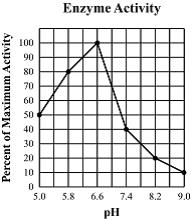


Which type of cell?
Prokaryote
Eukaryote
Has membrane bound organelles
Prokaryote
Eukaryote
Both
Where is the DNA found in a prokaryotic cell?
In the nucleus
In the mitochondria
Floating around in the cytoplasm
In the ribosome

In what organelle is the genetic material found inside?
Nucleus
endoplasmic reticulum
Mitochondria
Lysosome

What is the function of this organelle?
Sac that stores water, nutrients, and waste products
Regulates what enters and leaves the cell
Structures that transport and ship proteins like UPS
Cite of cellular respiration also known as the powerhouse of the cell

I store water in both plant and animal cells. What am I?
Mitochondria
Lysosome
Vacuole
Cytoplasm
What can only be found in plant cells?
Chloroplast
Vacuole
Nucleus
Cell membrane
Bacteria are a type of...
Prokaryote
Eukaryote
Both
The two kinds of cells are Prokaryotes and Eukaryotes. How are they different?
Prokaryotes are plant cells
Eukaryotes have a nucleus
Prokaryotes have a nucleus
There is no difference
What cell part is NOT found in all cells
Cytoplasm
Genetic material
Cell membrane
Cell wall

What is the function of this part of the cell?
Structure
Flexability
Regulates what comes in and out of the cell
Stores genetic information
Where are proteins made?
Golgi Body
Ribosomes
Chromosomes
Mitochondria
What is the gel-like substance inside of cells called?
Cytoplasm
Cytoskeleton
Cell membrane
Vacuole

This cell would be classified as a(n) ________________ cell.
Prokaryotic
Eukaryotic
Both


What molecule is pictured?
Integral Protein
Carbohydrate chain
Phospholipid

________ transport involves the movement of solutes across the membrane along the concentration gradient, without the use of additional energy.
passive
active
______ transport involves themovement of solutes across the membrane against their concentration gradients with the use of energy.
passive
active

Which type of active transport is displayed?
Endocytosis
Exocytosis


When a cell forms a vesicle around unwanted particles and expels it OUT of the cell.
Pinocytosis
Endocytosis
Receptor-mediated
Exocytosis

