
 Worksheets
NGSS Review
Total questions: 100
Worksheet time: 2hrs 37mins
What are the three main types of rocks?
sandstone, limestone, marble
igneous, metamorphic, sedimentary
obsidian, coal, basalt
conglomerate, obsidian, metamorphic

Look at the image and choose the correct statement.
The peaches have more mass
The peaches and lemons have the same mass.
The lemons have a greater volume.
The lemons have more mass.
The three states of matter are:
solid, ice, liquid
solid, air, liquid
gas, solid, water
liquid, gas, solid
The molecules in a solid are:
tight and close together
moving around as fast as they can
slightly spaced out
spread far apart from each other


What would happen if you touched a south pole end of a magnet to a north pole end of another magnet?
they would be attracted to each other
they would be repelled from each other
What does repel mean?
magnets move toward each other
magnets do not have magnetism
magnets move away from each other
magnets stick together

What type of energy is transformed in the Energy Conversion shown in the image below?
Nuclear Energy
Chemical Energy
Thermal Energy
Electrical Energy

What happens to our shadow when the sun is rising?
It gets shorter
It gets longer
It is not visible if it is sunny
The lunar phases are caused by...
The movement of the Moon relative to the Earth and Sun
The moon growing and shrinking
The movement of the sky
The movement of the Sun

What is the lunar phase where the moon is the darkest?
Full Moon
New Moon
Crescent
Gibbous

What is this lunar phase?
Crescent
Quarter
Gibbous
Full

What is this lunar phase?
Third-quarter
Crescent
New
Gibbous

Julia builds three pinewood derby cars. Car A weighs 5 ounces, Car B weighs 6 ounce, and Car C weighs 7 ounces. She predicts that the more weight added to a car leads to a faster finish. Scientific conclusions are based on scientific evidence, what evidence would support Julia's prediction?
Car A finishes faster than car A and car B
Car B finishes faster than car A and car C
Car C finishes faster than car A and car B
All three cars finish at the same time
Which variable can be changed or controlled to test the effects in a scientific experiment
Independent Variable
Dependent Variable
which variable is the variable that is actually tested in a scientific experiment
Independent variable
Dependent Variable
What is the process by which plants use sunlight to convert carbon dioxide and water into glucose and oxygen?
Respiration
Photosynthesis
Combustion
Fermentation
How does energy flow through an ecosystem?
Energy flows from the ocean to producers, then to consumers, and finally to decomposers.
Energy flows from the sun to producers, then to consumers, and finally to decomposers.
Energy flows from the clouds to producers, then to consumers, and finally to decomposers.
Energy flows from the moon to producers, then to consumers, and finally to decomposers.
How do the water cycle and the rock cycle contribute to Earth's systems and interactions?
They contribute by influencing the migration patterns of birds and animals.
They contribute by causing earthquakes and volcanic eruptions.
They contribute by influencing weather patterns, erosion, and the formation of landforms.
They contribute by creating new species of plants and animals.
What causes day and night on Earth?
The Earth's distance from the sun
The phases of the moon
The rotation of the Earth on its axis
The movement of the sun around the Earth
How do the positions of the Earth, moon, and sun cause lunar and solar eclipses?
The alignment of the Earth, moon, and sun causes lunar and solar eclipses.
The gravitational pull of the moon causes lunar and solar eclipses.
The rotation of the Earth causes lunar and solar eclipses.
The tilt of the Earth's axis causes lunar and solar eclipses.
What causes the change of seasons on Earth?
The Earth's distance from the sun
The phases of the moon
The tilt of the Earth's axis
The rotation of the Earth on its axis
What is the process by which a gas changes to a liquid?
Sublimation
Condensation
Evaporation
Melting
How does the water cycle contribute to the Earth's climate?
It contributes by influencing the migration patterns of birds and animals.
It contributes by causing earthquakes and volcanic eruptions.
It contributes by influencing weather patterns and precipitation.
It contributes by creating new species of plants and animals.
A boy rides a skate board down a hill. Eventually the skate board stops. Which is most responsible for causing the skateboard to stop?
gravity acting on the skateboard
friction acting on the skateboard
the mass of the skateboard
the mass of the boy
A book falls off the desk. What moves the book towards the floor?
mass
friction
gravity
speed
What will most likely stop an object in motion?
mass
force
acceleration
inertia law
How does the mass of an object affect acceleration?
The greater the mass of an object the greater the force needed to accelerate the object
The greater the mass of an object the smaller the force needed to accelerate the object
the smaller the mass of an object the greater the force needed to decelerate the object
A phone is sitting on the dash of the car, which is stopped at a red light. Why does the phone slide backwards as the car begins to move forward?
phone has inertia
the phone has momentum
the phone has acceleration
How would the absence of friction affect a steel ball traveling on a long straight path
steel ball's speed would decrease
steel ball's speed would increase
steel ball would stop immediately
steel ball would remain at a constant speed
What will happen to the book if no other forces act upon it?
book will stay at rest
book will begin to move
mass of the book will increase
gravity on the book will increase
A snow plow uncovered 100 miles of road in 4 hours . What was the average speed of the plow? (speed = distance divided by time)
20 mph
25 mph
50 mph
100 mph
A man jumps from a plane and a few seconds later opens his parachute. Which causes his fall to slow once his parachute opens?
decrease in gravity
increase in gravity
decreased air resistance
increased air resistance
Which is a push or pull that acts on an object?
force
speed
inertia
momentum
A person rolls a ball on a flat surface that suddenly slopes downward. Which most likely describes the motion of the ball?
ball stops when is reaches the downward slope
ball speeds up as it travels on the downward slope
ball slows down as it travels on the downward slope
ball changes directions as it travels on the downward slope
Which can cause an object moving in a straight line to change direction?
an outside force
an increase in speed
a change in momentum
a reduction in friction
What is an multicellular organism?
It has an organism with one cell.
It has more than one cell
It does't have cell
Example of multicellular organism
Human, Dog, Fish
Ostrich egg
bacteria, amoeba
Example of unicellular organism
Amoeba, bacteria, yeast, algae
cat, dog, fish, sunflower
sand, salt and pepper
Why do multicellular organisms need transport systems?
Because they cannot grow in their own environment.
Because they need food from an outside source.
To exchange gases with the outside environment.
To receive more energy than what they already have.


energy


Weathered pieces of rock.
pebbles
sediment
eroded
shale
Wind or water carrying away weathered pieces of sediment.
deposition
weathering
erosion
cementation
Eroded sediment finds a new home.
weathering
deposition
compaction
cementation
The solid innermost portion of our Earth.
outer core
mantle
inner core
crust
This layer of Earth is made of magma and is between the crust and core.
crust
mantle
core
outer core
The outermost layer of Earth composed mainly of rock.
crust
mantle
core
outer core
Orbit or movement around the sun.
rotation
revolution
Spinning of a planet on its axis.
rotation
revolution
Earth rotates on this imaginary line.
diagonal
axis
radius
diameter
Which of the following explains why we have night and day?
the phase of the moon
the rotation of Earth on its axis
the revolution of Earth around the sun
the alignment of planets
The _______________ during an experiment is what changes or is different.
hypothesis
conclusion
variable
conclusion


You need to collect ____________ in your experiment that supports your hypothesis.
graphs
plants
microscopes
data
You use this instrument to measure temperature.
sieve
hot plate
anemometer
thermometer
Which of the following is an examples of chemical change?
Soaking paper in water
Burning paper
Ripping paper
Folding paper
Which of the following mixtures will create a solution?
Sugar, salt, and flour
Sugar and water
Chocolate, peanuts, and raisins
Water and oil
What is a solution?
One substance spreads evenly throughout another substance
A change in the physical properties such as size and shape
A special mixture when one substance dissolves into another
Anything that takes up space and has mass
How are physical and chemical changes different?
Physical changes cannot be reversed, while chemical changes can be reversed
Chemical changes result in a new substance, while physical changes do not result in a new substance
Chemical changes involve adding chemicals and physical changes do not
Physical changes involve adding chemicals and chemical changes do not
Which state of matter has no definite shape or volume?
Solid
Liquid
Gas
All of the Above
What kind of substance contains only one kind of atom?
Element
Compound
Homogenous Mixture
Nucleus
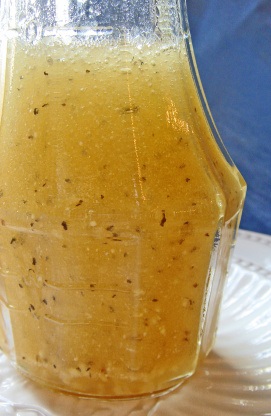
In the lab, Maya is using a substance that has a chemical formula and contains two different elements. Maya’s substance is a(n) _______ .
element
compound
heterogeneous mixture
homogenous mixture/solution
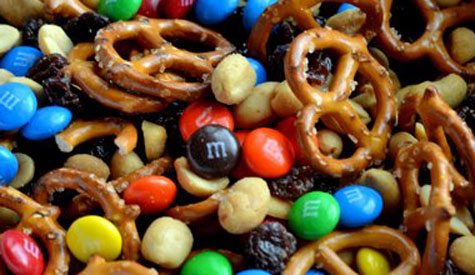

Homogeneous
Heterogeneous

