
 Worksheets
State Test Review
Total questions: 50
Worksheet time: 40mins
Which sequence lists the hereditary material found inside cells from the smallest unit to the largest unit?
chromosome → gene → nucleus
chromosome → nucleus → gene
gene → nucleus → chromosome
gene → chromosome → nucleus
Meiosis produces daughter cells that are genetically _________ each other.
identical to
different from
superior to
inferior to
Meiosis results in _____
2 haploid daughter cells
4 haploid daughter cells
2 diploid daughter cells
4 diploid daughter cells
Match the following for mitosis and meiosis.
PMAT happens once or twice
Mitosis & Meiosis
makes 4 genetically different cells
Meiosis
Sister Chromatids (already crossed over) pull apart
Anaphase 2 of Meiosis
Homologous Chromosomes pulled apart & Independent assortment
Anaphase 1 of Meiosis
makes 2 identical cells
Mitosis
In mitosis, one parent cell produces (a) (b) diploid daughter cells while in meiosis, one parent cell produces (c) (d) haploid daughter cells.

Which student correctly identified the end result of these types of cell division?
1
2
3
4

Which phase is this in?
Interphase
Metaphase
Anaphase
Telephase

Which phase is this in?
Interphase
Metaphase
Anaphase
Telephase

Which phase is this in?
Prophase
Metaphase
Anaphase
Telephase
Which of the following are CORRECT observations about MITOSIS and MEIOSIS? (Check all that apply.)
Mitosis produces cells that identical to the parent cell.
Meiosis produces cells that have half the number of chromosomes as the parent cell.
All cells go through INTERPHASE as part of the cell cycle, whether it goes to mitosis or meiosis next.
In both types of cell division, the chromosomes are only duplicated once.
Only in Mitosis, do you see chromosomes pair up to form a tetrad.
What is a dominant trait?
The trait that is always expressed when present
The trait that is expressed only when no dominant allele is present
The physical appearance of a trait
The set of genes in DNA that are responsible for a specific trait
What does it mean for alleles to be homozygous?
Alleles that are identical
Alleles that are different
The physical appearance of a trait
The basic physical and functional unit of heredity made up of DNA
Which of the following best describes how genes influence an organism's traits?
Genes control the production of proteins, which affect the organism's traits.
DNA controls the production of lipids, which determine the organism's traits.
Carbohydrates control the production of genes, which affects the organism's traits.
Genes control the development of sister centrioles, which determine the organism's traits.

Brown eyes are dominant over blue eyes. What is the probability that the offspring will have brown eyes in this cross?
25%
50%
75%
100%
What is an adaptation?
A favorable trait, which helps an organism survive.
An unfavorable trait, which is detrimental to the survival of an organism.
A characteristic that makes an organism "less fit".
Which of the following is the correct definition of natural selection?
The idea that organisms less equipped for their environment tend to survive longer
The idea that organisms more well equipped for their environment tend to survive longer
The idea that organisms more well equipped for their environment tend to not survive
None.
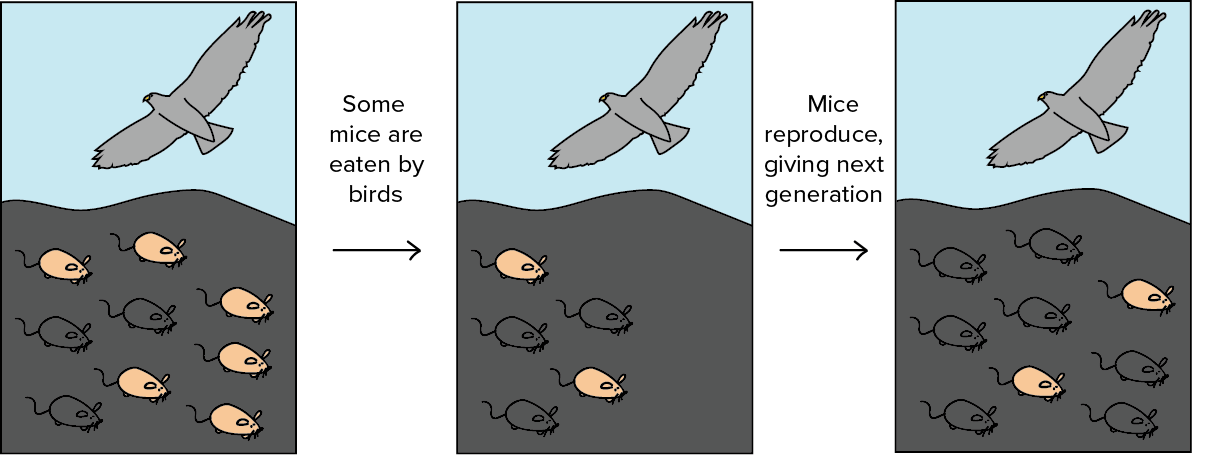
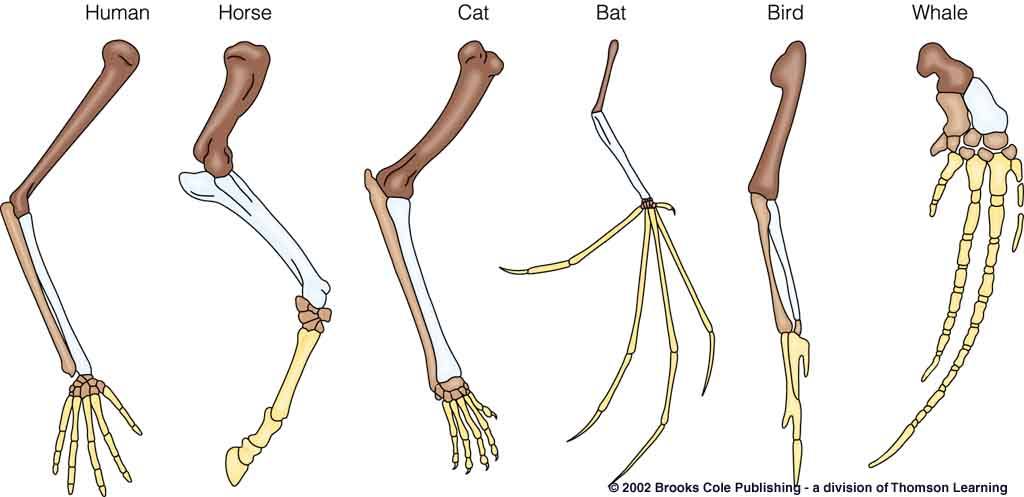
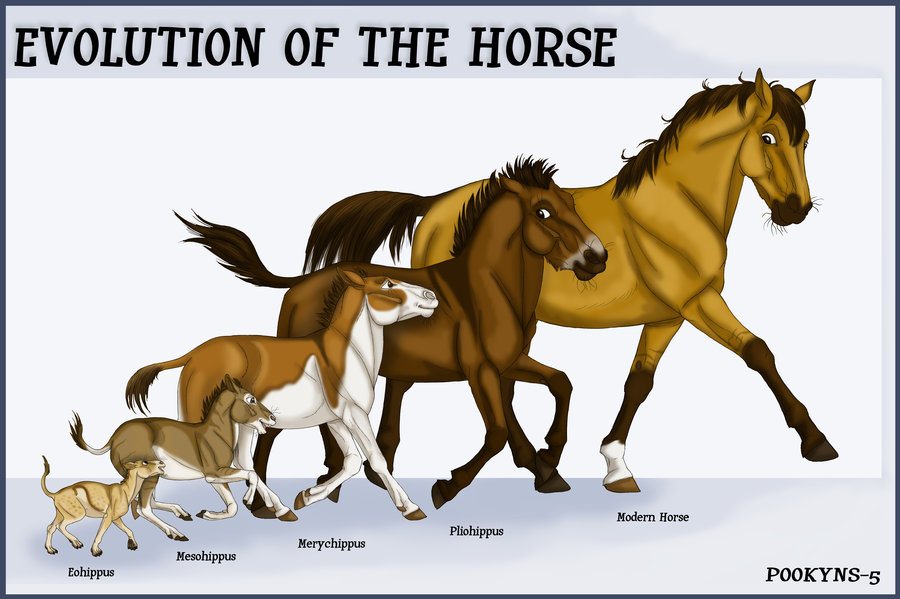

What is most likely to happen to moth populations in the picture shown?
Light moths--hunted easily, dark moths--population increase
Dark moths--hunted easily, dark moths--population increase
Light moths--hunted easily, light moths--population increase
Lights moths will change their color to match dark moths.
How do artificial selection and natural selection differ?
In artificial selection, the environment acts as the selecting agent.
In natural selection, traits that are useful to humans are inherited.
In natural selection, humans act as the selecting agent.
In natural selection, the environment acts as the selecting agent.
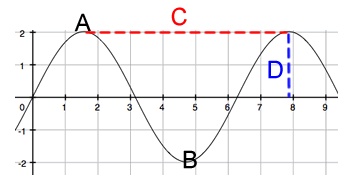

The pitch of a sound is directly related to the sound's _______.
amplitude
loudness
frequency
intensity


Which color of visible light is a combination of all wavelengths of visible light?
white
black
yellow
brown

A wave like the one shown in the diagram above is called a transverse wave. What is point B?
trough
wavelength
crest
amplitude

A student is comparing two sound waves.
Choose two phrases that correctly compare the wavelength and the energy of the two sound waves.
The wavelength of sound wave X is ( longer than / shorter than / equal to ) the wavelength of sound wave Y.
Therefore, sound wave X has ( more energy than / less energy than / the same amount of energy as ) sound wave Y.
The wavelength of X is longer than Y and the sound of X has more energy than Y
The wavelength of X is shorter than Y and the sound of X has more energy than Y
The wavelength of X is longer than Y and the sound of X has less energy than Y
The wavelength of X is shorter than Y and the sound of X has less energy than Y
The wavelength of X is equal tot Y and the sound of X has the same amount of energy as Y

The diagram represents the movement of sound from music playing through a speaker to a person’s ear.
Which statement best explains which type of energy shown needs a medium through which to travel?
Sound needs to travel through a medium because the energy is produced by a speaker
Light needs to travel through a medium because it involves the movement of light rays
Sound needs to travel through a medium because it involves the movement of particles
Light needs to travel through a medium because the energy is moved in two directions

A student is investigating the transmission of sound waves and light waves through different mediums. The student tests sound wave and light wave transmission within a glass jar with air, without air, and with water.
Select the answer that shows the mediums that will transmit sound waves and light waves.
Sound: 1 &3. Light. 4,5,& 6
Sound: 1,2 &3. Light. 4,5,& 6
Sound: 1 &3. Light. 5,& 6
Sound: 1, 2 &3. Light. 5,& 6
What do waves carry?
matter
ocean water only
energy
atoms
In which kind of rock do we usually find a fossil?
sedimentary rock
metamorphic rock
igneous rock
Which of the following would be an example of absolute age?
Fossil A is older than Fossil B
Fossil A and Fossil B are the same age
Fossil A is 10 million years old


Organisms D and C clearly lived in an aquatic (water) environment. Organism A does not look like it lived in the water. What is the most likely explanation for this?
The fossil in layer A died on land and was carried to the water
The fossils in layer C and D did not live in the same location as the fossil in layer A
The environment changed over a long period of time. It used to be under water, but is not anymore

What is letter A?
Igneous Rock
Sedimentary Rock
Metamorphic Rock
Minerals
What is letter B?
Igneous Rock
Sedimentary Rock
Metamorphic Rock
Minerals
What is letter C?
Igneous Rock
Sedimentary Rock
Metamorphic Rock
Minerals
Label the parts of the water cycle:
Infiltration
Precipitation
Sublimation
Transpiration
Evaporation
Run off
Match the following.
The presence of a substance in the environment that has harmful or poisonous effects
Pollution
A natural resource that will replenish itself as it is used
Renewable Resource
A natural resource that is not easily replaced once used
Non-Renewable Resource
Ways that a community protects resources and keeps them from running out
Conservation

This image here shows what type of boundary?
Divergent
Convergent: Subduction
Convergent: Collision
Transform
What happens at a transform boundary?
plates pull apart
plates collide
plates slide past each other
The idea that continents were once part of a single landmass that broke apart and
moved
Continental Drift
Tectonic Plates
Transform
Subduct

