
 Worksheets
8th grade Science EOC review
Total questions: 60
Worksheet time: 2hrs 52mins
The diameter of Saturn is almost 10 times that of the Earth, yet its density is much less. Which of the following best explains this difference?
Saturn has multiple rings
Saturn is a gaseous planet
Saturn rotates at a different speed than Earth
Saturn is farther from the sun than Earth
When a ball bounces, it has changing amounts of potential energy and kinetic energy. Eventually, however, the ball will stop bouncing. Why does the ball stop bouncing?
the ball's energy get used up during the bouncing process
the mass of the ball is probably too small to allow the ball to continue on it's own
the pull of gravity is stronger than the energy in the ball, which makes the ball slow down
the ball's energy gets transformed to other types of energy
Which of the following procedure BEST represents the Law of Conservation of Mass?
evaporating sugar water leaves 5 grams of sugar and turns the water into water vapor
combining 2 grams of copper and 4 grams of sulfer to make 6 grams of copper sulfate
burning 2 kilograms of wood from a pine tree leaves 0.4 kilograms of ash and soot
using filter paper to separate 2 grams of solid powder from 10 grams of water
Sea turtles hatch on the beach. Scientists have discovered that larger turtle hatchlings are more likely to survive than smaller hatchlings. They found that the larger hatchlings could move more quickly toward the water. This reduced the chances that predators would catch them. Which of the following describes the survival advantage for smaller hatchlings?
competition
natural selection
mutualism
commensalism
Megan ran tests on a mystery substance and found that it has a definite volume, high density, and flows easily. Which of the following statements BEST explains the mystery substance?
a solid because it has a definite volume and flows easily
a solid because it has a definite volume and high density
a liquid because it has a definite volume and high density
a liquid because it has a definite volume and flows easily

Which type of rock is most likely to form by process 2?
magma
igneous rock
sedimentary rock
metamorphic rock
The Earth is made of layers including the core, mantle, and crust. Which of the following BEST describes the Earth's core?
a hot mass of metal
less dense than the crust
less dense than the mantle
a cold mass of metal
You are part of a class that is investigating acceleration. You are responsible for designing and experiment to determine how mass affects the acceleration of different objects. All of the groups in the class will use your plan to investigate different objects and then the class will combine all of the results. Which of the following describes the most important part of your job?
you need to create the same data tables and graphs for all the groups so that the class can easliy compare the result
you need to make sure each group collects the same data and reaches the same conclusion
you need the class to write as many scientific questions about acceleration as possible
you need to plan a single procedure for all groups to follow
Different cell organelles have different functions. Which type of cells would most likely have the most mitochondria.
cells in the stomach lining that make digestive enzymes
nerve cells that transmit signals to the brain stem
muscle cells in the leg muscles of a runner
red blood cells that transport oxygen
If a geologist thinks that they have uncovered a location that contains ancient rocks, which of the following methods would be the BEST way to measure the age of rocks?
measure the amount of weathering present on the surface of the rocks
measure the amount of each radioactive element present in the rocks
measure the percentage of each mineral that makes up the rocks
measure the thickness of rock layers that cover the rocks
There are eight planets in our solar system. Those planets orbit the sun at varying speeds and distances. Venus and Mercury are the only planets in our solar system that do not have moons. Which of the following BEST explains why Venus and Mercury do not have moons?
Venus and Mercury have no gravity
Venus and Mercury are too hot to keep moons in orbit
Venus and Mercury travel too quickly around the Sun to attract moons
Venus and Mercury are too close to the Sun's gravity at attract moons
Rust is the process of iron combining with oxygen. Why is the formation of rust considered a chemical change?
rust has greater chemical reactivity than oxygen
rust has properties that differ from both iron and oxygen
rust has the same chemical composition as iron
rust has a very high melting point
Which is the best example of a pure substance?
peanuts
milk
gold
air
Which statement best explains how periods on the periodic table are organized?
increasing atomic number from left to right
increasing number of neutrons from left to right
decreasing number of electrons from left to right
decreasing atomic mass number from left to right
Which best explains why the total mass of the product(s) would be less than the total weight of the reactant(s) after a chemical reaction?
A physical change occurred.
Atoms involved in the reaction lost mass.
Precipitates were created in the new solution.
Gases were released to the atmosphere.
Which is an example of a renewable energy resource?
biomass
coal
gas
oil
Which best determines the health of a lake used as a source of freshwater?
its depth and width
its temperature and pH
its location and depth
its temperature and depth
A scientist finds the bones of a dinosaur. What could help the scientist determine the approximate age of the dinosaur bones?
the birds living in the area of the bones
the weather conditions in the area of the bones
the kinds of trees living in the area of the bones
the index fossils in the area of the bones
Chemical X has a mass of 5 grams, and chemical Y has a mass of 10 grams. If the two chemicals are mixed and a complete chemical reaction takes place, what is MOST LIKELY the mass of the product?
5 grams
15 grams
10 grams
50 grams
What characteristic of aluminum allows it to be made into aluminum foil?
It is dense.
It is soluble.
It is magnetic.
It is malleable.
Which BEST explains the importance of dissolved gases in the ocean?
They help control pollution.
They help provide oxygen for aquatic animals.
They help maintain a constant water temperature.
They help maintain constant levels of salinity.
Which is an example of a physical change?
boiling
burning
rotting
rusting
Where is the majority of Earth's freshwater located?
clouds
Pacific Ocean
polar ice caps
rivers
Which example BEST represents an interconnection between an aquatic food web and a terrestrial food web?
Fish eat insects that land on the surface of a pond.
Snakes eat bird eggs.
Bats eat mosquitos.
Mountain lions catch and eat deer.

conclusion can be drawn.

The table shows the number of neutrons, protons, and electrons for two atoms. How are the two atoms alike?
They have the same charge.
They have the same mass number.
They have the same atomic number
They are atoms of the same element.

The diagram shows the arrangement of electrons in a neon atom. How many protons are present in this atom's nucleus?
10
8
2
There is not enough information to answer this question.

In the diagram, the arrows labeled III point to the atom's ______________.
Protons
Neutrons
Nucleus
Electrons
Elements with seven valence electrons —
are highly reactive
are highly stable
have a high mass
have a low mass
The atoms of a certain element each contain 11 protons and 1 valence electron. Which statement correctly identifies this element and describes its chemical reactivity?
The element is sodium, and it is highly reactive
The element is fluorine, and it is highly reactive
The element is sodium, and it is not very reactive
The element is fluorine, and it is not very reactive
Which of these elements would have properties most similar to arsenic (As)?
Use the periodic table and your notes slides.
Silicon (Si)
Selenium (Se)
Tin (Sn)
Phosphorus (P)

Sulfur is a nonmetal. Of the following, the physical characteristic that is most
likely to describe a sample of sulfur is —
a shiny appearance
brittleness
malleability
ductility

How many of each atom are in the compound above?
1 magnesium atom, 2 iron atoms, and 4 oxygen atoms
3 magnesium atoms, 2 iron atoms, and 4 oxygen atoms
6 magnesium atoms, 6 iron atoms, and 12 oxygen atoms
3 magnesium atoms, 6 iron atoms, and 12 oxygen atoms

Potassium nitrate is a compound used in some fertilizers. Its chemical formula
is KNO3. How many TOTAL atoms are in each unit of potassium nitrate?
2
5
3
9

Look at the pictures above. A shows the bag before the vinegar and baking soda are mixed together, and B shows it after they are mixed together. In which picture do the contents of the bag have the greater mass?
The mass is greater in A—before they are mixed.
The mass is greater in B—after they are mixed.
The mass is the same in both.
The mass depends on the temperature.
Which of the following is the best clue that a chemical reaction has taken place?
Change in color
Change in state
Change in particle size
Change in volume
A student uses a magnet to move a .04 kg ball bearing. The magnet exerts a force of 4N, which causes the ball bearing to begin moving. What is the acceleration of the ball bearing when it begins to move?
.01 m/s2
.16 m/s2
3.96 m/s2
100 m/s2
While practicing in a simulator, an astronaut experienced an acceleration of 26 m/s2. The astronaut's mass was 63.0 kg. In Newtons, what force did the astronaut experience?
2.42 N
37 N
1638 N
42,588 N

In this model, which particle determines the reactivity of this atom?
Particle W
Particle X
Particle Y
Particle Z
Which table is correct? (use your periodic table and notes slides)


In this model, which particle determines the reactivity of this atom?
Particle W
Particle X
Particle Y
Particle Z
How many of each atom are in the compound above?
1 magnesium atom, 2 iron atoms, and 4 oxygen atoms
3 magnesium atoms, 2 iron atoms, and 4 oxygen atoms
6 magnesium atoms, 6 iron atoms, and 12 oxygen atoms
3 magnesium atoms, 6 iron atoms, and 12 oxygen atoms
The atoms of a certain element each contain 11 protons and 1 valence electron. Which statement correctly identifies this element and describes its chemical reactivity?
The element is sodium, and it is highly reactive
The element is fluorine, and it is highly reactive
The element is sodium, and it is not very reactive
The element is fluorine, and it is not very reactive
In the diagram, the arrows labeled III point to the atom's ______________.
Protons
Neutrons
Nucleus
Electrons

Which organelle is only found in a plant cell?
nucleus
chloroplast
mitochondria
cell membrane

What organelle do plants have surrounding their cells that animals lack?
Cell Wall
Woody Stems
Cell Membrane
Sharp Thorns

What is the volume of the following object?
16.5 cubic inches
136.5 cubic inches
150 cubic inches
136.5 cubic centimeters

Newton's Third Law States:
F=ma
An object in motion will stay in motion and an object at rest will stay at rest unless acted on by an unbalanced force.
A regularly occurring or apparently inevitable phenomenon observable in human society.
For every action, there is an equal and opposite reaction.
Which object below has the most inertia when at rest?
A pencil
A golf ball
A 10 pound weight
A school bus
A 80 kg person was running at 2 m/s2. How much force does the person have?
F=ma
40 N
91 N
160 N
82 N
In physics, what is a wave?
A friendly way to say hello to another person
A process to transfer electrons
A disturbance that carries energy
A compression of a wave can be described as...
the part of a sound wave where the particles are close together
the part of a sound wave where the particles are spread apart
The resting point of the wave
The color of objects that we see is the color of the wavelength that is _______ from its surface.
opaque
absorbed
reflected
shined
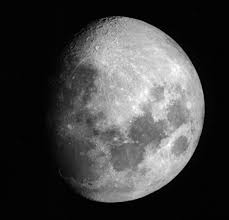
Name the moon phase
waning crescent
waxing crescent
waning gibbous
waxing gibbous

