
 Worksheets
Week 2 - Living Systems
Total questions: 18
Worksheet time: 2hrs 30mins
What is the main function of the nucleus in a eukaryotic animal cell?
Energy production
Protein synthesis
Genetic information storage
Digestion of cellular waste
Which organelle is responsible for producing energy for the cell in the form of ATP?
Golgi apparatus
Mitochondria
Lysosome
Endoplasmic reticulum
Which one of the statements about prokaryotic and eukaryotic cells is incorrect?
Eukaryotic animal cells have a cell wall, while prokaryotic cells do not.
Prokaryotic cells have membrane-bound organelles, while eukaryotic cells do not.
Eukaryotic cells have a nucleus, while prokaryotic cells do not.
Prokaryotic cells are generally larger than eukaryotic cells.
Which organelle is the site of protein synthesis
Golgi Apparatus
Smooth ER
Ribosome
Lysosome
What role do lysosomes play in an animal cell?
Synthesizing proteins
Breaking down cellular waste and debris
Producing lipids
Storing genetic material
What is the primary function of the Golgi apparatus in an animal cell?
ATP production
Protein packaging and distribution
DNA replication
Cell division
Which organelle is primarily involved in the modification, sorting, and shipping of proteins to various destinations?
Lysosome
Nucleus
Golgi apparatus
Peroxisome
The heart, arteries, and veins are all organs that work together to pump blood throughout the body. This is an example of ____.
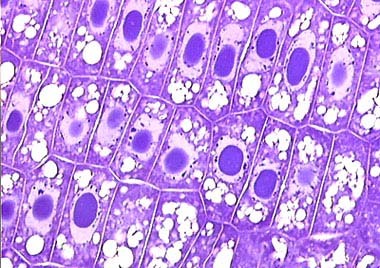


Which of the following correctly compares prokaryotes and eukaryotes? Select all that apply.
Prokaryotes: smaller in size.
Eukaryotes: less complex.
Prokaryotes: nucleus absent.
Prokaryotes and eukaryotes: have DNA.
Prokaryotes and eukaryotes: membrane-bound organelles.
Where is the DNA of a eukaryotic cell located?
ribosome
Golgi vessicle
nucleus
cytoplasm

