
 Worksheets
AP World History Final
Total questions: 173
Worksheet time: 3hrs 51mins
The Increased food production accompanying the introduction of Champa rice into China from Vietnam during the 11th century best illustrates which of the following?
The stimulation of agriculture by technological innovation
The reliance of China on food imports
The importance of Vietnam to the world economy
The influence of China on neighboring societies
Which of the following was a common feature of most Asian and European philosophies between 1000 to 1450?
Emphasis on experimental science
Reliance on ideas of individual freedom
A close association with religion
wide availability through printed books
Which of the following was the most important factor in enabling the Spanish to defeat the Aztec Empire?
The Spanish were able to use their understanding of Aztec culture to create effective propaganda that weakened Aztec resistance.
The Spanish were able to devise effective countermeasures to the horse cavalry that formed the bulk of the Aztec army.
The Spanish were able to form military alliances with other indigenous peoples who were enemies of the Aztecs.
The Spanish were able to exploit discontent within the Aztec state to trigger revolt of the lower classes against the Aztec ruling class.
Which of the following is true of commerce in the Indian Ocean during the time period 1000-1450?
Chinese merchants dominated the trade routes of the Indian Ocean.
Following the rise of the Mongols during the thirteenth century, the volume of Indian Ocean commerce fell sharply.
, Not Selected
There was very little commercial activity in the Indian Ocean.
Indian Ocean commerce flourished and was conducted by a mixture of Asian, Middle Eastern, and East African merchants.
The term “samurai” describes men in feudal Japan who were most like the men in feudal Europe known as
Catholic bishops
serfs
knights
lords of the manor
merchants
Which of the following was a significant effect of the Polynesian migrations in the Pacific in the period from 600 C.E. to 1450 C.E.?
The transfer of domesticated plant and animal species to new islands in the Pacific
The creation of an extensive trade network connecting Pacific islands to the Asian mainland
The establishment of an ethnically unified Polynesian state spanning several island groups
The development of distinctive Polynesian maritime technologies quickly adopted by Chinese and European explorers.
In the period 1000 to 1450, which of the following developments partially resulted from knowledge of Greek science and technology?
Mongol military tactics in Central Asia
Inca bridge design in the Andes
Islamic medical books in Baghdad
Christian theology in the Roman Empire
Japanese temple design in Kyoto
Which of the following was an important continuity in the social structure of states and empires in the period 600 B.C.E. to 1450 C.E.?
Wealthy merchants dominated political institutions.
Urban craft workers played a substantial role in government.
Landholding aristocracies tended to be the dominant class
Peasants were generally free of obligations to the state.
The economies of the southern colonies of colonial British America developed most like colonial economies in
the Dutch East Indies
the Caribbean and Brazil
Massachusetts and New York
Ireland and Scotland
Canada
From 1400 to 1750, Eurasian rulers sponsored the arts primarily for which of the following reasons?
To encourage tourism and pilgrimages
To display power and legitimize their rule
To increase employment opportunities for struggling artists
To spend excess money collected in taxes
Spain and Portugal signed the Treaty of Tordesillas (1494) primarily because they
needed to agree on the official languages for Central and South America in order to keep out English and French
wanted to protect the existing religions in South Asia and the Western Hemisphere
needed to resolve their territorial disputes after the discovery of ocean routes to the Americas and the Indian Ocean
did not wish to disrupt the plant and animal life of the Western Hemisphere with the introduction of foreign species
were concerned that the Western Hemisphere’s native peoples be treated humanely by the European conquerors
Which of the following was the most immediate effect of the Portuguese establishment of a school for navigation in the 1400s?
The establishment of direct overseas trade links between India and Europe
The development of overseas trade between West Africa and Europe
The decline of Venetian control of the trade in Asian luxury goods
The establishment of regular trade contacts between Europe and the Americas
Inca and Aztec societies were similar in that both
developed from Mayan civilization
independently developed iron technology
depended entirely on oral record keeping
acquired empires by means of military conquest
Which of the following is an accurate comparison of the political systems in western Europe and China during the time period 1000—1300?
Both societies gradually adopted a representative democratic system.
Developments in the legal systems of China emphasized individual political rights, while western Europe concentrated on maritime law.
Western Europe developed multiple monarchies, while China maintained a single empire.
Both regions experienced Mongol imperial rule.
Judaism, Christianity, and Islam share which of the following?
They share the Talmud and the Gospels as sacred texts.
They are polytheistic religions.
They recognize the existence of Adam and of Moses.
They recognize the divine nature of certain prophets.
Between 200 B.C.E. and 1450 C.E., the Silk Roads linked which of the following?
East Asia and the Mediterranean Sea
The Pacific Ocean and the Caribbean Sea
The Indian Ocean and the Atlantic Ocean
North Africa and western Europe
Which of the following best describes patriarchal gender systems?
Women are not allowed to work.
Women are confined to the home.
Women are inferiors and must be protected by men.
Women can be bought and sold.
Which of the following describes an accurate similarity between the Qing and Russian empires in the eighteenth and nineteenth centuries?
Both relied heavily on maritime trade as a source of material goods.
Both had vast territories with peoples of various ethnicity and languages.
Both successfully resisted pressure from industrialized powers.
Both were heavily influenced by the intellectual work of Jesuit missionaries.
Before 1700, Spain governed its American colonies through a system of
elected presidents
written constitutions
chartered companies
appointed administrators
independent merchants
During the period 1600—1800, the leaders of China, Korea, and Japan all had policies that
regulated interactions with foreigners
opened their countries to European merchants
led to wars involving all of East Asia
encouraged emigration and colonization
promoted trade and expansion

AP World History is broken into how many time periods?
3 time periods
4 time periods
5 time periods
6 time periods
What type of free response questions does AP World History have?
DBQ & LEQ
SAQ & DBQ
LEQ & SAQ
SAQ, DBQ, & LEQ
What religions did we study?
Sikhism
Judaism
Christianity
Orthodoxy
True or False: AP World History covers 10,000 years of history.
True
False
True or False: Prince Henry the Navigator was a Navigator on a ship?
True
False
The Age of Exploration, Renaissance, The Reformation, The Scietific Revolution, AND The Age of Absolutism MOSTLY cover what years?
600 C.E. to 1450 C.E.
1450 C.E. to 1750 C.E.
1750 C.E. to 1914 C.E.
1914 C.E. to present
Where is Mr. Smith going to be moving to after the end of the school year?
Australia
Greenville
Commerce
Stephenville
True or false: Ghengis Khan Conquered so many people and burned down so many towns he is ALLEGEDLY partly responsible for the drop in temperature during his reign?
True
False
True or False: The Neolithic Revolution brought about the domestication of plants & animals.
True
False
Don't pick the wrong answer!
Civilizations almost always started around sources of water in early history.
Yes
No
I don't know
Don't pick I don't know
What would be most responsible for the spike in population in China in the postclassical era?
the perfecting the manufacturing of Porcelain
the prolific trade on the Silk Road
the introduction of Champa rice to the Chinese diet
the high demand for Chinese silk
Which of the following is an indicator of increasing patriarchy in China?
Civil Service Exam
Veiling of Women
Footbinding
Issuing of Dowry's
Who was Ibn Battuta?
Religious Leader
Merchant
Christian Travler
Islamic traveler
China was the starting point for which of the following:
Silk Road Trade
All world religions
Major political thought in the West
Military Expansion
What do Vietnam, Japan, and Korea have in common?
They all have languages that stem from the same linguistic family.
China left a lasting cultural and religious imprint on them.
All were once colonies of the Mongols.
All were conquered by the Sung dynasty.
After the expansion of Islam into Africa, an organized Christian presence remained in
Mauritania and Tunisia
Morocco
Egypt and Ethiopia
Why was construction of the Grand Canal necessary?
To move goods easier between northern and southern China
What is the Chinese term for paper money?
Coins
Flying cash
Bills of exchange
Bill of sale
Malian Emperor Mansa Musa’s pilgrimage to Mecca in 1324 can best be understood in the context of which of the following?
The expansion of Islam throughout Afro-Eurasia
The development of new transportation technologies
The diffusion of African culture to the Middle East
The territorial expansion of West African empires
Ibn Battuta traveled widely across the Middle East, South Asia, Southeast Asia, and Africa in the fourteenth century. His travels serve as evidence for the
unifying influence of Islam
excellent condition of roads in Africa and Asia
political unity of Africa and Asia
widespread use of paper money

The map shows which of the following empires at its greatest extent?
The empire of Alexander the Great
The Mongol Empire
The Russian Empire
The Byzantine Empire

Based on the maps and your knowledge of world history, which of the following best describes the effect of the spread of Islam on Indian Ocean trade?
It led to the expansion and intensification of commerce along already existing trade routes.
It led to the disappearance of previously established trade networks.
It led to an expansion of land-based caravan trade but also to a decline of maritime trade.
It led to the first creation of trade links between previously isolated world regions.
During the thirteenth and fourteenth centuries, territories under Mongol control benefited from which of the following?
Widespread adoption of Confucian family hierarchies
Trade that facilitated the spread of Christianity throughout the Indian Ocean region
Trade that tied several distinct regional networks together
Widespread adoption of Buddhist religious practices
The development of Indian Ocean trade routes in the period 600 B.C.E. to 600 C.E. and the development of transatlantic trade routes in the period 1450 C.E. to 1600 C.E. were similar in that both depended on
the impetus of missionizing religions
understanding of currents and wind patterns
the political consolidation of newly conquered regions into empires
innovations in ship design that originated in Europe

The establishment of the Mongol Empire directly facilitated which of the following?
Increased cultural and technological exchange between the Islamic world and China
The development of Mongolian as the primary written language of administration across most of Eurasia
The spread of Persian culture into Central Asia
Improved ship designs and navigation techniques for oceanic commerce

The map below shows what significant economic developments?
Trade connections that linked the Hellenistic and Mauryan empires to African cities from 300 through 150 B.C.E.
Trading networks that promoted the growth of new cities from 600 C.E. through 1450 C.E
Chinese dominance of Indian Ocean trading networks because of the voyages of Zheng He in the 1400s C.E.
Changes in Indian Ocean trading networks that resulted from technological innovations from 1450 C.E. through 1750 C.E.

The map indicates that
Mali was a major source and hub of the gold trade
slavery existed in the western Sudan
Europeans had begun to make inroads in West Africa
Mali remained isolated from Europe and the Middle East

The illustration would be most useful to a historian studying which of the following?
Transportation and maritime technologies
Large-scale trading organizations
Geographic patterns of currents and winds in the Indian Ocean
The expansion of the Umayyad Caliphate

Which of the following best explains the process illustrated in the image?
A. States increasingly relied on slave soldiers to establish large empires.
B. The invention of the stirrup allowed expanding states to use cavalry more effectively.
C. The development of new types of armor reduced casualties and allowed states to expand faster than before.
D. States used gunpowder weapons to establish large empires.

The methods of warfare shown in the image were instrumental in explaining the territorial expansion of all of the following land-based empires EXCEPT
A. the Safavid Empire
B. the Qing (Manchu) Empire
C. the Aztec (Mexica) Empire
D. the Ottoman Empire

The Ottoman Empire's recruitment of soldiers and bureaucrats through the system depicted in the image is most similar to which broader method that rulers used to strengthen their empires in the period 1450-1750 ?
A. The collection of tribute
B. Establishment of religious uniformity
C. Abolition of feudal privileges
D. The granting of autonomy to minority groups

The recruitment depicted in the image is best understood in the context of which of the following developments in the period 1450-1750 ?
A. Attempts by imperial states to expand their economic power
B. Attempts by imperial states to prevent religious conflict
C. Attempts by imperial states to centralize their authority
D. Attempts by imperial states to control population growth

The inclusion of the image in the manuscript best illustrates which of the following features of the period 1450-1750?
A. Rulers using art as a way to communicate with their illiterate subjects
B. Rulers using art to expand their territories
C. Rulers using art as a way to increase literacy
D. Rulers using art to legitimize their rule
How did the Tokugawa shoguns treat Europeans in Japan in the seventeenth century?
They welcomed Europeans for their technological expertise and scientific knowledge.
They protected Christian missionaries and sponsored Christian churches.
They expelled all Europeans except the Dutch, who were allowed to trade at a single site.
They established regular diplomatic relations with European states.
The fact that Europeans often had to pay for Asian spices and textiles in cash led to which of the following?
An intense desire for precious metals
A European trade surplus
A lack of desire to trade with Asia
The closing of the Indian Ocean trade network
What was the significance of the Portuguese Caravel in the context of maritime exploration?
It was a small, fast ship that could navigate inland and shallow coastal areas
It was a warship equipped with heavy artillery
It was a large merchant ship used for long-distance trade
It was a fishing vessel used for coastal trade
Which European state was the first to establish a trading post empire around the coast of Africa and throughout the Indian Ocean?
England
Spain
Portugal
France
What was the primary goal of mercantilist economics in the context of European expansion?
To promote free trade and open markets
To establish a global currency system
To encourage economic cooperation with indigenous populations
To maintain a favorable balance of trade through exports and limited imports
Which European state established a presence in Canada and engaged in the fur trade with indigenous peoples?
Spain
France
England
Portugal
What was the main effect of the Colombian Exchange on the indigenous populations of the Americas?
Increased economic prosperity through trade
Devastation due to the spread of deadly diseases
Introduction of new technologies and innovations
Cultural exchange and mutual understanding
Which disease introduced by Europeans had a devastating impact on the indigenous populations of the Americas?
Smallpox
Cholera
Influenza
Malaria
What type of foods and plants were introduced by European settlers to the Americas?
Wheat, Olives, Grapes
Rice, Bananas, Sugar
Tea, Coffee, Spices
Potatoes, Tomatoes, Corn
What was the impact of the introduction of horses by Europeans on the indigenous populations of the Americas?
It led to the development of new forms of warfare
It caused a decline in the population due to diseases
It led to an increase in agricultural productivity
It had no significant impact
Which European state established the first permanent settlement in Australia?
England
Spain
Portugal
Netherlands

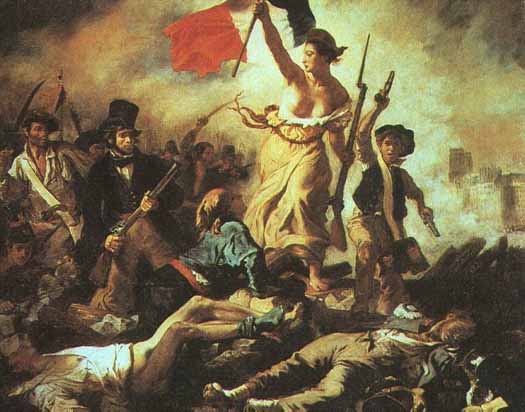
The Haitian Revolution was influenced mainly by which revolution?
French
American
Spanish American
Russian
Which of the following wars helped to inspire the French Revolution?
The American Civil War
The French and Indian War
American Revolution
The Seven Years War

"The aim of every political association is the preservation of the natural and imprescriptible rights of man. These rights are liberty, property, security and resistance to oppression."
-Declaration of the rights of Man and of the Citizen, 1789
Which philosopher best upholds the ideas expressed in the document above?
Montesquieu
Wollstonecraft
Locke
Hobbes
John Locke believed that all people had:
Natural Rights
Individual rights
Some rights

Who led the successful slave revolt on the island of Haiti in beginning in 1791 ending in 1804?
Toussaint L’Overture
Jose de San Martin
Father Miguel Hidalgo
Simon Bolivar

What was Japan's response to foreign interference in the nineteenth century?
Adapt to Western politics and culture (Meiji Restoration)
Isolate themselves further by resisting and fighting
Became allies with the Chinese to become the dominant power in the region
Adapt to the ideas of the islanders and tribal people to resist

Why, in the time period c. 1750-1900, did European states fight to acquire overseas colonies?
To acquire raw materials to fuel their industrialization
To spread Enlightenment ideas
To abolish slavery worldwide
To stop the spread of Islam throughout the world

Why did European powers divide Africa by diplomatic agreements between each other?
Fear of going to war because of fierce competition
Rapid population increase in European colonies in Asia
Atlantic revolutions lead Europeans states to seek new troops
Creation of transnational business fostered exchange of raw materials
At what conference did the Europeans divide up Africa for their colonization?
Egypt Conference
London Conference
Belgium Conference
Berlin Conference
Which statement about the technology developed during World War I is correct?
The new technology led to fewer refugees being displaced from their homes during the conflict.
The new technology created deadlier weapons which led to increased military casualties in battles fought during the conflict.
The new technology led to smaller nations joining large empires following the conflict.
The new technology led to a reduced focus on transportation improvements following the conflict.
In the 1930, what idea did the United States practice not get involved in WWII?
Isolationism
Reinforcement
Capitalism

Which was a state regulation of immigration during the nineteenth century?
Chinese Exclusion Acts
Congo Free State
White New Zealand Policy
Jim Crow Laws

What caused the Taiping and Boxer rebellions?
Foreign economic involvement in China
British selling opium to China
Indians refusing to touch the gunpowder pouches
Americans moving into West North America

The economic system that prevailed from c. 1750-1900 was
Capitalism
Communism
Socialism
Mercantilism
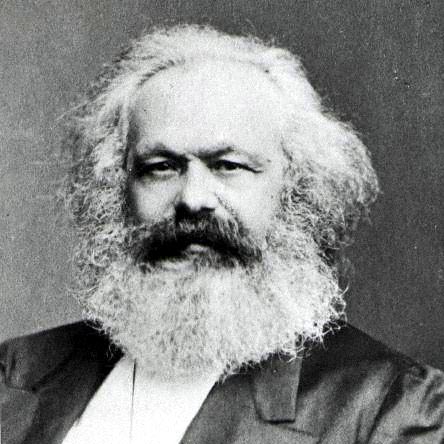
Which of the following statements is an accurate comparison of the Ottoman, Russian, and Qing Empires in the late nineteenth and early twentieth centuries?
Prior to their collapse, each of the empires attempted a series of Western-style reforms, but the ruling elites eventually failed to support the needed changes.
These land based empires collapsed due to a variety of internal and external factors, including WWI, failure to modernize and revolution
The Ottoman and Russian Empires survived because of the adoption of some Western-style reforms while the Qing failed because it refused to alter centuries of Chinese tradition.
The Ottoman Empire and Qing dynasty both lost territory to aggressive European powers while Russia, acting as an aggressor, expanded its empire during this time.

1. Which of the following best describes the 1936 lithograph (entitled The Hero) by German artist George Grosz?
A propaganda poster prepared by the Nazi Party
A protest poster against the atrocities of the atomic bomb
A representation of a Holocaust victim
A post-First World War print expressing antiwar sentiment
What was a key cause for the rise of fascism in nations such as Italy and Germany?
collectivization
economic hardship
genocide
secret treaties
Which type of government is characterized by extreme nationalism, censorship, militarism, and dictatorship?
fascist
direct democracy
constitutional confederation
parliamentary democracy
Neville Chamberlain visited Munich in 1938 to negotiate the fate of Sudetenland. Which policy is most closely associated with Chamberlain’s action?
appeasement
nonalignment
reparations
colonialism

What would be the best title for this chart?
Events During World War I
Totalitarian Regimes Between the Wars
Economic Problems Between the Wars
Causes of World War II
When a nation dedicates all of its resources to the war effort
total war
totalitarianism
migration
propaganda
The German invasion of which nation caused Britain and France to declare war on Germany?
. Austria
. Belgium
. Czechoslovakia
. Poland
What foreign policy guided American presidents during the Cold War to stop the spread of communism?
Open Door Policy
Dollar Diplomacy
Big Stick Policy
Containment

What American policy provided Western European countries financial assistance so they could recover from WWII?
Marshall Plan
Domino Theory
Truman Doctrine
Big Stick Policy
During what event did the U.S. bypass a Soviet blockade without provoking a military conflict?
Berlin Airlift
Cuban Missile Crisis
Korean War
Vietnam War
During the Cuban Missile Crisis, what did JFK do when he heard that the Soviet Union was construction a missile site in Cuba.
JFK gave into the Soviet demands.
JFK bombed the Soviet Union with an atomic bomb.
JFK ordered a naval blockade of Cuba.
JFK invaded Cuba from Guantanamo Bay.
Which of the following was a primary cause of the Cold War between the United States and the Soviet Union?
direct, armed conflict between the two nations
the founding of the United Nations
a deep reduction in military expenditures
a competition for political influence over other countries
Which of the following is most characteristic of the Cold War?
The growth of nuclear arsenals in the United States and the Soviet Union
The expansion of national borders by imperialistic European countries
The implementation of isolationist foreign policies in Great Britain and China
The rapid industrialization of many Southeast Asian countries
What was one major goal of the Soviet Union during the early years of the Cold War?
to expand individual liberties in the Baltic republics
to attract foreign economic investments
to create a defensive buffer zone in Eastern Europe
to establish a competitive market economy
Which of these was a cause of the Korean War?
NATO air and naval forces blocked ships sailing to North Korea.
United Nations inattention allowed guerrillas to infiltrate South Korea.
North Korean forces, with Soviet approval, invaded South Korea.
Widespread anti-colonial riots forced the Korean government to begin the war.
Who were the Big Three?
Great Britain, France, Russia
England, USSR, France
USA, Great Britain, USSR
England, USA, France
Why were Japanese Americans ordered into the internment camps?
For reasons of national security
For reasons of giving Japanese Americans jobs
To hide the Japanese Americans from danger
To recruit and train Japanese Americans to help fight the war for the U.S.
This term means "lightning war", and was the name of the fighting style that the Nazis used to conquer Europe.
Berlin
Kristallnacht
blitzkrieg
Nuremberg

Which Yalta agreement didn't end up happening?
Free elections in Eastern European countries.
The Soviet Union entering the war with Japan within 90 days of defeating Germany.
The establishment of the United Nations.
The Soviet Union was allowed to keep part of Poland.
Which conference split Germany into four Allied occupation zones after World War II?
Yalta and Potsdam conferences
Geneva Conference
Vienna Summit
Tehran Conference

What was the political and military alliance of Western, non communist nations?
North Atlantic Treaty Organization
Warsaw Pact
United Nations
League of Nations

The launch of Sputnik I intensified Cold War tensions and caused the —
United States to increase spending on technology, education and weapons to compete with the Soviet Union
Soviet Union to move missiles and warships to Cuba in order to threaten the United States
United States to send troops and aid to East Berlin to free it from Soviet control
Soviet Union to threaten Europe with nuclear attack if Soviet airspace were violated
Small states that are economically or politically dependent on a larger, more powerful state are called:
Protectorates
Dominions
Colonies
Satellite Countries
The original goal of Pan-Africanism was to
demand democratic reforms
encourage ethnic rivalry
promote a united Africa
divide Africa into separate countries
A similarity of the goals of Nelson Mandela and Mohandas Gandhi is that both leaders wanted to
secure political power for the majority of the people
encourage a greater degree of industrialization
improve the economy by expanding governmental control
gain independence from the Soviet Union
One way in which apartheid in South Africa and the caste system in India are similar is that both systems
allowed for educational opportunities
determined roles based on gender
revolved around central religious beliefs
enforced different sets of rules for distinct groups of people
Who was Ho Chi Minh?
Leader of African indpendence movement
Led guerilla movement for Vietnamese independence
Fought for recognition of aboriginal rights
Fought for control of land and resources in South America
What did Gamal Abdel Nasser want for Egypt?
Control over Suez Canal
Join Communist bloc of countries
Become a Capitalist country
Develop a nuclear bomb for Egypt
What was a non aligned country?
Joined Communist countries
Joined Capitalist countries
Joined the United Nations
Did not join Capitalist or Communist countries
How did Kwame Nkrumah try to free the Gold Coast from British control?
Violent Resistance
Non Violent Movement
Appeal to the United Nations
Creation of common culture and history
One way in which Joseph Stalin’s five-year plans and Mao Zedong’s Great Leap Forward are similar is that both plans were
efforts to reduce human rights violations
policies to improve relations with the West
methods used to control population growth
attempts to increase agricultural and industrial production
What was an immediate result of the Great Leap Forward (1958)?
independence of Kenya from Great Britain
the breakup of the Soviet Union
the relocation of Bosnian refugees
increased famine in China
What was the main goal of Zionism?
forming a representative government in China
establishing a Jewish homeland in the region of Palestine
improving the standard of living in developing countries
creating an international peacekeeping organization to solve global conflicts
Idea that no matter who started a war, both sides would die from the nuclear fall out
Containment
Sputnik
Space Race
Mutually Assured Destruction
The USSR justified their missile bases in Cuba because the USA had missile bases in...
USSR
Mexico
Turkey
China

In 1962, Algeria gained independence from
Spain.
France.
the Arabs.
the Ottoman Turks.
Nelson Mandela fought against an oppressive government system called...
segregation
Jim Crow
Apartheid
In his book Indian Home Rule, Gandhi asked the question, “Why do you want to drive away the English?” He replied with the following statement:
. . . “Because India has become impoverished by their Government. They take away our money from year to year. The most important posts are reserved for themselves. We are kept in a state of slavery. They behave insolently [insultingly] towards us and disregard our feelings. . . .”
Which event was an effect of the ideas expressed in this excerpt and the actions taken by Gandhi?
Independence for India and Pakistan
Amritsar Massacre
Sepoy Rebellion
Establishment of the British Raj
". . .The Nazi Holocaust, which engulfed millions of Jews in Europe, proved anew the urgency of the reestablishment of the Jewish state, which would solve the problem of Jewish homelessness by opening the gates to all Jews and lifting the Jewish people to equality in the family of nations. . .."
David Ben-Gurion, May 1948
This statement is referring to the establishment of which nation?
Jordan
Poland
Israel
Ethiopia

What is one explanation for the great change in the world population between 1950 and 2000?
Family planning was successful.
There was an absence of war and conflict.
New medicines and technology were discovered and applied.
Famine and other natural disasters increased.

Based on this late 20th-century map, which conclusion is accurate?
The worldwide distribution of wealth is unequal.
Social mobility between social classes is increasing.
The communist movement is growing.
Economic self-sufficiency in less developed countries is increasing.
How did Catholic Church leaders demonstrate sensitivity to demands of the poor for social justice in twentieth-century Latin America?
demanding special charitable contributions from the Vatican to wipe out poverty
formation of a "liberation theology"
renunciation of Christianity in favor of orthodox Marxist socialism
implementing land reform policies through representation in national elections
Which of the following statements about the Iranian Revolution of 1979 is most accurate?
it marked the end of British colonization in Iran
it overthrew a monarchy and installed a liberal democracy
it was guided by a non-Western ideology
its leaders withdrew Iran from OPEC
The purpose of the General Agreement on Tariffs and Trade (GATT) was to
regulate currency rates.
attract emerging economies into trade alliances with the United States.
eliminate barriers to free trade.
set fair labor standards for the industrialized nations.
Global warming refers to
natural variations in the global climate over time.
the rise in global temperatures caused by atmospheric pollution such as the emissions of cars and factories.
the risk of a nuclear war when the planet is politically "hot."
the increase in temperature caused by volcanic activity on the oceans' floors.
What is the total duration of the AP World History Modern Exam?
2 hours and 30 minutes
3 hours and 15 minutes
4 hours
5 hours
How many multiple-choice questions are included in Section 1 of the AP World History Modern Exam?
30 questions
40 questions
50 questions
55 questions
Which part of the AP World History Modern Exam includes 3 short-answer questions?
Part A of Section 1
Part B of Section 1
Section II
None of the above
What is the exam weighting for the multiple-choice questions in Section 1?
10%
20%
30%
40%
How long is the time limit for answering the multiple-choice questions in Section 1?
45 minutes
55 minutes
60 minutes
75 minutes
How much of the exam weighting does the Document-Based Question (DBQ) hold?
10%
15%
20%
25%
How long is the reading period for the Document-Based Question (DBQ)?
5 minutes
10 minute
15 minutes
20 minutes
How many units of study are there in this AP World History course?
6
7
8
9
When is the AP World History Exam scheduled for the academic year 2023-2024?
May 1, 2024
May 15, 2024
June 1, 2024
June 15, 2024
What type of free response questions does WHAP have?
DBQ 7 LEQ
SAQ & DBQ
LEQ & SAQ
SAQ, DBQ, & LEQ
How many LEQ questions are you required to answer on the WHAP exam?
4
3
5
1
Section I part B requires how many SAQ's answered on the WHAP exam?
4
3
2
1
Section II Free Response Question #1 is the DBQ
True
False

The author uses all of the following as evidence to support his argument about the impact of smallpox on Native American populations EXCEPT
A
many Native Americans who contracted smallpox died from it
B
the English settlers tried to help the Native Americans who were afflicted with smallpox
C
the Native Americans feared smallpox more than any other disease
D
smallpox was widespread among Native Americans

The author invokes which of the following to support his claim that smallpox’s impact on European settlers was different from its impact on Native Americans?
A
Pseudoscientific theories of European racial superiority
B
Evidence from population genetics
C
Ideas about the role of divine providence in human affairs
D
Protestant ideas about hard work and economic success as markers of personal virtue

The passage implies that the author was aware of smallpox being an infectious disease. Which of the following can best be cited as evidence of that claim?
A
The author’s statement that Native Americans lived in a “trading house” near the English settlement
B
The author’s statement that smallpox was so debilitating that those afflicted with it could not “make a fire, or fetch water to drink”
C
The author’s statement that the English settlers “took pity” at the sight of the Native Americans’ suffering
D
The author’s statement that no English settlers fell ill, even though “many performed these favors for the Indians for weeks”

The contents of the letter are best understood in the context of which of the following aspects of the historical situation in sub-Saharan Africa in the early 1600s?
A
Political, religious, and economic rivalries shaped European colonial policies in Africa.
B
State centralization in Europe led to a change from joint-stock company control to direct imperial control in many colonial territories
C
The arrival of Europeans led to the conquest and destruction of many native African states.
D
Religious conflicts stemming from the spread of Islam from North Africa made sub-Saharan African states vulnerable to European conquest.

The point of view expressed by the Dutch West India Company’s directors in the letter can best be described as
A
evenhanded in describing the benefits and detriments of various proposed options to the States General
B
shaped by views of European cultural and religious superiority over African peoples, which the States General representatives would have been likely to share
C
dismissive in its evaluation of the military and strategic importance of the kingdom of Kongo to the Netherlands
D
seeking to steer the States General representatives into taking action that would benefit the company financially

The report’s position on the proposed transfer of Luanda to the Dutch is best understood in light of the authors’ goal to
A
secure profits from the rapidly expanding trans-Atlantic slave trade
B
highlight the gender and family imbalances created by the slave trade
C
recommend that the company expand its operations to the Indian Ocean and the spice islands of Southeast Asia
D
offer a comparison between the profitability of East African versus West African slave trade routes

Which of the following best describes the author’s argument in the first paragraph?
A
The demographic makeup of Barbadian society and the structure of its economy make existing punishments for enslaved people justified.
B
Barbadian enslaved people are punished more leniently than those working on the larger plantations of French Caribbean islands.
C
Plantation owners who punish enslaved people too harshly are not fulfilling their duties as Christians to treat the less fortunate kindly.
D
The punishments of enslaved people in Barbados are the result of a long experience of deadly uprisings and anti-planter violence on the island.

Which of the following best describes the author’s claim in the second paragraph?
A
The extensive mining of precious metals on Caribbean islands has destroyed the islands’ natural environment.
B
Despite the small size of Barbadian plantations, the landowners on Barbados are very wealthy.
C
Enslaved people’s political grievances are threatening the political order in American colonial societies.
D
Barbadian plantation owners are the wealthiest social group in the Caribbean.

Which of the following is an implicit argument made by the author in the passage?
A
The current political and economic makeup of European colonies in the Caribbean is not sustainable over the long term.
B
Christianity will provide a solution to the social ills of colonial societies in the Caribbean.
C
Coerced labor systems have allowed a minority of the population of Caribbean colonial societies to reap enormous economic benefits.
D
It is incumbent upon France to try to wrest control of Barbados from Great Britain.

As outlined in the passage, the provisions of the agreement can best be used to illustrate which of the following aspects of state building in Eurasia in the period circa 1450–1750 ?
A
Mercantilist philosophy continued to inform the economic and social policies of many states.
B
Many states were able to consolidate their political systems and eliminate challenges to monarchical power.
C
Religious differences stopped being a significant factor in the weakening and fragmentation of imperial states.
D
Local elites successfully resisted attempts at state centralization and asserted their autonomy from central rule.

The privileges discussed in the passage best demonstrate that in some instances in the period 1450–1750
A
internal challenges to state power could lead to the establishment of new state-like structures within existing states
B
states implemented policies seeking to restrict the role of certain minority groups in economic and social life
C
monarchs had to resort to deploying standing armies to crush regional revolts by hereditary local elites
D
states successfully established professional bureaucracies to reduce reliance on mercenaries and tax farming

The fact that the Russian tsar insisted in the last paragraph that some ambassadors be treated differently from others best illustrates which of the following about international politics in the period circa 1650–1750?
A
The Christian countries of Europe had banded together to defeat the threat from the Muslim Ottoman Empire.
B
Russia had encountered significant resistance to its plans for further territorial expansion from some of the established states in eastern and southern Europe.
C
Poland and the Ottoman Empire both felt threatened by the rising military might of Russia.
D
The Zaporozhian Cossacks, Russia, and most other European countries were bound by international treaties prohibiting the mistreatment of ambassadors.

All of the following statements are factually accurate. Which would best support the author’s argument in the first paragraph of the passage?
A
The Mamluk ruling elites of Egypt were made up of slave soldiers of various ethnic origins, including Turco-Mongolic peoples from the Black Sea steppes and peoples from the Caucasus Mountains.
B
The period of Mamluk rule in Egypt saw a high number of conversions to Islam and a considerable reduction in the percentage of Coptic Christians in the overall population of Egypt.
C
The Mamluks were one of the very few Muslim dynasties to have successfully defeated invading Mongol armies in battle.
D
The Jewish community in Mamluk Cairo included many prominent figures, including royal physicians, scholars, and administrators.

Which of the following would a historian most likely cite as evidence in support of the author’s argument in the second paragraph of the passage?
A
The Ottoman millet system, an arrangement designed to utilize the economic contributions of non-Muslim groups within the empire while granting them limited autonomy to organize their communal affairs under their own religious leaders
B
The Ottoman practice of devshirme, a military levy of Christian boys who would be converted to Islam and trained as Ottoman Janissary soldiers or bureaucrats in state service
C
The Ottoman practice of farming out the collection of taxes to local private individuals (some of them non-Muslim), because of the shortage of trained government financial officials
D
The Ottoman sultans’ continued powers of granting final approval for any high-ranking appointment of a non-Muslim religious leader, including the power to approve patriarchs and bishops of the various Christian communities and chief rabbis of the Jewish community

All of the following statements are factually accurate. Which might best be used to undermine or modify the author’s argument in the second paragraph?
A
Christians and Jews in the Ottoman Empire faced considerable restrictions on their religious practices, legal rights, and social freedoms.
B
Christian and Jewish communities in many other Muslim states in the period circa 1450–1750 enjoyed some of the same rights as Ottoman Christians and Jews did.
C
The Ottoman Empire was a preferred destination for Jews fleeing religious persecution in Europe, as well as for Protestant Christian groups fleeing Catholic persecution in Central and Eastern Europe.
D
Many Ottoman Christians and Jews achieved great financial success through commercial activities, including long-distance trade.
Which of the following developments can be most directly attributed to Portuguese and Spanish state sponsorship of maritime exploration in the late fifteenth century?
A
Improvements in European geographic knowledge of Africa and the Indian Ocean
B
Improvements in Europeans’ ability to prevent the spread of infectious diseases
C
Religious divisions in Europe related to the Protestant Reformation
D
The development of theories of natural rights and representative government
Which of the following processes most immediately led to the global expansion of European political power in the period circa 1500 ?
A
The Columbian Exchange
B
The Ottoman conquest of Constantinople
C
Advances in shipbuilding and navigational methods
D
Advances in medicine that improved Europeans’ ability to survive in tropical climates
The sixteenth- and seventeenth-century maritime exploration efforts by England, France, and the Netherlands were most directly connected to which of the following historical processes?
A
The Protestant Reformation and the Catholic Reformation
B
Economic competition against Spain and Portugal and a desire to find new sailing routes to Asia
C
The transfer of engineering and navigational knowledge from the classical and Islamic worlds to Europe
D
The need to ease population pressures in Europe by establishing settlement colonies

