
 Worksheets
Final SMS2 (Last)
Total questions: 75
Worksheet time: 3hrs 30mins
Cells of organisms must go through cell division for?
growth
repair of damaged cells
replacement of dying cells.
All of these
DNA is replicated during ______ of the cell cycle.
Gap 1
Synthesis (S phase)
Gap 2
Gap 0
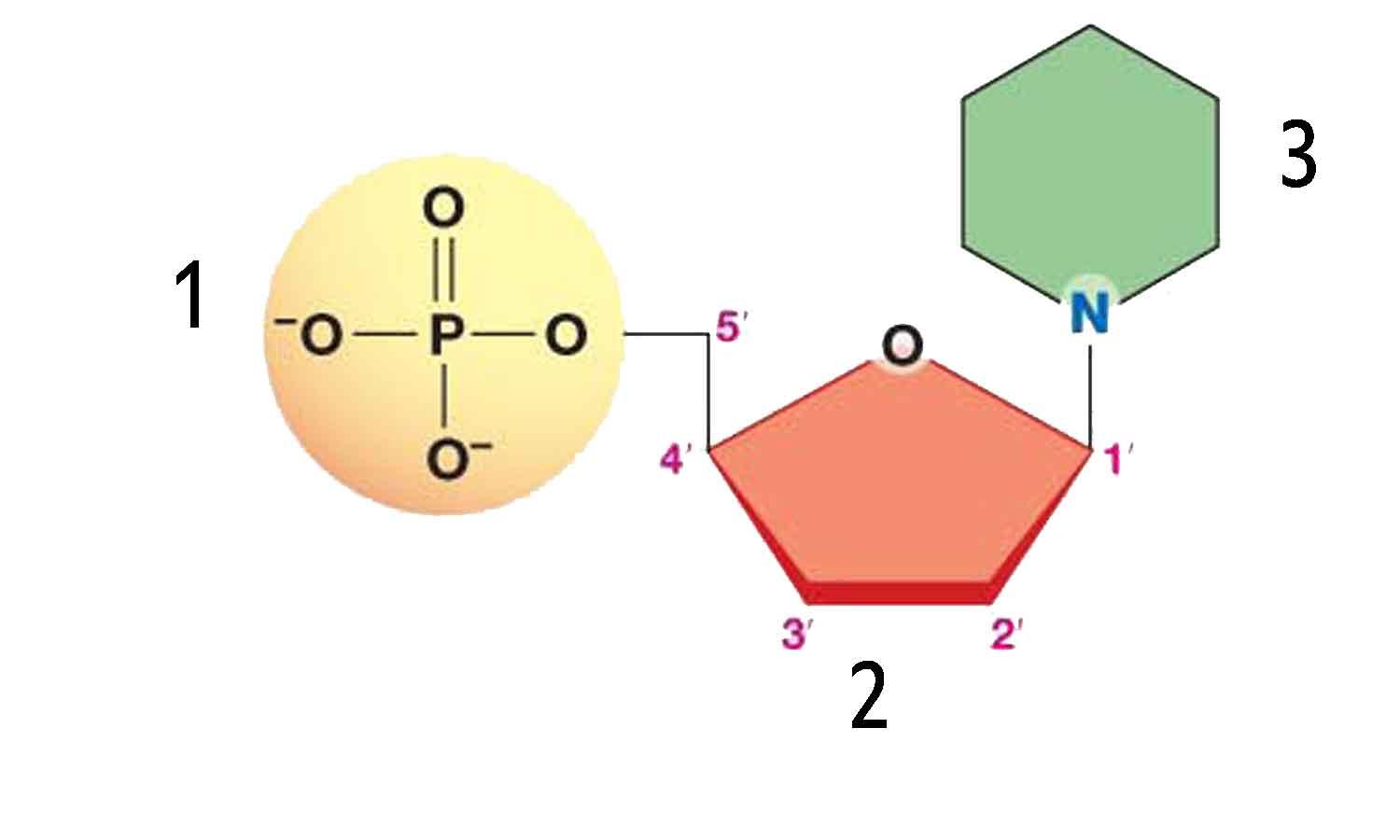
3) Nitrogen Base
2) Phosphate
3) Nitrogen Base
2) Ribose Sugar
3) Nitrogen Base
2) Deoxyribose Sugar
3) Nitrogen Base
Normal cells grow and divide continuously.
During most of interphase, DNA is found in a relaxed form called
chromosome
centromere
centriole
chromatin
During most of interphase, DNA is found in a relaxed form called
chromosome
centromere
centriole
chromatin
During mitosis, DNA is found in the condensed form called a
chromosome
centromere
centriole
chromatin
In prophase of mitosis, chromosomes
form and the nuclear envelope disappears.
are pulled toward opposite ends of the cell.
chromosomes line up along the equator of the cell
chromosomes begin to decondense and the two new nuclei begin to form.
In metaphase of mitosis, chromosomes
form and the nuclear envelope disappears.
are pulled toward opposite ends of the cell.
chromosomes line up along the equator of the cell
chromosomes begin to decondense and the two new nuclei begin to form.
In anaphase of mitosis, chromosomes
form and the nuclear envelope disappears.
are pulled toward opposite ends of the cell.
chromosomes line up along the equator of the cell
chromosomes begin to decondense and the two new nuclei begin to form.
In telophase of mitosis, chromosomes
form and the nuclear envelope disappears.
are pulled toward opposite ends of the cell.
chromosomes line up along the equator of the cell
chromosomes begin to decondense and the two new nuclei begin to form.
After mitosis, the cytoplasm and organelles are divided between the two new forming cells in a process called
centriole
chromatin
cytokinesis
centromere
This process is the programmed death of a cell
stem cell
regulation
apoptosis
cytocide
When cells go through mitosis repeatedly without entering interphase, this results
arthritis
cancer
mutation
diabetes

What is the scientific term that refers to sex cells?
autosome
gamete
karyotype
chromosome

The exchange of genetic information that insures that every gamete is unique is referred to as
mitosis
meiosis
reduction division
crossing over

Name the stage: Chromosomes line up in the middle of the cell.
Prophase
Metaphase
Anaphase
Telophase

Name the stage: two nuclei are formed enclosed by nuclear membranes
prophase
metaphase
anaphase
telophase

Name the stage: chromosomes condense and become visible
prophase
metaphase
anaphase
telophase

Name the stage: Chromosomes pull away from each other and move to opposite sides of the cell
Prophase
Metaphase
Anaphase
Telophase
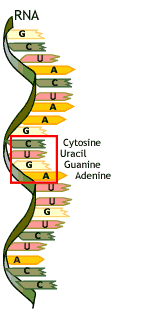
Which of the following are differences in the structure between RNA and DNA
DNA uses deoxyribose sugar, RNA uses sugar ribose
DNA pairs Adenine with Uracil, RNA pairs Adenine with Thymine
DNA is a double helix, RNA is a single helix
DNA pairs Adenine with Thymine, RNA pairs Adenine with Uracil
During transcription, this type of ribonucleic acid is responsible for copying the DNA and brining it out of the nucleus.
tRNA
mRNA
rRNA
dRNA
These building blocks consist of a sugar, phosphate, and nitrogen base.
Ribose
Nucleotide
Gene
Protein
A string of nucleotides that contain the information to make a specific protein
Ribose
Amino Acids
tRNA
Gene
During translation, this type of ribonucleic acid is responsible for delivering amino acids to help make a protein.
mRNA
rRNA
tRNA
dRNA
There are a total of ____ different amino acids
20
1
4
unlimited
mRNA occurs during this process
Translation
Transcription
Replication
Delivery
If the dominant trait is having freckles (F) and the recessive trait is no freckles (f), which allele combination(s) below would represent a person who has freckles? (select all that apply)
FF
Ff
ff
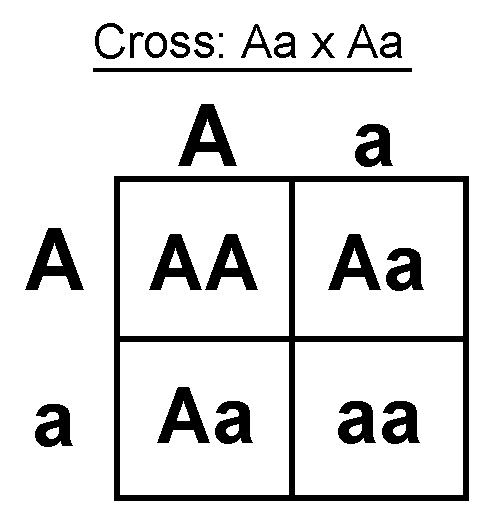
The combination of genes a person has, represented by letters, is their...
Genotype
Phenotype
Chromosome
Punnett Square

What belongs in the last box?
RR
Rr
rr
ff

In the punnett square below, what belongs in the missing square

Look at the punnett square shown. What allele pair would replace the "?"
WW
Ww
ww

What belongs in Box 4?
Y
YY
Yy
yy

Look at the punnett square. What is the probability that the offspring would have homozygous alleles for the trait?
100%
75%
50%
25%
0%
What is the probability & phenotype of the offspring? (A-Brown hair; a-blond hair)
50% Brown Hair and 50% Blond Hair
25 % Brown Hair and 75% Blond Hair
75 % Brown Hair and 25% Blond Hair
0% Brown Hair and 100% Blond Hair
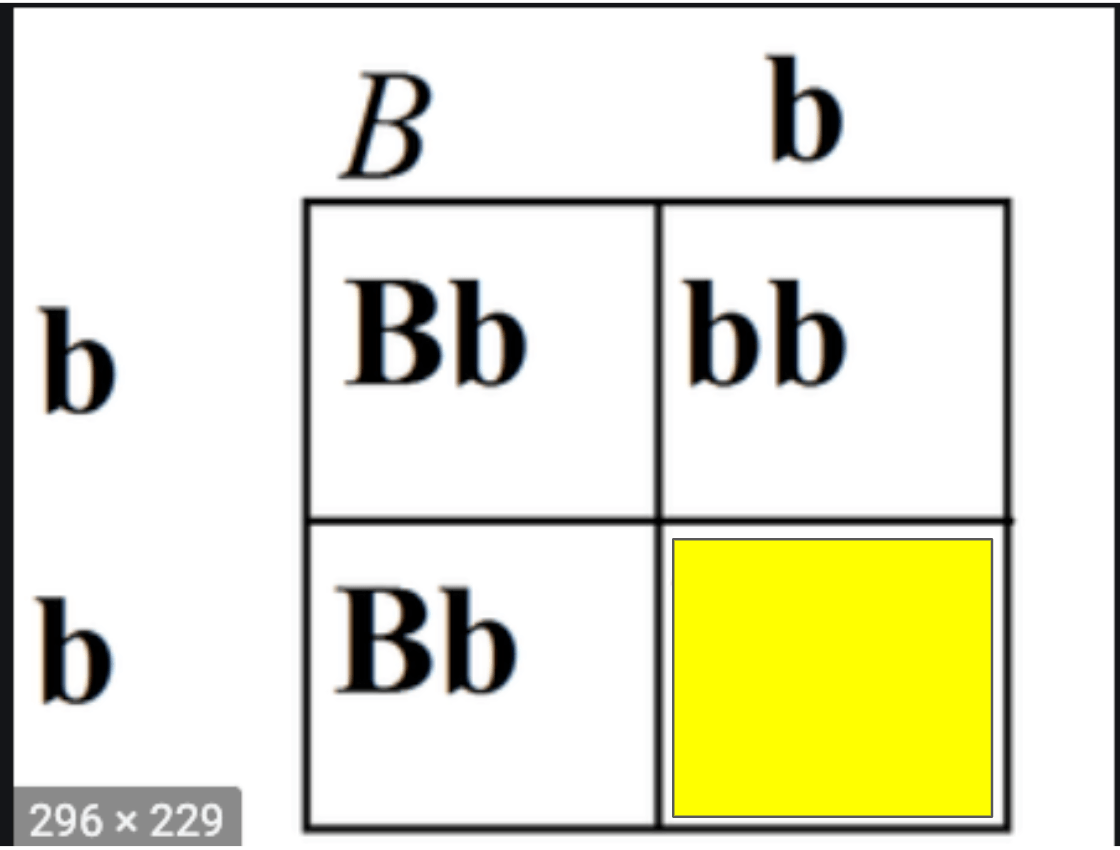
Fill in the Yellow Box
Bb
BB
bb
Which of the following allele pairs is heterozygous?
RR
ss
Mutations are always harmful to an organism's survival.
True
False
Over time natural selection can change how often a trait is seen within a population.
True
False
Some species produce an over abundance of eggs because not all of them will survive.
True
False
Before the industrial revolution the birds were eating more black moths. After the industrial revolution the birds started eating more white moths. Why
The birds thought the white moths tasted better.
There were not any black moths to eat
The white moths stood out on the dark trees so the birds could see them easier.
Animals compete for resources in the environment. This will affect an organism's survival.
True
False
Which of the following are factors that affect the survival of species?
Overproduction
Variation
Competition
All of the above
A phenotype that improves an organism’s chance of survival in their environment is considered a(n) ____________.
natural selection
adaption
speciation

Many different groups of organisms have wings, even though they do not share a recent common ancestor. This is because they evolved in environments with similar selective pressures. Wings are an example of a(n) ______________ structure.
vestigial
analogous
homologous
Match the following pictures with the words they represent

Analogous Structure

Homologous Structure

Artificial selection

Natural selection

Organism

Population

Community

ecosystem

biosphere
Homologous structures and vestigial structures show evidence of
divergent evolution
convergent evolution
both divergent and convergent evolution
analogous structures

In a population of ladybugs, black bugs are more successful in escaping predators. Overtime, this gene becomes more popular in the population and the ladybug population loses its red color. This is an example of?
Natural Selection
Mutation
Genetic Drift
Gene Flow
One species benefits, the other is unaffected
symbiosis
parasitism
mutualism
commensalism
Honey guide birds alert and direct badgers to bee hives. The badgers then expose the hives and feed on the honey first. Then, the honey guide birds eat as well.
symbiosis
parasitism
mutualism
commensalism
Tapeworms reside in human intestine and take nutrients from the human
symbiosis
parasitism
mutualism
commensalism

Vines grow on a tree. The vines get light but the tree is not affected. What kind of relationship is this?
Competition
Mutualism
Commensalism
Parasitism

Predator
Autotroph
Producer
Decomposer
The ecological role an organism performs in their specific environment is considered the organism's...
Habitat
Population
Biome
Niche

Producers /Autotrophs
Consumers /Heterotrophs
Decomposers
Scavengers
Decomposer
This is an organism that breaks down and gains nutrients from dead organisms.
Predator
This is an animal that lives by preying on other animals.
Producer
This is an organism that supplies matter and energy, also known as an autotroph.
Consumer
This is an organism that relies on other organisms for its food and energy supply; heterotroph
Parasite
This is an organism which feeds on, but usually does not kill, a larger organism

What happens to the amount of available energy in the pyramid as it moves up through the different levels?
it increases
it decreases
it remains the same

