
 Worksheets
Final Exam Review
Total questions: 113
Worksheet time: 2hrs 32mins
Who is known as the father of genetics? He developed ideas od uniformitarianism and deep time?
(a)
Who is nicknamed "Strata" because of his work with fossils?
(a)
Who had a brief career as a scientist before becoming a bishop? He is known for his work with rock layers and fossils.
(a)
Who focused his study on geology after his eyesight began to fail?
(a)
Who studied land snails on Canary Island and barnacles that were sent to Darwin?
(a)
Which of the following measures information about an object and uses it to calculate its age?
relative dating
absolute dating
(a) is the branch of geology concerned with the order and position of strata (rock layers) and their relationship to the geological time scale.
Which of the following states that any rock fragments that are included in a rock must be older than the rock in which they are included?
principle of inclusion
law of superposition
lateral continuity
original horizontality
cross cutting
Which of the following states that layers of rock are continuous until they encounter other solid bodies that break their deposition or until they are acted upon by agents that appeared after deposition occured?
principle of inclusion
law of superposition
lateral continuity
original horizontality
cross cutting
Which of the following states that layers of sediment are originally deposited horizontally under the action of gravity, any sloping occured after the layers were formed?
principle of inclusion
law of superposition
lateral continuity
original horizontality
cross cutting
Which of the following states that any feature that cuts across a rock or sediment must be younger than the rock or sediment it cuts across?
principle of inclusion
law of superposition
lateral continuity
original horizontality
cross cutting
Which of the following states that in a sequence of undisturbed sedimentary rocks, the youngest rocks are at the top, and the oldest rocks are at the bottom?
principle of inclusion
law of superposition
lateral continuity
original horizontality
cross cutting
atoms of the same element that have a different number of neutrons
(a)
the breakdown of unstable radioactive isotopes into other isotopes
(a)
Tectonic plates are huge pieces of (a) that fit together at their edges to cover Earth's surface.
regions where two tectonic plates are moving apart
transform boundary
divergent boundary
convergent boundary
regions where two tectonic plates are moving toward each other
transform boundary
divergent boundary
convergent boundary
regions where two tectonic plates are moving past each other
transform boundary
divergent boundary
convergent boundary
(a) volcanoes are broad, extremely large and occur at divergent boundaries.
(a) volcanoes occur mainly at subduction convergent boundaries.
Composite volcanoes are sometimes called (a) .
Volcanic (a) are curved chains of volcanoes that form from above subduction zones and adjacent to convergent plate boundaries.
Oceanic spreading ridges form cliffs and mountains when they move -
quickly
slowly
Oceanic spreading ridges have more gentle slopes when they move-
slowly
quickly
a sudden release of energy in the Earth's crust that creates seismic waves
(a)
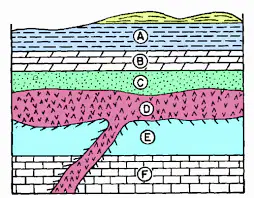
List the layers oldest to youngest.
(a)
A sample of granite is analyzed using the
K-40 --> Ar-40 method.
Of the original 1200 grams of potassium
only 75 grams remain.
How many half lives has this granite been through?
(a)
A sample of granite is analyzed using the
K-40 --> Ar-40 method.
Of the original 1200 grams of potassium
only 75 grams remain.
How old is the sample?
(a) billion years
*The half-life of K-40 is 1.25 billion years.
P waves are also known as (a) waves. They are the fastest waves.
S waves are also called (a) waves. They are the slowest waves.
(a) waves are the slowest waves. They cause the most damage.
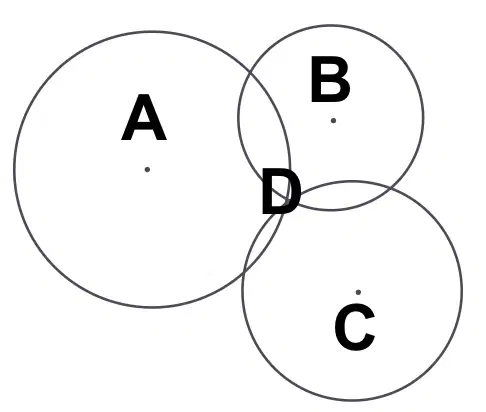
Which of the following is the epicenter?
A
B
C
D
an instrument used to record and measure the motion of the ground during an earthquake
(a)
If the magnitude of an earthquake increases by 1, the strength of the earthquake increases by a factor of-
(a)
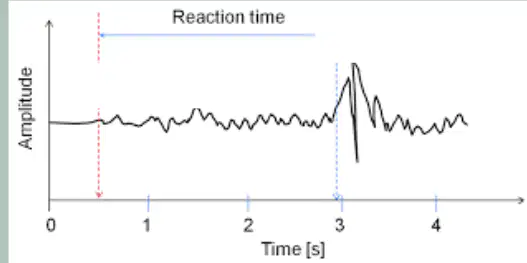
The first wave is the (a) wave.
The second wave is the (a) wave.
scale used to measure the magnitude of an earthquake
(a)
the Earth itself (rocks, minerals, and landforms of the surface and interior)
(a)
the envelope of gases surrounding the Earth
(a)
all of Earth's water
(a)
the region on, above, and below the Earth's surface where life exists
(a)
the most abundant greenhouse gas in the atmosphere
(a)
Which of the following nutrients does NOT go into the atmosphere?
water
carbon
phosphorus
nitrogen
a gas in the atmosphere that absorbs infrared radiation and emits it back to the Earth instead of letting it pass through into space
(a)
Which of the following is NOT a greenhouse gas?
hydrogen gas
chlorofluorocarbons
methane
carbon dioxide
ozone
Which of the following is NOT a greenhouse gas?
nitrogen vapor
nitrous oxide
methane
carbon dioxide
ozone
the excessive nutrient enrichment of water leading to algal blooms and ecological imbalance
(a)
overuse of this for agriculture is the main reason for the increase in nitrous oxide
(a)
Chlorofluorocarbons are found in which of the following?
Pick 2.
aerosols
refrigerants
lotion
soil
a product of livestock farming
(a)
gases from volcanic eruptions cause a volcanic-
(a)
a major earthquake that occured on All Saints Day in Portugal Lisbon
Great Lisbon
Toba
Mount Tambora
Indian Ocean Tsunami
Katrina
led to a new warning system
Great Lisbon
Toba
Mount Tambora
Indian Ocean Tsunami
Katrina
a major hurricane that led to changes in disaster policy
Great Lisbon
Toba
Mount Tambora
Indian Ocean Tsunami
Katrina
a volcanic eruption that changed the climate for three years and led to a global cholera pandemic
Great Lisbon
Toba
Mount Tambora
Indian Ocean Tsunami
Katrina
a supervolcano that erupted in Indonesia that possibly bottlenecked evolution
Great Lisbon
Toba
Mount Tambora
Indian Ocean Tsunami
Katrina
Which of the following is easier to predict?
where an earthquake will occur
when an earthquake will occur
the magnitude of an earthquake
the study of weather
(a)
clouds are formed in the atmosphere through (a)
the evaporation of water from plants
(a)
What type of weather will likely follow if the air pressure is steady?
no change in weather
fair weather
stormy weather
What type of weather will likely follow if the air pressure is rising?
no change in weather
fair weather
stormy weather
What type of weather will likely follow if the air pressure is falling?
no change in weather
fair weather
stormy weather
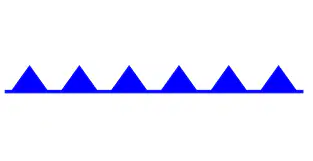
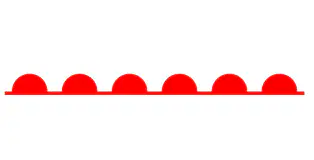
type of front
(a)
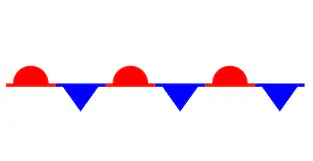
type of front
(a)
type of front
(a)

type of front
(a)
A surge of calcium contributed to the (a) explosion.
Plants needed (a) tissues to adapt to dry land.
Amphibians evolved from (a) -finned fish.
(a) could live on energy from the Sun and produced oxygen as a waste product.
Which of the following was NOT present in Earth's second atmosphere?
steam
free oxygen
carbon dioxide
ammonia
The gases in Earth's second atmosphere were produced by (a) .
Which of the following was present in the first atmosphere in Earth? Check 2.
hygrogen
carbon
helium
ozone
The (a) extinction was the deadliest.
We are currently in the (a) extinction.
when many species become extinct within a few million years
(a)
For fossils to form, sediment must cover the organism-
quickly
slowly
scientists who study fossils
(a)
structures that are remnants of organs or structures that had a function in an earlier ancestor
(a)
structures that are similar in function, but different in structure
(a)
structures that are similar in structure but different in function
(a)
Vertebrates all share gill slits and a (a) in their early embryo stage.
The fossil record shows common ancestry.
True
False
From the equator to the poles, the Sun's rays meet earth at __________________ angles.
smaller
larger
From the equator to the poles, light gets spread over _______________ areas.
smaller
larger
longest amount of daylight
summer solstice
vernal equinox
winter solstice
autumnal equinox
shortest amount of daylight
summer solstice
vernal equinox
winter solstice
autumnal equinox
the beginning of fall
summer solstice
vernal equinox
winter solstice
autumnal equinox
the beginning of spring
summer solstice
vernal equinox
winter solstice
autumnal equinox
The hemispheres that we live in
Check 2.
Northern
Southern
Western
Eastern
On December 22nd, you visit your friend in London, England (51.5°N). Find the following: subsolar point:
(a)
On December 22nd, you visit your friend in London, England (51.5°N). Find the following: Zenith angle
(a)
On December 22nd, you visit your friend in London, England (51.5°N). Find the following: noon sun angle
(a)
People standing in the _____________________ during a solar eclipse will see a total solar eclipse.
umbra
penumbra
People standing in the _____________________ during a solar eclipse will see a partial solar eclipse.
umbra
penumbra
During a solar eclipse, which of the following is in the middle?
the moon
the Sun
Earth
climate zone with cool summers, cold year round and dry
(a)
climate zone with true seasons, variety of climate patterns, and moderate precipitation
(a)
climate zone with no winter, warm year-round, high temperatures, rainfall and humidity
(a)
If the dew point is below freezing and that temperature is reached, (a) will form on surfaces.
If the dew point is below freezing and that temperature is reached, (a) will form in the air.
If the dew point is above freezing and that temperature is reached, (a) droplets will form in the air.
If the dew point is above freezing and that temperature is reached, (a) will form on the ground.
As air gets warmer, the relative humidity-
increases
decreases
As air gets cooler, the relative humidity-
increases
decreases
The Coriolis Effect caused winds to curve to the _____________________ in the Northern Hemisphere.
right
left
The Coriolis Effect caused winds to curve to the _____________________ in the Southern Hemisphere.
right
left
Winds move in which direction?
high pressure to low pressure
low pressure to high pressure
type of front that brings gusty winds, lower temperature, heavy rain and storms followed by cool, fair weather
(a)
type of front that brings gentle rain followed by warmer, milder weather
(a)
type of front where strong winds and heavy precipitation are possible
(a)
type of front that can bring many days of cloudy and wet weather
(a)

