
Font size
 Worksheets
Ancient Greece
Total questions: 113
Worksheet time: 3hrs 52mins
Select two of the most famous city-states of Greece.
Athens
Argos
Thebes
Melos
Sparta
What was the Greek word for city-state?
polis
agora
acropolis
Which city-state was the birthplace of democracy?
Sparta
Thebes
Athens
Who rules in a monarchy?
the people
a small group of elites
king or queen
Who rules in an oligarchy?
the people
small group of elite
king or queen
Who rules in a democracy?
the people
small groups of elite
king or queen
Even though Greek city-states had their own government, the people of ancient Greece were united by common _____________________.
food sources
language and gods
laws
How were Athens and Sparta different? Pick 2
Athens was focused on education. Sparta was focused on building a strong army.
Athens was focused on building a strong army, Sparta was focused on education.
They were not different.
Athens was a democracy. Sparta was an oligarchy.
Athens was an oligarchy. Sparta was a democracy.
Doric, Ionic and Corinthian are three types of:
Greek food
Greek columns
Greek temples
Greek gods
One of the great achievements of Greek sculptors was:
Creating lifelike statues
Creating statues with moving parts
Building ships that could carry many people
Creating statues of people's pets
What is one thing that is similar between Greek plays and modern movies?
They cost millions of dollars to make
Amazing special effects
Awards for best actor and writer
Only men were actors
On the acropolis, Athenians built
magnificent temples as earthly homes for their gods and goddesses.
a sports center where they held the Olympics every four years.
a meeting place where citizens gathered to discuss issues of the day.
all answers apply.
Greeks worshiped
many gods and goddesses.
only one god.
the big three.
only the 12 Olympian gods.
Which mountain in Greece gave its name to the twelve most important gods and goddesses?
Mount Vesuvius
Mount Etna
Mount Kythnos
Mount Olympus
What was the role of master sculptors in ancient Athens?
They made life-size clay models, which apprentices followed when sculpting with marble.
They added the details and finishing touches to statues that had been roughed out by apprentices.
They applied wax and bright colors to the statue’s hair, lips, clothes, and headdress.
They roughed out the statues in marble so that the apprentices could add the final details.
What was the role of master sculptors in ancient Athens?
They made life-size clay models, which apprentices followed when sculpting with marble.
They added the details and finishing touches to statues that had been roughed out by apprentices.
They applied wax and bright colors to the statue’s hair, lips, clothes, and headdress.
They roughed out the statues in marble so that the apprentices could add the final details.
Greek plays grew out of
songs and dances that the Greeks performed at harvest time to honor Dionysus.
solemn religious rituals performed at the beginning of the year in tribute to Zeus.
spring festivals that appealed to Hermes to bring forth a good crop each year.
celebrations of the summer solstice, the longest day of the year, to pay homage to Apollo.
Which statement about Greek plays is true?
In comedies, men played female characters and women played male characters.
Men played all the characters, both male and female.
There were no women actors because there were no female roles in Greek plays.
Only unmarried women could perform in Greek plays.
Which statement about Greek plays is true?
In comedies, men played female characters and women played male characters.
Men played all the characters, both male and female.
There were no women actors because there were no female roles in Greek plays.
Only unmarried women could perform in Greek plays.
Greek plays were performed
in small theaters in the private homes of wealthy Greeks.
in the acropolis, surrounded by the statues of the gods and goddesses.
in open-air theaters built into the sides of hills.
in the marketplace, where all people could gather.
The Panathenaic Games were
part of a festival that honored the goddess Athena.
held every four years to pay tribute to Zeus.
a drama competition that lasted for days at a time.
athletic events that only women could participate in.
A traditional story that explains beliefs about the world.
Literature
Religion
Achievements
Myth
The Greeks excelled in philosophy, sculpture, architecture, and ___________________.
theater
painting
electronics
transportation
The Greeks excelled in drama and theater. They invented ________________ or very serious plays with unhappy endings.
comedies
satires
suspenseful
tragedies
During this time, the __________________, a temple dedicated to the goddess Athena, was rebuilt.
Parthenon
Pantheon
Oracle of Delphi
Erechtheion
The Greeks created ________________ or the search for wisdom and truth.
psychology
sociology
philosophy
the Scientific Method

What type of Greek column is shown above?
Doric
Ionic
Corinthian
Tuscan
The Greeks also created ______________ or plays with humorous themes and happy endings.
comedies
satires
tragedies
documentaries
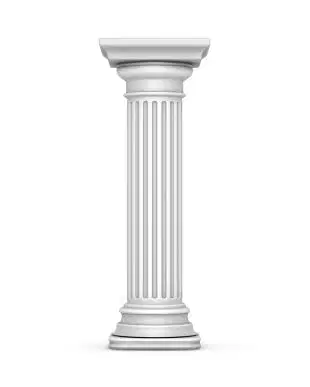
You can tell this type of column because it is the most simple of Greek column styles. (a)

You can tell which type of Greek column this is because it is the most elaborate. (a)

Let's take a trip to ancient Greece! Can you tell me who Athena was the goddess of?
Was she the goddess of love and beauty?
Or was she the goddess of war and wisdom?
Maybe she was the goddess of the sun, poetry, and music?
Or was she the goddess of the moon and the hunt?

Do you know which mountain in Greece was so awesome that it got to be the namesake of the twelve most important gods and goddesses?
Was it Mount Vesuvius?
Or maybe Mount Etna?
Could it be Mount Kythnos?
Or is it Mount Olympus?
Imagine you're a time-traveling historian, visiting ancient Greece. You notice three distinct styles of columns. Can you arrange them from the simplest to the most complex?
Ionic, Doric, Corinthian
Corinthian, Doric, Ionic
Doric, Ionic, Corinthian
Ionic, Corinthian, Doric
Imagine you're a time traveler visiting ancient Greece. Where would you find yourself watching a Greek play?
Cozied up in a small theater inside the private home of a wealthy Greek.
At the acropolis, surrounded by the majestic statues of gods and goddesses.
In an open-air theater built into the side of a hill, under the vast sky.
In the bustling marketplace, amidst a gathering of townsfolk.
Can you guess what Philosophy is the love of?
Is it the love of talking?
Could it be the love of thinking?
Or is it the love of wisdom?
Maybe it's the love of books?

Imagine you're a time traveler, and you've just met Socrates. What action of his do you think landed him in hot water?
Did he try to shake up the Athenian government by starting a revolution?
Did he ditch his belief in the gods and goddesses and convert to Christianity?
Did he point fingers at Athenian leaders, accusing them of leading the youth astray?
Or did he stir the pot by encouraging people to question everything they thought they knew?
Let's take a trip back in time! Can you tell me what the Panathenaic Games were?
A grand festival that honored the mighty goddess Athena. Sounds fun, right?
An event held every four years to pay tribute to Zeus. Quite a long wait, isn't it?
A drama competition that lasted for days at a time. Imagine the suspense!
Athletic events where only women could participate. Girl power, huh?
Of the main design elements of a Greek temple which is the top triangle?
Pediment
Columns
frieze
metopes
The style of these are Doric, Ionic or Corinthian.
Pediment
Columns
frieze
metopes
What did the Greeks call the statues that decorated their temples?
Pediment
Columns
frieze
metopes
Imagine you've time-traveled back to the period after the Persian Wars. Athens is buzzing with peace, prosperity, and innovation. What is this exciting era known as?
The Periclean Age
The Golden Age
The Great Age
The Hellenistic Age
Let's take a trip back in time! The Greeks were masters of philosophy, sculpture, architecture, and what else? Can you guess?
Theater
Painting
Electronics
Transportation

Who do you think was the mastermind behind the grand reconstruction of Athens during its Golden Age? Hint: It's not Socrates!
Socrates
Cleisthenes
Pericles
Phidias

Pop quiz time! Can you guess which temple, dedicated to the goddess Athena, was rebuilt during this period?
Parthenon
Pantheon
Oracle of Delphi
Agora
Pop quiz time! Can you guess who taught his students to think by asking them questions? Hint: He's a famous philosopher!
Plato
Socrates
Pericles
Aristotle
What type of Greek column is shown above?
Doric
Ionic
Corinthian
Tuscan

Which Greek root word means Earth?
(a)
What is one way the modern Olympics are like those of ancient Greece?
The location changes.
An athlete lights a flame.
Games are held every year.
Many countries send athletes.
What was the purpose of the first Olympics?
to honor a Greek god
to choose military leaders
to decide who would be king
to reach the top of Mount Olympus
In what way are many theaters today like the ones in ancient Greece?
The back of the theater is open.
People pay more for the best seats.
The stage is built into the side of a hill.
The rows rise so people can see and hear.
What vocabulary term has this definition:
A proposed explanation for something
(a)

What influence from ancient Greece is visible in this picture of the Lincoln Memorial in Washington, D.C.?
the use of columns
the honoring of gods
the effect of bright lights
the importance of religion
How did the philosopher Aristotle affect the modern study of plants and animals?
He invented a machine for measuring growth.
He created a system to divide them into groups.
He discovered that the heart pumps blood through the body.
He suggested cutting people open to see how the body works.
Who would be the most likely to use lines of latitude and longitude?
a painter
an architect
a mapmaker
an astronomer

Which Greek root word means measuring?
(a)
How did Greek scientists make their most important discoveries?
They got the citizens to vote.
They translated Egyptian texts.
They translated Egyptian texts.
They observed and asked questions.
Which of these ideas was first introduced in ancient Greece?
Earth moves around the sun.
The planets affect human lives.
It is good to study the star patterns.
The moon seems to change shape.
Which one of these lists of items would Pythagoras and Euclid most likely have written about?
rocks, stones, and dirt
skin, blood, and bones
lines, circles, and squares
actors, costumes, and stages

Which Greek root word means city?
(a)
Hippocrates is called the “father of medicine.” Which statement would he most likely have made?
"I will tell everybody about your illness."
"I see that you got sick after eating that meat."
"You must let me try this experiment on you."
"You are sick because the gods are angry at you."
How was ancient Greek democracy different from American democracy today?
Everyone did not always agree.
All citizens voted on every issue.
People could speak their opinions.
Strong speakers influenced others.
Which of the choices below is a part of American democracy that comes from the ancient Greeks?
juries of citizens
a Council of Elders
one official religion
independent city-states
Which vocabulary word has this definition:
A measure of how far north or south a place is on Earth is measured from the Equator
(a)
Why is Herodotus called the “father of history”?
He had many children.
He taught in the agora.
He wrote about the past.
He was an important leader.
Greek drama included tragedy and
festival
musical
theater
comedy
The word alphabet comes from
the ideas of Aristotle
the work of the writer Thucydides.
the first two letters of the Greek alphabet.
the Greek words meaning "word" and "parts."
What was the PRIMARY cause of the Persian Wars?
The Greeks wanted to establish more colonies in Asia Minor.
They fought over control of the trade routes of the Aegean region.
The Greeks refused to allow the Persians to participate in the Olympic games.
The Persians wanted to punish the Greek city-states for supporting Ionia's revolt against the Persians.
Who was the king of Persia at the start of the Persian Wars?
King Leonidas
King Cyrus
King Darius
King Xerxes
Because of a ____________________ the Persians were shown a path along the mountain ridge-
Athenian
loyal Persian
king
traitor
Leonidas sent the majority of the Greeks back to Athens but kept his personal guards, 300, to _________________________
join the Persians
stall the Persians
defeat the Athenians
burn Athens
How did the Greeks win the Battle of Salamis?
They had more ships.
They had cannons, and the Persians did not.
They bombarded the Persian Ships from the Shore.
They tricked the Persians into thinking they were retreating, and trapped them in a narrow waterway.
Name that battle:
- 480 B.C.E. along a thin channel
- Greek naval fleet outnumbered Persians
- Greece sank 300 Persian ships
- Greek victory
Battle of Salamis
Battle of Marathon
Battle of Thermoplyae
Battle of Plataea
Name that battle:
- 480 B.C.E.
- King Leonidas refused to surrender
- 300 brave Spartans died
- Persian victory
Battle of Marathon
Battle of Thermoplyae
Battle of Salamis
Battle of Plataea
Name that battle:
- 490 B.C.E.
- Athens fought alone
- Militiades led Athenians in a phallanx formation
- Greek victory
Battle of Marathon
Battle of Plataea
Battle of Salamis
Battle of Thermoplyae
Name that battle:
-479 B.C.E
-80,000 Greek soldiers led by Spartans
-Xerxes is defeated!
-Greek independence won
Battle of Marathon
Battle of Thermoplyae
Battle of Salamis
Battle of Plataea
Who am I?
I led the Persian army for most of the war, after my father died.
Cyrus
Xerxes
Pheidippides
Leonidas
Who am I?
I conquered the Ionian Colony hoping to broaden my empire. I was defeated at the Battle of Marathon.
Xerxes
Leonidas
Themistocles
Darius
Who am I?
I led the Greeks in the battle of Thermoplyae. I died with my fellow Spartan soldiers as one of the brave 300.
Militiades
Themistocles
Leonidas
Xerxes
Who am I?
I pretended to change sides and tricked Xerxes into leading his troops to a narrow hellespont, where the Athenian navy sunk 300 Persian ships. Though I may be shady, I successfully won the battle of Salamis for the Greeks.
Cyrus
Themistocles
Militiades
Leonidas
Know as the sun god
Hermes
Poseidon
Hera
Apollo
Know as the messenger of the gods
Hephaestus
Hestia
Hermes
Hera
Know as the goddess of earth, plants, and harvest
Ares
Demeter
Hera
Athena
Know as the god of fire and armor
Hephaestus
Hera
Hermes
Athena
Know as the god of war
Artemis
Ares
Athena
Hera
Known as the goddess of hearth and home
Athena
Hera
Hermes
Hestia
Know as the goddess of the hunt and the moon
Athena
Aphrodite
Artemis
Hera
Know as the goddess of love and beauty
Aphrodite
Ahtena
Hestia
Hera
Know as the god of the sea and all water
Hephaestus
Apollo
Poseidon
Zeus
Queen of the sky
Athena
Hera
Hestia
Artemis
Know as the goddess of all women, mother, and marriage
Demeter
Artemis
Athena
Hera
King of all gods
Zeus
Poseidon
Apollo
Ares
Know as the goddess of wisdom, law, and war
Artemis
Demeter
Hera
Athena
Wore winged hat and winged shoes, and carried a staff
Poseidon
Apollo
Hephaestus
Hermes
Symbols were doves, roses, sparrows, dolphins, and rams
Aphrodite
Athena
Hera
Artemis
When angered, he threw lighting bolts
Zeus
Poseidon
Apollo
Hephaestus
Controlled storms, sea monsters, and earthquakes
Hermes
Zeus
Apollo
Poseidon
Protected people's homes from evil
Aphrodite
Hestia
Apollo
Athena
Symbols were a burning torch, a spear, dogs, and vultures
Ares
Apollo
Hera
Hephaestus
Could protect or destroy ships
Athena
Zeus
Poseidon
Apollo
What had a snake body and nine heads.
hydra
cyclopes
griffin
medusa
what monster had one eye
griffin
Cerberus
cyclopes
Mark
who guards the underworld gates
Lincoln
Cerberus
furies
taco man
When you look at this person you turn to stone.
Minotaur
hydra's
Bob
Medusa
who was half horse half man
your pet
Centaurs
Chimera
Mark
Who worked with Scylla
Mark
Charybdis
bob
A hydra
what had the head of a bull
Minotaur
charybdis
Centaur
Mark
who is Zeus's horse
Mark
Hercules
Medusa
Pegasus
who guards the Strait of Messina
scylla
hydra
charybdis
Minotaur
what creatures were half goat half man
satyres
Lincoln
Zeus
Minotaur
who had dog heads and 12 tentacles
Cerberus
Satyrs
Kevin
Scylla
who was a mix of lots of creatures
hydra
Chimera
Scylla
Sphinx
have you enjoyed this
yes
no
a little bit
no let me go home

