
 Worksheets
Cardiovascular, Respiratory, & Digestive systems Review
Total questions: 65
Worksheet time: 39mins
Which of the following is not a blood group?
A
B
C
AB
What is the function of valves in the heart?
To prevent blood from flowing backward
To pump blood to the lungs
To carry oxygenated blood
To carry deoxygenated blood
Which component of blood helps in immune response?
Red blood cells
White blood cells
Platelets
Plasma
Which of the following is/are a component(s) of blood?
Red blood cells
White blood cells
Platelets
Plasma
Which chamber of the heart receives oxygenated blood from the lungs?
Left atrium
Right atrium
Left ventricle
Right ventricle
Which type of blood vessel carries blood back to the heart?
Arteries
Capillaries
Veins
Alveoli
Which of the following is the most abundant type of blood cell?
Red blood cells
White blood cells
Platelets
Plasma
Which blood vessel carries oxygenated blood from the heart to the rest of the body?
Pulmonary artery
Pulmonary vein
Aorta
Superior vena cava
Which component of the cardiovascular system carries oxygenated blood away from the heart to the body?
Arteries
Veins
Capillaries
Alveoli
Which of the following is responsible for defending the body against infections?
Red blood cells
White blood cells
Platelets
Plasma
Which of the following is a major component of plasma?
Water
Red blood cells
Platelets
Carbon dioxide
Which blood group is considered the universal donor?
A
B
AB
O
Which component of blood is responsible for clotting?
Red blood cells
White blood cells
Platelets
Plasma
What is the average adult volume of blood in the human body?
1 liter
2 liters
5 liters
10 liters
Which chamber of the heart pumps oxygenated blood to the rest of the body?
Left atrium
Right atrium
Left ventricle
Right ventricle
Which blood group is considered the universal receiver?
A
B
AB
O
Which blood component is responsible for carrying oxygen throughout the body?
Red blood cells
White blood cells
Platelets
Plasma
Which of the following is known as the "pacemaker" of the heart?
Aorta
Pulmonary vein
Left ventricle
Sinoatrial node
Which type of blood vessel has the thinnest walls?
Arteries
Capillaries
Veins
Lymph vessels
What is the main function of the cardiovascular system?
Deliver nutrients and oxygen to cells.
Exchange gas with the atomsphere
Transport waste and carbon dioxide from cells.
Deliver carbon dioxide to cells for respiration
The heart is (a) to the lungs.
Match the following
Coronary Artery
Feeds blood to the heart
Pericardium
Membrane that protects the heart
Aorta
Carries oxygenated blood away from the heart
Superior Vena Cava
Brings deoxygenated blood from the upper body to the heart

Match the following
1 and 2
vena cavas bringing blood to the heart
12
left ventricle, pumps blood to body
3
right atrium, receives blood from body
14
aorta, brings blood to body
9
pulmonary veins, brings blood from lungs
Match the following
Contain valves, return blood to the heart.
Veins
Thick walls, move blood away from the heart.
Arteries
Small, exchange nutrients and waste, oxygen and carbon dioxide with cells
Capillaries
Receive blood in the heart
Atria
Pump blood out of the heart
Ventricles
Match the following
lungs
found in pleural cavities
alveoli
air sacks in the lungs
trachea
cartilage tube in neck
epiglottis
flap that block trachea from food
pharynx
space at back of oral and nasal cavity
What is the main job of the respiratory system?
Managing the sympathetic and parasympathetic responses
Taking in oxygen and removing carbon dioxide
Responding to external stimuli
Breathing
The scientific name for tear ducts is
Acrimonial ducts
Salvitory tubes
Lacrimal ducts
Eustachian canals
Which of these is NOT a real structure?
Nasopharynx
Mesopharynx
Laryngopharynx
Oropharynx
The laryngopharynx branches into these two structures: (Select BOTH!)
Esophagus
Sigmoid colon
Eustachian tube
Trachea
The (a) end in air sacs call alveoli.
This is the site of gas exchange in the lungs.
Alveoli
Bronchus
Trachea
Pharynx
What is the name of the lipid that cover the alveoli?
Mucus
Lung lipid
Lacrimal fluid
Surfactant
Which of these shows the correct order of the lung structures?
1. Bronchiole
2. Bronchus
3. Trachea
4. Alveolus
1. Trachea
2. Bronchiole
3. Bronchus
4. Alveolus
1. Trachea
2. Bronchus
3. Bronchiole
4. Alveolus
1. Alveolus
2. Bronchus
3. Bronchiole
4. Trachea
Which lung has three sections?
Left
Right
The left lung is smaller because
it makes room for the heart
the left side of the body needs less oxygen
it functions only with expiration, which requires less volume
the body doesn't need that much lung
The (a) is the membrane or sac enclosing each lung.
The diaphragm contracts during
Inspiration
Expiration
The diaphragm relaxes during
Inspiration
Expiration
The process of using oxygen to make energy is called
Internal respiration
Inspiration
Expiration
Cellular respiration
What is the opening between the vocal cords called?
Trachea
Vocal gap
Glottis
Laryngeal gap
Which structure keeps us from choking?
Epiglottis
Respiratory flap
Bronchiole
Glottis

What structure is circled?
Lung
Trachea
Diaphragm
Pharynx

What structure is circled?
Trachea
Bronchus
Alveolus
Pulmonary trunk

What structure is circled?
Esophagus
Laryngopharynx
Bronchiole
Trachea
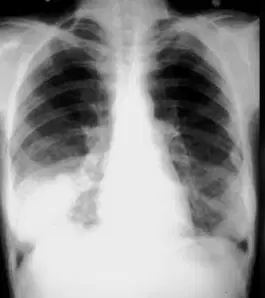
This patient has pneumonia. Which lung is affected?
Left
Right
Think Critically: What does digest mean?
break down
make up

What is the purple?
Substrate
Active Site
Enzyme

What is the pink?
substrate
active site
enzyme
What is the function of the digestive system?
helps the body get the glucose it needs to make ATP
takes in oxygen and releases carbon dioxide
helps with body movement
transports oxygen to the cells
What are the organs related to the digestive system?
small intestine
large intestine
stomach
lungs

What is muscular tube that moves food from the pharynx to the stomach?
Uvula
Esophagus
Palate
Salivary glands

How long does it take for the stomach to empty after a meal?
30 min - 1 hour
1-3 hours
4-6 hours
7-9 hours
What is the last section of the digestive system, where water is absorbed from food and the remaining material is eliminated from the body?
Large Intestine
Small Intestine
Appendix
Pharynx
What is the enlarged and muscular sac-like organ of the alimentary canal (gastrointestinal tract)
Tongue
Pancreas
Stomach
Gallbladder
When food is chewed, mixed, and churned __________ digestion is taking place.
Chemical
Mental
Emotional
Mechanical
When food is broken down by enzymes or acid, __________ digestion is taking place.
Chemical
Mental
Emotional
Mechanical
The __________ is where digestion begins.
Stomach
Small Inestine
Mouth
Liver

What is the name of the projection coming off of the large intestine?
Appendix
Cecum
Colon
The liver produces:
bile
ptyalin
hydrochloric acid

What digestive organ is the arrow pointing to?
Liver
Stomach
Gallbladder
Pancreas
What are the functions of Pancreas?
Helps in digestion and regulating blood pressure
Helps in digestion and regulating blood sugar
Helps in blood sugar regulation and produces insulin
Helps in blood sugar regulation and produces glucagon
What is the main purpose of the small intestine?
nutrients get absorbed into the blood/lacteal
bile is produced
water is removed
nutrients are assimilated
The villi provides a surface area for the absorption of nutrients into the bloodstream.
True
False
We get our nutrients through digestive system.
True
False

