wayground logo

Free Printable Worksheets

NEW

Font size

S
M
L
XL
Worksheets

Basic Physical Science - Chemistry Review

Total questions: 55

Worksheet time: 1hrs 24mins

Name
Class
Date
1.
Something that takes up space and has mass.
a)
volume
b)
matter
c)
mass
d)
density
2.
You can measure ______ with grams.
a)
mass
b)
volume
c)
conductivity
d)
melting point
3.

A characteristic of something that can be observed without changing it into something new is called..

a)

Mass

b)

Volume

c)

Physical property

d)

Density

4.

Which of the following determines an object’s ability to float in water?

a)

How much the object

b)

How dense an object is

c)

The amount of mass of the object

d)

The volume of an object

5.

BLUE COLOR

a)

PHYSICAL PROPERTY

b)

CHEMICAL PROPERTY

6.

FLAMMABILITY (BURNS)

a)

PHYSICAL PROPERTY

b)

CHEMICAL PROPERTY

7.

REACTS WITH ACID

a)

PHYSICAL PROPERTY

b)

CHEMICAL PROPERTY

8.

What kind of change occurs if matter changes in amount, size, or shape?

a)

substance change

b)

chemical change

c)

physical change

d)

elemental change

9.
Ice melting
a)
Chemical Change
b)
Physical Change
10.
A change in which NEW substances are formed.
a)
Chemical change
b)
Physical change
c)
Casual change
d)
Formal change
11.
A copper penny turning greenish after a few years is an example of ...
a)
Chemical Change
b)
Physical Change
12.

The simplest natural substance is called a(n)

a)

Element

b)

Compound

c)

Mixture

d)

Solution

13.

Two or more elements chemically combined together are called a

a)

Element

b)

Compound

c)

Mixture

d)

Solution

14.

The smallest amount you can have of one element is a(n)

a)

Molecule

b)

Compound

c)

Atom

d)

Sprinkle

15.

Scientists use a _____________ as an abbreviation for an element name.

a)

Atom

b)

Molecule

c)

Compound

d)

Chemical Symbol

16.

H2O is an example of

a)

Compound

b)

Element

17.

Ne is an example of

a)

Compound

b)

Element

18.
These are found in the nucleus and have a positive charge. 
a)

proton 

b)

electron 

c)

neutron 

d)

moron 

19.
These are found in the nucleus and have a neutral charge. 
a)
proton 
b)
electron 
c)
neutron 
d)
moron 
20.
These are found outside the nucleus and have a negative charge. 
a)
proton 
b)
electron 
c)
neutron 
d)
moron 
21.
These will determine what element an atom is. 
a)
number of neutrons
b)
number of electrons
c)
number of atoms 
d)
number of protons 
22.
This is how you find the number of neutrons in an atom. 
a)
Subtract the atomic number from the atomic mass
b)
Subtract the atomic mass from the atomic number 
c)
Add the atomic mass to the atomic number 
d)
Divide the atomic mass by the atomic number 
23.
The atomic mass is the number of _______ plus ________. 
a)
protons, electrons 
b)
protons, neutrons 
c)
electrons, neutrons 
d)
quarks, neutrons 
24.
This is an atom with a charge. 
a)
omni
b)
oni
c)
ion
d)
ouch-e
25.
How many protons does an Oatom have?
a)
8
b)
24
c)
16
d)
When is lunch? 
26.

Which particle is responsible for chemical reactions?

a)

proton

b)

electron

c)

neutron

d)

no charge

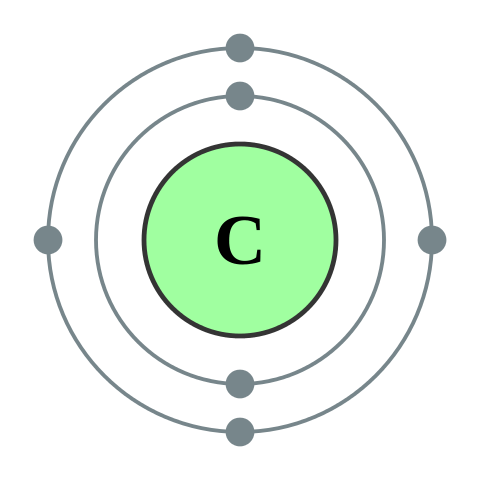
27.
a)
2
b)
8
c)
3
d)
13
28.

How many valence electrons does carbon have?

a)

4

b)

5

c)

6

d)

7

29.
What is a valence electron?
a)
an electron that is found in the outermost shell of an atom. 
b)
an electron found in the innermost shell of an atom.
c)
an electron found in the middle shell.
30.
What is this element...Au
a)
Iron
b)
Titanium
c)
Gold
d)
Flourine
31.
What is the symbol for Calcium
a)
Cl
b)
Ca
c)
Cm
d)
ca
32.
What is K?
a)
potassium
b)
berkelium
c)
sodium
d)
cacium
33.
How many Elements are in the compound C2H8O ?
a)
2
b)
1
c)
3
d)
0
34.
How many total atoms are in the compound C2H8O ?
a)
11
b)
2
c)
8
d)
1
35.
How many Chlorine are in MgCl2?
a)
2
b)
1
c)
3
36.
Number of C's in 2Na₂CO₃
a)
1
b)
2
c)
3
d)
5
37.
In chemical reactions, what does the principle of conservation of mass mean?
a)
Matter is not created or destroyed.
b)
The total mass of the reactants is greater than the total mass of the products.
c)
The total mass of the reactants is less than the total mass of the products.
d)
Matter is not changed.
38.
What is the left part of a chemical equation called?
2H2 + O2 --> 2H2O
a)
Reactants
b)
Products 
c)
Yields 
d)
Chemical Equation 
39.
What is the right part of a chemical equation called...
2H2 + O2 --> 2H2O
a)
Reactants
b)
Products 
c)
Yields 
d)
Chemical Equation 
40.

a substance that is created during a chemical reaction

a)

reactant

b)

product

c)

subscript

41.

Number BELOW on an element

a)

product

b)

reactant

c)

subscript

d)

coefficient

42.

a series of symbols and formulas that represents a chemical reaction

a)

reactant

b)

product

c)

Chemical equation

43.

What is a property of acids?

a)

Turns red litmus blue

b)

Feel slippery

c)

React with metals to form water and a salt

d)

Taste sour

44.

What is the pH of acids?

a)

Greater than 7

b)

Exactly 7

c)

Equal to 7

d)

Less than 7

45.

What is a property of bases?

a)

Taste sour

b)

React with metals to form water and a salt

c)

Turns blue litmus red

d)

taste bitter

46.

What is the pH of bases?

a)

Exactly 7

b)

Less than 7

c)

Greater than 7

d)

Equal to 7

47.

A common kitchen acid is _______.

a)

sulfuric acid

b)

vinegar

c)

baking soda

d)

lye

48.

A common kitchen base is _______.

a)

sulfuric acid

b)

vinegar

c)

baking soda

d)

lye

49.

When an acid reacts with a base what are the products?

a)

Salt and acid

b)

Another acid and base

c)

salt and water

d)

water and an acid

50.
All of the following would classify an element as a metal except?
a)
Dull
b)
Luster
c)
Malleable
d)
Hard
51.
Iron is a good conductor, malleable and magnetic. What type of element is Iron? 
a)
Metal
b)
Nonmetal
c)
Metalloid
d)
Pretty
52.
Which table below correctly lists the properties of metals and nonmetals? *
a)
A
b)
B
c)
C
d)
D
53.

The release of particles and energy from an unstable nucleus

a)

Isotopes

b)

Radioactivity

c)

X rays

d)

Electromagnetic energy

54.
When an element loses protons, its __________changes.
a)
protonic number
b)
electronic number
c)
neutronic number
d)
atomic number
55.
Nuclear fission is when scientists put atoms together.
a)
True 
b)
False