
 Worksheets
Civics 7th Grade EOC
Total questions: 118
Worksheet time: 2hrs 58mins
How did the magna carta influence the foundation of American democracy?
The Magna Carta established principles of limited government, individual rights, and the rule of law that influenced the foundation of American democracy.
The Magna Carta abolished the concept of limited government
What does democracy mean?
Ruled by one person
Ruled by people
The House of Burgesses is important in history because it was the
first elective legislative body in America
the first time a council advised the Virginia Company
What did the Magna Carta do?
Gave more power to the Common People
Limited the power of the King
The Magna Carta is similar to what American document?
The Bill of Rights
The Mayflower Compact
Why did the Pilgrims create the Mayflower Compact?
to establish an orderly community
to guarantee universal religious tolerance in the colony
Type of Democracy in which people vote first hand
Tyranny
Direct Democracy
What is the name of the place the Pilgrims Landed?
Plymouth Rock
Virginia
Who fought in the French and Indian War?
British vs. French and Indians
British vs. French
The French and Indian War, unfair taxes in the colonies, along with many other events all led to what eventually?
American Revolution
World War I
What did the Stamp Act tax?
legal documents and newspapers
mail brought into America
Why did King George want to tax the colonists?
to pay his debts for the French and Indian War
to pay for repairing British forts in America
Why were the colonists upset about the Stamp Act?
They didn't want to pay taxes.
They had no representation in the government of England.
How did the colonists protest the Stamp Act?
All of the above.
They burned the stamped paper in the streets.
What group took to the streets to protest the Stamp Act?
The Boston Boys
The Sons of Liberty

What did the Quartering Act say?
Colonists had to pay a tax on thier houses
Colonists had to allow British Soldiers to stay in their homes
What event was a direct result of the colonist frustration with the Tea Act?
The Boston Tea Party
Gaspee Affair

What happened during the Boston Tea Party?
Unarmed Colonists were fired on and killed by British Soldiers
Angry Colonist threw crates of tea into the harbor
What were the Intolerable Acts?
Laws designed to punish colonial America
Laws protecting British merchants
Who is the author of the pamphlet 'Common Sense'?
Benjamin Franklin
Thomas Payne
What is the main idea of 'Common Sense'?
To support the rights of the aristocracy
To advocate for total independence from England
What effect did 'Common Sense' have in the colonies?
It persuaded many colonists that America should be independent.
It petitioned the king to end the quarrel between the colonies and Great Britain.
Why was the Declaration of Independence written?
to instruct how a county wins its freedom.
to explain why the colonies were separating from Great Britain
Why did Thomas Jefferson say that King George III was an unfit ruler?
He denied the colonists their rights.
He was not born in Great Britain
rights that cannot be taken away
unalienable rights
natural rights
A list of the colonists' complaints.
Preamble
Grievances
The natural rights included in the Declaration of Independence are...
the pursuit of happiness.
life, liberty, and the pursuit of happiness.
Who was the main writer of the Declaration of Independence?
Benjamin Franklin
Thomas Jefferson
When was the Declaration of Independence written?
June 25, 1778
July 4, 1776
What is the main purpose of government?
To protect the rights of the people
To give people things
What two groups of people were not included in the Declaration of Independence?
Women and Slaves
Indentured Servants and Slaves
Under the Articles of Confederation, which government had the MOST power?
the state governments
national government
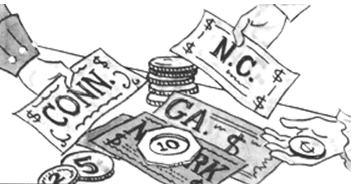
Which of the following weaknesses in the Articles of Confederation does this picture represent?
no executive branch
no common currency (money)
Which of the following is an example of a weakness in the Articles of Confederation?
All of the above
Weak national government
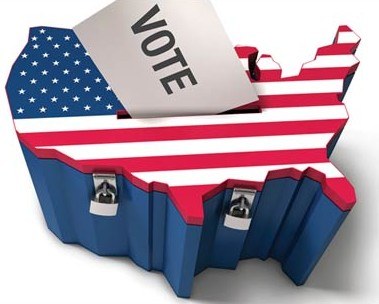
Under the Articles of Confederation, how many votes did each state get?
One
Zero
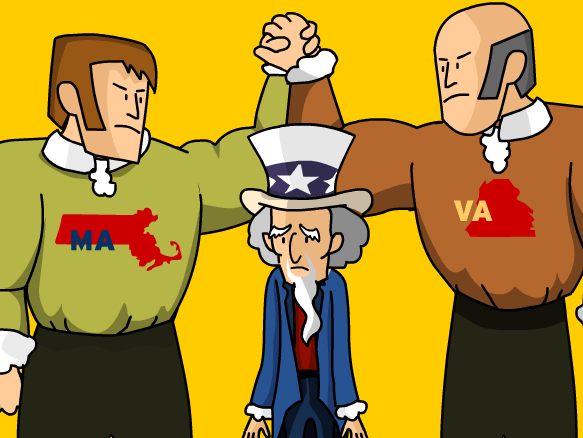
Why was this first U.S. government so weak?
Because of the Declaration of Independence
Americans were afraid to give their new government too much power
The Articles of Confederation created a ________ national government.
weak
both strong and weak
What is the name of the first written plan of government for the new United States
Articles of Confederation
Constitution
What is one reason Americans wanted to change the Articles of Confederation?
State government was weak and unsuccessful.
States were not working together and there was no leader.
In order to change (amend) the Articles of Confederation, __________ out of 13 states had to agree.
13
15
The weaknesses of the Articles of the Confederation led to an effort to create a new _____________.
Proclamation of 1763
Constitution
One result of the Shay rebellion was the realization that the federal government needed more control over the states
true
false
What did Shays' Rebellion help Americans realize they needed?
A strong national government
The ability to sign peace treaties

Why were farmers in Massachusetts so upset in 1786 and 1787?
They were losing their farms because they could not afford the taxes on them because they were not paid
The US was getting ready to go to war with France and they'd have to be soldiers again
the governments right to rule comes from the people
Federalism
Popular Sovereignty
The government has only the powers that the Constitution gives to it
Federalism
Limited Government
- Congress-legislative branch makes laws.
- President-executive branch carries out the laws.
- Courts-judicial branch explains and interprets the laws.
Checks and Balances
Separation of Powers

What is the purpose of Checks and Balances?
each branch of government has the power to check or limit the actions of the other two
division of power between the federal government and the states
Congress writes a law-->
President vetoes the law-->
Congress overrides the law with 2/3 vote
Checks and Balances
Separation of Powers
Limited Government
Government is divided into 3 branches: Legislative, Executive & Judicial branches.
Federalism
Limited Government
Separation of Powers
Checks & Balances
What does "Bicameral" mean?
1 house
2 houses
3 houses
4 houses
The Virginia Plan wanted representation based on _______.
population of each state.
number of state delegates.
one state, one vote
delegates appointed by the president.
The New Jersey Plan wanted representation based on _______.
population of each state.
number of state delegates.
one state, one vote
delegates appointed by the president.

Which of the two plans presented at the Constitutional Convention of 1787 was favored mostly by large states?
New Jersey Plan
New York Plan
Connecticut Plan
Virginia Plan

Where did the Constitutional Convention of 1787 take place?
Philadelphia, Pennsylvania
Richmond, Virginia
Washington D.C.
Paris, France

Which of the two plans presented at the Constitutional Convention of 1787 was favored mostly by small states?
Virginia Plan
Connecticut Plan
New Jersey Plan
New York Plan

What agreement was made between the Northern and Southern States in the 3/5 Compromise?
Slaves would count as 3/5 of a person
All slaves would count towards population
Only 3 of the Southern States would get representation in Congress
Only 5 of the Northern States would get representation in Congress

What was the name of the compromise, which was agreed upon at the Constitutional Convention of 1787, that provided the current system of government in the United States?
New Jersey Plan
Connecticut Compromise
Virginia Plan
New York Compromise

What are the names of the two houses that make up the United States Congress? (Select Two Answer Choices)
Parliament
House of Representatives
House of Burgesses
Senate

What was the very first constitution of the United States known as?
Magna Carta
Mayflower Compact
United States Constitution
Articles of Confederation
“A President needs to provide strong leadership for the country.”
Federalist
Anti-Federalists
“We need to make sure the governments’ power is limited and citizens have guaranteed personal freedoms.”
Federalist
Anti-Federalists
“The National Government needs to be stronger in order to function.”
Federalist
Anti-Federalists
“States should have more power than the National government.”
Federalist
Anti-Federalists
The federalist believed in a (a) national government.
"Procedures to ensure no unfair actions by the government on your rights." This is called our _______ __________ rights.
Civic Duties
Civil Liberties
Due Process
Citizen Obligations
Which Court System would hear a case on CONSTITUTIONALITY?
Local
State
International
Federal
Which court would hear cases about KIDS?
Juvenile
Circuit
Supreme
Appellate
The power to review the constitutionality of laws by the supreme courts of the United States and Virginia is known as.
judicial review
legislative review
executive review
civil review
In a criminal case, who determines whether someone is guility or not?
Judge
Bailiff
Prosecutor
Jury
At the state level, which court is considered the lowest?
State Supreme Court
District Court
Court of Appeals
U.S. Supreme Court
A customer hired a construction company to build a shed, but the construction company never finished the shed. So the customer sued the company, and the case was heard in...
civil court
criminal court
District Court
felony court
A car was stolen. This is an example of a...
civil court case
misdemeanor
felony
A serious crime for which punishment may be imprisonment or death.
Felony
Deficit
Bill of Rights
Bicameral
A section of a constitution than protects individual freedom.
Bill of Rights
Appropriations Bill
Balanced Budget
Bicameral
The process of becoming a new citizen.
Naturalization
Felony
Deficit
Municipal
Right to bear arms
1
2
3
4
5
Right to a speedy and public trial
6
7
8
9
10
All powers not given to the federal government in the US Constitution belong to the states.
6
7
8
9
10
Soldiers cannot quarter in your home without your permission.
1
2
3
4
5
Protected against unreasonable searches and seizures. Officials must have permission, a warrant, or probably cause.
1
2
3
4
5
Freedom of religion, assembly, petition, press, and speech
1
2
3
4
5
You have rights that are not listed in the Constitution.
6
7
8
9
10
Right to remain silent, right against being tried for the same offense twice, etc.
1
2
3
4
5
Right to trial by jury (specifically in civil cases)
6
7
8
9
10
Protection against cruel, unusual, or excessive punishments.
6
7
8
9
10
What is the importance of serving on a jury?
So that citizens are able to petition the government
To ensure that citizens get a fair trial
To give citizens free lawyers
To keep our country safe from foreign attacks.
Which of the following are obligations (duties) of US Citizens?
pay taxes
obey laws
defend the nation
vote
be informed


Top level of the federal court system
appeals courts
Supreme Court
district courts
exclusive jurisdiction

Which show the the three levels of the Federal Court System, from lowest to highest?
City, County, State
District, Appeal, Supreme
Supreme, Appeal, District
County, State, Federal
Which court case involved the right to freedom of speech?
Tinker v. Des Moines, Iowa
Miranda v. Arizona
Marbury v. Madison
Brown v. Board of Education, Topeka

Which Branch has a Bicameral Congress?
Legislative Branch
Executive Branch
The Presidential Cabinet
Judicial Branch
Which of the following are NOT one of the three branches of government?
Judicial
Secretary of State
Legislative
Executive
FBI
This branch of government carries out or executes the laws.
Judicial
State
Legislative
Executive
The (a) branch interprets the laws.
Who has the power to veto a bill before it becomes a law?
Vice President
President
Supreme Court
Congress
The highest court in the judicial branch is called?
Supreme Court
Federal Court
State Court
Appellate Court
How many justices are on the Supreme Court?
5
9
13
3
There are (a) members of the House of Representatives.
How old must you be to run for president?
35
45
50
25
Who assumes power if the current president can no longer serve?
Secretary of State
Vice President
The President's wife
The Attorney General
A presidential election is held every (a) years.

