
 Worksheets
Waves Unit Test
Total questions: 79
Worksheet time: 54mins


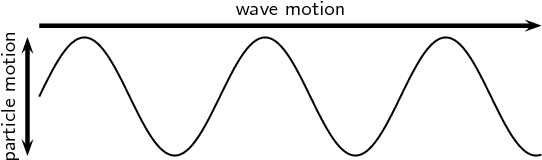
What type of wave move in a back and forth motion?
Compression wave
Light wave
Transverse wave
Hicks-Riddick Wave
A disturbance that transfers energy from place to place
Wave
Energy
Interference
Node
The material through which a wave travels.
Hertz
Crest
Medium
Trough
A wave that requires a medium through which to travel.
Longitudinal Wave
Mechanical Wave
Standing Wave
Transverse Wave
A wave that moves the medium in a direction perpendicular to the direction in which the wave travels.
Longitudinal Wave
Mechanical Wave
Standing Wave
Transverse Wave
The part of a longitudinal wave where the particles of the medium are close together.
Compression
Crest
Rarefaction
Trough
The part of a longitudinal wave where the particles of the medium are farther apart.
Compression
Crest
Rarefaction
Trough
The maximum distance the particles of a medium move away from their rest positions as a wave passes through the medium.
Amplitude
Frequency
Interference
Wavelength
The distance between two corresponding parts of a wave.
Crest
Hertz
Resonance
Wavelength

What do seismic waves and sound waves have in common?
They're mechanical waves
They're electromagnetic waves
They're phonetic waves
They're permanent waves
What do waves carry from place to place?
Energy, but not matter
Energy and matter
Matter, but not energy
Neither energy nor matter
How are electromagnetic waves different from mechanical waves?
Electromagnetic waves need a medium to travel through; mechanical waves don't.
Electromagnetic waves can travel through water; mechanical waves can only travel through solid matter.
Electromagnetic waves can travel through empty space; mechanical waves can't
Electromagnetic waves are long chains of vibrating molecules; mechanical waves aren't.
Which of the following are electromagnetic waves?
Water waves
Radio waves
Sound waves
Seismic waves
What type of waves carry energy at a right angle to the direction of the energy flow?
Compression waves
Transverse waves
Sound waves
P-waves
How is wavelength measured?



This is when sound waves reflect or bounce off an an object.
Echo
Transmission
Refraction
Absorption

When you place things into water they sometimes look bent (see the image below). What is this an example of?
Refraction
Diffraction
Transmission
Absorption

Which type of interaction is this?
reflection
refraction
diffraction

Which type of interaction is this?
reflection
refraction
diffraction

Which type of interaction is this?
reflection
refraction
diffraction

Which type of interaction is this?
reflection
refraction
diffraction
What term does the following sentence describe?
The distance between the highest point of a wave crest and the resting position of the wave is the _________.
frequency
amplitude
trough
resting position
Which wave travels in the SAME DIRECTION as the vibrations that are produced my the source?
Longitudinal
Transverse

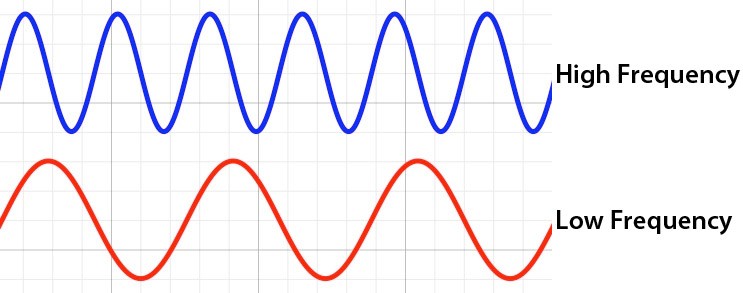
Which wave has the highest frequency?
red
green
blue
pink
Definition: When one object vibrating at the same natural frequency of a second object forces that second object into vibrational motion.
Reflection
Refraction
Diffraction
Resonance

The image depicts which of the following wave behaviors?
Resonance
Doppler Effect
Polarization
Diffraction

The image depicts which of the following wave behaviors?
Resonance
Doppler Effect
Interference
Polarization

The two blue and purple waves will undergo _________________ when they meet.
Constructive interference
Destructive interference

The image of the two waves depicts
Constructive interference
Destructive interference

Which of the pictured is responsible for us being able to see objects?
Transmission
Reflection
Refraction
Scattering
Absorption
Frequency is always measured in _________
kilometers
Hertz
centimeters
seconds

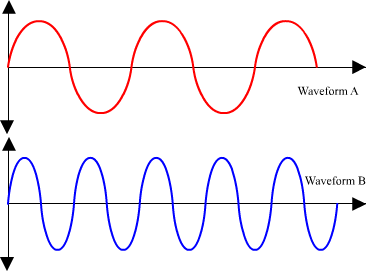
Which wave has the longest wave length?
top wave
bottom wave


A wave is a disturbance that transfers ________ from one place to another.
Matter
Energy
Which types of waves require a medium to travel?
Electromagnetic
Mechanical
If a wave has a low frequency, it will have __________ energy.
High
Low
If a wave has a high amplitude, it will have __________ energy.
High
Low
A wave that can travel without a medium is called a(n)
electromagnetic wave
mechanical wave
surface wave
all waves can travel in any way
Longitudinal waves move:
at a right angle compared to the direction the wave is traveling
in a circle compared to the direction the wave is traveling
matter
in the same direction as the wave is traveling
Low frequency sound wave = _______ Pitch
Low amplitude sound wave = __________________
Quieter sounds
Louder sounds

True or False: Sound can travel through outer space.
True
False
Sound waves are...
electromagnetic and transverse
electromagnetic and longitudinal
mechanical and transverse
mechanical and longitudinal

