Wayground logo

Free Printable Worksheets

Font size

S
M
L
XL
Worksheets

Chemistry Chapter 2

Total questions: 65

Worksheet time: 4hrs 0mins

Name
Class
Date
1.

A proton has a ___________ charge.

a)

positive

b)

negative

c)

neutral

d)

massive.

2.

An electron has a _________ charge

a)

positive

b)

neutral

c)

negative

d)

massive

3.
The particles with no charge in an atom are the _______.
a)
electrons
b)
neutrons
c)
protons
d)
protons and neutrons
4.
What does the nucleus of an atom contain?
a)
Electrons and neutrons
b)
Protons and neutrons
c)
Neutrinos and positrons
d)
DNA and RN
5.

__________ are negatively charged particles that are in the orbitals around the nucleus.

a)

protons

b)

nucleus

c)

neutrons

d)

electrons

6.

An element is identified by

a)

its number of protons

b)

the atomic mass

c)

the type of charge

d)

its number of isotopes

7.

What is this table

a)

Elemental Table of Periods

b)

Atomic Table of Atoms

c)

Periodic Table of Elements

8.

The number of protons in an atom is called the .....

a)

Mass

b)

Atomic Number

c)

Nucleus

d)

Orbital

9.

How many protons does Oxygen (O) have?

a)

24

b)

16

c)

15.999

d)

8

10.

How many neutrons does Sodium (Na) have?

a)

11

b)

23

c)

12

d)

22.98977

11.

What does the atomic mass tell you?

a)

The number of neutrons + protons

b)

The number of electrons

c)

The number of electrons + protons

12.
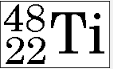
How many protons does this isotope of titanium have?
a)
48
b)
22
c)
26
d)
70
13.
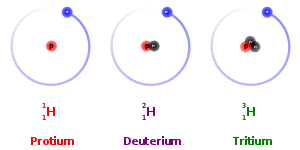
How many neutrons does the isotope of lithium have?
a)
8
b)
3
c)
4
d)
5
14.
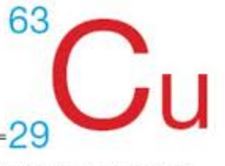
How many electrons does a Copper atom have?
a)
63
b)
29
c)
92
d)
34
15.
In a correctly written symbol what would be located in the "A" position?
a)
number of neutrons
b)
atomic number
c)
number of electrons 
d)
mass number
16.
Isotopes are atoms of the same element that have the same number of __________ but different number of __________ . Therefore, isotopes of the same element have different masses. 
a)
protons, neutrons
b)
protons, electrons
c)
neutrons, protons
d)
electrons, protons
17.
A neutral atom of the isotope 2612Mg would consist of
a)
12 protons, 26 neutrons, 26 electrons
b)
26 protons, 12 neutrons, 26 electrons
c)
26 protons, 14 neutrons, 14 electrons
d)
12 protons, 14 neutrons, 12 electrons
18.

An atom has 12 protons and 13 neutrons in its nucleus. Which is the correct symbol?

a)
b)
c)
d)
19.
Different isotopes have...
a)
different masses
b)
different atomic numbers
c)
different electrons
d)
different protons
20.
An atom becomes _________ when it gains electrons.
a)
Positive
b)
Negative
c)
Neutral
d)
Invinsible
21.
An atom becomes _______ when it loses electrons.
a)
Positive
b)
Negative
c)
Neutral
d)
Invinsible
22.
Cations are...
a)
Positive
b)
Negative
c)
Neutral
d)
Purring
23.
Anions are...
a)
Positive
b)
Negative
c)
Neutral
d)
Crying
24.

Why are ions formed?

a)

To make our lives difficult

b)

Because atoms want to be stable with 8 valence electrons

c)

Because atoms have the same number of protons and electrons

d)

Because atoms gained neutrons

25.

An atom with 2 protons, 3 neutrons, and 4 electrons has a charge of ____.

a)

+2

b)

-2

c)

+3

d)

0

26.
What is the charge of an atom that has lost one electron?
a)
-1
b)
-2
c)
+1
d)
+2
27.

A Bromine ion gains 1 electron, which of the following is the correct symbol for a Bromine ion?

a)

Br-1

b)

Br+1

c)

Br+7

d)

Br-7

28.

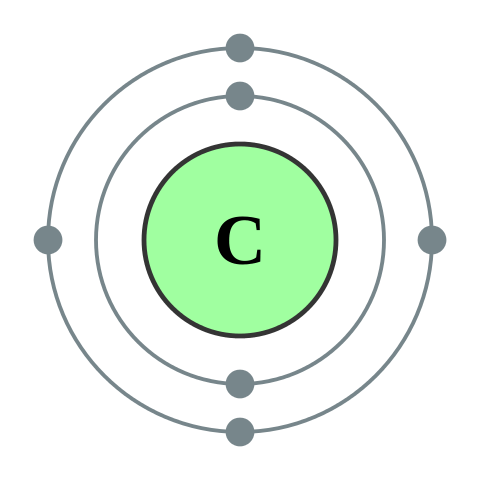
How many protons, neutrons, and electrons?

a)

proton = 6, neutron = 4, electron = 1

b)

proton = 4, neutron = 4, electron = 5

c)

proton = 1, neutron = 6, electron = 10

d)

proton = 4, neutron = 2, electron = 3

29.

Valence electrons are:

a)

Electrons farthest away from the nucleus

b)

Electrons closest to the nucleus

c)

Electrons that just come and go - they don't stay with the atom

d)

Electrons in the second shell

30.
Elements in the same column of the periodic table always have the same # of _______ as one another.
a)
Protons
b)
Neutrons
c)
Electrons
d)
Valence Electrons
31.
Valence electrons are the...
a)
Innermost electrons
b)
Middle electrons
c)
Outermost electrons
d)
Any electrons
32.

How many valence electrons does carbon have?

a)

4

b)

5

c)

6

d)

7

33.

A __________ goes up and down on the periodic table.

a)

Group

b)

Period

34.

A _________ goes side to side on the periodic table.

a)

Group

b)

Period

35.

What two elements are in the same Period?

a)

K - Potassium and Na - Sodium

b)

Li - Lithium and Mg - Magnesium

c)

B - Boron and C - Carbon

d)

Zn - Zinc and N - Nitrogen

36.

Which two elements would have similar properties?

a)

Ar - Argon and Xe - Xenon

b)

Og - Oganesson and Lu - Lutetium

c)

He - Helium and Lu - Lutetium

d)

Ar - Argon and Se - Selenium

37.

What two elements have the same number of energy shells?

a)

He - Helium and Ne - Neon

b)

Na - Sodium and K - Potassium

c)

Be - Berylium and Mg - Magnesium

d)

Na - Sodium and Mg - Magnesium

38.

Identify Sodium (Na) as a metal, non metal or a metalloid.

a)

Metal

b)

Nonmetal

c)

Metalloid

39.

Identify Hydrogen (H) as a metal, non metal or a metalloid.

a)

Metal

b)

Nonmetal

c)

Metalloid

40.

Which Physical property do most metals share?

a)

High boiling point

b)

Malleable

c)

Brittle

d)

Poor conductor of heat and electricity

41.

What element is represented as Cl?

a)

Carbon Iodine

b)

Cadmium

c)

Cobalt

d)

Chlorine

42.

Nonmetals are found on the_________of the periodic table

a)

left side

b)

right side

c)

the zigzag line

d)

bottom

43.

The elements along the staircase are called

a)

metals

b)

nonmetals

c)

metalloids

d)

noble gases

44.
How would this element be classified?
a)
Metal
b)
Nonmetal
c)
Metalloid
d)
Metamorphic
45.
John was observing the physical properties of elements in order to classify them as either a metal, nonmetal, or metalloid. The first element was dull, brittle, and did not conduct heat. What would its classification be? 
a)
metal 
b)
nonmetal 
c)
metalloid
46.
As you move down the first group, reactivity _________.
a)
Increases
b)
Decreases
c)
Stays the same
d)
They are all inert
47.
Which two groups on the Periodic Table are the MOST reactive?
a)
Group 1 and Group 17
b)
Group 2 and Group 16
c)
Group 13 and Group 15
d)
Group 17 and Group 18
48.

Which group on the Periodic Table is INERT?

a)

Group 1

b)

Group 2

c)

Group 17

d)

Group 18

49.
How many valence electrons are elements trying to reach in their outer shells?
a)
1
b)
2
c)
5
d)
8
50.
How many valence electrons are found in atoms of group 15?
a)
4
b)
5
c)
2
d)
3
51.

What groups are the most reactive METALS?

a)

2 and 3

b)

1 and 18

c)

1 and 2

d)

16 and 17

52.

What groups are the most reactive NON-METALS?

a)

1 and 2

b)

16 and 17

c)

2 and 17

d)

1 and 16

53.

An atom has 18 protons and 8 valence electrons. Which statement would best identify this element?

a)

The element is "happy" or stable because its outer energy level is filled.

b)

The element has an atomic mass of 18.

c)

The element is highly reactive with eight electrons in its outer shell.

d)

The element is a metal.

54.
Rows on the period table are called _____ while columns are called _____.
a)
groups, families
b)
groups, periods
c)
periods, groups
d)
families, groups
55.
How to calculate molar mass of H2O?
a)
2+16=18
b)
1+16=17
c)
2+32=34
d)
1+31=32
56.

What is the molar mass of CO2?

a)

12 g/mol

b)

16 g/mol

c)

32 g/mol

d)

44 g/mol

57.
What is the molar mass of table salt (NaCl)?
a)
116.886 g/mol
b)
35.453 g/mol
c)
22.990 g/mol
d)
58.443 g/mol
58.

Calculate the molar mass of Ba(C2H3O2)2

a)

255.3 g/mol

b)

237.3 g/mol

c)

228.3 g/mol

d)

196.3 g/mol

59.
What are the units in molar mass?
a)
grams
b)
moles
c)
moles/gram
d)
grams/mole
60.
The molar mass of an element is equal to its...
a)
Atomic mass
b)
Atomic number
c)
Oxidation number
d)
Valence electrons
61.
Find the molar mass of KCl
a)
36 g/mol
b)
78 g/mol
c)
74 g/mol
d)
178 g/mol
62.
What is the molar mass of fluorine gas, F2?
a)
18.998 g/mol
b)
38 g/mol
c)
9 g/mol
d)
18 g/mol
63.

How many particles are found in a mole?

a)

6.022 x 10236.022\ x\ 10^{23}  

b)

6.022 x 10236.022\ x\ 1023  

c)

6022 x 10236022\ x\ 10^{23}  

d)

6022 x 10236022\ x\ 1023  

64.

what are the units used for Molecular Weight?

a)

amu

b)

grams

c)

g/mol

d)

mol

65.

the mass weight in grams of a mole of atoms

a)

atomic mass unit (amu)

b)

molar

c)

gram atomic weight (gaw)

d)

mole (mol)