
 Worksheets
BBA-7B (SAMPLING-2)
Total questions: 10
Worksheet time: 6mins
.............is a subset of the population. It comprises some members selected from it.
Element
Sample
Population
Subject
......... is a single member of the sample, just as an element is a single member of the population
Element
Subject
Poulation
Sample
We do sampling because of the following reasons.........
understand of properties or characteristics of population
It makes it possible for us to generalize properties
Practically impossible to collect data from, or test, or examine every element.
To destroy each element of population
A sample in which every unit in the population has a chance (greater than zero) of being selected in the sample
Non Probability Sampling
Probability Sampling
Destructive Sampling
None of these
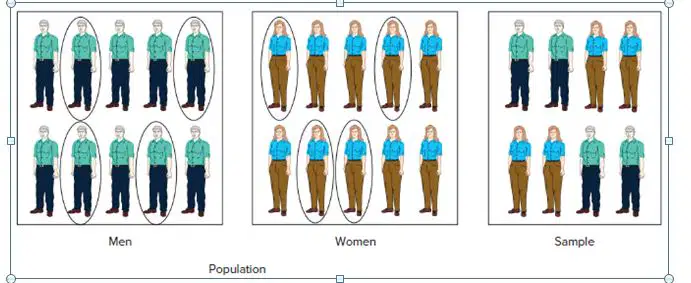
Image referes to...
Stratified Sampling
Cluster sampling
Systematic Sampling
Random Sampling
A .....sample is obtained by dividing the population into sections or clusters and then selecting one or more clusters at random
Judgement
Quota
Stratified
Cluster
................. SAMPLING involves the choice of subjects who are most advantageously placed or in the best position to provide the information required.
Random
Quota
Stratified
Judgement
If the representativeness of sample is not critical for the study, we use.........
Probabililty
Non Probability
Both destructive and Probability
Destructive sampling
For Stratifid Random sampling
Stratification must be meaningful
Sampling frame is essential
Quota should be accurate
Expert judgement should be included
Type of purposive sampling, ensures that certain groups are adequately represented in the study through the assignment of a quota.
Simple random
Convenience
Cluster
Quota

